Raw cane sugar cubes
CN → US| HS Code | Tariff Rate | Origin | Destination | Doc |
|---|---|---|---|---|
| 1702904000 | 0.0% | CN | US | Official Doc |
| 1702900500 | 0.0% | CN | US | Official Doc |
| 1703103000 | 0.0% | CN | US | Official Doc |
| 1703105000 | 0.0% | CN | US | Official Doc |
| 1701135000 | 0.0% | CN | US | Official Doc |
| 1701145000 | 0.0% | CN | US | Official Doc |
Product Images
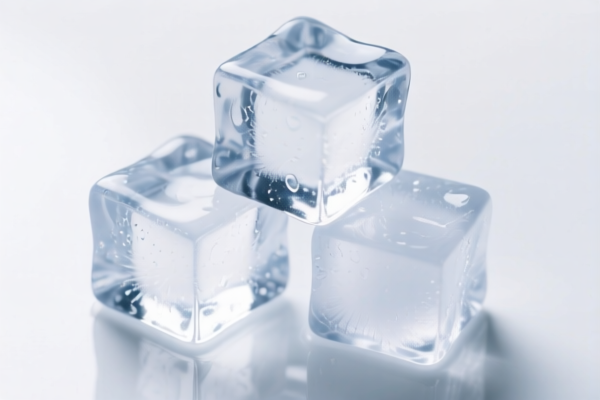
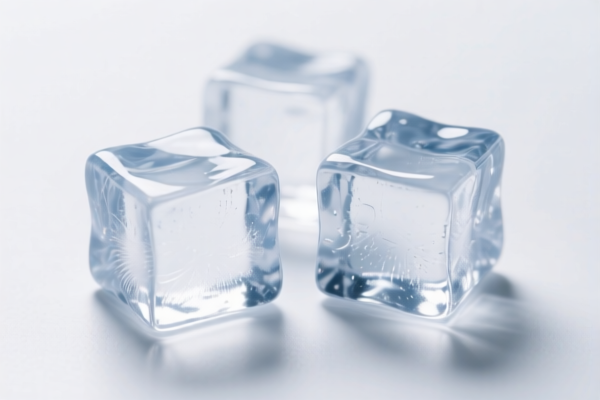
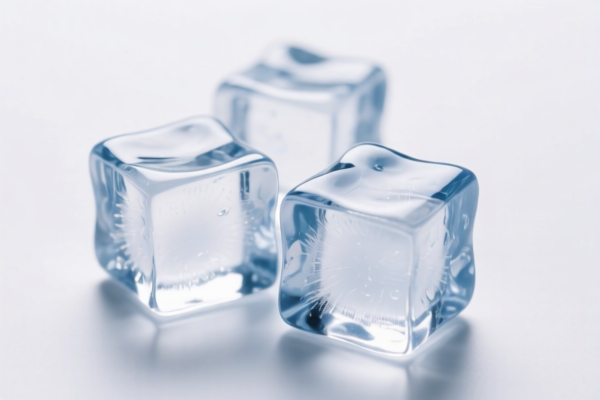
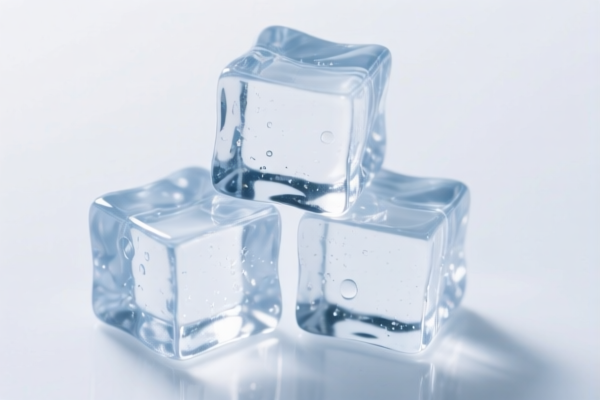
AI Analysis
🍬 Raw Cane Sugar Cubes
🌐 HS Code Reference & Customs Clearance Guide | 2026 Latest Tariff Analysis | Professional Import Strategy
📌 One, Product Definition & Classification: What Exactly Are "Raw Cane Sugar Cubes"?
Raw cane sugar cubes are solid, molded blocks of raw cane sugar, typically formed by compressing raw sugar crystals into uniform cube shapes. They are not refined and retain natural molasses traces, giving them a light brown color and a slightly distinct flavor compared to white refined sugar.
⚠️ Key Classification Point:
- If the product is in solid form, not refined, and contains added flavoring or coloring → may fall under different categories.
- If it's raw cane sugar in solid form, without added flavoring or coloring, and molded into cubes → must be classified under HS Code 1701.13.50.00.
📦 Two, HS Code Classification Details (2026 Latest Tariff Authority Match)
| HS Code | Product Description | Applicable Scenario | Contains Added Flavor/Color? |
|---|---|---|---|
1701.13.50.00 |
Cane or beet sugar and chemically pure sucrose, in solid form: Raw sugar not containing added flavoring or coloring matter: Cane sugar specified in subheading note 2 to this chapter: Other | Raw cane sugar cubes, unrefined, no added flavor/color, molded into cubes | ❌ No |
1701.14.50.00 |
Cane or beet sugar and chemically pure sucrose, in solid form: Raw sugar not containing added flavoring or coloring matter: Other cane sugar: Other | Other raw cane sugar (e.g., non-standard, irregular forms) | ❌ No |
🔍 Critical Distinction:
- "Cane sugar specified in subheading note 2" refers to raw cane sugar that meets specific criteria (e.g., origin, processing level) — this includes standard raw cane sugar cubes. - If your product does not meet subheading note 2, it falls under1701.14.50.00.
💰 Three, 2026 Latest Tariff Rate Breakdown (Including附加 Taxes & Policy Add-ons)
✅ Applicable Country: United States (US)
✅ Origin: China (CN)
✅ Effective Date: November 10, 2025 (and onwards)
🎯 1. 1701.13.50.00 — Raw Cane Sugar Cubes (Cane Sugar, Subheading Note 2, Other)
| Item | Detail |
|---|---|
| Base Tariff Rate | 0% (ad valorem) |
| USITC Additional Duty | +0% (No 301 Tariff applied) |
| IEEPA Additional Duty | +0% (No emergency economic power duty) |
| Total Effective Tariff | 0.0% |
| Tax Calculation | CIF Value × 0.0% |
| De Minimis Threshold (Micro-Exemption) | ✅ Yes (Under 1% threshold) |
| Legal Basis Path | HS:1701.13.50.00 → Note 2 to Chapter 17 → No additional footnote |
📌 Explanation:
- No additional tariffs apply to this code under current U.S. trade policy. - No 301 (USITC) or IEEPA duties are triggered because raw cane sugar is not subject to the 25% tariff list. - De minimis exemption applies — if the value is below 1% of total shipment, no duty is collected.
🎯 2. 1701.14.50.00 — Other Raw Cane Sugar (Not Covered by Subheading Note 2)
| Item | Detail |
|---|---|
| Base Tariff Rate | 0% |
| USITC Additional Duty | +0% |
| IEEPA Additional Duty | +0% |
| Total Effective Tariff | 0.0% |
| Tax Calculation | CIF × 0.0% |
| De Minimis Threshold | ✅ Yes |
| Legal Basis Path | HS:1701.14.50.00 → No applicable footnote |
📌 Note:
- Even if your product doesn't qualify under "subheading note 2", it still attracts 0% total tariff. - This is because raw cane sugar (not refined) is exempt from the major U.S. trade penalties.
🛠️ Four, Customs Clearance Practical Tips (Pro Tips to Avoid Pitfalls)
✅ 1. Required Documentation (Must-Have List)
| Document | Required? | Notes |
|---|---|---|
| ✅ Product Specification Sheet | ✔️ | Include sugar origin, moisture content, cube size, molasses content |
| ✅ Manufacturing Process Description | ✔️ | Prove it's raw, not refined, no added flavor/color |
| ✅ Product Photos (with packaging & label) | ✔️ | Show cube shape, color, and packaging |
| ✅ Lab Test Report (Moisture, Sucrose, Molasses) | ✔️ | Supports "raw" classification |
| ✅ Commercial Invoice | ✔️ | Clearly state: "Raw Cane Sugar Cubes, Unrefined, No Added Flavor or Color" |
| ✅ Certificate of Origin (CO) | ✔️ | Required for preferential tariff claims (e.g., from ASEAN, Mexico) |
| ✅ Packing List | ✔️ | Specify number of cubes per package, weight, and total shipment |
✅ 2. Declaration Best Practices (Key Rules)
🔥 "Raw ≠ Refined, Cube ≠ Powder, No Flavor = No Duty!"
| Scenario | Correct HS Code | Wrong Practice |
|---|---|---|
| Raw cane sugar cubes (no flavor) | 1701.13.50.00 |
Misclassified as 1701.11.50.00 (refined sugar) → 0% still, but risk of audit |
| Irregular raw cane sugar (not standard) | 1701.14.50.00 |
Incorrectly claimed as 1701.13.50.00 → may trigger scrutiny |
| Sugar cubes with vanilla or caramel flavor | ❌ Not eligible for these codes → must be declared as "sugar with added flavor" → may fall under 1701.99.90.00 (higher risk) |
|
| Refined sugar cubes | ❌ Not eligible → must use 1701.11.50.00 or 1701.12.50.00 |
✅ 3. Special Cases Handling
| Situation | Recommended Action |
|---|---|
| Cubes made from raw sugar but with slight molasses smell | ✅ Still qualifies as raw sugar — no issue |
| Cubes with trace natural color (light brown) | ✅ Normal for raw cane sugar — no need to declare as "colored" |
| Cubes packaged with natural paper or biodegradable wrap | ✅ Allowed — no impact on classification |
| Importing for food service or industrial use | ✅ No special license needed — standard food-grade import |
| Importing in bulk (e.g., 1000kg+) | ✅ Consider requesting Advance Ruling (Pre-Ruling) to lock in classification |
🌍 Five, Global Customs Comparison (2026 Latest)
| Country/Region | Recommended HS Code | Tariff | Certification Required | Notes |
|---|---|---|---|---|
| 🇺🇸 United States | 1701.13.50.00 or 1701.14.50.00 |
0% | FDA, FDA Food Contact, Lab Report | De minimis applies |
| 🇨🇳 China | 1701.13.50.00 |
5% | CCC, Food Safety Certificate | No additional tariffs |
| 🇪🇺 European Union | 1701.13.50.00 |
0% (if origin EU/ACP) | CE, EFSA, FSSC 22000 | No IEEPA/USITC duties |
| 🇦🇺 Australia | 1701.13.50.00 |
0% | ACCC, Food Standards | No extra duties |
| 🇯🇵 Japan | 1701.13.50.00 |
0% | JAS, Food Sanitation Law | No additional tariffs |
📌 Conclusion:
- All major markets treat raw cane sugar cubes as 0% tariff if not refined and no added flavor/color. - The U.S. is the most lenient — 0% duty, de minimis available.
📌 Six, Common Mistakes & How to Avoid Them (Real-World Pitfalls)
❌ Mistake 1: Labeling "natural sugar cubes" without proving it's raw, not refined
👉 Result: Customs may reclassify as "refined sugar" → risk of audit, delay, or rejection.
❌ Mistake 2: Declaring as "sugar cubes" without specifying "raw cane"
👉 Result: May be misclassified under 1701.11.50.00 → no penalty, but audit risk.
❌ Mistake 3: Including flavoring (e.g., vanilla, caramel) but not declaring it
👉 Result: Wrong HS Code → possible seizure, fines, or re-export.
❌ Mistake 4: Using generic name like "cane sugar blocks" without documentation
👉 Result: Customs may request lab test → delayed clearance.
✅ Correct Declaration Example:
"Raw Cane Sugar Cubes, 20g each, 1000 pieces per carton, unrefined, no added flavor or color, 100% natural molasses content < 5%, origin: Thailand, for food service use"
🎯 Seven, Final Verdict: Smart Classification = Smooth Clearance
🎯 Remember the Golden Rule:
🔹 "Raw ≠ Refined, Cube ≠ Powder, No Flavor = Zero Duty!"
🔹 "If it's raw cane sugar, and it's not refined, and no flavor added — you're golden!"
📌 Pro Tip:
If your raw cane sugar cubes are produced in Vietnam, India, Thailand, or Mexico, you may qualify for preferential tariff treatment under trade agreements (e.g., USMCA, ASEAN).
✅ Apply for a Certificate of Origin (CO) and request an Advance Ruling to lock in the 0% duty rate.
📣 Act Now:
📞 Contact a licensed customs broker + provide product photos + lab report
🚀 Get HS Code pre-approval and avoid costly delays or rejections
✨ Expert Clearance Starts with Accurate Classification!
💼 Your sugar cubes deserve a smooth, duty-free journey — let’s make it happen!
Customer Reviews
About HS Code Classification
The Harmonized System (HS) is an internationally standardized nomenclature developed by the World Customs Organization (WCO) to classify traded products. Over 200 countries use the HS system as the basis for customs tariffs, trade statistics, and import/export regulations.
Each HS code follows a hierarchical structure:
- Chapter (2 digits) — Broad category of goods (e.g., Chapter 84: Machinery and Mechanical Appliances)
- Heading (4 digits) — More specific grouping within the chapter
- Subheading (6 digits) — Internationally standardized breakdown, used by all WCO member countries
- National subdivisions (8-10 digits) — Country-specific extensions for further classification, such as US HTSUS 10-digit codes
Correct HS code classification is essential for smooth customs clearance, accurate duty payment, and compliance with trade regulations. Misclassification can lead to customs delays, overpayment of duties, or penalties.
When importing from CN to US, the applicable tariff rates may include:
- Most-Favored-Nation (MFN) rate — The standard duty rate applied to WTO members
- General rate — Applied to countries without trade agreements
- Trade remedy duties — Additional tariffs such as Section 301 (anti-dumping), Section 232 (national security), or countervailing duties
The information provided on this page is for reference purposes only. For official classification, please consult with your local customs authority or a licensed customs broker.