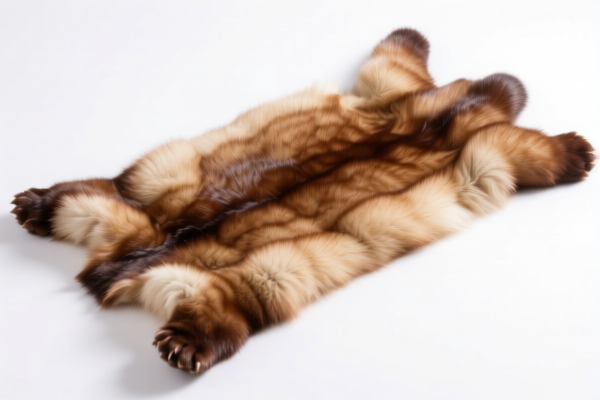
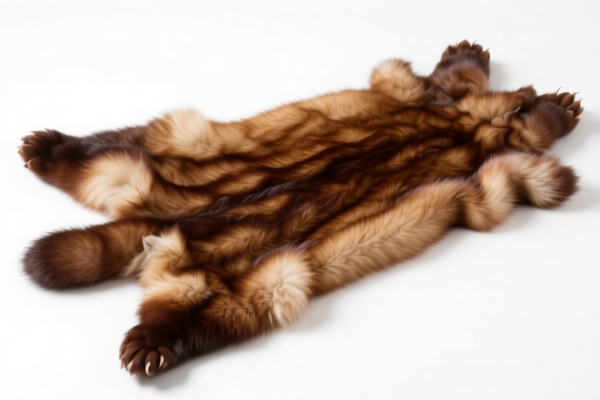
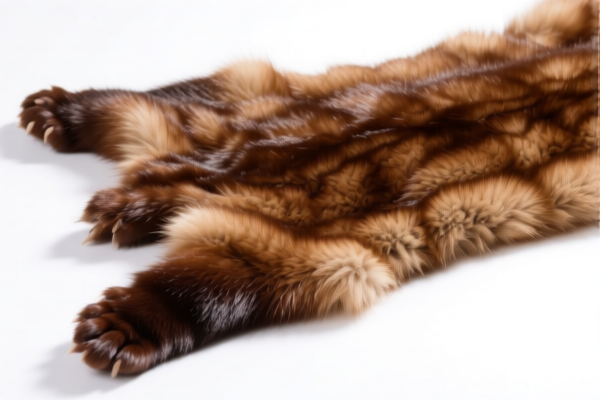
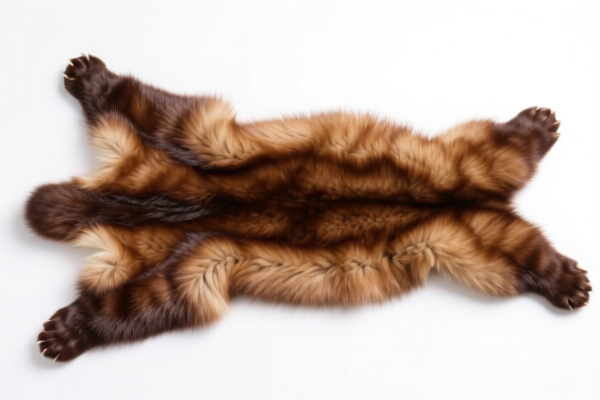
Raw mink skins without head, tail and paws
CN → US| HS Code | Tariff Rate | Origin | Destination | Doc |
|---|---|---|---|---|
| 4103901190 | 17.5% | CN | US | Official Doc |
| 4103901140 | 17.5% | CN | US | Official Doc |
| 4103902000 | 20.8% | CN | US | Official Doc |
Product Images
AI Analysis
🦫 Mink Skins (Raw, Without Head, Tail, and Paws)
🌐 HS Code Reference & Customs Clearance Guide | 2026 Latest Tariff Analysis | Professional Tier-1 Clearance Strategy
📌 1. Product Definition & Classification: What Exactly Are "Raw Mink Skins"?
Raw Mink Skins, specifically those without head, tail, and paws, are classified as unpreserved or lightly preserved animal hides/skins (Chapter 41 of the Harmonized System).
In international trade, they are categorized based on: - State: Unprocessed (raw/fresh), salted, or dried. - Form: Whole carcass, split, or cut (e.g., skinned without extremities). - Species: Mink (Neovison vison).
⚠️ Key Classification Point:
- If unprocessed (raw/fresh/salted) → Chapter 41 (Animal Hides & Skins).
- If tanned, leathered, or fur-processed → Chapter 43 (Furskins and manufactured fur skins).
- This guide applies strictly to RAW (unprocessed) skins, as per your input.
📦 2. HS Code Classification Details (2026 Latest Tariff Authority Cross-Reference)
| HS Code | Product Description | Applicability | State of Processing |
|---|---|---|---|
4103.90.11.90 |
Other unpreserved skins of mink, whole or cut (not head/tail/paws) | Raw mink skins, cut forms, salted/fresh | ✅ Unprocessed (Raw) |
4103.90.11.40 |
Other unpreserved skins of mink, whole or in pieces | Raw mink skins, unprocessed, classified under "Other" | ✅ Unprocessed (Raw) |
4103.90.20.00 |
Other animal skins, unpreserved (general category) | Mink skins falling under broader "other" category | ✅ Unprocessed (Raw) |
🔍 Critical Note:
- All three codes apply to RAW (unprocessed) mink skins.
- The difference lies in sub-classification nuances (e.g., specific vs. general "other" categories).
- Do NOT confuse with Chapter 43 codes (e.g., 4302), which apply to tanned/processed fur skins.
💰 3. 2026 Latest Tariff Rate Breakdown (Including Additional Duties & Policy Surcharges)
✅ Applicable Country: United States (US)
✅ Origin: China (CN)
✅ Effective Date: November 10, 2025 (and subsequent imports)
🎯 1. HS Code 4103.90.11.90 —— Raw Mink Skins (Specific "Other" Category)
| Item | Details |
|---|---|
| Base Tariff Rate | 0% (ad valorem) |
| Section 301 (USITC) Additional Duty | +7.5% |
| IEEPA Section 122 Additional Duty | +10% |
| Total Tax Rate | 17.5% |
| Tax Calculation | CIF Value × 17.5% |
| De Minimis Exemption Eligibility | ❌ Not Eligible (deny_de_minimis) |
| Legal Basis Path | USITC:4103.90.11.90 → FOOTNOTE:301.9903.88.01 → IEEPA:9903.01.24 → FOOTNOTE:122.9903.01.24 |
📌 Explanation:
- "Base 0%": Mink skins have a standard MFN rate of 0%.
- "Section 301 +7.5%": U.S. additional tariff on specific Chinese animal products.
- "IEEPA 10%": Additional tariff under Executive Order on Chinese imports.
- Total 17.5% is mandatory for Chinese-origin raw mink skins.
🎯 2. HS Code 4103.90.11.40 —— Raw Mink Skins (General "Other" Category)
| Item | Details |
|---|---|
| Base Tariff Rate | 0% (ad valorem) |
| Section 301 (USITC) Additional Duty | +7.5% |
| IEEPA Section 122 Additional Duty | +10% |
| Total Tax Rate | 17.5% |
| Tax Calculation | CIF Value × 17.5% |
| De Minimis Exemption Eligibility | ❌ Not Eligible (deny_de_minimis) |
| Legal Basis Path | USITC:4103.90.11.40 → FOOTNOTE:301.9903.88.01 → IEEPA:9903.01.24 → FOOTNOTE:122.9903.01.24 |
📌 Note:
- Identical tariff structure to4103.90.11.90.
- The distinction is administrative (how customs classifies "other" mink skins).
- Result: Same 17.5% total rate.
🎯 3. HS Code 4103.90.20.00 —— Other Unpreserved Animal Skins (Broad Category)
| Item | Details |
|---|---|
| Base Tariff Rate | 3.3% (ad valorem) |
| Section 301 (USITC) Additional Duty | +7.5% |
| IEEPA Section 122 Additional Duty | +10% |
| Total Tax Rate | 20.8% |
| Tax Calculation | CIF Value × 20.8% |
| De Minimis Exemption Eligibility | ❌ Not Eligible (deny_de_minimis) |
| Legal Basis Path | USITC:4103.90.20.00 → FOOTNOTE:301.9903.88.01 → IEEPA:9903.01.24 → FOOTNOTE:122.9903.01.24 |
📌 Warning:
- This code has a higher base rate (3.3%) compared to the specific mink codes (0%).
- Total 20.8% is 3.3% higher than the specific mink codes.
- Avoid this code if your product is definitively mink; misclassification leads to overpayment or audit risks.
🛠️ 4. Customs Clearance Practical Advice (Real-World Pitfall Avoidance Guide)
✅ 1. Required Documentation Checklist (All Mandatory)
| Document | Mandatory | Notes |
|---|---|---|
| ✅ Product Specification Sheet | ✔️ | Must state: "Raw Mink Skins, Unprocessed, No Head/Tail/Paws" |
| ✅ Process Description | ✔️ | Detail: Salting, drying, freezing, or fresh? |
| ✅ Product Photos | ✔️ | Clear images showing skin condition, cut edges, absence of extremities |
| ✅ Commercial Invoice | ✔️ | Must NOT use terms like "Fur Leather" or "Tanned Skin" |
| ✅ Packing List | ✔️ | Specify net/gross weight, piece count, container info |
| ✅ Certificate of Origin | ✔️ | If claiming non-Chinese origin for lower rates |
| ✅ Third-Party Inspection Report | ✔️ | Recommended to confirm raw state (no tanning/processing) |
✅ 2. Declaration Strategy (Key Mantras)
🔥 "Raw means Raw, No Processing, HS 41, Not 43!"
| Scenario | Correct Declaration | Wrong Practice |
|---|---|---|
| Raw mink skins (salted/fresh) | 4103.90.11.90 or 4103.90.11.40 |
Declare as "Fur Leather" → Chapter 43 |
| Tanned/processed mink fur | 4302.11.00 (Chapter 43) |
Declare as Raw → Seizure Risk |
| Mixed shipments (raw + processed) | Split declaration | Mixed declaration → Penalty |
| Small samples (<$800) | Not Eligible for De Minimis | Assume $800 exemption → Seizure |
✅ 3. Special Case Handling
| Situation | Recommendation |
|---|---|
| OEM Custom Cuts | Provide design specs to prove "no head/tail/paws" |
| Salted vs. Fresh | Clearly state preservation method; salted may have different inspection requirements |
| Origin Fraud | If shipped via third country (e.g., Vietnam), do not falsely declare; U.S. CBP tracks origin |
| Audit Risk | If rate is questioned, provide lab test confirming no tanning chemicals |
🌍 5. Global Market Customs Comparison (2026 Latest)
| Country/Region | Recommended HS Code | Tariff Rate (China Origin) | Certifications | Notes |
|---|---|---|---|---|
| 🇺🇸 USA | 4103.90.11.90 / 4103.90.11.40 |
17.5% | No special | IEEPA + 301 apply |
| 🇨🇳 China | 4103.90.11 |
0% | None | Low import tax |
| 🇪🇺 EU | 4103.90 |
6.5% | REACH | No Section 301 |
| 🇬🇧 UK | 4103.90 |
6.5% | UKCA | Post-Brexit tariff |
| 🇯🇵 Japan | 4103.90 |
5.5% | None | MFN rate |
📌 Conclusion:
- USA has the highest effective tariff (17.5%) due to Section 301 + IEEPA.
- EU/UK/Japan have lower rates but stricter chemical safety regulations (REACH).
📌 6. Common Mistakes & Pitfalls (Blood-Taught Lessons)
❌ Mistake 1: Declaring raw mink as "Fur Leather" (4302)
👉 Consequence: Wrong Chapter → Seizure + Penalty. Raw skins are Chapter 41, not 43.
❌ Mistake 2: Assuming De Minimis ($800) applies
👉 Consequence: Illegal. Raw animal products are explicitly denied de minimis exemption under IEEPA.
❌ Mistake 3: Mixing raw and processed skins in one shipment
👉 Consequence: Clearance Delay. Must separate into different HS codes.
❌ Mistake 4: Using vague terms like "Animal Skins"
👉 Consequence: Audit Trigger. Must specify Species (Mink) and State (Raw).
✅ Correct Declaration Example:
"Raw Mink Skins, Unprocessed, Salted, No Head/Tail/Paws, 100 Pieces, Model MK-RAW-01, Origin: China"
🎯 7. Conclusion: Precision Classification Saves Money!
🎯 Remember the Mantra:
🔹 "Raw is Chapter 41, Not 43!"
🔹 "No De Minimis for Animal Skins!"
🔹 "17.5% Total Duty for China-Origin Mink!"
📌 Pro Tip:
- If your mink skins are originating from non-China countries (e.g., Canada, Denmark), IEEPA 10% may not apply.
- Apply for Advance Ruling from U.S. CBP to confirm HS Code and avoid post-clearance audits.
📣 Immediate Action:
📞 Consult a licensed customs broker + Submit product images + Request Advance Ruling
🚀 Ensure compliant clearance, avoid seizures, and optimize costs!
✨ Professional Clearance Starts with Accurate Classification!
💼 Every percentage point of tariff is a profit margin decision!
Customer Reviews
About HS Code Classification
The Harmonized System (HS) is an internationally standardized nomenclature developed by the World Customs Organization (WCO) to classify traded products. Over 200 countries use the HS system as the basis for customs tariffs, trade statistics, and import/export regulations.
Each HS code follows a hierarchical structure:
- Chapter (2 digits) — Broad category of goods (e.g., Chapter 84: Machinery and Mechanical Appliances)
- Heading (4 digits) — More specific grouping within the chapter
- Subheading (6 digits) — Internationally standardized breakdown, used by all WCO member countries
- National subdivisions (8-10 digits) — Country-specific extensions for further classification, such as US HTSUS 10-digit codes
Correct HS code classification is essential for smooth customs clearance, accurate duty payment, and compliance with trade regulations. Misclassification can lead to customs delays, overpayment of duties, or penalties.
When importing from CN to US, the applicable tariff rates may include:
- Most-Favored-Nation (MFN) rate — The standard duty rate applied to WTO members
- General rate — Applied to countries without trade agreements
- Trade remedy duties — Additional tariffs such as Section 301 (anti-dumping), Section 232 (national security), or countervailing duties
The information provided on this page is for reference purposes only. For official classification, please consult with your local customs authority or a licensed customs broker.