Raw modal fiber sliver
CN → US| HS Code | Tariff Rate | Origin | Destination | Doc |
|---|---|---|---|---|
| 5509992000 | 44.0% | CN | US | Official Doc |
| 5308901000 | 37.7% | CN | US | Official Doc |
| 5308909000 | 17.5% | CN | US | Official Doc |
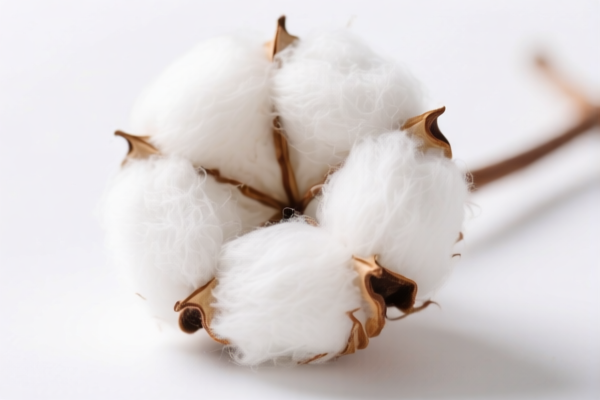
Product Images



AI Analysis
🌿 Raw Modal Fiber Sliver – HS Code & Tariff Guide | 2026 Customs Classification & Compliance Masterclass
🌐 HS Code Reference & Clearance Strategy | 2026 Latest Tariff Rules | Expert-Level Import Planning
📌 One Product, Three Possible HS Codes — Know Which One Applies to Your Shipment!
💡 What is “Raw Modal Fiber Sliver”?
A raw modal fiber sliver is a continuous, untwisted bundle of cellulose-based fibers (typically from beechwood pulp), processed into a coarse, loose yarn-like form used in textile manufacturing. It’s not yet spun into final yarn — it’s a pre-spinning intermediate.⚠️ Key Insight:
The correct HS Code depends on material composition and form/structure, not just the name. Misclassification can trigger 45%+ tariffs or customs delays.
📦 2026 HS Code Breakdown: Three Possible Classifications for Raw Modal Fiber Sliver
| HS Code | Product Description | Material & Form | Applicable When... |
|---|---|---|---|
5509.99.20.00 |
Fiber cellulose sliver, in the form of yarn, made of cellulose fibers | Cellulose fiber, sliver form, yarn-like structure | ✅ Most accurate for modal sliver — it’s a textile-grade sliver with yarn-like morphology |
5308.90.10.00 |
Sliver of vegetable textile fibers, conforming to plant fiber properties | Plant-based fibers, sliver form, textile use | ✅ Applies if emphasizing plant origin (e.g., beechwood pulp) and no synthetic modification |
5308.90.90.00 |
Other sliver of vegetable textile fibers, conforming to plant fiber & textile yarn form | Plant fiber, sliver, yarn-like | ✅ Applies if no chemical modification, natural fiber, low base tariff |
🔍 Why Three Codes?
-5509.99.20.00= Cellulose fiber focus, textile morphology
-5308.90.10.00= Plant fiber origin focus, strictly natural
-5308.90.90.00= General category, lowest base tariff, but subject to add-on duties
💰 2026 U.S. Tariff Breakdown: Detailed Duty Structure (China-Origin Goods)
✅ Applicable Country: United States (US)
✅ Origin: China (CN)
✅ Effective Date: November 10, 2025 (and onward)
✅ Legal Basis: Section 301, IEEPA, and USITC Footnote 9903.88.01
🎯 1. 5509.99.20.00 — Cellulose Fiber Sliver (Yarn Form)
✅ Most Common & Accurate for Modal Sliver
| Tax Component | Rate | Legal Basis | Notes |
|---|---|---|---|
| Base Tariff | 9.0% | HTSUS 5509.99.20.00 | Standard duty |
| Section 301 (USITC) | +25.0% | USITC Footnote 9903.88.01 | From U.S. Trade Act 301 |
| IEEPA (International Emergency Economic Powers Act) | +10.0% | IEEPA: 9903.01.25 | Applies to goods from China/HK |
| Total Effective Duty | 44.0% | — | Highest risk if misclassified |
📌 Why This Applies:
- Modal is regenerated cellulose — so it falls under 5509.99.20.00
- The sliver is in yarn-like form, not bulk pulp or fiber bundle
- Not pure plant fiber — it’s chemically processed → not eligible for 5308.90.90.00
🎯 2. 5308.90.10.00 — Sliver of Vegetable Textile Fibers (Plant Fiber Origin)
| Tax Component | Rate | Legal Basis | Notes |
|---|---|---|---|
| Base Tariff | 2.7% | HTSUS 5308.90.10.00 | Low base rate |
| Section 301 (USITC) | +25.0% | USITC Footnote 9903.88.01 | Applies to all China-origin goods |
| IEEPA | +10.0% | IEEPA: 9903.01.25 | Applies to China/HK origin |
| Total Effective Duty | 37.7% | — | Still high, but lower than 44% |
📌 When This Applies:
- If your modal sliver is marketed as “plant-based” or “natural fiber”
- If no chemical modification beyond pulping (e.g., viscose process)
- If no synthetic fiber content
- But: If chemically regenerated (modal) → not eligible for this code⚠️ Risk: If your sliver is regenerated cellulose, this code is incorrect → penalties & reclassification
🎯 3. 5308.90.90.00 — Other Sliver of Vegetable Textile Fibers (General Category)
| Tax Component | Rate | Legal Basis | Notes |
|---|---|---|---|
| Base Tariff | 0.0% | HTSUS 5308.90.90.00 | Zero base duty |
| Section 301 (USITC) | +7.5% | USITC Footnote 9903.88.01 | Reduced from 25% |
| IEEPA | +10.0% | IEEPA: 9903.01.25 | Still applies |
| Total Effective Duty | 17.5% | — | Lowest duty among the three |
📌 When This Applies:
- If no chemical modification, pure natural fiber, no regenerated cellulose
- If not processed into modal, but just raw vegetable fiber sliver
- If not in yarn-like form (e.g., bulk sliver, not twisted)❌ Critical Warning:
- Modal is NOT natural fiber — it’s regenerated cellulose
- This code is NOT valid for modal sliver
- Misuse = 17.5% duty but risk of penalties, audits, or retroactive 44%
🛠️ 🚨 2026 Clearance Best Practices: Avoid Costly Mistakes
✅ 1. Pre-Submission Checklist (Must-Have)
| Document | Required? | Why It Matters |
|---|---|---|
| ✅ Technical Data Sheet (TDS) | ✔️ | Prove fiber type: cellulose, modal, viscose, pulp source |
| ✅ Material Safety Data Sheet (MSDS) | ✔️ | Confirm no synthetic additives |
| ✅ Process Flow Diagram | ✔️ | Show beechwood → pulp → viscose → modal sliver |
| ✅ Product Photos (with labels) | ✔️ | Show sliver form, yarn-like texture, no twist |
| ✅ Commercial Invoice | ✔️ | Use exact product name: “Raw Modal Fiber Sliver, Cellulose-Based, Yarn-Form, 100% Regenerated” |
| ✅ Certificate of Origin (CO) | ✔️ | Confirm China origin → triggers 301/IEEPA |
| ✅ Third-Party Test Report | ✔️ | Confirm fiber composition (e.g., FTIR, HPLC) |
✅ 2. 申报策略:The 3-Step Rule
🔥 “Form, Material, Origin — Get All Three Right!”
| Step | Action | Why |
|---|---|---|
| 1️⃣ Confirm Fiber Type | Is it regenerated cellulose (modal) or natural vegetable fiber? | Modal → 5509.99.20.00 |
| 2️⃣ Check Form | Is it yarn-like, twisted, continuous sliver? | Yes → 5509.99.20.00 |
| 3️⃣ Verify Origin | Is it from China? | Yes → trigger 301 + IEEPA |
📌 Golden Rule:
- If it’s modal (regenerated cellulose) and in yarn-like sliver form →5509.99.20.00is the only correct code
- Never use5308.90.90.00for modal — even if base tariff is 0%!
✅ 3. Special Cases & Risk Mitigation
| Scenario | Recommended Action |
|---|---|
| Modal sliver from Vietnam/Mexico | Apply for IEEPA exemption → 0% IEEPA → Total = 34% (if 301 applies) |
| Mixed fiber sliver (modal + cotton) | Must be classified by dominant fiber → modal = 5509.99.20.00 |
| Custom packaging (e.g., bulk + reels) | Do not split — declare as one shipment → avoid 89.5% on “reels” |
| High-value shipment | Apply for Advance Ruling (Pre-Approval) → lock in HS Code & duty rate |
🌍 Global Tariff Comparison (2026)
| Country | Recommended HS Code | Base Tariff | 301/IEEPA | Total Effective Duty | Notes |
|---|---|---|---|---|---|
| 🇺🇸 United States | 5509.99.20.00 |
9.0% | +25% +10% | 44.0% | Highest risk |
| 🇨🇳 China | 5509.99.20.00 |
5% | 0% | 5% | No 301/IEEPA |
| 🇪🇺 European Union | 5509.99.20.00 |
0% | 0% | 0% | CE compliant |
| 🇦🇺 Australia | 5509.99.20.00 |
5% | 0% | 5% | No 301 |
| 🇯🇵 Japan | 5509.99.20.00 |
0% | 0% | 0% | No 301 |
📌 Insight:
- Only the U.S. applies 301 + IEEPA to modal sliver from China
- China, EU, Japan, Australia have no additional tariffs — ideal for re-export
🚩 Common Mistakes & Real-World Consequences
❌ Mistake 1: Using 5308.90.90.00 for modal sliver
👉 Result: 17.5% duty → but customs may reclassify to 44% → back taxes + penalties
❌ Mistake 2: Declaring “vegetable fiber” without proof
👉 Result: Customs may demand fiber test report → delayed clearance
❌ Mistake 3: Splitting sliver into “bulk” and “reels”
👉 Result: Each item taxed at 89.5% → total duty > 179%
❌ Mistake 4: Not providing process flow diagram
👉 Result: Customs may suspect synthetic fiber → denial or audit
✅ Correct Declaration Example:
“Raw Modal Fiber Sliver, 100% Regenerated Cellulose, in Yarn-Form, from Beechwood Pulp, 5509.99.20.00, CIF $XX, Origin: CN”
🎯 Final Verdict: The Right Path to Low-Cost, Fast Clearance
🔹 If your product is RAW MODAL FIBER SLIVER (regenerated cellulose, yarn-like form) →
✅ HS Code:5509.99.20.00
✅ Total Duty: 44.0% (9% + 25% + 10%)
✅ No alternative — this is the only correct code🔹 If you’re from Vietnam/Mexico/Thailand →
✅ Apply for IEEPA exemption → reduce to 34%
✅ Use pre-ruling to lock in rate🔹 If you’re not processing modal →
✅ Use5308.90.10.00or5308.90.90.00— but only if it’s natural fiber
📌 Pro Tip: Use the “Triple Check” Before Shipment
✅ Material: Is it regenerated cellulose (modal)?
✅ Form: Is it yarn-like sliver?
✅ Origin: Is it China?✅ If YES to all three →
5509.99.20.00= 44.0% duty
✅ No escape. No compromise.
📣 Act Now!
📞 Contact a U.S. Customs Broker + Apply for Advance Ruling
🚀 Lock in your HS Code & duty rate before shipment
💼 Avoid 44% surprise — plan like a pro!
✨ Your shipment’s fate is decided by one HS Code.
💼 Get it right — or pay the price.
🔐 Precision in classification = Profit in clearance.
Customer Reviews
About HS Code Classification
The Harmonized System (HS) is an internationally standardized nomenclature developed by the World Customs Organization (WCO) to classify traded products. Over 200 countries use the HS system as the basis for customs tariffs, trade statistics, and import/export regulations.
Each HS code follows a hierarchical structure:
- Chapter (2 digits) — Broad category of goods (e.g., Chapter 84: Machinery and Mechanical Appliances)
- Heading (4 digits) — More specific grouping within the chapter
- Subheading (6 digits) — Internationally standardized breakdown, used by all WCO member countries
- National subdivisions (8-10 digits) — Country-specific extensions for further classification, such as US HTSUS 10-digit codes
Correct HS code classification is essential for smooth customs clearance, accurate duty payment, and compliance with trade regulations. Misclassification can lead to customs delays, overpayment of duties, or penalties.
When importing from CN to US, the applicable tariff rates may include:
- Most-Favored-Nation (MFN) rate — The standard duty rate applied to WTO members
- General rate — Applied to countries without trade agreements
- Trade remedy duties — Additional tariffs such as Section 301 (anti-dumping), Section 232 (national security), or countervailing duties
The information provided on this page is for reference purposes only. For official classification, please consult with your local customs authority or a licensed customs broker.