Razor Blades
CN → US| HS Code | Tariff Rate | Origin | Destination | Doc |
|---|---|---|---|---|
| 8212100000 | 10.0% | CN | US | Official Doc |
| 8212200010 | 17.5% | CN | US | Official Doc |
| 8212200005 | 17.5% | CN | US | Official Doc |
| 8209000030 | 39.6% | CN | US | Official Doc |
| 8209000060 | 39.6% | CN | US | Official Doc |
Product Images
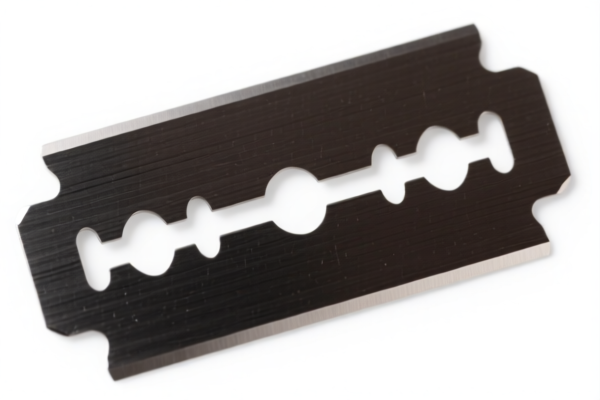
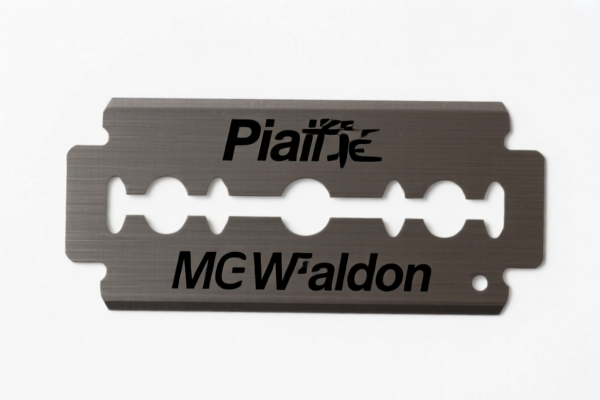
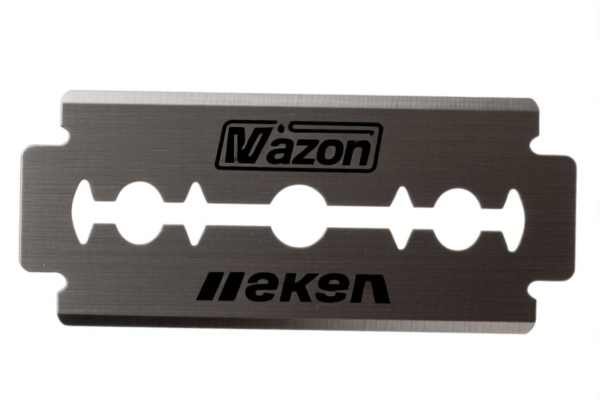
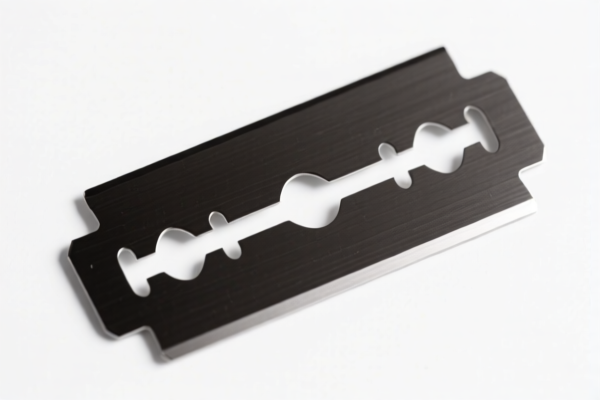
AI Analysis
🪒 Razor Blades (Shaving Appliances & Parts)
🌐 HS Code Reference & Clearance Guide | 2026 Latest Tariff Analysis | Professional Customs Strategy
📌 I. Product Definition & Classification: Do You Truly Understand "Razor Blades"?
Razor blades, in international trade, are primarily categorized under Chapter 82: Tools, Implements, and Cutlery. They are distinguished by their form factor, usage, and material composition. The classification largely depends on whether the item is a cartridge head assembly or loose replacement blades, and specifically if they are considered "parts" or "blades" under specific legal definitions.
⚠️ Key Distinction Point:
- "Shaver Heads" (Cartridge Heads): These include the blade holder structure and are treated as parts of electric shavers or safety razor handles. They generally attract lower base tariffs but are subject to specific section notes. → HS 8212.10
- "Replacement Blades" (Loose/Single-Edge): These are thin, sharp metal insertions. Their classification can vary significantly based on whether they are deemed "tools" (higher base tariff) or specific "safety razor blades" (lower base tariff). → HS 8212.20 or 8209.00
📦 II. HS Code Classification Details (Latest 2026 Tariff Alignment)
Based on the provided data, here are the potential HS Codes for Razor Blades and the rationale for each:
| HS Code | Product Description | Rationale for Classification | Base Tariff | Add-on Tariffs | Total Tax Rate |
|---|---|---|---|---|---|
8212.10.00.00 |
Shaver Heads (Parts of Shavers) | Classified as "Parts of razors and shaver heads." The form and function align with the category of razor parts. | 0.0% | 10% (Section 122) | 10.0% |
8212.20.00.10 |
Safety Razor Replacement Blades | Explicitly categorized as "Safety Razor Blades." The name "blades" and single-edge/safety form factor match this specific subheading. | 0.0% | 7.5% (Additional) + 10% (Section 122) | 17.5% |
8212.20.00.05 |
Single-Edge Replacement Blades | The term "Single-Edge Razor Blades" matches the material (metal) and usage requirements for safety razor blades. | 0.0% | 7.5% (Additional) + 10% (Section 122) | 17.5% |
8209.00.00.30 |
Tool Tips/Blades (Generic) | Classified as "Tips and points for tools." No obvious material conflict; defaults to a generic "parts/components" category for tools. | 4.6% | 25.0% (Additional) + 10% (Section 122) | 39.6% |
8209.00.00.60 |
Tool Tips/Blades (Fallback) | Classified as "Other parts and accessories for tools." Inferred as metal, fitting the "catch-all" logic for tool components. | 4.6% | 25.0% (Additional) + 10% (Section 122) | 39.6% |
🔍 Critical Insight:
- HS 8212 is the preferred chapter for razor-specific items. It offers the lowest base tariff (0%).
- HS 8209 is a fallback category for "tool tips." If customs officers do not recognize the item as a "safety razor blade" under 8212, they may misclassify it as a general tool tip, jumping the base tax to 4.6% and triggering the higher USITC additional duty (25% vs 7.5%).
- Total Tax Range: 10.0% to 39.6% depending on precise description and customs interpretation.
💰 III. 2026 Latest Tariff Rate Breakdown (Including Additional Duties & Policy Surcharges)
✅ Applicable Country: United States (US)
✅ Origin: China (CN)
✅ Effective Date: From November 10, 2025 (including subsequent imports)
🎯 1. 8212.10.00.00 —— Shaver Heads (Parts of Shavers)
| Item | Detail |
|---|---|
| Base Tariff | 0% (ad valorem) |
| Section 122 Duty | +10% (Specific surcharge for certain shaver parts/components) |
| USITC Additional Duty | 0% (Not applicable to this specific 8212 heading in this dataset) |
| Total Tax Rate | 10.0% |
| Tax Calculation | CIF Value × 10% |
| De Minimis Exemption | ❌ Not Available (Deny de minimis for Section 122 items) |
| Legal Basis Path | Section 122 → HS 8212.10.00.00 |
📌 Explanation:
- This is the most cost-effective classification if the item is a "shaver head" (cartridge with holder).
- The 10% Section 122 duty is specific to these parts.
- Warning: Do not mislabel "shaver heads" as "blades" to avoid higher taxes, but do not mislabel "loose blades" as "shaver heads" to avoid fraud penalties.
🎯 2. 8212.20.00.10 & 8212.20.00.05 —— Safety Razor Replacement Blades
| Item | Detail |
|---|---|
| Base Tariff | 0% (ad valorem) |
| USITC Additional Duty | +7.5% (Specific additional duty for certain steel articles/blades) |
| Section 122 Duty | +10% (Specific surcharge) |
| Total Tax Rate | 17.5% |
| Tax Calculation | CIF Value × 17.5% |
| De Minimis Exemption | ❌ Not Available |
| Legal Basis Path | USITC Footnote → Section 122 → HS 8212.20.00.10/05 |
📌 Note:
- These codes are for loose replacement blades (cartridge replacements or double/Single edge blades).
- The total rate is 17.5%, which is significantly lower than the 39.6% found in the 8209 category.
- Key to Savings: Accurate naming ("Safety Razor Blades" vs. "Metal Cutting Blades") is crucial to stay in the 0% base tariff bracket.
🎯 3. 8209.00.00.30 & 8209.00.00.60 —— Tool Tips/Blades (High Risk Misclassification)
| Item | Detail |
|---|---|
| Base Tariff | 4.6% (ad valorem) |
| USITC Additional Duty | +25.0% (High Section 301/Additional duty for steel tools) |
| Section 122 Duty | +10% |
| Total Tax Rate | 39.6% |
| Tax Calculation | CIF Value × 39.6% |
| De Minimis Exemption | ❌ Not Available |
| Legal Basis Path | USITC 301 → Section 122 → HS 8209.00.00.30/60 |
📌 Warning:
- This rate is double that of the correct razor blade classification.
- Customs may apply this if the product is described vaguely as "metal blades," "cutting inserts," or "tool parts" without referencing "razor" or "shaving."
- Avoid this classification unless the item is genuinely a industrial cutting tool tip and not a consumer razor blade.
🛠️ IV. Customs Clearance Practical Advice (Real-World Pitfall Guide)
✅ 1. Documentation Checklist (All Required)
| Document | Mandatory | Description |
|---|---|---|
| ✅ Product Specification | ✔️ | Must specify: "For Shavers," "Safety Razor Blades," or "Shaver Heads." |
| ✅ Product Photos | ✔️ | Clear images showing the blade structure, packaging, and any branding. |
| ✅ Commercial Invoice | ✔️ | Crucial: Use precise language. Avoid vague terms like "Metal Parts." Use "Razor Blades for Safety Razors." |
| ✅ Packing List | ✔️ | Itemize quantities and weights accurately. |
| ✅ Origin Certificate (CO) | ✔️ | Required to prove Chinese origin for tariff calculations. |
✅ 2. Declaration Tips (Key Mnemonics)
🔥 "Name it Right, Rate it Light!"
| Scenario | Correct Declaration | Incorrect Declaration | Consequence |
|---|---|---|---|
| Loose Cartridge Blades | "Safety Razor Replacement Blades" | "Plastic/Metal Inserts" | Risk of HS 8209 (39.6%) |
| Shaver Head (with holder) | "Shaver Head for Electric Shaver" | "Shaver Blade" | Risk of misclassification or penalty |
| Single-Edge Blades | "Single-Edge Safety Razor Blades" | "Metal Cutting Blades" | Risk of HS 8209 (39.6%) |
| Industrial Blade | "Tool Tip for Industrial Cutter" | "Razor Blade" | Potential legal issue if misused |
📌 Pro Tip:
- Always include "Razor" or "Shaver" in the product name.
- Avoid standalone terms like "Blade" or "Cutting Insert."
- If the item is a cartridge (blades + plastic holder), it is often treated as a Shaver Head (8212.10) or Safety Razor Blade (8212.20) depending on specific USITC rulings, but never as a generic tool tip (8209) if it fits 8212.
✅ 3. Special Cases
| Scenario | Handling Advice |
|---|---|
| OEM/Private Label | Provide the customer's order + design specs. Ensure the description matches the functional use (shaving). |
| Electric Shaver Heads | Clearly state "Part of Electric Shaver." Do not declare as "manual razor blades." |
| Mixed Containers | If shipping both shaver heads and loose blades, separate HS Codes on the invoice to ensure correct tax application. |
| High-Value Shipments | Consider Advance Ruling if the product form is non-standard (e.g., novel blade design). |
🌍 V. Global Market Clearance Comparison (2026 Latest)
| Country/Region | Recommended HS Code | Tariff Rate | Certification | Notes |
|---|---|---|---|---|
| 🇺🇸 USA | 8212.20.00.10 |
17.5% (China Origin) | N/A | Avoid 8209 (39.6%) |
| 🇨🇳 China | 8212.20.00.00 |
5-7% (Est.) | N/A | Lower base tariffs |
| 🇪🇺 EU | 8212.20.00 |
0-3% (CE Required) | CE + RoHS | No Section 122 equivalent |
| 🇬🇧 UK | 8212.20.00 |
0-3% | UKCA | Post-Brexit rules apply |
| 🇯🇵 Japan | 8212.20.00 |
0-3% | PSE (if electric) | Low base rates |
📌 Conclusion:
- The US market is the most complex due to Section 122 and USITC additional duties.
- Accurate HS Code selection saves 22.1% (39.6% - 17.5%) on loose blades.
- Proper naming is the single most important factor in avoiding the 39.6% penalty rate.
📌 VI. Common Errors & Pitfall Guide (Blood & Tears Lessons)
❌ Error 1: Describing products as "Metal Blades" or "Cutting Inserts"
👉 Consequence: Customs assigns HS 8209.00.00.30/60 → 39.6% Tax.
👉 Fix: Use "Safety Razor Blades" or "Shaver Heads."
❌ Error 2: Mixing "Shaver Heads" and "Loose Blades" in one line item
👉 Consequence: Customs may apply the highest applicable rate to the entire shipment or flag for inspection.
👉 Fix: Separate line items with distinct HS Codes.
❌ Error 3: Using vague terms like "Accessories for Shavers"
👉 Consequence: High risk of misclassification and delayed clearance.
👉 Fix: Be specific. "Replacement Cartridge for [Brand] Shaver."
❌ Error 4: Ignoring Section 122
👉 Consequence: Surprise 10% surcharge at customs if not pre-calculated.
👉 Fix: Include Section 122 in cost modeling for all 8212 items.
✅ Correct Practice:
"Safety Razor Replacement Blades, Single-Edge, Metal, for Manual Shavers, Model XYZ, Origin: China"
🎯 VII. Conclusion: Precision in Classification, Savings in Customs!
🎯 Remember the Mnemonic:
🔹 "8212 is King for Razors, 8209 is a Trap for the Lazy!"
🔹 "Name it 'Razor,' Rate it '17.5%,' Name it 'Metal,' Pay '39.6%'!"
🔹 "Shaver Heads are 10%, Blades are 17.5%, Tools are 39.6%. Don't Get Fooled!"
📌 Pro Tip:
If your razor blades are originating from Vietnam, Mexico, or Thailand, you may qualify for Section 301 Exclusions or FTAA/USMCA benefits, reducing the tax to 0-5%.
✅ Recommendation: Apply for an Advance Ruling if you are shipping large volumes or new product lines.
📣 Immediate Action:
📞 Contact a professional customs broker + Provide Product Photos + Request HS Code Pre-Ruling
🚀 Ensure your razor blades clear customs smoothly, minimize taxes, and maximize profit!
✨ Professional Clearance Starts with Accurate Classification!
💼 Every percentage point matters in your bottom line!
Customer Reviews
About HS Code Classification
The Harmonized System (HS) is an internationally standardized nomenclature developed by the World Customs Organization (WCO) to classify traded products. Over 200 countries use the HS system as the basis for customs tariffs, trade statistics, and import/export regulations.
Each HS code follows a hierarchical structure:
- Chapter (2 digits) — Broad category of goods (e.g., Chapter 84: Machinery and Mechanical Appliances)
- Heading (4 digits) — More specific grouping within the chapter
- Subheading (6 digits) — Internationally standardized breakdown, used by all WCO member countries
- National subdivisions (8-10 digits) — Country-specific extensions for further classification, such as US HTSUS 10-digit codes
Correct HS code classification is essential for smooth customs clearance, accurate duty payment, and compliance with trade regulations. Misclassification can lead to customs delays, overpayment of duties, or penalties.
When importing from CN to US, the applicable tariff rates may include:
- Most-Favored-Nation (MFN) rate — The standard duty rate applied to WTO members
- General rate — Applied to countries without trade agreements
- Trade remedy duties — Additional tariffs such as Section 301 (anti-dumping), Section 232 (national security), or countervailing duties
The information provided on this page is for reference purposes only. For official classification, please consult with your local customs authority or a licensed customs broker.