Razor Replacement Blades
CN → US| HS Code | Tariff Rate | Origin | Destination | Doc |
|---|---|---|---|---|
| 8212200010 | 17.5% | CN | US | Official Doc |
| 8212200005 | 17.5% | CN | US | Official Doc |
| 8209000030 | 39.6% | CN | US | Official Doc |
| 8209000060 | 39.6% | CN | US | Official Doc |
| 8211945000 | 0.0% | CN | US | Official Doc |
Product Images
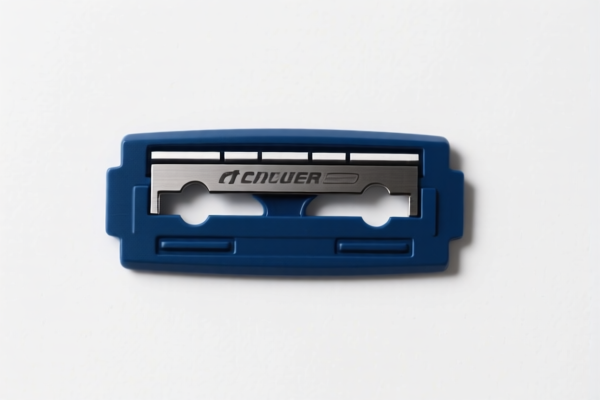
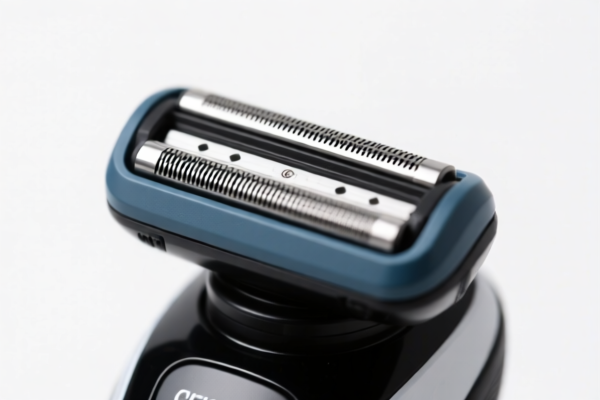
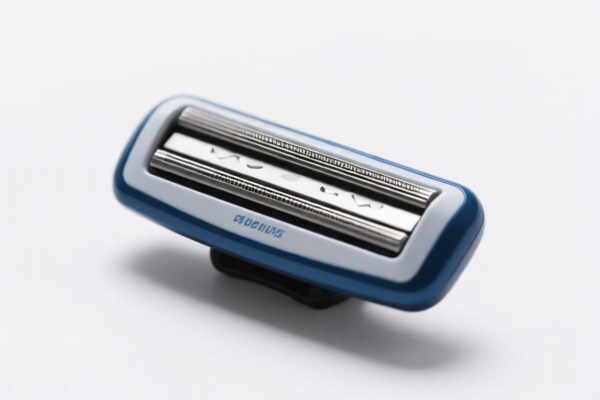
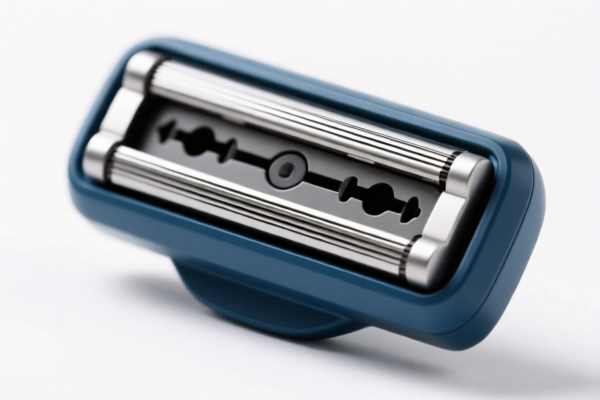
AI Analysis
🪒 Razor Replacement Blades (Safety & Single Edge)
🌐 HS Code Reference & Customs Clearance Guide | 2026 Latest Tariff Analysis | Professional Entry Strategies
📌 I. Product Definition & Classification: Do You Really Know "Razor Blades"?
Razor replacement blades are sharp cutting instruments used for shaving or grooming. In international trade, they are strictly categorized based on their intended use and structural design. Confusion often arises between general "edged tools" and specific "shaving blades," leading to significant tariff differences.
Key Distinction Logic: * Safety Razor Blades / Blanks for Shaving: Specifically designed for safety razors or as raw material blanks for manufacturing shaving blades. These fall under Chapter 82 (Base Metal Tools) but specifically in heading 8212. * Other Edged Tools (e.g., Craft, Industrial): If a blade is not for shaving (e.g., for cutting glass, paper, or general industrial use) and is not a safety razor blade, it may fall under different subheadings like 8205 (Other Hand Tools).
⚠️ Critical Classification Point:
- If the blade is explicitly for shaving (single-edge for shaving, or blanks for safety razor blades) → HS 8212.20.xxxx
- If the blade is single-edge but NOT for shaving (e.g., industrial cutting, craft) → HS 8205.59.55.xxxx
📦 II. HS Code Classification Details (2026 Latest Tariff Authority Comparison)
| HS Code | Product Description | Applicable Scenario | Is it for Shaving? |
|---|---|---|---|
8212.20.00.10 |
Safety razor blades, including razor blade blanks in strips: Other | General safety razor blades (multi-blade cartridges components, non-single edge) | ✅ Yes |
8212.20.00.05 |
Safety razor blades, including razor blade blanks in strips: Single edge razor blades for shaving | Traditional safety razor blades (Gillette Twin-blade, etc.) | ✅ Yes |
8205.59.55.05 |
Other handtools: Other Edged handtools: Single edge razor blades other than for shaving | Industrial craft blades, decorative cutting blades, non-shaving single-edge blades | ❌ No |
8205.59.55.10 |
Other handtools: Other Edged handtools: Other | General edged handtools not specified elsewhere (e.g., chisels, other blades) | ❌ No |
🔍 Key Reminder:
- Shaving Intent is King: If the product description, marketing, or usage clearly indicates "shaving," it must go to 8212. Misclassifying shaving blades as "other handtools" (8205) to avoid tariffs is a high-risk customs violation.
- Blanks Matter: Raw material strips intended solely to be cut into shaving blades are also classified under 8212, not general steel products.
💰 III. 2026 Latest Tariff Rate Details (Including Additional Duties & Policy Add-ons)
✅ Applicable Country: United States (US)
✅ Country of Origin: China (CN)
✅ Effective Time: As per latest USITC/USMCA/Section 301 updates (Note: Current data reflects the provided dataset)
🎯 1. 8212.20.00.10 & 8212.20.00.05 —— Safety Razor Blades (For Shaving)
| Item | Content |
|---|---|
| Base Tariff (MFN) | 0.0% |
| Section 301 Additional Duty | +7.5% |
| Total Tariff Rate | 7.5% |
| Tax Calculation | CIF Value × 7.5% |
| De Minimis Eligibility | ❌ No (Standard small packages are subject to inspection if value > $800, but tariffs apply to commercial shipments) |
| Legal Basis Path | HTSUS: 8212.20 → USITC Footnote: Section 301 |
📌 Explanation:
- Base Tariff: Historically, safety razor blades have a 0% MFN rate under normal trade conditions.
- Additional Duty: The 7.5% is the current Section 301 additional tariff applied to specific Chinese-origin goods in this category.
- Total Cost: You pay 7.5% on the total CIF (Cost, Insurance, Freight) value. This is relatively low compared to electronics, but significant for high-volume, low-margin razor blade imports.
🎯 2. 8205.59.55.05 & 8205.59.55.10 —— Other Handtools (Non-Shaving Edged Blades)
| Item | Content |
|---|---|
| Base Tariff (MFN) | 0.0% |
| Section 301 Additional Duty | 0.0% |
| Total Tariff Rate | 0.0% |
| Tax Calculation | $0 |
| De Minimis Eligibility | ✅ Yes (Generally eligible for de minimis entry under $800, subject to CBP discretion) |
| Legal Basis Path | HTSUS: 8205.59 → No 301 Footnote Applies |
📌 Note:
- If your blades are NOT for shaving (e.g., for craft, industrial cutting, or packaging), they fall into 8205.59.55.
- Current Rate: 0% Total. This is a significant cost advantage.
- ⚠️ Warning: Do NOT misdeclare shaving blades as "non-shaving handtools" to save 7.5%. Customs (CBP) routinely audits razor imports based on product photos, keywords (e.g., "shaving," "beard"), and usage context. Penalties for misclassification include back-duties, fines, and loss of importer credibility.
🛠️ IV. Customs Clearance Practical Advice (Field Pitfall Avoidance Guide)
✅ 1. Documentation Checklist (None of These Can Be Missing)
| Document | Must Provide | Explanation |
|---|---|---|
| ✅ Product Specifications | ✔️ | Clearly state: "For Shaving" OR "For Industrial/Craft Use Only." Include blade dimensions and material. |
| ✅ Product Photos | ✔️ | High-res images showing packaging. If packaging says "Razor Blades," it must be classified under 8212. |
| ✅ Commercial Invoice | ✔️ | Description must be precise. - Example A: "Safety Razor Blades, Single Edge, for Shaving" → 8212 - Example B: "Single Edge Craft Blades, Not for Shaving" → 8205 |
| ✅ Packing List | ✔️ | Match invoice. Note quantity and weight. |
| ✅ Country of Origin Certificate | ✔️ | Confirm "Made in China" to ensure correct Section 301 applicability. |
✅ 2. Declaration Techniques (Key Mantra)
🔥 “Intent Defines Code, Shaving Means 7.5%, Non-Shaving Means 0%!”
| Scenario | Correct Declaration | Incorrect Action | Consequence |
|---|---|---|---|
| Blades for Shaving | HS 8212.20.00.xxxx | Declare as "Steel Blades" or "Craft Tools" | 7.5% Back-duties + Potential Fines |
| Blanks for Shaving | HS 8212.20.00.xxxx | Declare as "Flat Steel Strips" | Misclassification Penalty |
| Craft/Craft Blades | HS 8205.59.55.xxxx | Declare as "Shaving Blades" | Unnecessary 7.5% Cost |
| Mixed Shipments | Separate HS Codes | Mix under one code | Customs Seizure/Exam Delay |
✅ 3. Special Handling
| Situation | Handling Advice |
|---|---|
| OEM Blades (Private Label) | Ensure the OEM contract states the intended use. If the brand implies shaving (e.g., "ManCare"), it will be classified as shaving blades. |
| Blades with Packaging | If packaging includes shaving instructions, diagrams of faces, or words like "Smooth Shave," CBP will classify them under 8212 regardless of your claim. |
| Bulk Blanks vs. Finished Blades | Both "finished blades" and "blanks in strips" for shaving go to 8212. Do not try to classify blanks as general steel. |
| Non-Shaving Single Edge | Must provide a Letter of Explanation or detailed spec sheet proving they are for industrial/craft use, not shaving. |
🌍 V. Global Market Customs Comparison (2026 Latest)
| Country/Region | Recommended HS Code | Tariff (China Origin) | Certification Requirement | Notes |
|---|---|---|---|---|
| 🇺🇸 USA | 8212.20.00.xxxx |
7.5% (Total) | None (Standard) | 7.5% is Section 301. Avoid misclassification. |
| 🇪🇺 EU | 8212.21.00 |
~0-2% | CE (if applicable tools) | Generally low tariff. |
| 🇨🇳 China | 8212.20 |
0% | N/A | Domestic trade, no export tariff. |
| 🇬🇧 UK | 8212.20 |
~0% | Post-Brexit rules apply | Similar to EU. |
| 🇨🇦 Canada | 8212.20 |
0% (USMCA if applicable) | Health Canada (if claiming medical) | Low tariff. |
📌 Conclusion:
- The US 7.5% tariff is the primary cost driver.
- EU/UK/Canada have lower or zero tariffs for safety razor blades.
- Strategic Tip: If exporting to the US, ensure your supply chain and documentation are impeccable to justify the 7.5% rather than risking penalties for evasion.
📌 VI. Common Mistakes & Pitfalls (Blood & Tears Lessons)
❌ Mistake 1: Declaring "Shaving Blades" as "Steel Tools" (8205) to avoid 7.5%
👉 Consequence: CBP audits find "Shaving" in product images or keywords. Back-duties + 10-20% penalty.
❌ Mistake 2: Not distinguishing between "Single Edge for Shaving" and "Single Edge for Crafting"
👉 Consequence: Both are 8212 vs 8205, but the 7.5% difference is real. Correct classification saves money if the product is truly non-shaving.
❌ Mistake 3: Ignoring "Blanks in Strips"
👉 Consequence: If you import steel strips to cut into razor blades, they are still 8212, not general steel. Misclassification leads to errors.
✅ Correct Practice:
For Shaving:
8212.20.00.10(Other Safety) or8212.20.00.05(Single Edge).
Description: "Replacement Safety Razor Blades, Single Edge, For Shaving, Made in China, HS 8212.20.00.05."
🎯 VII. Conclusion: Professional Declaration, Save Time & Money!
🎯 Remember the Mantra:
🔹 "Shaving = 8212 (7.5% Tariff). Non-Shaving = 8205 (0% Tariff). Do Not Mix!"
🔹 "7.5% is cheap compared to 100% Penalty. Declare Truthfully."
📌 Tips:
- If your product is NOT for shaving, provide clear evidence (specs, photos, usage instructions) to support 8205 classification.
- For US Imports, budget for the 7.5% additional duty. It is non-negotiable for true shaving blades.
📣 Immediate Action:
📞 Verify Your Product Intent: Ask your supplier, "Are these blades marketed or designed for shaving?"
📄 Prepare Accurate Docs: Ensure Invoice & Photos match the HS Code.
🚀 Clear Customs Smoothly: Avoid delays, fines, and seized cargo.
✨ Professional Customs Clearance Starts with Accurate Classification!
💼 Your Margin Depends on the Right HS Code!
Customer Reviews
About HS Code Classification
The Harmonized System (HS) is an internationally standardized nomenclature developed by the World Customs Organization (WCO) to classify traded products. Over 200 countries use the HS system as the basis for customs tariffs, trade statistics, and import/export regulations.
Each HS code follows a hierarchical structure:
- Chapter (2 digits) — Broad category of goods (e.g., Chapter 84: Machinery and Mechanical Appliances)
- Heading (4 digits) — More specific grouping within the chapter
- Subheading (6 digits) — Internationally standardized breakdown, used by all WCO member countries
- National subdivisions (8-10 digits) — Country-specific extensions for further classification, such as US HTSUS 10-digit codes
Correct HS code classification is essential for smooth customs clearance, accurate duty payment, and compliance with trade regulations. Misclassification can lead to customs delays, overpayment of duties, or penalties.
When importing from CN to US, the applicable tariff rates may include:
- Most-Favored-Nation (MFN) rate — The standard duty rate applied to WTO members
- General rate — Applied to countries without trade agreements
- Trade remedy duties — Additional tariffs such as Section 301 (anti-dumping), Section 232 (national security), or countervailing duties
The information provided on this page is for reference purposes only. For official classification, please consult with your local customs authority or a licensed customs broker.