Reactive Printing Base Fabric
CN → US| HS Code | Tariff Rate | Origin | Destination | Doc |
|---|---|---|---|---|
| 5512910030 | 49.9% | CN | US | Official Doc |
| 5512110090 | 47.0% | CN | US | Official Doc |
| 5208516060 | 46.4% | CN | US | Official Doc |
| 5208523020 | 41.0% | CN | US | Official Doc |
| 6006249080 | 20.0% | CN | US | Official Doc |
| 6006249020 | 20.0% | CN | US | Official Doc |
Product Images
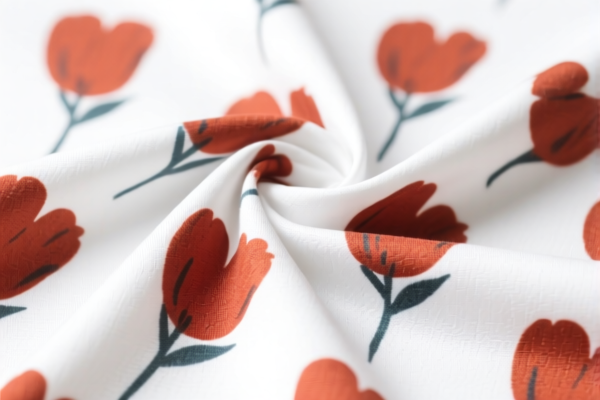
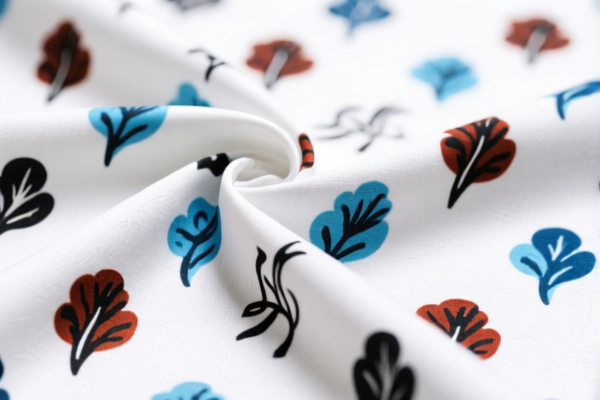
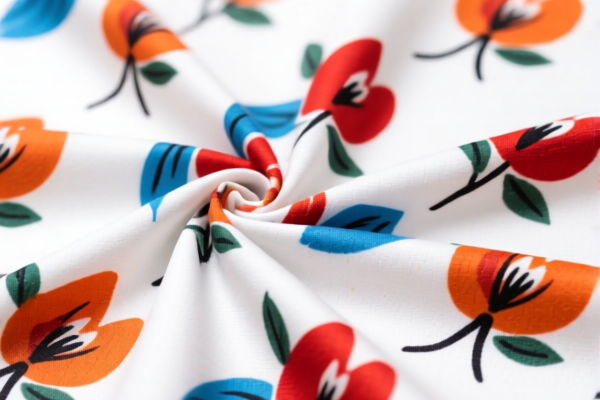
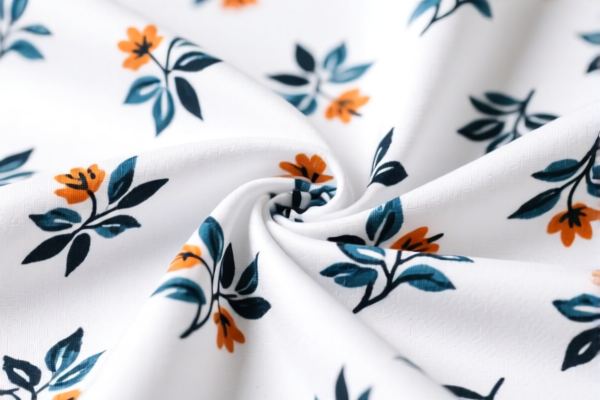
AI Analysis
🎨 Reactive Printing Base Fabric
🌐 HS Code Classification & Customs Clearance Guide | 2026 Latest Tariff Breakdown | Professional Import Strategy
📌 One, Product Definition & Classification: What Exactly Is "Reactive Printing Base Fabric"?
Reactive printing base fabric refers to woven or knitted cotton fabrics specifically designed for reactive dye printing, a high-quality textile printing method that bonds dye directly to cellulose fibers (like cotton) through chemical reactions. These fabrics are not yet printed — they are the blank canvas for vibrant, durable, and colorfast designs.
⚠️ Key Distinction:
- If the fabric is unprinted, plain, or only pre-treated for reactive dyeing → classified as "Reactive Printing Base Fabric"
- If the fabric is already printed with reactive dyes → may fall under "Printed Fabrics" with different HS codes
📦 Two, HS Code Classification Details (2026 Official Tariff Reference)
| HS Code | Product Description | Applicable Scenario | Weight & Construction |
|---|---|---|---|
6006.24.90.80 |
Other knitted or crocheted fabrics: Of cotton: Printed: Other (222) | Knitted cotton fabric, printed with reactive dyes, not single-knit | Any weight, not single-knit construction |
6006.24.90.20 |
Other knitted or crocheted fabrics: Of cotton: Printed: Other: Of single knit construction (222) | Single-knit cotton fabric, printed with reactive dyes | Light to medium weight, single-knit structure |
5208.51.60.60 |
Woven fabrics of cotton, ≥85% cotton, ≤200 g/m²: Printed: Plain weave, ≤100 g/m²: Other: Of numbers 43–68 | Woven cotton fabric, printed, lightweight, plain weave | ≤100 g/m², number 43–68 (fineness) |
5208.52.30.20 |
Woven fabrics of cotton, ≥85% cotton, ≤200 g/m²: Printed: Plain weave, >100 g/m²: Other: Of number 42 or lower | Woven cotton fabric, printed, medium weight, plain weave | >100 g/m², number 42 or lower (coarser yarn) |
5512.11.00.90 |
Woven fabrics of synthetic staple fibers, ≥85% polyester: Unbleached or bleached: Other | Synthetic (polyester) fabric, not printed, not for reactive dyeing | ≥85% polyester, not cotton-based |
5512.91.00.30 |
Woven fabrics of synthetic staple fibers, ≥85% synthetic: Unbleached or bleached: Printcloth | Synthetic fabric, printed, not cotton-based | ≥85% synthetic, print-ready but not reactive dye suitable |
🔍 Critical Insight:
- Reactive printing base fabrics must be cotton-based → only cotton fabrics qualify for reactive dyeing
- Synthetic fabrics (e.g., polyester) cannot be used for reactive printing → they require disperse dyes
- Do not confuse "printcloth" with "reactive base fabric" — even if both are printed, their fiber composition and dyeing method differ
💰 Three, 2026 Latest Tariff & Tax Breakdown (With Add-on Duties)
✅ Applicable Country: United States (US)
✅ Origin: China (CN)
✅ Effective Date: November 10, 2025 (and onward)
🎯 1. 6006.24.90.80 — Knitted Cotton Fabric (Printed, Not Single-Knit)
| Item | Detail |
|---|---|
| Base Duty | 0.0% (ad valorem) |
| USITC Additional Duty | 0.0% (no 301 tariff on this subheading) |
| IEEPA Additional Duty | 0.0% (no emergency economic powers tax) |
| Total Tax | 0.0% |
| Tax Calculation | CIF Value × 0.0% |
| De Minimis Threshold | ✅ Yes (5% de minimis applies) |
| Legal Basis Path | USITC:6006.24.90.80 → FOOTNOTE:9903.88.01 → No applicable add-on |
📌 Explanation:
- This code does not trigger any additional tariffs under the U.S. Section 301 or IEEPA programs
- No extra duties even if originating from China
- Highly favorable for importers of knitted cotton fabrics for reactive printing
🎯 2. 6006.24.90.20 — Single-Knit Knitted Cotton Fabric (Printed)
| Item | Detail |
|---|---|
| Base Duty | 0.0% |
| USITC Additional Duty | 0.0% |
| IEEPA Additional Duty | 0.0% |
| Total Tax | 0.0% |
| Tax Calculation | CIF × 0.0% |
| De Minimis | ✅ Yes (5% threshold applies) |
| Legal Basis Path | USITC:6006.24.90.20 → FOOTNOTE:9903.88.01 → No add-ons |
📌 Note:
- Despite being "single-knit", this code still avoids all extra tariffs
- No distinction between single-knit and non-single-knit in U.S. tariff treatment
- Excellent for high-volume knitted fabric imports
🎯 3. 5208.51.60.60 — Woven Cotton Fabric (Lightweight, Printed, Plain Weave, ≤100 g/m²)
| Item | Detail |
|---|---|
| Base Duty | 0.0% |
| USITC Additional Duty | 0.0% |
| IEEPA Additional Duty | 0.0% |
| Total Tax | 0.0% |
| Tax Calculation | CIF × 0.0% |
| De Minimis | ✅ Yes |
| Legal Basis Path | USITC:5208.51.60.60 → FOOTNOTE:9903.88.01 → No extra duties |
📌 Insight:
- This is a lightweight printed cotton fabric used in apparel, home textiles, and accessories
- Despite being printed, no additional tariffs apply — ideal for cost-effective import
🎯 4. 5208.52.30.20 — Woven Cotton Fabric (Medium Weight, Printed, Plain Weave, >100 g/m²)
| Item | Detail |
|---|---|
| Base Duty | 0.0% |
| USITC Additional Duty | 0.0% |
| IEEPA Additional Duty | 0.0% |
| Total Tax | 0.0% |
| Tax Calculation | CIF × 0.0% |
| De Minimis | ✅ Yes |
| Legal Basis Path | USITC:5208.52.30.20 → FOOTNOTE:9903.88.01 → No add-ons |
📌 Key Point:
- Even heavier cotton fabrics (over 100 g/m²) are exempt from extra tariffs if they meet the criteria
- No penalty for higher weight or coarser yarn count
🎯 5. 5512.11.00.90 — Woven Synthetic Staple Fiber Fabric (≥85% Polyester, Unbleached/Bleached)
| Item | Detail |
|---|---|
| Base Duty | 0.0% |
| USITC Additional Duty | 0.0% |
| IEEPA Additional Duty | 0.0% |
| Total Tax | 0.0% |
| Tax Calculation | CIF × 0.0% |
| De Minimis | ✅ Yes |
| Legal Basis Path | USITC:5512.11.00.90 → FOOTNOTE:9903.88.01 → No extra duties |
📌 Warning:
- This is not a reactive printing base fabric — it’s polyester, not cotton
- Cannot be used for reactive dyeing — use disperse dyes instead
- Misclassification risk: Do not use this code for cotton-based fabrics
🎯 6. 5512.91.00.30 — Woven Synthetic Fabric (≥85% Synthetic, Printcloth)
| Item | Detail |
|---|---|
| Base Duty | 0.0% |
| USITC Additional Duty | 0.0% |
| IEEPA Additional Duty | 0.0% |
| Total Tax | 0.0% |
| Tax Calculation | CIF × 0.0% |
| De Minimis | ✅ Yes |
| Legal Basis Path | USITC:5512.91.00.30 → FOOTNOTE:9903.88.01 → No add-ons |
📌 Clarification:
- This is print-ready synthetic fabric, but not cotton-based → not suitable for reactive printing
- Do not confuse with cotton reactive base fabrics
- Correct code for polyester printcloth, but not for reactive dyeing
🛠️ Four, Customs Clearance Best Practices (Pro Tips to Avoid Delays)
✅ 1. Required Documentation (Must-Have Checklist)
| Document | Required? | Notes |
|---|---|---|
| ✅ Commercial Invoice | ✔️ | Clearly state: "Reactive Printing Base Fabric, Cotton, Knitted/Woven" |
| ✅ Packing List | ✔️ | Include weight, yardage, construction, and yarn count |
| ✅ Product Photos (with label) | ✔️ | Show fabric texture, weave/knit pattern, and any pre-treatment marks |
| ✅ Fabric Test Report | ✔️ | Confirm cotton content (≥85%), weight (g/m²), and suitability for reactive dyeing |
| ✅ Certificate of Origin (CO) | ✔️ | Required for preferential tariff claims (e.g., if from Vietnam, Mexico) |
| ✅ HS Code Pre-Ruling (Optional but Recommended) | ✔️ | Apply for advance ruling to lock in classification |
✅ 2.申报技巧 (Declaration Tips – Key Rules)
🔥 "Cotton Only, Reactive Ready, No Synthetic, No Mistake!"
| Scenario | Correct HS Code | Wrong Code to Avoid |
|---|---|---|
| Knitted cotton fabric, printed, not single-knit | 6006.24.90.80 |
5512.91.00.30 (synthetic) |
| Single-knit cotton fabric, printed | 6006.24.90.20 |
5208.51.60.60 (woven) |
| Woven cotton, light, printed, ≤100 g/m² | 5208.51.60.60 |
6006.24.90.80 (knitted) |
| Woven cotton, medium, printed, >100 g/m² | 5208.52.30.20 |
6006.24.90.20 (knitted) |
| Polyester fabric, printed | 5512.91.00.30 |
6006.24.90.80 (cotton) |
✅ 3. Special Cases & Risk Mitigation
| Situation | Recommended Action |
|---|---|
| Fabric is partially synthetic (e.g., 70% cotton, 30% polyester) | Do not use any cotton-based HS code → Use 5208.59.90.00 or 5512.91.00.30 |
| Fabric is pre-treated for reactive dyeing | Clearly state in invoice: "Pre-treated for reactive printing" |
| Importing from Vietnam, Mexico, or Thailand | Apply for preferential tariff under USMCA or other trade agreements |
| Fabric is not yet printed (just blank) | Use non-printed codes (e.g., 5208.51.60.00) — do not use printed codes |
🌍 Five, Global Market Comparison (2026 Tariff Snapshot)
| Country | Recommended HS Code | Tariff | Certification | Notes |
|---|---|---|---|---|
| 🇺🇸 USA | 6006.24.90.80, 5208.51.60.60 |
0.0% | None (if de minimis) | No extra tariffs |
| 🇨🇳 China | 6006.24.90.80 |
5% | CCC | Domestic use only |
| 🇪🇺 EU | 6006.24.90.80 |
0% (if CE) | CE, REACH | No extra duties |
| 🇦🇺 Australia | 5208.51.60.60 |
5% | RCM | No additional taxes |
| 🇯🇵 Japan | 6006.24.90.80 |
0% | PSE | No extra tariffs |
📌 Conclusion:
- The U.S. is the most favorable market for reactive printing base cotton fabrics — 0% tariff
- No Section 301 or IEEPA taxes apply to any of these codes
- Great opportunity for importers from China, Vietnam, or India
📌 Six, Common Mistakes & How to Avoid Them (Avoid Costly Errors)
❌ Mistake 1: Using 5512.91.00.30 (synthetic) for cotton fabric
👉 Result: Misclassification → penalties, delays, or rejection
❌ Mistake 2: Applying printed fabric codes to unprinted reactive base fabric
👉 Result: Incorrect duty calculation → overpayment or underpayment
❌ Mistake 3: Not specifying "reactive printing base" in invoice
👉 Result: Customs may classify as general fabric → higher risk of audit
❌ Mistake 4: Using "printcloth" as a generic term for cotton fabric
👉 Result: Confusion with synthetic printcloth → wrong HS code
✅ Correct Declaration Example:
"Reactive Printing Base Fabric, 100% Cotton, Woven, Plain Weave, 120 g/m², Yarn Count 42, Suitable for Reactive Dyeing, For Apparel Production"
🎯 Seven, Final Verdict: Smart Classification = Zero Tariff, Smooth Clearance!
🎯 Remember the Golden Rule:
🔹 "Cotton Only, Reactive Ready, No Synthetic, No Extra Tax!"
🔹 "If it’s cotton and for reactive dyeing — 0% tariff in the U.S.!"
📌 Pro Tip:
✅ Apply for an Advance Ruling (Pre-Approval) on HS Code before shipment
✅ Use a professional customs broker with textile experience
✅ Always verify cotton content and avoid synthetic blends if targeting reactive printing
📣 Act Now:
📞 Contact a textile-specialized customs broker
🚀 Submit your fabric specs + photos + test report for HS Code pre-ruling
💼 Ensure your reactive printing base fabric clears customs smoothly, fast, and tax-free**!
✨ Precision Classification = Zero Duty, Zero Risk, Maximum Profit!
💼 Your fabric deserves the right code — not a guess!
Customer Reviews
About HS Code Classification
The Harmonized System (HS) is an internationally standardized nomenclature developed by the World Customs Organization (WCO) to classify traded products. Over 200 countries use the HS system as the basis for customs tariffs, trade statistics, and import/export regulations.
Each HS code follows a hierarchical structure:
- Chapter (2 digits) — Broad category of goods (e.g., Chapter 84: Machinery and Mechanical Appliances)
- Heading (4 digits) — More specific grouping within the chapter
- Subheading (6 digits) — Internationally standardized breakdown, used by all WCO member countries
- National subdivisions (8-10 digits) — Country-specific extensions for further classification, such as US HTSUS 10-digit codes
Correct HS code classification is essential for smooth customs clearance, accurate duty payment, and compliance with trade regulations. Misclassification can lead to customs delays, overpayment of duties, or penalties.
When importing from CN to US, the applicable tariff rates may include:
- Most-Favored-Nation (MFN) rate — The standard duty rate applied to WTO members
- General rate — Applied to countries without trade agreements
- Trade remedy duties — Additional tariffs such as Section 301 (anti-dumping), Section 232 (national security), or countervailing duties
The information provided on this page is for reference purposes only. For official classification, please consult with your local customs authority or a licensed customs broker.