Rear Seat Cover Protection Mat
CN → US| HS Code | Tariff Rate | Origin | Destination | Doc |
|---|---|---|---|---|
| 6304920000 | 23.8% | CN | US | Official Doc |
| 4016996050 | 37.5% | CN | US | Official Doc |
| 3926909989 | 22.8% | CN | US | Official Doc |
| 3926909950 | 22.8% | CN | US | Official Doc |
| 4016990500 | 20.9% | CN | US | Official Doc |
Product Images
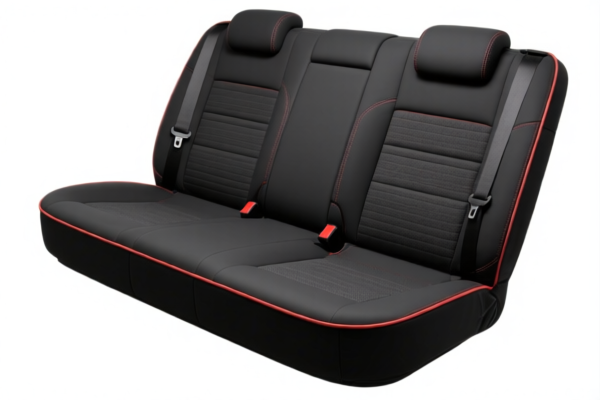
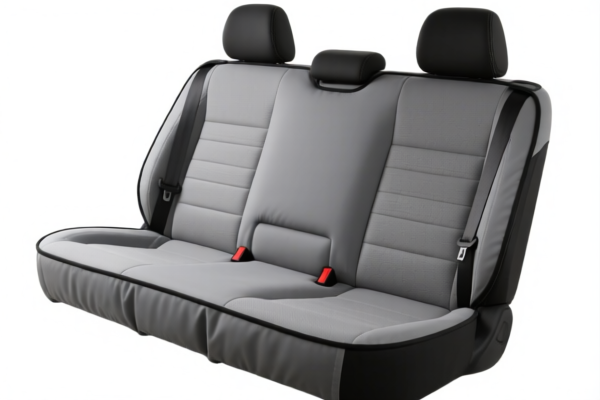
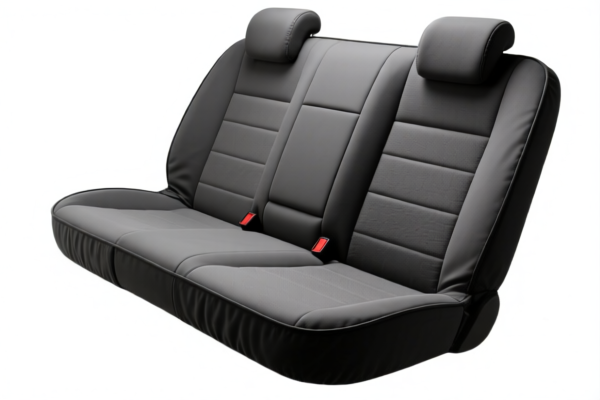
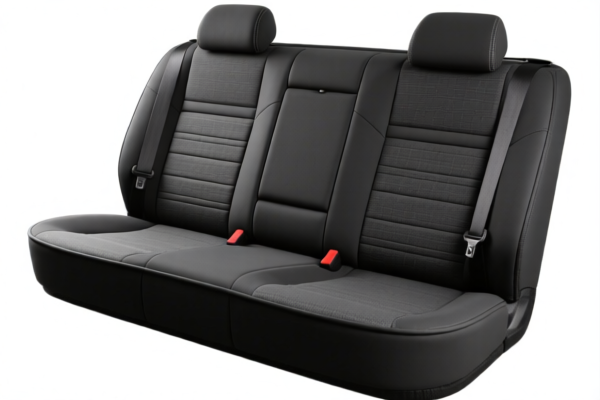
AI Analysis
🚗 Rear Seat Cover Protection Mat
🌐 HS Code Reference & Customs Clearance Guide | 2026 Latest Tariff Analysis | Professional Entry Strategies
📌 I. Product Definition & Classification: Do You Really Understand "Rear Seat Covers"?
A rear seat cover protection mat is an automotive interior accessory designed to protect the original upholstery from dirt, scratches, pet hair, and wear. In international trade, its classification hinges primarily on its material composition and specific function, often falling into "basket" (catch-all) categories due to the variety of materials used (textile, rubber, plastic).
⚠️ Key Classification Differentiator:
- If made of textile/fabric → Classified under Chapter 63 (Textile Articles)
- If made of rubber → Classified under Chapter 40 (Rubber Articles)
- If made of plastic/synthetic → Classified under Chapter 39 (Plastic Articles)
📦 II. HS Code Classification Details (2026 Latest Tariff Authoritative Comparison)
| HS Code | Product Description | Material Inference | Application Scenario |
|---|---|---|---|
6304.92.00.00 |
Other furnishing articles, of textile materials | Cotton or Textile-based | Fabric covers, carpet-like mats, textile-backed protectors |
4016.99.60.50 |
Other articles of vulcanized rubber, n.e.s. | Rubber-based | Heavy-duty rubber mats, anti-slip rubber liners |
3926.90.99.89 |
Other articles of plastics, n.e.s. | Plastic/Synthetic | PVC mats, synthetic polymer covers, hard plastic liners |
3926.90.99.50 |
Other articles of plastics, n.e.s. | Plastic/Synthetic | Medical/Transport-focused plastic positioning mats |
4016.99.05.00 |
Other vulcanized rubber articles, n.e.s. | Rubber/Plastic Hybrid | Household/General protective rubber items |
🔍 Critical Reminder:
- Most common "car mats" are textiles or rubber. Misclassification can lead to massive tax differences. - "N.e.s." (Not Elsewhere Specified) means these are "catch-all" codes. You must prove the material to justify the choice.
💰 III. 2026 Latest Tariff Rate Breakdown (Including Additional Taxes & Policy Add-ons)
✅ Applicable Country: United States (US)
✅ Origin: China (CN)
✅ Effective Time: November 10, 2025 onwards (including subsequent imports)
🎯 1. 6304.92.00.00 —— Textile Furnishing Articles (Cotton/Textile Mats)
| Item | Content |
|---|---|
| Base Duty Rate | 6.3% (Ad Valorem) |
| Section 301 Additional Duty | +7.5% |
| Section 122 Duty | +10% |
| Total Tax Rate | 23.8% |
| Tax Calculation | CIF Value × 23.8% |
| De Minimis Eligibility | ❌ No (subject to high duties) |
| Legal Basis Path | Base Tariff → Section 301 (7.5%) → Section 122 (10%) |
📌 Explanation:
- "Base Duty 6.3%": Standard MFN rate for textile furnishing articles.
- "Section 301 7.5%": Added tariff on Chinese goods under trade remedy measures.
- "Section 122 10%": Specific additional duty applicable to certain textile/footwear/rubber products from China.
- Total 23.8%: Significantly higher than base rates. Must be factored into Landed Cost.
🎯 2. 4016.99.60.50 —— Rubber Articles (Heavy-Duty Rubber Mats)
| Item | Content |
|---|---|
| Base Duty Rate | 2.5% (Ad Valorem) |
| Section 301 Additional Duty | +25.0% |
| Section 122 Duty | +10% |
| Total Tax Rate | 37.5% |
| Tax Calculation | CIF Value × 37.5% |
| De Minimis Eligibility | ❌ No |
| Legal Basis Path | Base Tariff → Section 301 (25%) → Section 122 (10%) |
📌 Note:
- This is the highest tax bracket in the provided dataset.
- Rubber products face steep Section 301 duties (25%).
- Only choose this HS code if the product is >50% rubber by weight and not specifically designed for other chapters.
🎯 3. 3926.90.99.89 —— Plastic Articles (PVC/Synthetic Mats)
| Item | Content |
|---|---|
| Base Duty Rate | 5.3% (Ad Valorem) |
| Section 301 Additional Duty | +7.5% |
| Section 122 Duty | +10% |
| Total Tax Rate | 22.8% |
| Tax Calculation | CIF Value × 22.8% |
| De Minimis Eligibility | ❌ No |
| Legal Basis Path | Base Tariff → Section 301 (7.5%) → Section 122 (10%) |
📌 Explanation:
- Base 5.3%: Standard for plastic articles.
- Total 22.8%: Slightly lower than textile (23.8%) and much lower than rubber (37.5%).
- Ideal for PVC or vinyl seat covers.
🎯 4. 3926.90.99.50 —— Plastic Articles (Specialized/Transport Mats)
| Item | Content |
|---|---|
| Base Duty Rate | 5.3% (Ad Valorem) |
| Section 301 Additional Duty | +7.5% |
| Section 122 Duty | +10% |
| Total Tax Rate | 22.8% |
| Tax Calculation | CIF Value × 22.8% |
| De Minimis Eligibility | ❌ No |
| Legal Basis Path | Base Tariff → Section 301 (7.5%) → Section 122 (10%) |
📌 Note:
- Same tax rate as3926.90.99.89(22.8%).
- Used if the mat has medical positioning or specialized transport functions.
- If it's a standard car seat cover,3926.90.99.89is more appropriate unless specific usage applies.
🎯 5. 4016.99.05.00 —— Rubber/Plastic Household/General Protective Items
| Item | Content |
|---|---|
| Base Duty Rate | 3.4% (Ad Valorem) |
| Section 301 Additional Duty | +7.5% |
| Section 122 Duty | +10% |
| Total Tax Rate | 20.9% |
| Tax Calculation | CIF Value × 20.9% |
| De Minimis Eligibility | ❌ No |
| Legal Basis Path | Base Tariff → Section 301 (7.5%) → Section 122 (10%) |
📌 Best Option?:
- Lowest Total Tax: 20.9%.
- This code is for "other vulcanized rubber articles" for household/general use.
- Caution: Only use if the product can be convincingly argued as a "general protective item" rather than a specific automotive part, and if it contains rubber components. Misuse can lead to customs disputes.
🛠️ IV. Customs Clearance Practical Advice (Battle-Tested Pitfall Avoidance Guide)
✅ 1. Document Preparation Checklist (Non-Negotiable)
| Document | Required? | Description |
|---|---|---|
| ✅ Product Specification Sheet | ✔️ | Must specify material % (e.g., "100% Polyester", "70% Rubber/30% Plastic") |
| ✅ Material Composition Declaration | ✔️ | Critical for determining Chapter 63, 40, or 39 |
| ✅ Product Photos (Labeled) | ✔️ | Clear view of stitching, backing, and material texture |
| ✅ Commercial Invoice | ✔️ | State: "Rear Seat Cover Protection Mat – [Material]" |
| ✅ Packing List | ✔️ | Include weights to verify density/material type if questioned |
| ✅ FCC/RoHS Certificates | ❌ (Usually not required) | Unless electronic/heated elements are present |
✅ 2. Declaration Tips (Key Mantra)
🔥 "Material is King, Chapter Defines Fate, Name Must Match, Tax Varies Greatly!"
| Scenario | Correct HS Code | Wrong Practice | Consequence |
|---|---|---|---|
| Fabric/Cotton Mat | 6304.92.00.00 (23.8%) |
Declare as Plastic → Audit Risk | Seizure/Fine |
| Heavy Rubber Mat | 4016.99.60.50 (37.5%) |
Declare as Textile → Underpayment | Back Taxes + Penalties |
| PVC/Vinyl Mat | 3926.90.99.89 (22.8%) |
Declare as Rubber → Overpayment | Lost Profit Margin |
| General Protector | 4016.99.05.00 (20.9%) |
Use without justification → Rejection | Delayed Shipment |
✅ 3. Special Case Handling
| Situation | Handling Advice |
|---|---|
| Heated Seat Covers | May fall under Chapter 85 (Electrical). Requires different classification. |
| Mixed Materials | Classify based on essential character (GRI 3(b)). E.g., Rubber backing + Fabric top → Likely Rubber Chapter. |
| Set Items (Mat + Bolsters) | Declare as a set. Determine primary component. |
| OEM Custom Designs | Provide design files to prove material intent. |
🌍 V. Global Market Clearance Comparison (2026 Latest)
| Country/Region | Recommended HS Code | Est. Tax Rate (China Origin) | Certification | Notes |
|---|---|---|---|---|
| 🇺🇸 USA | 6304.92.00.00 / 3926.90.99.89 |
20.9% – 37.5% | None specific | High Section 301/122 duties |
| 🇨🇳 China | 6304.92.00.00 / 3926.90.99.89 |
5% – 10% | CCC (if applicable) | Lower duties, easier clearance |
| 🇪🇺 EU | 6304.92.00.00 / 3926.90.99.89 |
4% – 6% | REACH, RoHS | No Section 301/122 equivalents |
| 🇬🇧 UK | 6304.92.00.00 / 3926.90.99.89 |
4% – 6% | UKCA | Post-Brexit rules apply |
| 🇦🇺 Australia | 6304.92.00.00 / 3926.90.99.89 |
5% | RCM | Moderate duties |
📌 Conclusion:
- USA has the highest landed cost due to Section 301 (7.5%-25%) and Section 122 (10%).
- EU/UK/AU are more favorable for these goods, with no punitive additional tariffs.
- Material choice matters: Plastic (22.8%) and Textile (23.8%) are more cost-effective than Rubber (37.5%) for US imports.
📌 VI. Common Errors & Pitfall Guide (Blood & Tears Lessons)
❌ Error 1: Declaring a Rubber Mat as Plastic to save tax
👉 Consequence: Customs lab test proves 80% rubber → Re-classification + 15% tax difference + Fine.
❌ Error 2: Using "Car Accessory" as a generic description
👉 Consequence: Customs lacks material info → Holding for additional documentation → Delays.
❌ Error 3: Ignoring Section 122 Duty
👉 Consequence: Budget assumes 6% tax, but actual is 16%+ → Profit Margin Erased.
❌ Error 4: Misclassifying Heated Mats as Standard Mats
👉 Consequence: Missing electrical safety compliance → Shipment Rejected.
✅ Correct Practice:
"Rear Seat Cover Protection Mat, 100% Polyester Fabric, Non-Heated, Model XYZ, For SUVs"
OR
"Heavy-Duty Rubber Floor Mat, 100% Vulcanized Rubber, Black, Model ABC"
🎯 VII. Conclusion: Professional Classification, Cost Optimization!
🎯 Remember the Mantra:
🔹 "Textile 23.8%, Plastic 22.8%, Rubber 37.5% – Choose Material Wisely!"
🔹 "Section 122 Adds 10%, Don't Let It Eat Your Profit!"
🔹 "Declare Material Clearly, Avoid Customs Audits!"
📌 Pro Tip:
If your seat covers are originating from Vietnam, Mexico, or Malaysia, you may qualify for lower or zero Section 301 duties under USMCA or FTAs.
Recommendation: Apply for Advance Ruling if importing large volumes to secure classification certainty.
📣 Take Action Now:
📞 Consult a Licensed Customs Broker + Provide Material Specs + Apply for Pre-Ruling
🚀 Ensure Smooth Clearance, Maximize Profit, and Scale Your Automotive Business!
✨ Professional Customs Clearance Starts with Accurate Classification!
💼 Every Cent in Tax Saved is Pure Profit Added!
Customer Reviews
About HS Code Classification
The Harmonized System (HS) is an internationally standardized nomenclature developed by the World Customs Organization (WCO) to classify traded products. Over 200 countries use the HS system as the basis for customs tariffs, trade statistics, and import/export regulations.
Each HS code follows a hierarchical structure:
- Chapter (2 digits) — Broad category of goods (e.g., Chapter 84: Machinery and Mechanical Appliances)
- Heading (4 digits) — More specific grouping within the chapter
- Subheading (6 digits) — Internationally standardized breakdown, used by all WCO member countries
- National subdivisions (8-10 digits) — Country-specific extensions for further classification, such as US HTSUS 10-digit codes
Correct HS code classification is essential for smooth customs clearance, accurate duty payment, and compliance with trade regulations. Misclassification can lead to customs delays, overpayment of duties, or penalties.
When importing from CN to US, the applicable tariff rates may include:
- Most-Favored-Nation (MFN) rate — The standard duty rate applied to WTO members
- General rate — Applied to countries without trade agreements
- Trade remedy duties — Additional tariffs such as Section 301 (anti-dumping), Section 232 (national security), or countervailing duties
The information provided on this page is for reference purposes only. For official classification, please consult with your local customs authority or a licensed customs broker.