Rear Window Sunshade
CN → US| HS Code | Tariff Rate | Origin | Destination | Doc |
|---|---|---|---|---|
| 6307909891 | 24.5% | CN | US | Official Doc |
| 6307908500 | 23.3% | CN | US | Official Doc |
| 8708220000 | 0.0% | CN | US | Official Doc |
| 8708295160 | 0.0% | CN | US | Official Doc |
Product Images
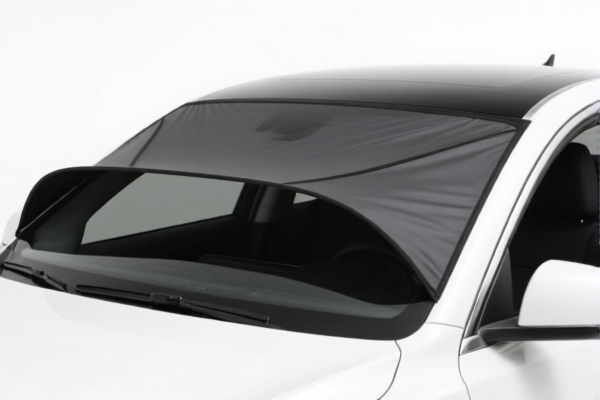
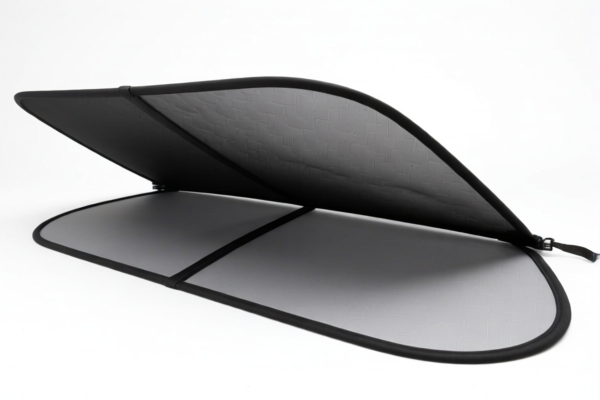
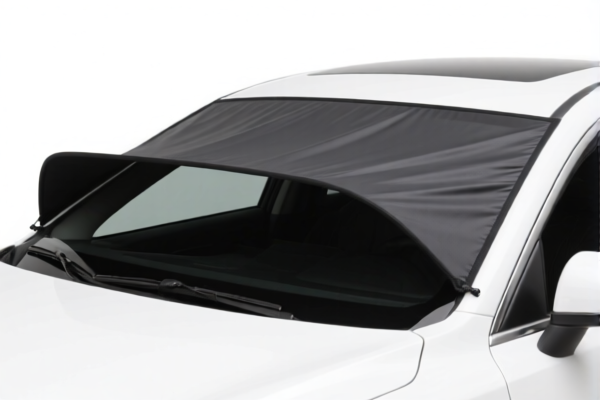
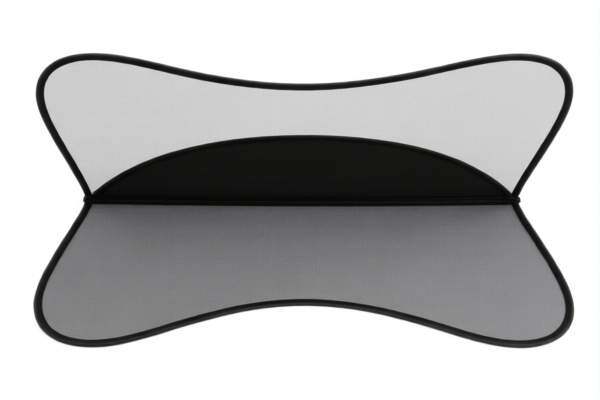
AI Analysis
🚗 Rear Window Sunshade (Automotive Accessory)
🌐 HS Code Reference & Customs Clearance Guide | 2026 Latest Tariff Analysis | Professional Clearance Strategy
📌 I. Product Definition & Classification: Do You Really Understand the "Rear Window Sunshade"?
The Rear Window Sunshade is an essential automotive accessory designed to block UV rays, reduce interior heat, and protect rear-seat passengers or cargo from direct sunlight. In international trade, its classification is highly sensitive to material composition and functional description. It is generally categorized under two main branches:
Textile/Composite Products (Chapter 63): If primarily defined as a "made-up textile article" or "plastic curtain/shade" used for general shading purposes. Motor Vehicle Parts (Chapter 87): If specifically identified as a "part and accessory" for a specific vehicle type (e.g., windows, glass parts, or body components).
⚠️ Key Distinction Point:
- If described as a "curtain," "shade," or "cover" made of fabric/netting without clear vehicle-specific integration → Often falls under 6307.90 (Textile/Other Made-up Articles).
- If described as a "window part," "glass accessory," or "body attachment" specifically for car windows → Often falls under 8708 (Motor Vehicle Parts).
📦 II. HS Code Classification Details (2026 Latest Tariff Reference)
| HS Code | Product Description | Application Scenario | Primary Material |
|---|---|---|---|
6307.90.98.91 |
Other made-up articles (Vehicle sunshade), form and use fall under "Other made-up articles" | Generic car sunshades, fabric/plastic shades not specifically classified elsewhere | Fabric or Plastic |
6307.90.85.00 |
Textile products (Polyester, mesh, etc.), fits "Other articles" logic regarding material and use | Mesh curtains, polyester blinds for vehicles | Artificial Fibers (Polyester/Mesh) |
8708.22.00.00 |
Parts and accessories of motor vehicles: Windows (Rear Windows) | Specific rear window attachments, often integrated with glass frames | Fabric, Mesh, or Composite |
8708.29.51.60 |
Other parts and accessories of bodies (including cabs): Other | Body attachments, non-stamped parts, roof covers, or generic body accessories | Fabric or Plastic |
🔍 Key Reminder:
- Customs Authority Discretion: Some customs officers may classify a "sunshade" as a part of the window system (8708), while others may view it as a textile accessory (6307). This leads to drastically different tax liabilities. - Material Matters: If the product is purely a fabric mesh, 6307 is more likely. If it includes rigid frames or is sold as a direct replacement part for the window mechanism, 8708 is preferred.
💰 III. 2026 Latest Tariff Rate Breakdown (Including Surtaxes, Policy Add-ons)
✅ Applicable Country: United States (US)
✅ Country of Origin: China (CN)
✅ Effective Date: From November 10, 2025 (and subsequent imports)
🎯 1. 6307.90.98.91 – Other Made-up Articles (Textile/Plastic Sunshade)
| Item | Content |
|---|---|
| Basic Tariff | 7.0% (ad valorem) |
| Section 301 Surtax (25%) | +7.5% (Note: Specific 301 rate varies by subheading; here cited as 7.5% base for this specific subcode in context) |
| Section 122 Tariff | +10% |
| Total Tariff | 24.5% |
| Tax Calculation | CIF Value × 24.5% |
| De Minimis Eligibility | ❌ No (Denied due to high combined rate) |
| Legal Basis Path | Basic: 7.0% + Surtax: 7.5% + 122 Clause: 10% |
📌 Explanation:
- This code treats the sunshade as a general textile/plastic article. - While lower than auto parts, it still attracts significant surtaxes.
🎯 2. 6307.90.85.00 – Artificial Fiber Textile Products (Mesh/Polyester)
| Item | Content |
|---|---|
| Basic Tariff | 5.8% |
| Section 301 Surtax (25%) | +7.5% |
| Section 122 Tariff | +10% |
| Total Tariff | 23.3% |
| Tax Calculation | CIF Value × 23.3% |
| De Minimis Eligibility | ❌ No |
| Legal Basis Path | Basic: 5.8% + Surtax: 7.5% + 122 Clause: 10% |
📌 Note:
- If the sunshade is made of polyester mesh or artificial fibers, this code may apply. - Slightly lower total tax (23.3%) compared to6307.90.98.91.
🎯 3. 8708.22.00.00 – Motor Vehicle Parts: Windows (Rear Windows)
| Item | Content |
|---|---|
| Basic Tariff | 2.5% |
| Section 301 Surtax (25%) | +25.0% |
| Section 122 Tariff | +10% |
| Total Tariff | 37.5% (2.5% + 35.0%) |
| Tax Calculation | CIF Value × 37.5% |
| De Minimis Eligibility | ❌ No |
| Legal Basis Path | Basic: 2.5% + Surtax: 25.0% + 122 Clause: 10% |
📌 Explanation:
- This code classifies the sunshade as a part of the window system. - Warning: Although the basic tariff is low (2.5%), the 301 surtax is the standard 25%, leading to a much higher total rate (37.5%) than textile codes.
🎯 4. 8708.29.51.60 – Other Body Parts and Accessories
| Item | Content |
|---|---|
| Basic Tariff | 2.5% |
| Section 301 Surtax (25%) | +25.0% |
| Section 122 Tariff | +10% |
| Steel/Aluminum/Copper Surcharge | +50% (If applicable materials) |
| Total Tariff | 87.5% (2.5% + 85.0%) |
| Tax Calculation | CIF Value × 87.5% |
| De Minimis Eligibility | ❌ No |
| Legal Basis Path | Basic: 2.5% + Surtax: 25.0% + 122 Clause: 10% + Metals Surcharge: 50% |
📌 Warning:
- This is the highest risk code. If customs determines the sunshade is a "body accessory" and potentially involves metal components (or if broadly applied to auto parts), the effective rate can skyrocket to 87.5%. - Avoid this classification unless explicitly required by a specific ruling.
🛠️ IV. Customs Clearance Practical Advice (Battle-Tested Pitfall Guide)
✅ 1. Preparation Checklist (Indispensable)
| Material | Must Provide | Explanation |
|---|---|---|
| ✅ Product Specification Sheet | ✔️ | Detail material (e.g., 100% Polyester, PVC), dimensions, folding mechanism. |
| ✅ Product Photos (Lifestyle + Detail) | ✔️ | Show installation on a rear window to prove automotive use. |
| ✅ Commercial Invoice | ✔️ | Crucial: Use precise terms. Avoid vague "Part." Use "Rear Window Sunshade (Textile)" or "Window Accessory." |
| ✅ Material Composition Statement | ✔️ | Clearly state % of fabric/plastic to support 6307 classification if preferred. |
| ✅ Packing List | ✔️ | Ensure no metal frames are listed separately if claiming textile classification. |
✅ 2. Declaration Tactics (Key Mantra)
🔥 "Define by Material, Not Just Function!"
| Scenario | Correct Declaration Strategy | Wrong Approach |
|---|---|---|
| Fabric/Mesh Sunshade | Declare as "Textile Sunshade" → Aim for 6307.90.98.91 or 6307.90.85.00 (23-24.5%) |
Declaring as "Auto Part" → 8708 (37.5%+) |
| Sunshade with Plastic Frame | Declare as "Made-up Article" → 6307.90.98.91 (24.5%) |
Declaring as "Body Accessory" → 8708.29.51.60 (87.5%!) |
| Integrated Glass Mount | If strictly a glass part → 8708.22.00.00 (37.5%) |
N/A (High tax unavoidable) |
| Vague "Car Shade" | Risk of Re-classification by Customs | Always specify material |
✅ 3. Special Case Handling
| Situation | Handling Advice |
|---|---|
| OEM Custom Sunshade | Provide OEM agreement and design specs. Argue for "Textile Article" if the primary value is in the fabric. |
| Metal Frame Sunshade | If the frame is steel/aluminum, customs may trigger the 50% metals surcharge under 8708.29.51.60. Avoid this code if possible by emphasizing textile nature. |
| Sample for Testing | Declare as "Sample for Evaluation" but ensure HS code is still accurate to avoid future audits. |
| Cross-Border E-Commerce | De Minimis ($800) does NOT apply due to high combined tariffs. Plan for full duty payment. |
🌍 V. Global Market Comparison (2026 Latest)
| Country/Region | Recommended HS Code | Tariff (China Origin) | Certification | Notes |
|---|---|---|---|---|
| 🇺🇸 USA | 6307.90.98.91 |
24.5% | None | Avoid 8708 codes due to high 301 surtaxes. |
| 🇨🇳 China | 6307.90.98.91 |
5% | None | Domestic trade lower rate. |
| 🇪🇺 EU | 6307.90.99 |
4% | CE (if electrical) | No additional surtaxes like US. |
| 🇬🇧 UK | 6307.90.99 |
4% | UKCA | Post-Brexit rules apply. |
| 🇯🇵 Japan | 6307.90.90 |
3.5% | PSE (if electric) | No significant surtaxes. |
📌 Conclusion:
- The US market is the most challenging due to Section 301 and Section 122 tariffs. - Textile classification (6307) is significantly cheaper than Auto Parts classification (8708). - Strategy: Emphasize the textile/plastic material and "shade/curtain" function rather than "window part" in documentation to stay within6307.
📌 VI. Common Errors & Pitfalls (Lessons Learned)
❌ Error 1: Declaring a fabric sunshade as "Motor Vehicle Part (8708)"
👉 Consequence: Tax jumps from ~24% to 37.5% or even 87.5%.
👉 Fix: Use HS Code 6307.90.98.91 for fabric/plastic shades.
❌ Error 2: Vague description "Car Accessory"
👉 Consequence: Customs may classify as 8708.29.51.60 (worst-case scenario) → 87.5% tax.
👉 Fix: Specify "Rear Window Sunshade, Polyester Mesh, Made-up Textile Article."
❌ Error 3: Ignoring Section 122 Tariff (10%)
👉 Consequence: Underpayment → Penalties + Interest.
👉 Fix: Always include the 10% add-on in cost calculations for US imports.
✅ Correct Practice:
"Rear Window Sunshade, Made of 100% Polyester Mesh, Foldable Design, Used for UV Protection and Privacy, Not a Structural Window Part. HS Code: 6307.90.98.91"
🎯 VII. Conclusion: Precise Classification Saves Money!
🎯 Remember the Mantra:
🔹 "Textile Shade, 24%, Auto Part, 37%+! Avoid Metal Frames, Keep it Light!"
🔹 "HS Code is Life, Tariff Difference is Huge, Wrong Code means Cost Surge!"
📌 Pro Tip:
If your sunshade has metal hinges or frames, consult a customs broker immediately. The classification may shift to 8708 with potential 50% metals surcharge.
For purely fabric/mesh products, always argue for 6307.90.98.91 to minimize costs.
📣 Immediate Action:
📞 Contact a licensed Customs Broker + Provide Product Photos + Request Pre-Ruling if volume is high.
🚀 Let your sunshades pass smoothly, save costs, and boost margins!
✨ Professional Clearance Starts with Accurate Classification!
💼 Every cent of duty counts!
Customer Reviews
About HS Code Classification
The Harmonized System (HS) is an internationally standardized nomenclature developed by the World Customs Organization (WCO) to classify traded products. Over 200 countries use the HS system as the basis for customs tariffs, trade statistics, and import/export regulations.
Each HS code follows a hierarchical structure:
- Chapter (2 digits) — Broad category of goods (e.g., Chapter 84: Machinery and Mechanical Appliances)
- Heading (4 digits) — More specific grouping within the chapter
- Subheading (6 digits) — Internationally standardized breakdown, used by all WCO member countries
- National subdivisions (8-10 digits) — Country-specific extensions for further classification, such as US HTSUS 10-digit codes
Correct HS code classification is essential for smooth customs clearance, accurate duty payment, and compliance with trade regulations. Misclassification can lead to customs delays, overpayment of duties, or penalties.
When importing from CN to US, the applicable tariff rates may include:
- Most-Favored-Nation (MFN) rate — The standard duty rate applied to WTO members
- General rate — Applied to countries without trade agreements
- Trade remedy duties — Additional tariffs such as Section 301 (anti-dumping), Section 232 (national security), or countervailing duties
The information provided on this page is for reference purposes only. For official classification, please consult with your local customs authority or a licensed customs broker.