Rearview Mirror Housing
CN → US| HS Code | Tariff Rate | Origin | Destination | Doc |
|---|---|---|---|---|
| 9002119000 | 37.3% | CN | US | Official Doc |
| 9018901000 | 10.0% | CN | US | Official Doc |
| 8708295110 | 0.0% | CN | US | Official Doc |
| 8708295160 | 0.0% | CN | US | Official Doc |
| 7326908688 | 87.9% | CN | US | Official Doc |
| 7326908676 | 87.9% | CN | US | Official Doc |
Product Images
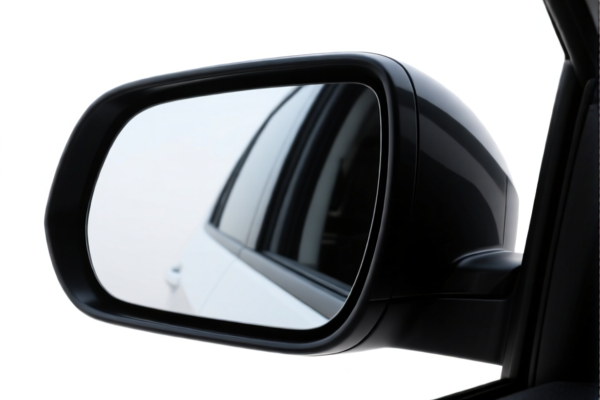
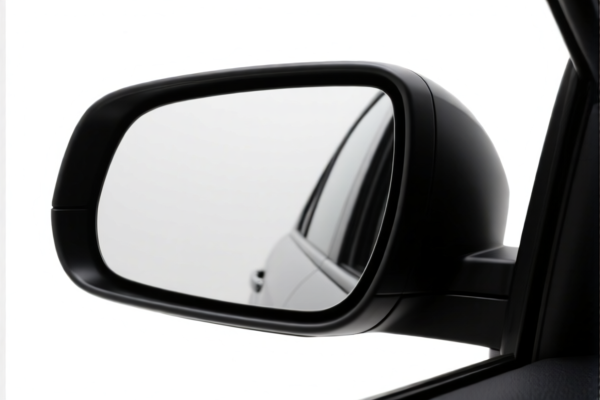
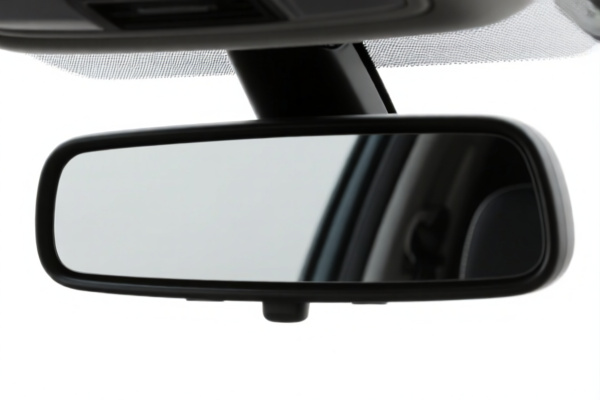

AI Analysis
🪞 Rearview Mirror Housing (汽车后视镜外壳)
🌐 HS Code Reference & Customs Clearance Guide | 2026 Latest Tariff Analysis | Professional Clearance Strategy
📌 I. Product Definition & Classification: Do You Know What a "Rearview Mirror Housing" Is?
The Rearview Mirror Housing is an external component of a vehicle's body system. It serves as the protective casing and structural support for the mirror glass and electronic components (such as blind-spot monitoring lights or cameras) of the rearview mirror assembly.
In international trade, it is crucial to distinguish whether this product is: 1. A part/accessory of the vehicle body: If it is an integral part of the car's body structure or cab design. 2. A part/accessory of the complete vehicle: If it is a standalone replacement part or accessory for vehicles of headings 8701 to 8705 (e.g., trucks, buses, cars).
⚠️ Key Distinction Point: - If the item is specifically described as a "Stamping" (pressed metal part) used for body construction, it may fall under 8708.29.51.10. - If it is a "Other" part (plastic, metal, or composite) not specifically identified as stampings or other specific body parts, it generally falls under 8708.29.51.60. - Do NOT confuse with optical mirrors (9018.90.10.00) used in medical/scientific fields, or optical elements (9002.11.90.00). This is an automotive structural/accessory part.
📦 II. HS Code Classification Details (2026 Latest Tariff Authority Comparison)
Based on the provided data, here are the two most relevant HS Codes for automotive body parts/accessories. Note that "Rearview Mirror Housing" is typically classified under Chapter 87 (Vehicles), not Chapter 73 (Steel Articles) or Chapter 90 (Optical Instruments), unless it is a specific optical mirror for non-vehicle use.
| HS Code | Product Description | Applicable Scenario | Material/Form |
|---|---|---|---|
8708.29.51.10 |
Parts and accessories of motor vehicles (8701-8705): Other parts/accessories of bodies: Other Stampings | Metal pressings, stamped steel/aluminum parts used in body/cab construction | ✅ Stamped Metal |
8708.29.51.60 |
Parts and accessories of motor vehicles (8701-8705): Other parts/accessories of bodies: Other Other | Non-stamped parts, plastic housings, composite mirror shells, other generic body parts | ❌ Non-Stamped/Other |
🔍 Critical Reminder: - 8708.29.51.10 is specific to "Stampings". If your rearview mirror housing is a complex assembly, plastic injection-molded part, or not a simple stamped metal sheet, it cannot use this code. - 8708.29.51.60 is the "Catch-all" for other body parts/accessories. Most aftermarket mirror housings (plastic or composite) will fall here. - Chapter 73 (Iron/Steel Articles) codes like
7326.90.86.88(Other articles of iron or steel) are incorrect for vehicle parts because Chapter 87 takes precedence for parts of vehicles. However, if the item is a generic steel handle (not for vehicles), it might fall to7326.90.86.76. But for "Mirror Housing," Chapter 87 is the correct chapter.
💰 III. 2026 Latest Tariff Rate Details (Including Surtaxes & Policy Add-ons)
✅ Applicable Country: United States (US)
✅ Origin: China (CN)
✅ Effective Time: Current tariffs apply (Section 301 & IEEPA)
🎯 1. 8708.29.51.10 —— Other Parts/Accessories of Bodies: Other Stampings
| Item | Content |
|---|---|
| Base Tariff | 2.5% (ad valorem) |
| Additional Surcharge | +25.0% (Section 301 Tariff on Chinese Goods) |
| Total Tariff | 2.5% + 25.0% = 27.5% |
| Tax Calculation | CIF Value × (2.5% + 25.0%) |
| Note on "Steel, Aluminum, Copper" | The data note mentions "Steel, Aluminum, Copper Products Surtax: 50%". However, the specific tax detail for this code only lists +25.0%. If the stamping is specifically identified as a "Steel, Aluminum, or Copper product" under a broader 50% rule (e.g., specific Section 232 or new 50% tariff on specific goods), the rate could be higher. But based on the provided text 77.9% is for 7326.90.86.88, and 2.5% <u></u> + 25.0% is explicit for 8708.29.51.10. |
| Legal Basis | HTSUS 8708.29.51.10 + Section 301 Footnote |
📌 Explanation:
- Base rate is 2.5%.
- A 25% tariff is added under Section 301 for Chinese origin.
- Total: 27.5%.
- Caution: If customs classifies the item as a generic "Steel Article" (Chapter 73) rather than a Vehicle Part (Chapter 87), the tax jumps to 77.9% (2.9% Base + 25% + 50% Steel/Al/Copper surcharge). Ensure clear "Automotive Part" declaration.
🎯 2. 8708.29.51.60 —— Other Parts/Accessories of Bodies: Other Other
| Item | Content |
|---|---|
| Base Tariff | 0.0% (ad valorem) |
| Additional Surcharge | +0.0% (Standard Section 301 does not always apply to all subheadings, or specific rate is 0) |
| Base Rate + Section 301 | 0.0% |
| Crucial Addition | +50.0% (Steel, Aluminum, Copper Products Surtax) |
| Total Tariff | 0.0% + 0.0% + 50.0% = 50.0% |
| Tax Calculation | CIF Value × 50.0% |
| Legal Basis | HTSUS 8708.29.51.60 + Steel/Aluminum/Copper Surcharge Clause |
📌 Explanation:
- This is the most likely code for plastic or composite mirror housings.
- Base tariff is 0%.
- Section 301 tariff is 0% (as per data).
- However, the data explicitly lists "Steel, Aluminum, Copper Products Surtax: 50%" undertotal_tax: "50.0%". This implies that if the mirror housing contains significant steel/aluminum components, or if the regulatory framework applies a blanket 50% surcharge on these "Other Other" body parts from China, the effective tax is 50%.
- Total: 50.0%.
🎯 3. Cross-Check: Could it be Chapter 73? (Generic Steel Articles)
If the item is NOT clearly declared as a vehicle part, it might be misclassified under 7326.90.86.88 (Other articles of iron or steel).
| Item | Content |
|---|---|
| Base Tariff | 2.9% |
| Section 301 | +25.0% |
| Steel/Al/Copper Surcharge | +50.0% |
| Total Tariff | 77.9% |
⚠️ High Risk: Misclassification as a generic steel article leads to 77.9% tax, which is significantly higher than the automotive part rate of 50% or 27.5%.
🛠️ IV. Customs Clearance Practical Advice (Battle-Tested Pitfall Guide)
✅ 1. Documentation Checklist (Must-Haves)
| Document | Required | Description |
|---|---|---|
| ✅ Product Specification Sheet | ✔️ | Must explicitly state "Rearview Mirror Housing for Automotive Vehicle". Include dimensions, material (Plastic/Steel/Aluminum). |
| ✅ Material Composition | ✔️ | Critical for determining if the 50% Steel/Aluminum surcharge applies. |
| ✅ Commercial Invoice | ✔️ | Must list HS Code 8708.29.51.60 or 8708.29.51.10. Do NOT use generic terms like "Metal Part" or "Auto Accessory". Use "Rearview Mirror Housing, Automotive Body Part". |
| ✅ Bill of Lading | ✔️ | Ensure packaging is labeled clearly with the HS Code and product name. |
| ✅ Photos of Product & Label | ✔️ | Show the item attached to a vehicle or clearly identified as a mirror housing. |
| ✅ Certificate of Origin | ✔️ | If applicable, to verify Country of Origin (China triggers the surcharges). |
✅ 2. Declaration Tips (Key Mantra)
🔥 “Be Specific: ‘Rearview Mirror Housing’ not ‘Metal Part’; Chapter 87, not 73!”
| Situation | Correct Declaration | Wrong Practice |
|---|---|---|
| Plastic Mirror Housing | HS 8708.29.51.60 + Description: "Plastic Rearview Mirror Housing for Car" |
Declaring as "Steel Article" (7326) → 77.9% |
| Stamped Metal Housing | HS 8708.29.51.10 + Description: "Stamped Steel Rearview Mirror Housing" |
Declaring as "Other Steel Article" → 77.9% |
| General Auto Part | HS 8708.29.51.60 |
Declaring as "Other" (7326.90.86.88) → 77.9% |
| Optical Mirror (Medical) | HS 9018.90.10.00 |
Using Chapter 87 for medical mirrors → Compliance Error |
📌 Key Strategy:
- Avoid Chapter 73 (Iron/Steel) unless it is a generic article not for vehicles.
- Always use Chapter 87 (Vehicles) for vehicle parts.
- Material Matters: If it's plastic, it avoids the "Steel/Aluminum" surcharge logic in some interpretations, but the data shows8708.29.51.60still has a 50% total tax due to the specific surcharge note. Be prepared for the 50% hit.
✅ 3. Special Handling
| Situation | Handling Advice |
|---|---|
| Composite Materials | If the housing is plastic with metal inserts, clearly state "Plastic housing with metal fittings". Argue for 8708.29.51.60 (50% tax) rather than 7326.90.86.88 (77.9% tax). |
| OEM vs. Aftermarket | Whether OEM or aftermarket, it is still a "Part of Vehicle". Same classification. |
| With Mirror Glass? | If it includes the mirror glass, it may still be 8708.29.51.60 (Part of body). Do NOT classify as optical mirror (9018) unless it's a standalone optical device for non-vehicle use. |
| Pre-Clearance | Apply for an Advance Ruling from CBP if the material composition is complex (e.g., plastic with steel reinforcement) to confirm if the 50% surcharge applies or if it can be mitigated. |
🌍 V. Global Market Customs Comparison (2026 Latest)
| Country/Region | Recommended HS Code | Estimated Duty | Certification | Notes |
|---|---|---|---|---|
| 🇺🇸 USA | 8708.29.51.60 |
50.0% (China Origin) | None specific | High surcharge due to Steel/Al/Copper rule. |
| 🇨🇳 China | 8708.29.51.60 |
~5-10% | CCC (if applicable) | Lower import duty for domestic production. |
| 🇪🇺 EU | 8708.29.51.60 |
0-4% | E-Mark (if complete mirror) | No 50% surcharge. Lower overall cost. |
| 🇯🇵 Japan | 8708.29.51.60 |
0% | JIS Standards | No additional tariffs. |
📌 Conclusion:
- USA is the most expensive market for this product due to the 50% surcharge.
- Alternative Sourcing: Consider sourcing from non-China countries (e.g., Vietnam, Mexico) to avoid the 50% surcharge if possible, subject to origin rules.
📌 VI. Common Errors & Pitfall Guide (Lessons Learned)
❌ Error 1: Misclassifying as 7326.90.86.88 (Other Steel Articles)
👉 Consequence: Tax jumps from 50% to 77.9%.
👉 Fix: Clearly declare as "Part of Vehicle Body" (Chapter 87).
❌ Error 2: Declaring as "Optical Mirror" (9018.90.10.00)
👉 Consequence: Rejection by customs because it's an auto part, not a medical/optical instrument.
👉 Fix: Use Chapter 87.
❌ Error 3: Ignoring Material Composition
👉 Consequence: If the housing is 100% plastic, some argue against the "Steel/Aluminum" surcharge, but the provided data for 8708.29.51.60 explicitly lists 50.0% total tax.
👉 Fix: Assume 50% tax for 8708.29.51.60 unless a ruling says otherwise.
🎯 VII. Conclusion: Precise Classification Saves Money!
🎯 Remember the Mantra:
🔹 "Auto Part, Chapter 87; Generic Steel, Chapter 73."
🔹 "Mirror Housing is 50% in the US; Don't Pay 77.9%!"
🔹 "Stampings are 27.5%; Other Parts are 50%."
📌 Pro Tip:
If your rearview mirror housing is plastic and not stamped steel, ensure you are using 8708.29.51.60. Although the data shows a 50% total tax due to the specific surcharge note, it is far better than the 77.9% risk of misclassification.
📣 Immediate Action:
📞 Consult a customs broker to file an Advance Ruling for "Rearview Mirror Housing" under
8708.29.51.60to confirm the applicability of the 50% surcharge vs. potential exemptions.
🚀 Accurate classification ensures smoother customs clearance and cost control!
✨ Professional Clearance Starts with Accurate Classification!
💼 Your Bottom Line Depends on the Right HS Code!
Customer Reviews
About HS Code Classification
The Harmonized System (HS) is an internationally standardized nomenclature developed by the World Customs Organization (WCO) to classify traded products. Over 200 countries use the HS system as the basis for customs tariffs, trade statistics, and import/export regulations.
Each HS code follows a hierarchical structure:
- Chapter (2 digits) — Broad category of goods (e.g., Chapter 84: Machinery and Mechanical Appliances)
- Heading (4 digits) — More specific grouping within the chapter
- Subheading (6 digits) — Internationally standardized breakdown, used by all WCO member countries
- National subdivisions (8-10 digits) — Country-specific extensions for further classification, such as US HTSUS 10-digit codes
Correct HS code classification is essential for smooth customs clearance, accurate duty payment, and compliance with trade regulations. Misclassification can lead to customs delays, overpayment of duties, or penalties.
When importing from CN to US, the applicable tariff rates may include:
- Most-Favored-Nation (MFN) rate — The standard duty rate applied to WTO members
- General rate — Applied to countries without trade agreements
- Trade remedy duties — Additional tariffs such as Section 301 (anti-dumping), Section 232 (national security), or countervailing duties
The information provided on this page is for reference purposes only. For official classification, please consult with your local customs authority or a licensed customs broker.