Rebar
CN → US| HS Code | Tariff Rate | Origin | Destination | Doc |
|---|---|---|---|---|
| 7215500016 | 35.0% | CN | US | Official Doc |
| 7215500018 | 35.0% | CN | US | Official Doc |
| 7214200000 | 10.0% | CN | US | Official Doc |
| 7214100000 | 10.0% | CN | US | Official Doc |
| 7214990060 | 10.0% | CN | US | Official Doc |
Product Images
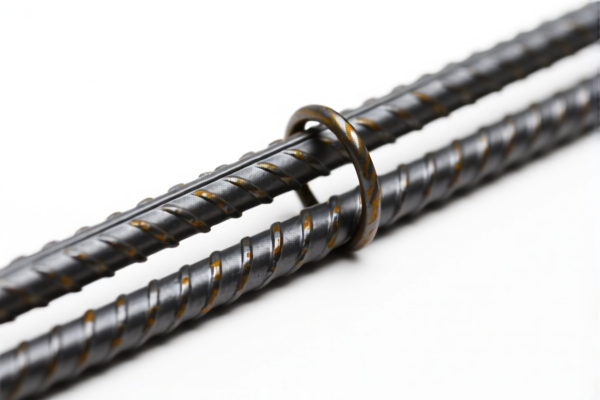
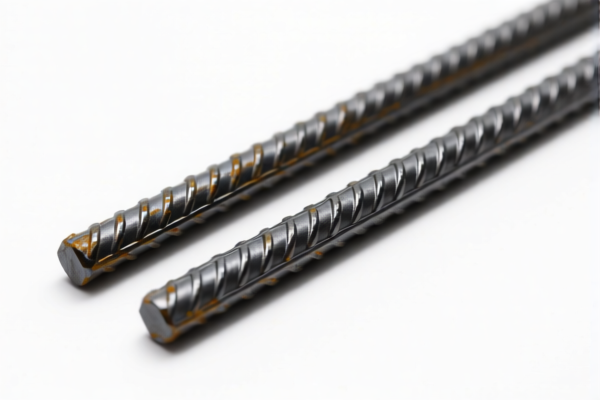
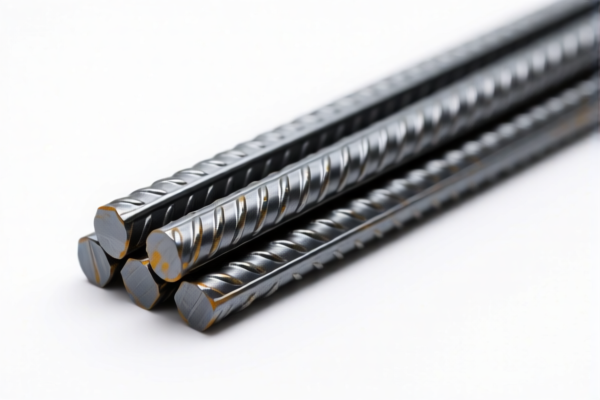
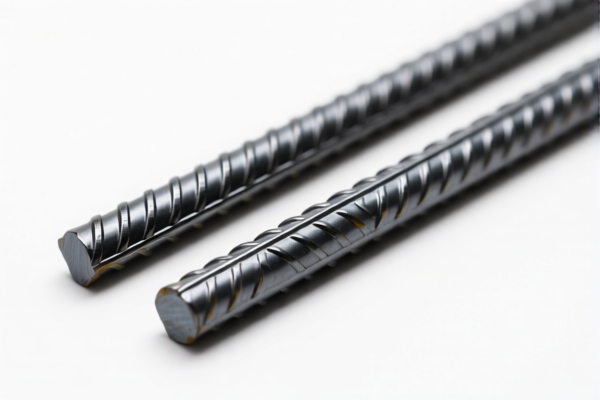
AI Analysis
🏗️ Steel Rebar & Rods (Steel Bars for Concrete Reinforcement)
🌐 HS Code Reference & Customs Clearance Guide | 2026 Latest Tariff Analysis | Professional Clearance Strategy
📌 I. Product Definition & Classification: Do You Really Know "Rebar"?
Rebar (Reinforcing Bar) is the backbone of modern infrastructure, from skyscrapers to bridges. In international trade, steel bars and rebar are categorized primarily by their material composition (Iron/Non-alloy Steel) and form (Bars/Rods). However, due to specific US trade policies, the classification depends heavily on whether the product falls under specific sub-headings for "other bars" versus "concrete reinforcement."
⚠️ Key Distinction:
- If the product is classified under 7215.50 (Other bars/rods of iron/non-alloy steel), it is often viewed as "other" steel products, triggering higher retaliatory tariffs. - If the product is classified under 7214.20 or 7214.10 (Other bars/rods... for concrete reinforcement), it benefits from lower base rates but still faces specific US trade additions.
📦 II. HS Code Classification Details (Based on Provided Data)
| HS Code | Product Description | Application/Logic | Total Tax Rate |
|---|---|---|---|
7215.50.00.16 |
Steel bars/rods, material: Iron/Non-alloy Steel, form: Bars/Rods. Classified based on "other categories" logic. | Generic steel bars/rods not specifically defined under other precise headings. | 35.0% |
7215.50.00.18 |
Steel bars conforming to Iron/Non-alloy Steel material and bar form. Rebar is a sub-category application based on "other category" fallback rules. | Fallback classification for steel bars/rebar not fitting specific concrete reinforcement codes. | 35.0% |
7214.20.00.00 |
Steel bars/rebars, material: Steel, form: Bars/Rebars. Fits definition of iron/non-alloy steel other bars/rods and concrete reinforcement. | Specific classification for concrete reinforcement bars. | 10.0% |
7214.10.00.00 |
Steel bars/rebars, material: Iron/Non-alloy Steel, form: Bars/Rods. Meets bar/rod requirements. | Specific classification for bars/rods of iron/non-alloy steel. | 10.0% |
7214.99.00.60 |
Rebar, material: Steel, form: Bar-shaped. No material conflict based on common sense, a reasonable inference. | Catch-all for other steel bars/rebars not specified in 7214.10 or 7214.20. | 10.0% |
🔍 Critical Insight:
- Codes7215.50.00.16&7215.50.00.18carry a 35% total tax rate. These are "fallback" or "other" categories. Misclassifying a standard rebar here can significantly increase costs. - Codes7214.*carry a 10% total tax rate. These are the preferred classifications for concrete reinforcement rebar and specific non-alloy steel bars.
💰 III. 2026 Latest Tariff Rate Breakdown (Including Surcharges & Policy Additions)
✅ Applicable Country: United States (US)
✅ Origin: China (CN)
✅ Effective Time: 2025/2026 (Based on provided data)
🎯 1. 7215.50.00.16 & 7215.50.00.18 —— Steel Bars/Rods (Other Category)
| Item | Content |
|---|---|
| Base Duty | 0.0% |
| Section 301 Surcharge | +25.0% |
| Section 122 Tariff | +10.0% |
| Total Tax Rate | 35.0% |
| Calculation | CIF Value × 35% |
| Legal Basis | Combined Section 301 (25%) + Section 122 (10%) on top of 0% base. |
📌 Explanation:
- The 25% is the standard Section 301 tariff on many Chinese steel products. - The 10% is an additional "Section 122" tariff (likely referring to recent trade actions or specific national security provisions). - Total: 35%. This is a high-cost classification. Ensure your product description doesn't accidentally fall into this "other" bucket if a more specific one applies.
🎯 2. 7214.20.00.00, 7214.10.00.00, 7214.99.00.60 —— Reinforcement Bars & Steel Rods
| Item | Content |
|---|---|
| Base Duty | 0.0% |
| Section 301 Surcharge | 0.0% |
| Section 122 Tariff | +10.0% |
| Total Tax Rate | 10.0% |
| Calculation | CIF Value × 10% |
| Legal Basis | Only Section 122 (10%) applies; Section 301 (25%) is exempt or not applicable for these specific sub-headings. |
📌 Crucial Note:
- For Rebar (concrete reinforcement), the Section 301 25% tariff does not apply (or is set to 0% in this specific dataset logic). - Only the 10% Section 122 tariff is added. - Total: 10%. This is a significant cost saving (25% difference!) compared to the 7215 classification. - Strategy: Always aim to classify rebar under 7214 (Reinforcing Bars) rather than 7215 (Other Bars) if possible.
🛠️ IV. Customs Clearance Practical Advice (Avoid Pitfalls)
✅ 1. Documentation Checklist (Essential)
| Document | Mandatory? | Purpose |
|---|---|---|
| ✅ Product Specifications | ✔️ | Must state: Material (e.g., Grade 60, ASTM A615), Diameter, Length, Form (Ribbed/Smooth). |
| ✅ Certificate of Origin | ✔️ | Proves Chinese origin to apply correct tariffs. |
| ✅ Commercial Invoice | ✔️ | Must clearly state "Steel Rebar for Concrete Reinforcement" or "Steel Bars." |
| ✅ Packing List | ✔️ | Details weight, dimensions, and package type (coils/bundles). |
| ✅ Third-Party Test Report | ✔️ | ASTM standards compliance (e.g., ASTM A615, A706) helps justify classification under 7214.20. |
| ✅ Bill of Lading | ✔️ | Standard shipping document. |
✅ 2. Classification Strategy (Key Mnemonic)
🔥 "Rebar goes to 7214, Other Bars to 7215. 10% vs 35%, choose wisely!"
| Situation | Correct HS Code | Tax Rate | Why? |
|---|---|---|---|
| Standard Concrete Rebar (Ribbed, for construction) | 7214.20.00.00 |
10% | Specifically defined for concrete reinforcement. Avoids 301 tariff. |
| Plain Steel Rods/Bars (Not for rebar) | 7214.10.00.00 or 7214.99.00.60 |
10% | Fits definition of iron/non-alloy steel bars. Lower rate. |
| "Other" Steel Bars (No specific rebar use) | 7215.50.00.16 / .18 |
35% | Fallback category. High tariff due to Section 301 + 122. |
| Misclassified Rebar (Declared as "Metal Rod") | 7215.50.00.16 |
35% | PITFALL! Wrong classification leads to huge extra cost. |
✅ 3. Special Circumstances
| Situation | Handling Advice |
|---|---|
| OEM Custom Rebar | Provide drawings showing rib patterns and dimensions to prove it is "rebar" (7214) and not just "rod" (7215). |
| Rebar Bundled with Accessories | Declare rebar separately if possible. Accessories may have different tax treatments. |
| Steel Grade Dispute | If customs questions the grade, provide ASTM certification to support 7214 classification. |
| Origin Fraud | Do not misdeclare origin. Section 122 tariffs target Chinese goods. |
🌍 V. Global Market Comparison (2026 Latest)
| Country/Region | Recommended HS Code | Tariff (China Origin) | Notes |
|---|---|---|---|
| 🇺🇸 USA | 7214.20.00.00 |
10% (Total) | Only 10% Section 122. Avoid 7215 (35%). |
| 🇨🇳 China | 7214.20.00.00 |
Varies (Check latest) | Domestic trade may have different rates. |
| 🇪🇺 EU | 7314 or similar |
Varies (CE/Quality) | EU has different classification for steel products. |
| 🇦🇺 Australia | 7214 |
Varies | No Section 301, but may have anti-dumping duties. |
📌 Conclusion:
- The US market is the most critical for tariff optimization here. - Classification Error Cost: Misclassifying rebar as "other bars" (7215) instead of "reinforcing bars" (7214) adds a 25% penalty. - Action: Always insist on 7214 classification for construction rebar.
📌 VI. Common Mistakes & Pitfalls (Lessons Learned)
❌ Mistake 1: Declaring "Steel Rebar" as "Steel Rods" or "Metal Bars" without specifying "for Concrete Reinforcement"
👉 Consequence: Customs may classify under 7215.50 → 35% Tax instead of 10%.
❌ Mistake 2: Ignoring the "Section 122" tariff
👉 Consequence: Even with 10% total, the 10% Section 122 is mandatory. Do not forget to declare it.
❌ Mistake 3: Using generic descriptions like "Iron Bars"
👉 Consequence: Ambiguity leads to classification disputes and potential delays.
✅ Correct Practice:
"ASTM A615 Grade 60 Deformed Steel Reinforcing Bars, Ribbed, 12mm Diameter, for Concrete Reinforcement"
🎯 VII. Conclusion: Precision Saves Money!
🎯 Remember the Mnemonic:
🔹 "Rebar is 7214, Tax is 10%. Other bars are 7215, Tax is 35%. Don't let a wrong code cost you 25%!"
🔹 "Specify 'Concrete Reinforcement' clearly in the invoice to justify 7214."
📌 Pro Tip:
- If you are exporting rebar to the US, ensure your HS Code is pre-approved via an Advance Ruling if possible.
- Verify the Section 122 status regularly, as trade policies can shift.
- Keep ASTM test reports ready to prove the product is indeed "rebar" and not generic steel.
📣 Immediate Action:
📞 Consult with a customs broker to confirm 7214.20.00.00 eligibility.
🚀 Optimize your supply chain to handle the 10% tariff efficiently.
💼 Precision in classification is the key to profit protection!
✨ Professional Clearance Starts with Accurate Classification!
💼 Every 1% of tariff savings equals significant margin growth!
Customer Reviews
About HS Code Classification
The Harmonized System (HS) is an internationally standardized nomenclature developed by the World Customs Organization (WCO) to classify traded products. Over 200 countries use the HS system as the basis for customs tariffs, trade statistics, and import/export regulations.
Each HS code follows a hierarchical structure:
- Chapter (2 digits) — Broad category of goods (e.g., Chapter 84: Machinery and Mechanical Appliances)
- Heading (4 digits) — More specific grouping within the chapter
- Subheading (6 digits) — Internationally standardized breakdown, used by all WCO member countries
- National subdivisions (8-10 digits) — Country-specific extensions for further classification, such as US HTSUS 10-digit codes
Correct HS code classification is essential for smooth customs clearance, accurate duty payment, and compliance with trade regulations. Misclassification can lead to customs delays, overpayment of duties, or penalties.
When importing from CN to US, the applicable tariff rates may include:
- Most-Favored-Nation (MFN) rate — The standard duty rate applied to WTO members
- General rate — Applied to countries without trade agreements
- Trade remedy duties — Additional tariffs such as Section 301 (anti-dumping), Section 232 (national security), or countervailing duties
The information provided on this page is for reference purposes only. For official classification, please consult with your local customs authority or a licensed customs broker.