Receiver Adapter
CN → US| HS Code | Tariff Rate | Origin | Destination | Doc |
|---|---|---|---|---|
| 8504406007 | 35.0% | CN | US | Official Doc |
| 8504407007 | 35.0% | CN | US | Official Doc |
| 8536694010 | 35.0% | CN | US | Official Doc |
| 8536698000 | 37.7% | CN | US | Official Doc |
| 8517790000 | 67.5% | CN | US | Official Doc |
Product Images
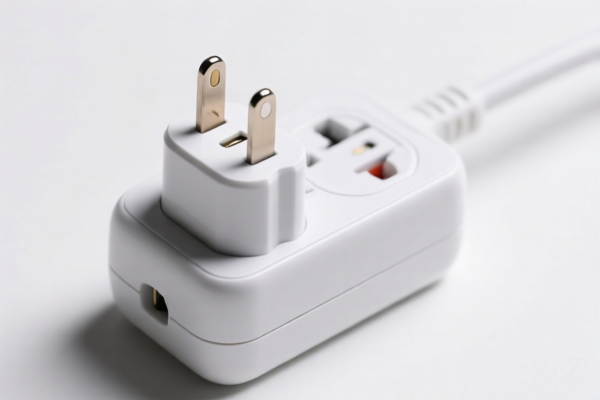
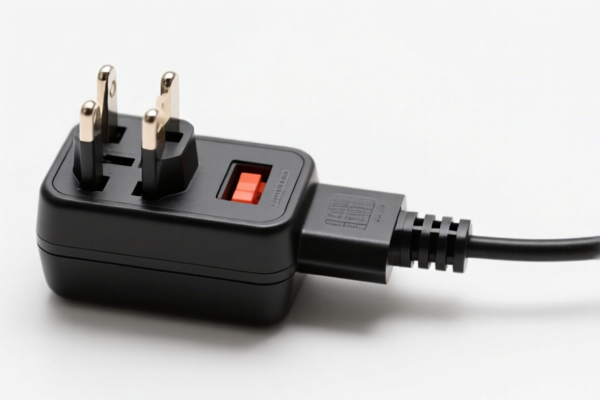
AI Analysis
🔌 Receiver Adapter: Power Supply & Connectivity Solutions
🌐 HS Code Reference & Customs Clearance Guide | 2026 Latest Tariff Analysis | Professional Clearance Strategy
📌 I. Product Definition & Classification: What Exactly is a "Receiver Adapter"?
The term "Receiver Adapter" is ambiguous in international trade. It can refer to two distinct types of products: 1. Power Adapters (External Power Supplies): Devices that convert AC mains voltage to DC for electronic devices (e.g., routers, set-top boxes, IoT sensors). 2. Connectivity/Signal Adapters: Devices that adapt signals or physical connections (e.g., HDMI-to-USB, Coaxial adapters, antenna receivers).
In customs classification, the function and internal structure dictate the HS Code. Misclassification can lead to severe tariff penalties, especially for Chinese-origin goods entering the US.
⚠️ Key Distinction:
- If it converts AC/DC power → Generally falls under Chapter 85 (Electrical Machinery) as converters.
- If it converts signals/connects circuits → Generally falls under Chapter 85 (Connectors/Switches) or Chapter 85 (Communication Parts).
📦 II. HS Code Classification Details (2026 Latest Tariff Authority Match)
Based on the provided data, the "Receiver Adapter" is classified into five potential HS Codes depending on its specific technical nature. Below is the detailed breakdown.
| HS Code | Product Description (Based on Data) | Applicable Scenario | Key Functional Attribute |
|---|---|---|---|
8504.40.60.07 |
Static Converter (Power Adapter) | Used to provide power to electronic devices via static conversion. | Power Converter (AC/DC) |
8504.40.70.07 |
Stationary Converter (Power Adapter) | Fits the functional description of a stationary power converter. | Power Converter (AC/DC) |
8536.69.40.10 |
Electrical Connection Equipment (≤1,000V) | Coaxial connectors or similar connection devices for voltages up to 1,000V. | Signal/Power Connection |
8536.69.80.00 |
Electrical Connection/Conversion Device | Plugs, sockets, and other connectors. | Physical Connector/Socket |
8517.79.00.00 |
Part of Communication Equipment | Classified as "Other" parts/components for communication devices. | Spare Part/Component |
🔍 Critical Note:
- Powers Adapters (8504.xxxx) are distinct from Connectors (8536.xxxx).
- If the adapter has a plug on one end and a circuit board for conversion inside, it’s likely 8504.
- If it’s purely a mechanical interface (e.g., an antenna adapter with no internal electronics), it’s likely 8536.
- If it’s a small component inside a larger machine (e.g., a PCB module), it might be 8517.
💰 III. 2026 Latest Tariff Rate Breakdown (Including Surtaxes & Policy Surcharges)
✅ Applicable Country: United States (US)
✅ Origin: China (CN)
✅ Effective Date: Post-November 10, 2025 (including subsequent imports)
🎯 1. 8504.40.60.07 & 8504.40.70.07 —— Power Adapters (Static/Stationary Converters)
| Item | Content |
|---|---|
| Base Tariff | 0.0% |
| Section 301 Surtax | +25.0% |
| 122 Clause Tariff | +10.0% |
| Total Tariff Rate | 35.0% |
| Tax Calculation | CIF Value × 35% |
| De Minimis Eligibility | ❌ No (Denied) |
| Legal Basis Path | Section 301: 9903.88.01 → IEEPA/122 Clause → USITC: 8504.40.60.07/70.07 |
📌 Explanation:
- These codes cover external power supplies that convert AC to DC.
- The 25% Section 301 tax is standard for many electrical machinery items from China.
- The 10% 122 Clause tax is an additional surcharge applied under specific trade enforcement provisions.
- Total Cost Impact: High. Ensure your pricing strategy accounts for this 35% landed cost increase.
🎯 2. 8536.69.40.10 & 8536.69.80.00 —— Electrical Connectors & Adapters
| Item | Content |
|---|---|
| Base Tariff | 0.0% (for 8536.69.40.10) / 2.7% (for 8536.69.80.00) |
| Section 301 Surtax | +25.0% |
| 122 Clause Tariff | +10.0% |
| Total Tariff Rate | 35.0% (for .40.10) / 37.7% (for .80.00) |
| Tax Calculation | CIF Value × 35% or 37.7% |
| De Minimis Eligibility | ❌ No (Denied) |
| Legal Basis Path | Section 301: 9903.88.01 → IEEPA/122 Clause → USITC: 8536.69.40.10/80.00 |
📌 Explanation:
-.40.10is for Coaxial Connectors (often used in antenna/receiver setups).
-.80.00is for Other Connectors/Plugs/Sockets.
- The base tariff for.80.00is 2.7%, leading to a higher total tax (37.7%) compared to the 0% base of.40.10.
- Warning: If your "adapter" is just a plastic/metal plug with no electronics, customs may classify it here. Do not confuse it with power adapters.
🎯 3. 8517.79.00.00 —— Parts of Communication Equipment
| Item | Content |
|---|---|
| Base Tariff | 0.0% |
| Section 301 Surtax | +7.5% |
| 122 Clause Tariff | +10.0% |
| Steel/Aluminum/Copper Surtax | +50.0% (Applicable to metal products) |
| Total Tariff Rate | 67.5% (for non-metallic/base) / 117.5% (if metallic components trigger surtax) |
| Tax Calculation | CIF Value × 67.5% or higher |
| De Minimis Eligibility | ❌ No (Denied) |
| Legal Basis Path | Section 301: 9903.01.25 → IEEPA:9903.01.24 → USITC: 8517.79.00.00 |
📌 Explanation:
- This code is for components/parts of communication devices (e.g., internal circuit boards, specialized receivers).
- CRITICAL WARNING: If the product contains steel, aluminum, or copper (common in casings or heatsinks), a 50% additional surtax may apply under specific trade rules.
- This results in the highest tariff burden (67.5% - 117.5%).
- Only use this code if the item is clearly a non-complete part of a larger communication system, not a standalone power adapter.
🛠️ IV. Customs Clearance Practical Advice (Real-World Pitfall Guide)
✅ 1. Preparation Checklist (Non-negotiable)
| Document | Required? | Description |
|---|---|---|
| ✅ Product Specification Sheet | ✔️ | Must clearly state: Input/Output Voltage, Current, Power (Watts), and Function (Power Conversion vs. Signal Adaptation). |
| ✅ Circuit Diagram/Block Diagram | ✔️ | Essential to prove whether the device contains conversion circuitry (8504) or is just a connector (8536). |
| ✅ Product Photos (Label Side) | ✔️ | Must show model number, brand, input/output ratings, and safety certifications (UL, CE, FCC). |
| ✅ Third-Party Test Reports | ✔️ | FCC (for emissions), UL/ETL (for safety), RoHS (for materials). |
| ✅ Commercial Invoice | ✔️ | Description must be precise: e.g., "AC/DC Power Adapter, 12V 2A" NOT just "Adapter". |
| ✅ Certificate of Origin (CO) | ✔️ | Required to prove Chinese origin (which triggers surtaxes). |
| ✅ Packing List | ✔️ | Detail contents to avoid "missing parts" queries. |
✅ 2. Classification Strategy (Key Rules)
🔥 "Power vs. Signal, Component vs. Unit: Choose Wisely!"
| Scenario | Correct HS Code | Incorrect HS Code | Consequence |
|---|---|---|---|
| External Power Brick (AC to DC) | 8504.40.60.07 / 70.07 |
8536.69.80.00 |
Misclassification → 35% vs 37.7% (Minor) OR Rejection if deemed incomplete. |
| Coaxial Adapter (No electronics) | 8536.69.40.10 |
8504.40.70.07 |
Huge Risk: If customs tests it and finds no conversion, it may force 8536 and fine you for false declaration. |
| Internal Receiver Module (Part of router) | 8517.79.00.00 |
8504.40.60.07 |
Highest Risk: 67.5%+ tax. Avoid unless it’s a clear spare part. |
| Standalone Power Adapter with Cable | 8504.40.60.07 |
Split into "Adapter" + "Cable" | Splitting increases complexity and risk. Declare as one unit. |
✅ 3. Special Situation Handling
| Situation | Handling Advice |
|---|---|
| OEM Custom Adapters | Provide client order + design specs. Ensure voltage ratings match the declared HS Code. |
| Adapters with "Smart" Features (e.g., PD Charging) | Still likely 8504 if they convert power. If they process data, risk shifting to 8517. |
Metallic Casings on 8517 Items |
Avoid 8517 if possible due to the 50% surtax on metal products. Opt for 8504 if structurally a power supply. |
| Small Qty Samples | No De Minimis Exemption for these codes. Even small shipments are subject to full tariffs. |
🌍 V. Global Market Comparison (2026 Latest)
| Country/Region | Recommended HS Code | Tariff (China Origin) | Certification Required | Notes |
|---|---|---|---|---|
| 🇺🇸 USA | 8504.40.60.07 |
35.0% | FCC, UL/ETL, RoHS | High Tariff. 35% is standard for power adapters. |
| 🇨🇳 China | 8504.40.60.07 |
~10-15% (Import) | CCC | Domestic market has different rules. |
| 🇪🇺 EU | 8504.40.60 |
0-4% (Varies) | CE, ErP, RoHS | No Section 301 taxes. Lower barrier. |
| 🇯🇵 Japan | 8504.40.60 |
0-14% | PSE, JIS | Check specific JIS standards for safety. |
| 🇬🇧 UK | 8504.40.60 |
0-4% | UKCA, CE | Post-Brexit rules apply. |
📌 Conclusion:
- The US market is the most expensive due to the combination of Base Tariff + Section 301 + 122 Clause.
- Cost Optimization: Ensure your product is correctly classified as8504(35%) rather than8517(67.5%+) or8536(37.7%) if it’s a connector.
- Certifications are Key: Without FCC/UL, the product may be detained, leading to storage fees and potential destruction.
📌 VI. Common Errors & Pitfalls (Blood & Tears)
❌ Error 1: Declaring a Power Adapter as a "Signal Adapter" (8536)
👉 Consequence: If customs inspectors find circuitry inside, they will reclassify to 8504 and penalize for false declaration. Plus, 8536 has a 2.7% base tax vs 0%, so you might overpay on base but risk legal issues.
❌ Error 2: Declaring a Power Adapter as a "Part of Communication Equipment" (8517)
👉 Consequence: Tariff jumps to 67.5%+. This is a common mistake when "adapter" is used loosely. Only use 8517 for internal PCB modules, not external power bricks.
❌ Error 3: Ignoring the 122 Clause Tariff
👉 Consequence: Forgetting to add the 10% surcharge leads to underpayment. Customs will assess penalties and interest.
❌ Error 4: Missing UL/ETL Certification for US Market
👉 Consequence: Product held at CBP. Even if HS Code is correct, lack of safety certification blocks entry.
✅ Correct Practice:
"External AC/DC Power Adapter, 19V 3.42A, for Laptop Model XYZ, UL Listed, FCC Certified, Input 100-240V"
🎯 VII. Conclusion: Precision in Classification Saves Money!
🎯 Remember the Rules:
🔹 "Power Adapters = 8504 (35% Tax)"
🔹 "Connectors = 8536 (35-37.7% Tax)"
🔹 "Parts = 8517 (67.5%+ Tax, Avoid if Possible!)"
🔹 "No De Minimis for Chinese Origins"
📌 Pro Tip:
If your "Receiver Adapter" is a complex device with both power conversion and signal processing, consult a customs broker for a Pre-Ruling (Advance Ruling). This protects you from sudden reclassification and massive back-taxes.
📣 Immediate Action:
📞 Contact a Licensed Customs Broker
📄 Provide Product Specs + Circuit Diagrams
🚀 Apply for Pre-Ruling for HS Code Confirmation
✨ Professional Clearance Starts with Accurate Classification!
💼 Every Percentage Point of Tax Matters – Know Your Code!
Customer Reviews
About HS Code Classification
The Harmonized System (HS) is an internationally standardized nomenclature developed by the World Customs Organization (WCO) to classify traded products. Over 200 countries use the HS system as the basis for customs tariffs, trade statistics, and import/export regulations.
Each HS code follows a hierarchical structure:
- Chapter (2 digits) — Broad category of goods (e.g., Chapter 84: Machinery and Mechanical Appliances)
- Heading (4 digits) — More specific grouping within the chapter
- Subheading (6 digits) — Internationally standardized breakdown, used by all WCO member countries
- National subdivisions (8-10 digits) — Country-specific extensions for further classification, such as US HTSUS 10-digit codes
Correct HS code classification is essential for smooth customs clearance, accurate duty payment, and compliance with trade regulations. Misclassification can lead to customs delays, overpayment of duties, or penalties.
When importing from CN to US, the applicable tariff rates may include:
- Most-Favored-Nation (MFN) rate — The standard duty rate applied to WTO members
- General rate — Applied to countries without trade agreements
- Trade remedy duties — Additional tariffs such as Section 301 (anti-dumping), Section 232 (national security), or countervailing duties
The information provided on this page is for reference purposes only. For official classification, please consult with your local customs authority or a licensed customs broker.