Recipe Rack
CN → US| HS Code | Tariff Rate | Origin | Destination | Doc |
|---|---|---|---|---|
| 9403200082 | 85.0% | CN | US | Official Doc |
| 7323999030 | 88.4% | CN | US | Official Doc |
| 9403200075 | 85.0% | CN | US | Official Doc |
| 3924104000 | 13.4% | CN | US | Official Doc |
| 7323999080 | 88.4% | CN | US | Official Doc |
Product Images
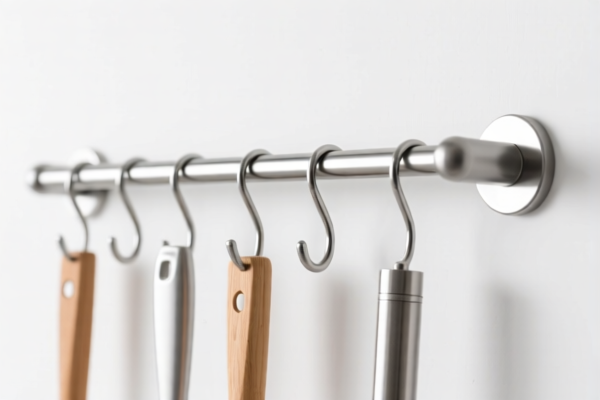
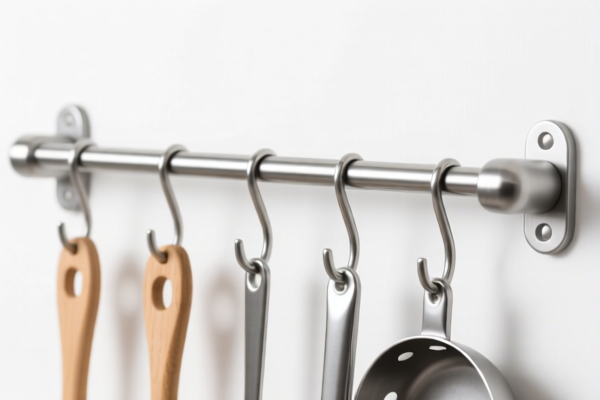
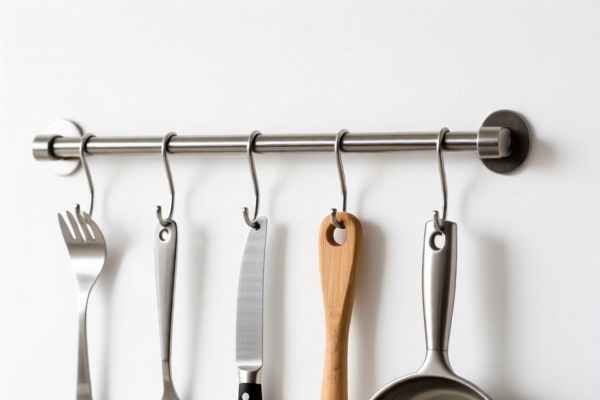
AI Analysis
🍳 Recipe Rack (Spice Rack / Condiment Holder)
🌐 HS Code Reference & Customs Clearance Guide | 2026 Latest Tariff Analysis | Professional Clearance Strategy
📌 I. Product Definition & Classification: Do You Really Know a “Recipe Rack”?
A "Recipe Rack" (often synonymous with Spice Rack, Condiment Holder, or Kitchen Organizer) is a versatile household storage solution. In international trade, it is categorized based on Material and Function. It is primarily divided into two competing categories:
- Metal Kitchen Utensils/Stand (Section XV): If made of iron, steel, aluminum, or other base metals, designed to hold bottles, jars, or papers on a countertop.
- Metal Furniture (Section XIX): If structured as a larger shelving unit or rack for general storage, often classified under furniture.
⚠️ Key Distinction Point:
- If the item is a small countertop holder for spices/condiments made of metal/plastic → Often classified under 7323 (Metal Kitchenware) or 3924 (Plastic Kitchenware).
- If the item is a larger standing rack/shelf made of metal → Classified under 9403 (Other Furniture).
- Crucial Note: The provided data shows conflicting classifications for "Recipe Rack" made of metal, leading to vastly different tax implications (13.4% vs. 85.0%+).
📦 II. HS Code Classification Details (2026 Latest Tariff Authority Comparison)
| HS Code | Product Description | Material Inference | Applicability Scenario |
|---|---|---|---|
9403.20.00.82 |
Other metal furniture; Shelves, shelving units | Metal (Steel/Iron/Aluminum) | Larger racks, shelving units, or metal storage furniture not specifically kitchen utensils |
7323.99.90.30 |
Kitchen/tableware articles, of iron or steel | Iron/Steel | Countertop spice racks, condiment holders, metal stands for kitchens |
9403.20.00.75 |
Other metal/plastic furniture; Household items | Metal/Plastic | General household racks, mixed-material storage solutions |
3924.10.40.00 |
Plastic tableware, kitchenware, or household articles | Plastic | Low-Tariff Option: If the rack is primarily made of plastic |
7323.99.90.80 |
Other kitchen/tableware articles, of iron or steel | Iron/Steel | Similar to 7323.99.90.30 but different sub-category nuance |
🔍 Critical Observation:
- Metal vs. Plastic is the Key: If your recipe rack is plastic, the tax drops dramatically to 13.4% (3924.10.40.00).
- If it is metal, it faces punitive tariffs ranging from 85.0% to 88.4% depending on the specific sub-heading (9403vs7323).
- The distinction between "Furniture" (9403) and "Kitchenware" (7323) for metal racks is often ambiguous and subject to customs interpretation.
💰 III. 2026 Latest Tariff Rate Breakdown (Including Surtaxes & Policy Surcharges)
✅ Applicable Country: United States (US)
✅ Origin: China (CN)
✅ Effective Time: Post-2025 (Including Section 301 & IEEPA surcharges)
🎯 1. 3924.10.40.00 —— Plastic Recipe Rack (The Low-Tariff Choice)
| Item | Content |
|---|---|
| Base Tariff | 3.4% (ad valorem) |
| USITC Surtax (301) | 0% (Plastic items often excluded from highest brackets) |
| IEEPA Surtax (Section 122/Other) | 10% (Specific to certain Chinese goods) |
| Total Tax Rate | 13.4% |
| Tax Calculation | CIF Value × 13.4% |
| De Minimis Eligibility | ❌ Not Eligible (Value likely exceeds $800 threshold for de minimis if imported in bulk, but structure confirms surcharge applies) |
| Legal Basis Path | IEEPA:9903.01.10 → USITC:3924.10.40.00 → FOOTNOTE:122 |
📌 Explanation:
- This is the most favorable classification if the product is made of plastic.
- The 10% IEEPA surcharge applies, but the lack of the 25% Section 301 tax on plastic kitchenware saves significant cost.
🎯 2. 9403.20.00.82 & 9403.20.00.75 —— Metal Furniture Racks
| Item | Content |
|---|---|
| Base Tariff | 0.0% |
| USITC Surtax (301) | 25% |
| IEEPA Surtax (Section 122) | 10% |
| Steel/Aluminum Surtax | 50% (Specific to steel/aluminum products under Section 232) |
| Total Tax Rate | 85.0% |
| Tax Calculation | CIF Value × 85.0% |
| De Minimis Eligibility | ❌ Not Eligible |
| Legal Basis Path | IEEPA:9903.01.25 → USITC:9403.20.00.82 → FOOTNOTE:232 (Steel/Aluminum) + FOOTNOTE:301 |
📌 Explanation:
- Extremely High Cost.
- The 50% steel/aluminum surcharge combined with 25% Section 301 and 10% IEEPA creates a nearly 85% tax burden.
- This applies if the rack is considered "Other Metal Furniture."
🎯 3. 7323.99.90.30 & 7323.99.90.80 —— Metal Kitchenware (Spice Racks)
| Item | Content |
|---|---|
| Base Tariff | 3.4% |
| USITC Surtax (301) | 25% |
| IEEPA Surtax (Section 122) | 10% |
| Steel/Aluminum Surtax | 50% (Under Section 232) |
| Total Tax Rate | 88.4% |
| Tax Calculation | CIF Value × 88.4% |
| De Minimis Eligibility | ❌ Not Eligible |
| Legal Basis Path | IEEPA:9903.01.25 → USITC:7323.99.90.30 → FOOTNOTE:232 + FOOTNOTE:301 |
📌 Explanation:
- Even if classified as "Kitchenware" (7323), it is still subject to the 50% Steel/Aluminum surcharge if made of steel.
- Total tax reaches 88.4%, making metal recipe racks prohibitively expensive for US importers from China unless a duty exemption or exclusion applies.
🛠️ IV. Customs Clearance Practical Advice (Battle-Tested Pitfall Guide)
✅ 1. Document Preparation Checklist (Non-Negotiable)
| Document | Required | Description |
|---|---|---|
| ✅ Product Specification Sheet | ✔️ | Must clearly state Material Composition (e.g., "80% Plastic, 20% Metal") to justify 3924 classification. |
| ✅ Product Photos | ✔️ | Show the rack in use (holding spices/papers) and close-ups of material texture. |
| ✅ Bill of Materials (BOM) | ✔️ | Essential if mixed material. Proves if plastic is the principal character. |
| ✅ Commercial Invoice | ✔️ | Must match the HS Code description exactly (e.g., "Plastic Spice Rack" vs. "Metal Storage Shelf"). |
| ✅ Declaration of Origin | ✔️ | Confirm Country of Origin (China) to trigger surcharge calculations. |
✅ 2. Declaration Strategy (Key Mnemonics)
🔥 “Material is King, Function Follows. Plastic Saves, Metal Burdens.”
| Scenario | Correct Declaration | Wrong Practice |
|---|---|---|
| Plastic Recipe Rack | HS: 3924.10.40.00Name: "Plastic Condiment Holder" |
Declare as Metal → 85% Tax |
| Metal Spice Rack | HS: 7323.99.90.30 OR 9403.20.00.82Name: "Metal Kitchen Organizer" |
Declare as Plastic → Fraud Risk |
| Mixed Material (Plastic dominant) | HS: 3924.10.40.00Name: "Plastic Recipe Rack with Metal Parts" |
Split declaration → Complexity & Delay |
| Large Metal Shelving Unit | HS: 9403.20.00.82Name: "Metal Storage Rack" |
Declare as Kitchen Utensil → Misclassification |
✅ 3. Special Situation Handling
| Situation | Handling Advice |
|---|---|
| OEM Custom Metal Racks | Provide design drawings. If it resembles furniture more than a utensil, expect 9403 classification. |
| Plastic with Metal Wire Inserts | Emphasize Plastic as the primary material. Cite GRI 3(b) for essential character. Aim for 3924. |
| Steel Spice Racks | Check for Exclusions under Section 301 (HTS 7323.99.90). If excluded, tax drops significantly. |
| Aluminum Racks | Subject to Section 232 (50%). Very high cost. Consider if alternative origins (Vietnam, India) are available. |
🌍 V. Global Market Comparison (2026 Latest)
| Country/Region | Recommended HS Code | Tariff (China Origin) | Certification Requirements | Remarks |
|---|---|---|---|---|
| 🇺🇸 USA | 3924.10.40.00 (Plastic) |
13.4% | FDA (if food contact), Prop 65 | Metal racks face 85%+ |
| 🇺🇸 USA | 7323.99.90.30 (Metal) |
88.4% | None specific | Avoid if possible due to cost |
| 🇨🇳 China | 7323.99.90.30 |
3.4% | None | Low export duty |
| 🇪🇺 EU | 7323.99.90 |
0% - 6% | None | No Section 301 equivalent |
| 🇦🇺 Australia | 7323.99.90 |
5% | None | Competitive market |
📌 Conclusion:
- The US market is uniquely punitive for metal kitchenware/furniture from China due to layered surcharges.
- Plastic recipe racks (3924) are the only cost-effective entry point into the US from China.
- For metal racks, importers must seek Section 301 Exclusions or switch supply chains to non-China origins (e.g., Vietnam, Thailand) to avoid the 85%+ tax burden.
📌 VI. Common Errors & Pitfalls (Blood-Tea Lessons)
❌ Error 1: Declaring a Metal Spice Rack as "Plastic" to save tax
👉 Consequence: Customs audit → Back taxes + 10% penalty + potential fraud charges.
❌ Error 2: Classifying a Large Metal Shelf as "Kitchen Utensil" (7323)
👉 Consequence: Misclassification → Delayed release, potential reclassification to 9403 (85% tax).
❌ Error 3: Ignoring the Steel/Aluminum Surcharge (50%)
👉 Consequence: Budgeting for 25% tax only, but actual tax is 88.4% → Profit margin wiped out.
❌ Error 4: Using vague descriptions like "Home Organizer"
👉 Consequence: Customs requests additional information → Port storage fees + delays.
✅ Correct Approach:
“Recipe Rack, Plastic, 3-Tier, for Countertop Use, Model XYZ, FDA Compliant”
OR
“Metal Spice Rack, Stainless Steel, Countertop Organizer, Model ABC”
🎯 VII. Conclusion: Precision Classification for Profit Maximization
🎯 Remember the Mantra:
🔹 “Plastic Rack: 13.4% (Go!)”
🔹 “Metal Rack: 85%+ (Stop & Think)”
🔹 “Check Exclusions for Steel/Aluminum”
📌 Actionable Tips:
1. Switch to Plastic: If designing new products, use plastic or bamboo (if eligible) to avoid metal surcharges.
2. Apply for Exclusions: If metal is unavoidable, check if your specific HTS code has a valid Section 301 exclusion.
3. Get a Pre-Ruling: For large shipments, submit a Customs Ruling Request to US CBP to confirm classification and tax liability before shipment.
4. Supply Chain Diversification: Consider sourcing metal racks from Vietnam or India to bypass China-specific surcharges.
📣 Immediate Action Required:
📞 Contact your customs broker with the exact material breakdown.
📄 Request a Section 301 Exclusion Check for metal racks.
🚀 Optimize for3924.10.40.00wherever possible to ensure smooth clearance and maximum profit.
✨ Professional Clearance Starts with Accurate Classification!
💼 Every Percent of Tax Saved is Pure Profit!
Customer Reviews
About HS Code Classification
The Harmonized System (HS) is an internationally standardized nomenclature developed by the World Customs Organization (WCO) to classify traded products. Over 200 countries use the HS system as the basis for customs tariffs, trade statistics, and import/export regulations.
Each HS code follows a hierarchical structure:
- Chapter (2 digits) — Broad category of goods (e.g., Chapter 84: Machinery and Mechanical Appliances)
- Heading (4 digits) — More specific grouping within the chapter
- Subheading (6 digits) — Internationally standardized breakdown, used by all WCO member countries
- National subdivisions (8-10 digits) — Country-specific extensions for further classification, such as US HTSUS 10-digit codes
Correct HS code classification is essential for smooth customs clearance, accurate duty payment, and compliance with trade regulations. Misclassification can lead to customs delays, overpayment of duties, or penalties.
When importing from CN to US, the applicable tariff rates may include:
- Most-Favored-Nation (MFN) rate — The standard duty rate applied to WTO members
- General rate — Applied to countries without trade agreements
- Trade remedy duties — Additional tariffs such as Section 301 (anti-dumping), Section 232 (national security), or countervailing duties
The information provided on this page is for reference purposes only. For official classification, please consult with your local customs authority or a licensed customs broker.