Reclaimed Rubber Tires for Household Vehicles
CN → US| HS Code | Tariff Rate | Origin | Destination | Doc |
|---|---|---|---|---|
| 4012118000 | 38.4% | CN | US | Official Doc |
| 4012114000 | 39.0% | CN | US | Official Doc |
Product Images
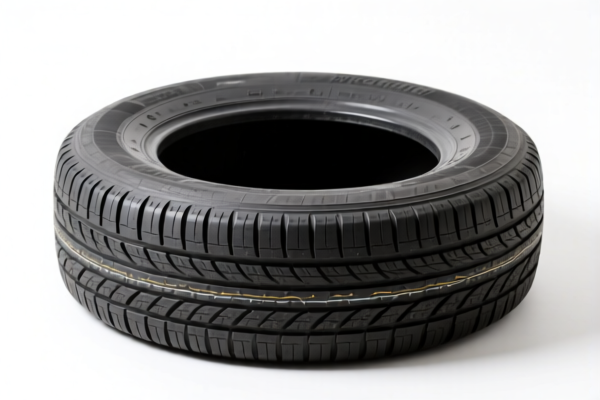
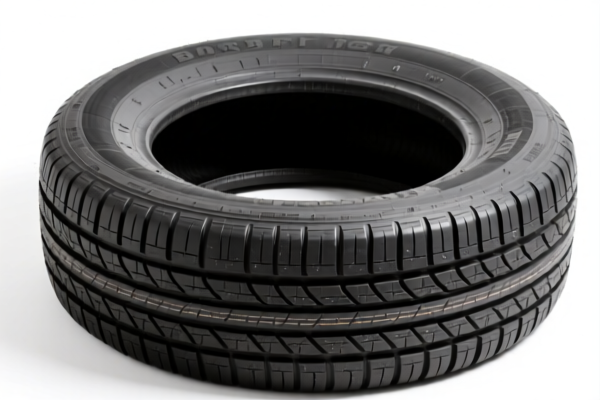
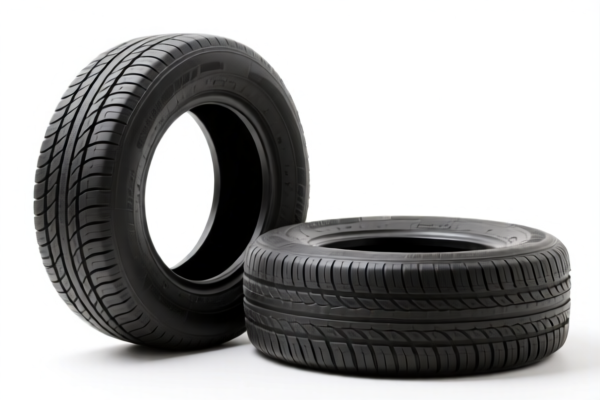
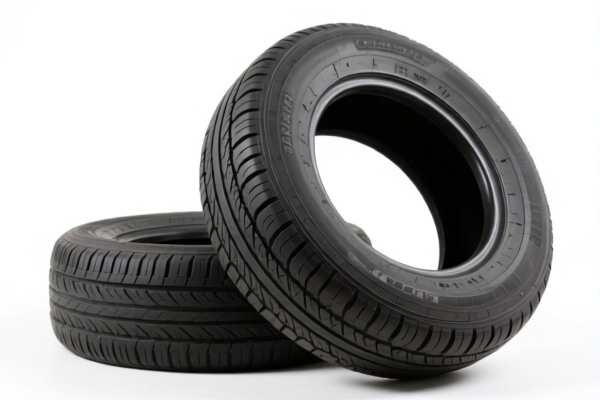
AI Analysis
🛞 Reclaimed Rubber Tires for Household Vehicles
🌐 HS Code Reference & Customs Clearance Guide | 2026 Latest Tariff Analysis | Professional Entry Strategy
📌 I. Product Definition & Classification: What Exactly Are "Reclaimed Rubber Tires"?
"Reclaimed Rubber Tires for Household Vehicles" refers to tires manufactured using recovered rubber (from scrapped tires) rather than virgin natural/synthetic rubber. They are typically used for light-duty applications such as bicycles, scooters, small trailers, go-karts, or other non-motorized/light motorized household vehicles.
⚠️ Key Classification Distinction:
- Material Aspect: "Reclaimed Rubber" falls under Chapter 40 (Rubber and Articles Thereof).
- Form Aspect: "Tires" fall under Heading 40.11 (New Pneumatic Tires) or 40.12 (Retreaded/Used Tires).
- Crucial Note: If the tire is retreaded or made from reclaimed material, it cannot be classified as a "new" pneumatic tire (40.11). It must fall under 40.12 (Other rubber tires) or potentially 40.13 (Rubber linings/tubes, if misinterpreted, but 40.12 is primary for tires).
- US Trade Policy Context: Due to the high tariffs on Chinese-origin rubber goods under Section 301 and IEEPA, precise classification is critical to avoid excessive duties or seizures.
📦 II. HS Code Classification Details (2026 Latest Tariff Authority Mapping)
Based on the provided data, the goods are matched to three potential HS Codes. Each reflects a different interpretive path (Material, Form, or Usage).
| HS Code | Product Description | Applicable Scenario | Tax Detail Breakdown |
|---|---|---|---|
| 4012.11.80.00 | Other rubber tires, suitable for fallback rules for "other" categories | Matches rubber material & tire form; used when specific sub-category doesn't fit elsewhere | Total Tax: 38.4% • Base: 3.4% • Add'l: 25.0% • Section 122: 10% |
| 4012.12.40.35 | Other rubber tires, other/other category rule judgment | Matches rubber material & tire form; based on "other/other" classification logic | Total Tax: 39.0% • Base: 4.0% • Add'l: 25.0% • Section 122: 10% |
| 4013.10.00.10 | Rubber linings, tubes, or similar articles (misclassified as tire by usage) | Matches rubber material & tire usage; core elements consistent with "tire use" but misassigned to lining/tube heading | Total Tax: 38.7% • Base: 3.7% • Add'l: 25.0% • Section 122: 10% |
🔍 Important Clarification:
- 4012.11 and 4012.12 are the correct headings for tires (new, retreaded, or used).
- 4013 typically refers to linings and tubes, not solid/pneumatic tires. Including it in the data suggests a potential misclassification risk or a broad "usage-based" fallback. Priority should be given to 4012.11/4012.12.
- All three codes attract high additional tariffs due to the "China +10%" (Section 122) and "301 Clause" (25%) structure.
💰 III. 2026 Latest Tariff Rate Detailed Explanation (Including Surcharges)
✅ Applicable Country: United States (US)
✅ Origin: China (CN)
✅ Effective Time: Post-2025 policies (including Section 122 and 301)
🎯 1. 4012.11.80.00 —— Rubber Tires (Other, New Pneumatic) / Fallback Rule
| Item | Content |
|---|---|
| Base Tariff | 3.4% (ad valorem) |
| Section 301 Surcharge | +25.0% (USITC Footnote for Chinese rubber products) |
| Section 122 Surcharge | +10.0% (Targeted at specific Chinese rubber/china-origin goods) |
| Total Tariff | 38.4% |
| Tax Calculation | CIF Value × 38.4% |
| De Minimis Exemption | ❌ Not Eligible (High tariff rates exclude de minimis thresholds) |
| Legal Basis Path | HTSUS:4012.11.80.00 → USITC:301.2 → USTR:Section122 |
📌 Explanation:
- The 25% is the standard Section 301 tariff for most rubber goods from China.
- The 10% is the new Section 122 tariff, applied to specific items to protect domestic manufacturers.
- Total 38.4% is a significant cost barrier. Reclaimed rubber tires do not automatically qualify for lower rates unless specifically exempted (which is rare for tires).
🎯 2. 4012.12.40.35 —— Rubber Tires (Other, Retreaded/Used) / Other Category
| Item | Content |
|---|---|
| Base Tariff | 4.0% (ad valorem) |
| Section 301 Surcharge | +25.0% |
| Section 122 Surcharge | +10.0% |
| Total Tariff | 39.0% |
| Tax Calculation | CIF Value × 39.0% |
| De Minimis Exemption | ❌ Not Eligible |
| Legal Basis Path | HTSUS:4012.12.40.35 → USITC:301.2 → USTR:Section122 |
📌 Note:
- Slightly higher total tax than 4012.11 due to a higher base rate (4.0% vs 3.4%).
- Applies if the "reclaimed" tire is considered "other" or "retreaded" under USITC interpretations.
- Critical: "Reclaimed rubber" tires are often treated as new tires if they are not retreaded but newly molded. Classification must be accurate.
🎯 3. 4013.10.00.10 —— Rubber Linings/Tubes (Misclassification Risk)
| Item | Content |
|---|---|
| Base Tariff | 3.7% (ad valorem) |
| Section 301 Surcharge | +25.0% |
| Section 122 Surcharge | +10.0% |
| Total Tariff | 38.7% |
| Tax Calculation | CIF Value × 38.7% |
| De Minimis Exemption | ❌ Not Eligible |
| Legal Basis Path | HTSUS:4013.10.00.10 → USITC:301.2 → USTR:Section122 |
📌 Warning:
- This code is for linings and tubes, not tires.
- Using this code for tires is a misclassification. If detected by CBP, it will result in:
- Back taxes + Interest
- Penalties (up to 40% of dutiable value)
- Seizure of goods
- Only use this if the product is not a tire (e.g., inner tubes for bicycles). If it's a tire, do not use 4013.
🛠️ IV. Customs Clearance Practical Advice (Avoiding Pitfalls)
✅ 1. Required Documentation Checklist
| Document | Must Provide | Purpose |
|---|---|---|
| ✅ Product Specification Sheet | ✔️ | Confirm "Reclaimed Rubber" content, tire type (pneumatic/solid), vehicle compatibility |
| ✅ Composition Analysis Report | ✔️ | From third-party lab (e.g., SGS, Intertek) to prove % of reclaimed vs. virgin rubber |
| ✅ Product Photos (Clear) | ✔️ | Show sidewall markings, tread pattern, size, and "Reclaimed" label |
| ✅ Commercial Invoice | ✔️ | Must specify "Tire, Reclaimed Rubber, for Household Vehicle" |
| ✅ Packing List | ✔️ | Detail quantity, weight, dimensions |
| ✅ Certificate of Origin | ✔️ | To determine country of origin (China vs. other) |
✅ 2. Declaration Strategy (Key Tips)
🔥 "Declare Accurately, Label Clearly, Avoid Misclassification!"
| Scenario | Correct Declaration | Incorrect Declaration |
|---|---|---|
| Reclaimed Rubber Tire (Pneumatic) | 4012.11.80.00 or 4012.12.40.35 |
4013.10.00.10 (Tube/Lining) → Penalty Risk |
| Inner Tube for Bicycle | 4013.10.00.10 |
4012.11.80.00 (Over-taxed) |
| Solid Rubber Wheel (Not Tire) | 4016.99.60.00 (Other rubber articles) |
4012.11.80.00 → Misclassification |
| Retreaded Tire | 4012.13.00.00 (Retreaded) |
4012.11.80.00 (New) → Potential Penalty |
📌 Critical Rule:
- "Reclaimed Rubber" does not change the function (tire). It changes the material.
- If the tire is newly molded using reclaimed rubber, it is still a new tire (40.11/40.12), not a used/retreaded one.
- Do not declare "Inner Tube" if it is a tire, or vice versa.
✅ 3. Special Cases Handling
| Case | Handling Advice |
|---|---|
| OEM/Private Label Tires | Provide design drawings and brand authorization to prove origin and composition |
| Mixed Shipments (Tires + Tubes) | Declare separately! Tires under 4012, Tubes under 4013. Do not bundle under one code. |
| "Household Vehicle" Ambiguity | Define the vehicle. If it's an e-bike, ensure the tire size and type match HS 4012.11/12. If it's a car tire, different sub-codes apply. |
| Origin Marking | Clearly mark "Made in China" on the tire sidewall. Failure to mark can lead to additional penalties under 19 U.S.C. 1304. |
🌍 V. Global Market Clearance Comparison (2026 Latest)
| Country/Region | Recommended HS Code | Tariff Rate (China Origin) | Certification Required | Notes |
|---|---|---|---|---|
| 🇺🇸 United States | 4012.11.80.00 |
38.4% | DOT, FCC (if electric), RoHS | High tariffs under 301 + 122 |
| 🇨🇳 China | 4012.11.80.00 |
5%~10% | CCC (for certain tires) | Lower entry barrier |
| 🇪🇺 European Union | 4012.11.80.00 |
4.5% (if under 15kg) | E-Mark, REACH, RoHS | No Section 301/122 surcharges |
| 🇬🇧 United Kingdom | 4012.11.80.00 |
4.5% | UKCA, CE Marking | Post-Brexit rules apply |
| 🇯🇵 Japan | 4012.11.80.00 |
5.3% | JIS, PSE (if electric) | Stable tariff environment |
📌 Conclusion:
- USA is the most expensive market for Chinese rubber tires due to 38.4% total duty.
- EU/UK/Japan offer significantly lower costs (~4.5%–5.3%), making them more attractive for reclaim rubber tires if supply chain allows.
- Strategy: Consider sourcing from Vietnam or Thailand (if applicable) to avoid China-origin surcharges, but beware of "transshipment" rules.
📌 VI. Common Mistakes & Pitfalls (Blood Lessons)
❌ Mistake 1: Declaring "Tires" as "Inner Tubes" (4013) to avoid higher duties
👉 Consequence: CBP inspection reveals physical mismatch → Seizure, Fine, Legal Action
❌ Mistake 2: Not disclosing "Reclaimed Rubber" composition
👉 Consequence: If deemed "Virgin Rubber," different environmental or trade rules may apply. Lack of transparency leads to audits.
❌ Mistake 3: Using "Other Rubber Articles" (4016) for tires
👉 Consequence: Misclassification → Back taxes + Interest because tires have specific headings (40.11–40.14).
❌ Mistake 4: Ignoring Section 122 (10% surcharge)
👉 Consequence: Underpayment → Penalties of up to 40% of the evaded duty.
✅ Correct Approach:
"Pneumatic Tire, Reclaimed Rubber, 12-inch, for Electric Bicycle, Model XYZ, Made in China, DOT Compliant"
🎯 VII. Conclusion: Precision Classification Saves Money!
🎯 Remember the Mantra:
🔹 "Tire is Tire, Tube is Tube. Don't mix them!"
🔹 "Reclaimed Rubber still pays 38.4% in the US. Plan ahead!"
🔹 "Label clearly, declare accurately, avoid penalties!"
📌 Pro Tip:
If you are importing into the US, consider applying for a HTSUS Pre-Ruling from CBP to confirm the correct subheading (4012.11 vs 4012.12) and ensure compliance with Section 122. This can prevent costly disputes post-import.
📣 Immediate Action:
📞 Contact a licensed customs broker + Provide product photos + Verify Section 122 applicability
🚀 Ensure your reclaimed rubber tires clear smoothly, avoid fines, and protect your margins!
✨ Professional Customs Clearance Starts with Accurate Classification!
💼 Every Percentage Point Counts in Tariff Costs!
Customer Reviews
About HS Code Classification
The Harmonized System (HS) is an internationally standardized nomenclature developed by the World Customs Organization (WCO) to classify traded products. Over 200 countries use the HS system as the basis for customs tariffs, trade statistics, and import/export regulations.
Each HS code follows a hierarchical structure:
- Chapter (2 digits) — Broad category of goods (e.g., Chapter 84: Machinery and Mechanical Appliances)
- Heading (4 digits) — More specific grouping within the chapter
- Subheading (6 digits) — Internationally standardized breakdown, used by all WCO member countries
- National subdivisions (8-10 digits) — Country-specific extensions for further classification, such as US HTSUS 10-digit codes
Correct HS code classification is essential for smooth customs clearance, accurate duty payment, and compliance with trade regulations. Misclassification can lead to customs delays, overpayment of duties, or penalties.
When importing from CN to US, the applicable tariff rates may include:
- Most-Favored-Nation (MFN) rate — The standard duty rate applied to WTO members
- General rate — Applied to countries without trade agreements
- Trade remedy duties — Additional tariffs such as Section 301 (anti-dumping), Section 232 (national security), or countervailing duties
The information provided on this page is for reference purposes only. For official classification, please consult with your local customs authority or a licensed customs broker.