Recovered Toilet Paper
CN → US| HS Code | Tariff Rate | Origin | Destination | Doc |
|---|---|---|---|---|
| 4823700040 | 35.0% | CN | US | Official Doc |
| 4823690040 | 35.0% | CN | US | Official Doc |
| 4819100040 | 35.0% | CN | US | Official Doc |
| 4819504060 | 35.0% | CN | US | Official Doc |
| 4811596000 | 35.0% | CN | US | Official Doc |
Product Images
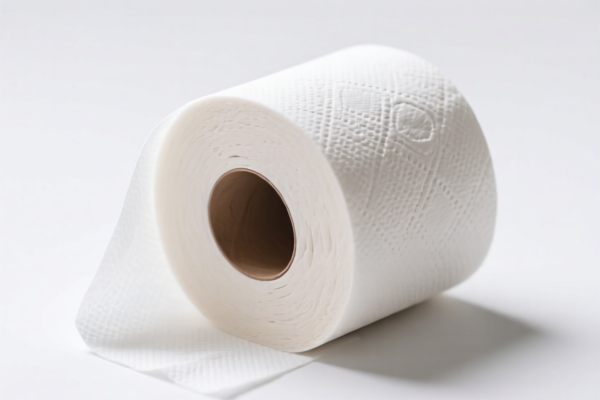
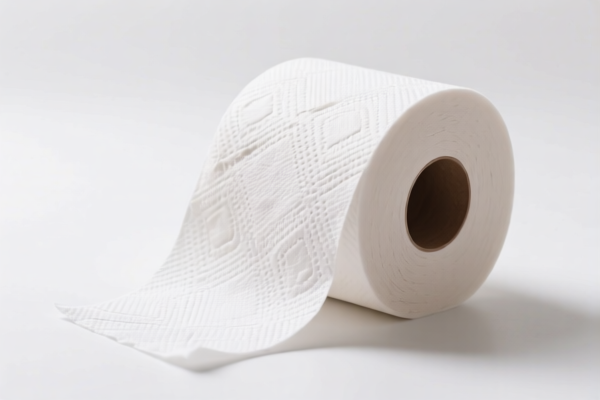
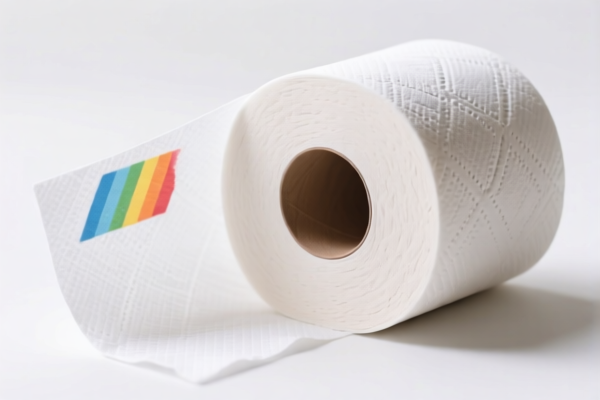
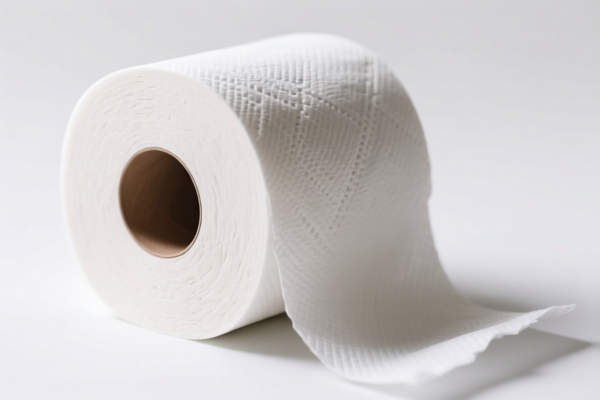
AI Analysis
🧻 Recovered Toilet Paper (Recycled Tissue)
🌐 HS Code Reference & Customs Clearance Guide | 2026 Latest Tariff Analysis | Professional Compliance Strategy
📌 I. Product Definition & Classification: Do You Truly Understand "Recovered Toilet Paper"?
"Recovered Toilet Paper" refers to tissue products made from recycled paper fibers (post-consumer or post-industrial waste). In international trade, the classification depends heavily on the physical form, processing stage, and specific usage.
⚠️ Key Distinction:
- If the product is raw pulp or molded shapes (e.g., egg cartons, protective packaging) → Classified under 4823.
- If the product is finished packaging containers (boxes, containers) → Classified under 4819.
- If the product is coated/crafted recycled paper → Classified under 4811.
Critical Note:
- "Recovered" implies recycled content.
- The destination market (USA) applies aggressive punitive tariffs (Section 301 & Section 122) on Chinese-origin recycled paper products.
- Do not confuse with "Virgin Tissue Paper" (which may fall under 4803) – the HS codes provided below are specific to recycled/recovered materials.
📦 II. HS Code Classification Details (2026 Latest Tariff Authority Reference)
| HS Code | Product Description | Application Scenario | Key Characteristics |
|---|---|---|---|
4823.70.00.40 |
Recycled Paper Packaging Material, Material: Recycled Paper, Form: Pulp Molded or Pressed Articles | Molded packaging trays, protective inserts, egg cartons, pulp cups | ✅ Made via pulp molding or pressing; rigid structure |
4823.69.00.40 |
Recycled Paper Packaging Material, Material: Paper, Form: Paper Packaging Articles | Folded boxes, paper tubes, rigid containers not molded | ✅ Paper-based packaging; not pulp-molded; includes folded structures |
4819.10.00.40 |
Recycled Paper Packaging Material, Material: Recycled Paper, Form: Packaging Containers | Carton boxes, folding cartons, rigid containers made from recycled board | ✅ Finished containers; typically folding cartons or rigid boxes |
4819.50.40.60 |
Recycled Paper Packaging Material, Material: Paper/Cardboard, Form: Packaging Containers | Cardboard boxes, corrugated packaging containers | ✅ Cardboard/Heavy Paper; structural containers |
4811.59.60.00 |
Recovered Coated Paper, Material: Paper, Processed: Coated/Surfaced | Recycled paper with wax, plastic, or other coatings for moisture resistance | ✅ Treated/Coated recycled paper; not necessarily a finished container |
🔍 Important Reminder:
- All listed HS codes are for US Import (from China) with a total tax rate of 35.0%.
- The term "Recovered Toilet Paper" in your query likely refers to packaging materials made from recycled paper (as per the data), NOT personal hygiene toilet rolls (which would typically fall under 4803/4804).
- If you are importing personal use toilet paper, the HS codes provided DO NOT APPLY. Please verify if you mean Recycled Packaging Paper.
💰 III. 2026 Latest Tariff Rate Breakdown (Including Additional Duties)
✅ Applicable Country: United States (US)
✅ Country of Origin: China (CN)
✅ Effective Date: Ongoing (Current Policy)
🎯 1. General Tariff Structure for All Listed HS Codes (4823.70.00.40 to 4811.59.60.00)
| Item | Rate |
|---|---|
| Basic MFN Rate | 0.0% |
| Section 301 Additional Duty | +25.0% |
| Section 122 Duty | +10.0% |
| Total Effective Tariff Rate | 35.0% |
| Calculation Basis | CIF Value (Cost, Insurance, Freight) × 35% |
| De Minimis Exemption Eligibility | ❌ NOT ELIGIBLE (Section 301 & 122 duties apply to all shipments regardless of value) |
| Legal Authority | USITC Section 301 Tariffs + USTR Section 122 (if applicable) |
📌 Explanation:
- 0% Basic Rate: Recycled paper products often enjoy low basic MFN rates due to trade preferences for recycling materials.
- +25% Section 301: Imposed under the U.S. Trade Representatives’ investigation of China’s trade practices (List 3/4A).
- +10% Section 122: Applied under Section 122 of the Trade Act of 1974, which allows the President to impose duties up to 15% for a period of 1 year to protect national security or balance of payments.
- Total 35%: This is a fixed combined rate for these specific recycled paper packaging codes from China.
🛠️ IV. Customs Clearance Practical Advice (Risk Avoidance Guide)
✅ 1. Documentation Checklist (Mandatory)
| Document | Required | Notes |
|---|---|---|
| ✅ Commercial Invoice | ✔️ | Must explicitly state "Recovered/Recycled Paper" and "Made in China" |
| ✅ Packing List | ✔️ | Detail dimensions, weight, and number of units |
| ✅ Material Composition Certificate | ✔️ | Proof of recycled content (e.g., % post-consumer waste) |
| ✅ Product Description | ✔️ | Must match HS Code description (e.g., "Pulp Molded Packaging" vs. "Paper Box") |
| ✅ Fumigation Certificate | ✔️ | If packaging is wood-based or mixed, but for pure paper, usually not required unless contaminated |
✅ 2. Declaration Tips
🔥 Key Mantra:
"Accurate Description, Proven Recycled Content, No Hidden Goods!"
| Scenario | Correct Declaration | Wrong Practice |
|---|---|---|
| Pulp Molded Trays | 4823.70.00.40 – "Recycled Paper Pulp Molded Packaging" |
Declaring as "Cardboard Boxes" → Misclassification |
| Folding Cartons | 4819.10.00.40 or 4819.50.40.60 |
Declaring as "Coated Paper" → Higher scrutiny |
| Coated Recycled Paper Rolls | 4811.59.60.00 |
Declaring as "Finished Packaging" → Wrong form |
| Mixed Shipments | Separate lines for each HS Code | Bundling all under one code → Penalties |
✅ 3. Special Considerations
| Scenario | Handling Advice |
|---|---|
| High-Risk Audit | Be prepared to provide samples or lab tests proving recycled content if customs questions the "Recovered" label. |
| Value Declaration | Ensure CIF value is accurate. A 35% duty on a low-value item can still be significant. |
| Packaging Integrity | If the product is damaged or wet, it may be reclassified as "waste" rather than "recycled material," leading to rejection or destruction. |
| Non-Chinese Origin | If the paper is sourced from China but manufactured in Vietnam/Malaysia, you may avoid the 35% duty if proper Certificate of Origin is provided. |
🌍 V. Global Market Comparison (2026 Update)
| Country/Region | Recommended HS Code | Tariff Rate (from China) | Certification | Notes |
|---|---|---|---|---|
| 🇺🇸 USA | 4823.70.00.40 etc. |
35.0% (Fixed) | None Specific | Highest barrier due to Section 301 + 122 |
| 🇨🇳 China | Same | 0% (Import Duty) | None | Export incentive for recycled materials |
| 🇪🇺 EU | Varies (e.g., 4823) | 0% – 2.5% | CE, REACH | Lower tariffs; strict environmental standards |
| 🇬🇧 UK | Varies | 0% – 2.5% | UKCA | Post-Brexit rules; similar to EU |
| 🇯🇵 Japan | Varies | 0% – 5% | None | FTA benefits available |
📌 Conclusion:
- The USA is the most expensive market for Chinese recycled paper products due to 35% combined duties.
- Consider third-country manufacturing (e.g., Vietnam, Thailand) to mitigate duties, provided Rules of Origin are met.
📌 VI. Common Mistakes & Pitfalls (Lessons Learned)
❌ Mistake 1: Using "Toilet Paper" to describe packaging materials
👉 Consequence: Customs may classify under hygiene products (different HS Code), leading to mismatched duties and clearance delays.
👉 Fix: Use precise terms like "Recycled Packaging Board," "Pulp Molded Container."
❌ Mistake 2: Ignoring the Section 122 Duty
👉 Consequence: Underestimating costs by 10%.
👉 Fix: Always factor in the +10% in your cost calculations.
❌ Mistake 3: Claiming "De Minimis" Exemption
👉 Consequence: 0% success rate for Section 301/122 goods under $800.
👉 Fix: Prepare for full duty payment on all shipments.
🎯 VII. Conclusion: Professional Declaration Saves Money!
🎯 Remember:
🔹 "Recovered Paper = Recycled Content"
🔹 "USA Import = 35% Duty (301 + 122)"
🔹 "HS Code Matters: Molded vs. Boxed vs. Coated"
📌 Pro Tip:
If you are importing personal-use toilet paper (hygiene product), the HS Codes above DO NOT APPLY. Please consult for HS Codes under 4803 or 4804. The data provided strictly covers recycled paper packaging materials.
📣 Immediate Action:
📞 Verify Product Form: Is it molded? Boxed? Coated?
📄 Prepare Origin Proof: If shipping via Vietnam/Malaysia, ensure proper CO.
📉 Calculate Landed Cost: Include the 35% tariff in your pricing strategy.
✨ Professional Clearance Starts with Accurate Classification!
💼 Your Cost Efficiency Depends on Precision!
Customer Reviews
About HS Code Classification
The Harmonized System (HS) is an internationally standardized nomenclature developed by the World Customs Organization (WCO) to classify traded products. Over 200 countries use the HS system as the basis for customs tariffs, trade statistics, and import/export regulations.
Each HS code follows a hierarchical structure:
- Chapter (2 digits) — Broad category of goods (e.g., Chapter 84: Machinery and Mechanical Appliances)
- Heading (4 digits) — More specific grouping within the chapter
- Subheading (6 digits) — Internationally standardized breakdown, used by all WCO member countries
- National subdivisions (8-10 digits) — Country-specific extensions for further classification, such as US HTSUS 10-digit codes
Correct HS code classification is essential for smooth customs clearance, accurate duty payment, and compliance with trade regulations. Misclassification can lead to customs delays, overpayment of duties, or penalties.
When importing from CN to US, the applicable tariff rates may include:
- Most-Favored-Nation (MFN) rate — The standard duty rate applied to WTO members
- General rate — Applied to countries without trade agreements
- Trade remedy duties — Additional tariffs such as Section 301 (anti-dumping), Section 232 (national security), or countervailing duties
The information provided on this page is for reference purposes only. For official classification, please consult with your local customs authority or a licensed customs broker.