Recovered bleached chemical pulp paperboard
CN → US| HS Code | Tariff Rate | Origin | Destination | Doc |
|---|---|---|---|---|
| 4804520020 | 35.0% | CN | US | Official Doc |
| 4804520040 | 35.0% | CN | US | Official Doc |
| 4807009400 | 35.0% | CN | US | Official Doc |
| 4807009200 | 35.0% | CN | US | Official Doc |
| 4706200000 | 35.0% | CN | US | Official Doc |
Product Images
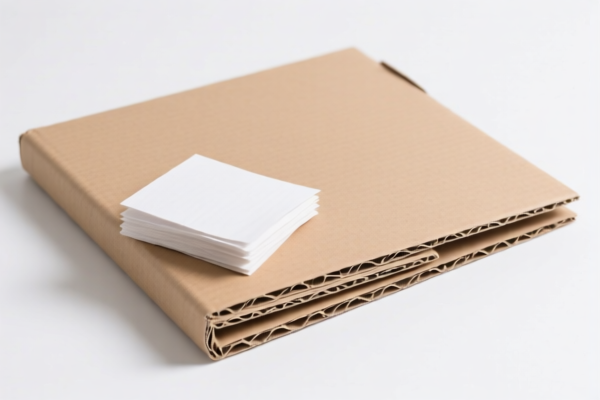
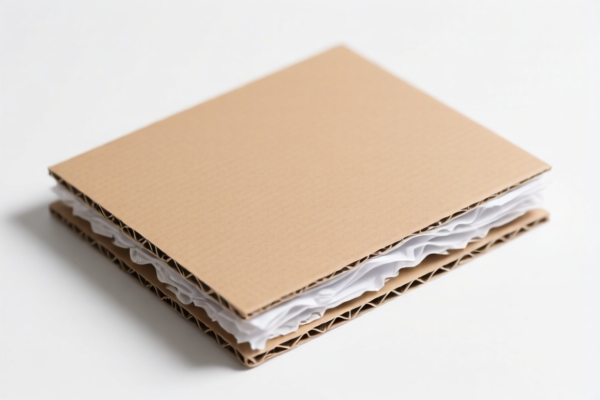
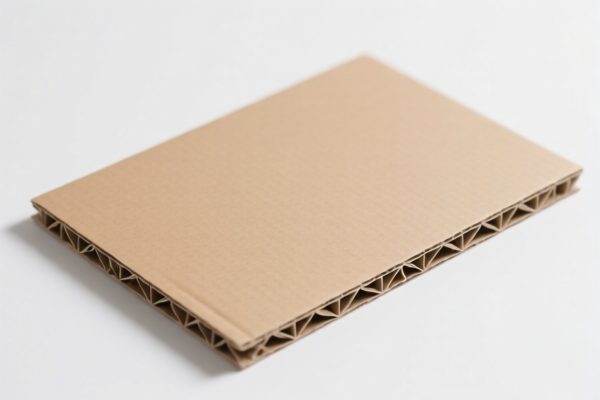
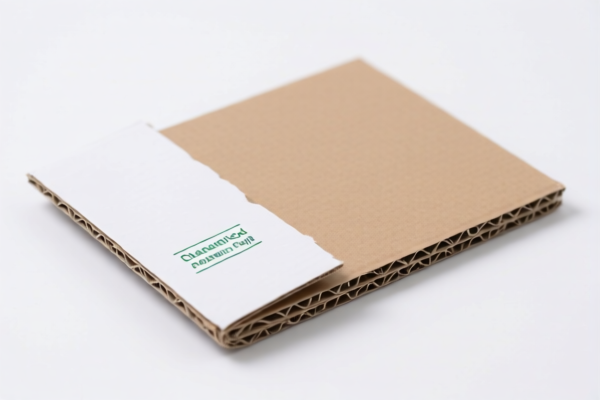
AI Analysis
📦 Recovered Bleached Chemical Pulp Paperboard (Recycled)
🌐 HS Code Reference & Customs Clearance Guide | 2026 Latest Tariff Analysis | Professional Compliance Strategy
📌 1. Product Definition & Classification: Do You Really Know "Recovered Bleached Chemical Pulp Paperboard"?
Recovered Bleached Chemical Pulp Paperboard refers to paperboard manufactured from recycled fibers (waste paper and paperboard) that have been processed into pulp and then bleached to achieve a lighter color. Unlike virgin chemical wood pulp paperboard (e.g., Kraft linerboard), this material is classified under Chapter 47 (Pulp of wood or of other fibrous cellulosic material) or Chapter 48 (Paper and paperboard), specifically focusing on waste/recycled paper products.
In international trade, the key distinction lies in: 1. Raw Material: Is it virgin wood pulp (Ch 47/4804-4807) or recycled waste/paperboard (Ch 4803-4807)? 2. Processing State: Is it pulp (raw material) or paperboard (finished semi-product)? 3. Bleaching: Has it been chemically bleached?
⚠️ Key Distinction Point:
- If it is purely pulp (fibrous material, not yet formed into sheet/board), it may fall under 4706.20.00.00.
- If it is formed into board/sheets but made from recycled fibers, it typically falls under 4807 series (Composite paper, paperboard, etc.) or specific waste paper codes, but 4804/4805 are strictly for virgin fiber paperboard.
- Crucial Note: The term "Recovered" implies recycled content. HS codes starting with 4804 and 4805 are generally for virgin chemical pulp. 4807 covers composite/waste-based paperboards. 4706 covers pulp from waste paper.
📦 2. HS Code Classification Details (2026 Latest Tariff Authority Comparison)
Based on the provided , here are the relevant HS codes for "Recovered Bleached Chemical Pulp Paperboard." Note that some codes in the dataset (like 4804.52) describe virgin chemical pulp, which may be a misclassification if the product is truly recovered/recycled. However, we will analyze them as per the provided data structure, highlighting the discrepancies.
| HS Code | Product Description (from Data) | Applicable Scenario | Material Origin | Critical Compliance Note |
|---|---|---|---|---|
4706.20.00.00 |
Bleached chemical pulp of waste paper and paperboard | Raw material: Pulp/Fiber from recycled paper | ✅ Recycled (Recovered) | Most Accurate for Pulp Form. This is the correct code for pulp made from recycled paper. |
4807.00.92.00 |
Chemical wood pulp bleached paperboard, uncoated | Paperboard form, uncoated surface | ⚠️ Ambiguous (Data says "Chemical Wood Pulp", but name says "Recovered") | If truly recovered, this code is incorrect (4807 is usually virgin/composite). Use only if it contains significant virgin fiber mix. |
4807.00.94.00 |
Chemical wood pulp bleached paperboard, composite paperboard | Composite paperboard category | ⚠️ Ambiguous | Similar to above. Only valid if it's a composite board meeting 4807 criteria. |
4804.52.00.20 |
Chemical wood pulp bleached kraft paper | Kraft paper category | ❌ Incorrect for Recycled | 4804 is for virgin kraft paper. Do not use for recovered pulp unless mixed heavily with virgin pulp (check local customs rules). |
4804.52.00.40 |
Chemical wood pulp bleached paperboard, packaging base | Packaging substrate | ❌ Incorrect for Recycled | Same as above. Designed for virgin chemical wood pulp. |
🔍 Priority Recommendation:
- For pure recovered/recycled bleached chemical pulp (in pulp form):4706.20.00.00is the most accurate.
- For recovered/recycled paperboard (in sheet/board form): It typically falls under 4803 (Tissue) or 4807 (if composite) or specific waste codes. The provided 4804/4805 codes are high-risk if the product is 100% recycled.
- Warning: Misdeclaring recycled goods as virgin (4804) can lead to severe penalties for customs fraud or misclassification.
💰 3. 2026 Latest Tariff Rate Details (Including Surcharge, Policy Surcharges)
✅ Applicable Country: United States (US)
✅ Origin: China (CN) (Assumed based on tax details in data)
✅ Effective Date: From November 10, 2025 (including subsequent imports)
🎯 1. 4706.20.00.00 —— Bleached Chemical Pulp of Waste Paper and Paperboard
| Item | Content |
|---|---|
| Base Rate | 0% (ad valorem) |
| USITC Surcharge | +25% (Under Section 301 Duties) |
| IEEPA Surcharge | +10% (Targeting China/HK products, effective Nov 10, 2025) |
| Total Rate | 35% |
| Tax Calculation | CIF Value × 35% |
| De Minimis Eligibility | ❌ No (deny_de_minimis) |
| Legal Basis Path | IEEPA:9903.01.25 → IEEPA:9903.01.24 → USITC:4706.20.00.00 → FOOTNOTE:9903.88.01 |
📌 Explanation:
- The 25% USITC surcharge is part of the ongoing Section 301 tariffs on Chinese imports.
- The 10% IEEPA surcharge is an additional penalty for Chinese-origin goods under the International Emergency Economic Powers Act.
- Total 35% is applied to the CIF value. This is a high tariff rate for raw pulp materials.
🎯 2. 4804.52.00.20 & 4804.52.00.40 —— Chemical Wood Pulp Bleached Paperboard (Virgin)
| Item | Content |
|---|---|
| Base Rate | 0% |
| USITC Surcharge | +25% |
| IEEPA Surcharge | +10% |
| Total Rate | 35% |
| Tax Calculation | CIF × 35% |
| De Minimis Eligibility | ❌ No |
| Legal Basis Path | IEEPA:9903.01.25 → IEEPA:9903.01.24 → USITC:4804.52.00.20/40 → FOOTNOTE:9903.88.01 |
📌 Note:
- Although these codes are for virgin pulp, the tariff structure is identical (35%).
- Risk: If you import recovered pulp under these codes, you are declaring it as virgin. Customs may reject this due to material mismatch (density, fiber length, chemical composition).
🎯 3. 4807.00.92.00 & 4807.00.94.00 —— Composite/Uncoated Paperboard
| Item | Content |
|---|---|
| Base Rate | 0% |
| USITC Surcharge | +25% |
| IEEPA Surcharge | +10% |
| Total Rate | 35% |
| Tax Calculation | CIF × 35% |
| De Minimis Eligibility | ❌ No |
| Legal Basis Path | IEEPA:9903.01.25 → IEEPA:9903.01.24 → USITC:4807.00.92.00/94.00 → FOOTNOTE:9903.88.01 |
📌 Note:
- These codes are often used for composite paperboard (layers of different papers). If your "recovered" paperboard is a single layer of recycled pulp, this code may be incorrect.
🛠️ 4. Customs Clearance Practical Advice (Combat Avoidance Guide)
✅ 1. Document Checklist (Indispensable)
| Document | Required | Description |
|---|---|---|
| ✅ Product Specification Sheet | ✔️ | Must specify: Fiber content (100% recycled?), Bleaching process (ECF/TCF?), GSM, Moisture content. |
| ✅ Origin Certificate (CO) | ✔️ | Crucial to prove Chinese origin (for 35% tariff calculation). |
| ✅ Commercial Invoice | ✔️ | Must clearly state "Recovered Bleached Chemical Pulp Paperboard" and HS Code. |
| ✅ Packing List | ✔️ | Detail weight, volume, and packaging type. |
| ✅ Test Report | ✔️ | Third-party lab report confirming recycled fiber content and bleaching level. |
| ✅ Material Safety Data Sheet (MSDS) | ✔️ | If treated with chemicals. |
✅ 2. Declaration Tips (Key Mnemonic)
🔥 "Recycled is Key, Pulp vs Board, Declare Exactly, Avoid the 35% Shock!"
| Scenario | Correct Declaration | Wrong Practice |
|---|---|---|
| 100% Recycled Pulp | 4706.20.00.00 |
Misdeclare as 4804 (Virgin) → Audit & Penalty |
| Recycled Paperboard (Composite) | 4807.00.94.00 (if layered) |
Declare as 4804.52 (Virgin Kraft) → Rejection |
| Virgin Kraft Paper | 4804.52.00.20 |
Declare as "Recovered" → Wrong Classification |
| Mixed Content (Virgin+Recycled) | Check threshold (e.g., >90% virgin = 4804) | Ambiguous description → Delays |
✅ 3. Special Handling
| Scenario | Handling Advice |
|---|---|
| High Recycled Content | Provide lab tests proving >50% or >90% recycled content to justify 4706 or 4807. |
| Bleaching Type | Specify if ECF (Elemental Chlorine Free) or TCF (Total Chlorine Free), as this affects environmental certifications. |
| Moisture Content | Ensure moisture is <10-12% for safe shipping and classification stability. |
| Packaging | Use palletized, wrapped loads to prevent damage during transit. |
🌍 5. Global Main Market Comparison (2026 Latest)
| Country/Region | Recommended HS Code | Tariff (China Origin) | Certification Requirements | Notes |
|---|---|---|---|---|
| 🇺🇸 USA | 4706.20.00.00 (Pulp) |
35% (25% Sec 301 + 10% IEEPA) | No special certs | High Tariff. Consider supply chain diversification. |
| 🇨🇳 China | 4706.20.00.00 |
5-10% (Import Duty) | CCC (if applicable) | No Section 301 surcharge on imports to China. |
| 🇪🇺 EU | 4706.20.00.00 |
0-6% (MFN) | REACH Compliance | No US-style surcharges. |
| 🇦🇺 Australia | 4706.20.00.00 |
5% | APVMA (if treated) | Moderate tariff. |
| 🇯🇵 Japan | 4706.20.00.00 |
0-5% | JIS Standards | Low tariff environment. |
📌 Conclusion:
- USA is the most expensive market due to 35% total tariff.
- China, EU, Japan, Australia have significantly lower tariffs.
- If exporting to the US, consider duty drawback programs or FTZ (Foreign Trade Zone) utilization if eligible.
📌 6. Common Mistakes & Pitfalls (Lessons Learned)
❌ Mistake 1: Declaring recycled pulp as virgin pulp (4804.52)
👉 Consequence: Customs audit, fines for fraud, and potential seizure of goods.
👉 Solution: Always provide fiber analysis reports to prove recycled content.
❌ Mistake 2: Confusing Pulp (4706) with Paperboard (4804/4807)
👉 Consequence: If imported as pulp but received as sheets, or vice versa, customs will reject.
👉 Solution: Clearly state the physical form: "Pulp in bales" vs "Paperboard in rolls/sheets".
❌ Mistake 3: Ignoring Bleaching Chemicals
👉 Consequence: If chemicals are present, additional environmental regulations (REACH, TSCA) may apply.
👉 Solution: Include SDS and declare chemical treatments accurately.
❌ Mistake 4: Underestimating Tariff Complexity
👉 Consequence: Unexpected 35% tariff cost erodes profit margins.
👉 Solution: Calculate Landed Cost including all surcharges before signing contracts.
✅ Correct Practice:
"Recovered Bleached Chemical Pulp Paperboard, 100% Recycled Fiber, ECF Bleached, in Pulp Form, CIF Los Angeles, HS Code 4706.20.00.00"
🎯 7. Conclusion: Professional Declaration, Save Time, Reduce Costs!
🎯 Remember the Mnemonic:
🔹 "Recycled is 4706, Virgin is 4804, 35% Tax for US, Don't Confuse the Two!"
🔹 "HS Code Determines Destiny, 35% Tariff is High, Declare Accurately, Avoid Penalties!"
📌 Tips:
- If your product is 100% recycled, strictly use 4706.20.00.00 (for pulp) or appropriate 4807/4803 codes (for board).
- Pre-Arrangement: Apply for an Advance Ruling from US Customs (CBP) if you are unsure about the classification of mixed-fiber products.
- Supply Chain: Consider sourcing from non-China origins (e.g., Southeast Asia) to avoid the 35% US surcharge if possible.
📣 Immediate Action:
📞 Contact a Professional Customs Broker + Provide Product Photos + Apply for HS Code Pre-Ruling
🚀 Let your paperboard clear customs smoothly, efficiently export, and double profits!
✨ Professional Customs Clearance Starts with Precise Classification!
💼 Every cent of your cost deserves to be calculated accurately!
Customer Reviews
About HS Code Classification
The Harmonized System (HS) is an internationally standardized nomenclature developed by the World Customs Organization (WCO) to classify traded products. Over 200 countries use the HS system as the basis for customs tariffs, trade statistics, and import/export regulations.
Each HS code follows a hierarchical structure:
- Chapter (2 digits) — Broad category of goods (e.g., Chapter 84: Machinery and Mechanical Appliances)
- Heading (4 digits) — More specific grouping within the chapter
- Subheading (6 digits) — Internationally standardized breakdown, used by all WCO member countries
- National subdivisions (8-10 digits) — Country-specific extensions for further classification, such as US HTSUS 10-digit codes
Correct HS code classification is essential for smooth customs clearance, accurate duty payment, and compliance with trade regulations. Misclassification can lead to customs delays, overpayment of duties, or penalties.
When importing from CN to US, the applicable tariff rates may include:
- Most-Favored-Nation (MFN) rate — The standard duty rate applied to WTO members
- General rate — Applied to countries without trade agreements
- Trade remedy duties — Additional tariffs such as Section 301 (anti-dumping), Section 232 (national security), or countervailing duties
The information provided on this page is for reference purposes only. For official classification, please consult with your local customs authority or a licensed customs broker.