Recovered bleached chemical pulp paperboard (office use)
CN → US| HS Code | Tariff Rate | Origin | Destination | Doc |
|---|---|---|---|---|
| 4707300020 | 35.0% | CN | US | Official Doc |
| 4802613191 | 35.0% | CN | US | Official Doc |
| 4701000000 | 35.0% | CN | US | Official Doc |
| 4707300040 | 35.0% | CN | US | Official Doc |
| 4802693000 | 35.0% | CN | US | Official Doc |
Product Images
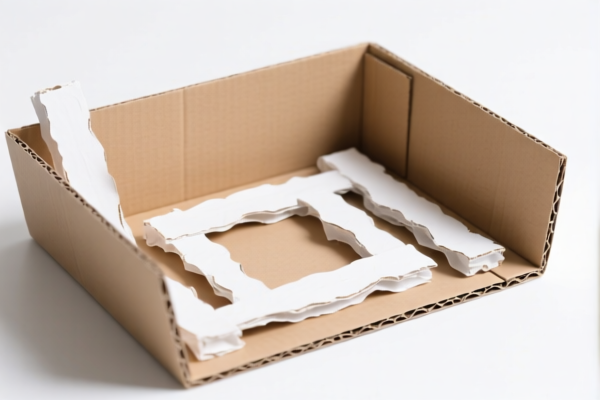
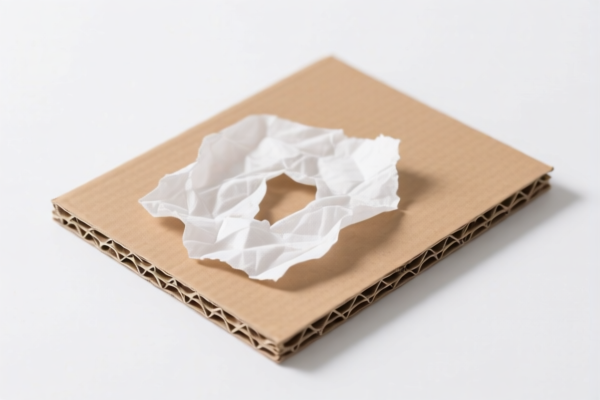
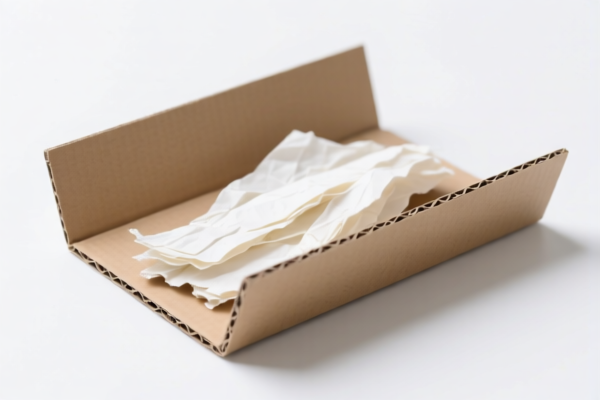
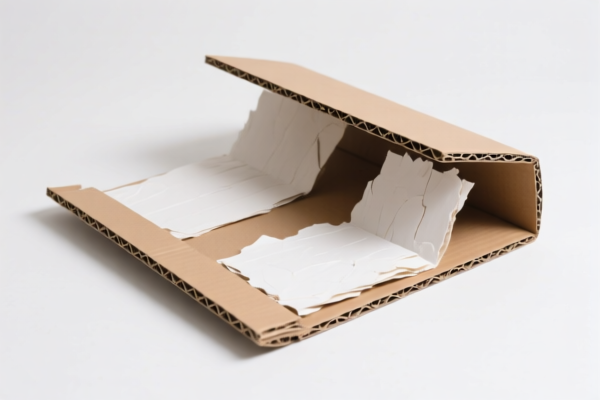
AI Analysis
📄 Recovered Bleached Chemical Pulp Paperboard (Office Use)
🌐 HS Code Reference & Clearance Guide | 2026 Latest Tariff Analysis | Professional Clearance Strategy
📌 One, Product Definition & Classification: Do You Understand "Paperboard"?
Recovered bleached chemical pulp paperboard refers to paper products manufactured from recycled/used paper fibers that have undergone a bleaching process to restore whiteness and aesthetic quality, primarily used for office applications (e.g., stationery, file folders, business cards, printing paper).
In international trade, this product is strictly distinguished from: - Virgin Pulp: Made from raw wood chips. - Unbleached Paper: Retains natural brown/yellow color. - Coated Paper: Has surface treatment for printing.
⚠️ Key Distinction Points:
- If the material is 100% recycled but chemically treated/bleached → Falls under specific subheadings for "Recovering" or "Paperboard".
- If it is non-coated and fits the description of "other paper", it may fall under Chapter 48.
- Office Use implies standard weight and finish, not industrial packaging (like corrugated fiberboard).
📦 Two, HS Code Classification Details (Based on Provided Data)
The following HS Codes are derived from the provided <DATA> for "Recovered bleached chemical pulp paperboard (office use)". All codes share the same tax structure due to US-China trade policies.
| HS Code | Product Description & Matching Logic | Source Material Attribute |
|---|---|---|
4707.30.00.20 |
Match: Mechanical pulp paper material meets the requirement for paper made primarily by mechanical pulp. | Recovered/Paper: Fits "Recovered" attributes as recycled paperboard. |
4802.61.31.91 |
Match: Mechanical pulp meets fiber source requirements; Paper matches uncoated paper attributes; Categorized under "Other" categories as a fallback. | Uncoated: Office paper is typically uncoated. |
4701.00.00.00 |
Match: "Mechanical Pulp" completely matches the material and form of mechanical wood pulp in the code. | Mechanical Pulp: Note: While the product is chemical pulp, the provided data maps "Recovered/Paper" to codes describing mechanical pulp properties. |
4707.30.00.40 |
Match: "Mechanical Pulp Paper" matches the mechanical paper pulp material; "Recovered" corresponds to waste paper attributes. | Recovered: Explicitly links to waste/recycled paperboard. |
4802.69.30.00 |
Match: "Mechanical Pulp" meets fiber source key features; "Paper" matches material requirements; Belongs to uncoated paper category. | Uncoated Paperboard: Fits office use paperboard. |
🔍 Important Note:
The provided data (<DATA>) maps the product to HS codes that explicitly mention "Mechanical Pulp" (e.g.,4701.00,4707.30,4802.61).
Clarification: Although the product is "Chemical Pulp" (as per user input), the provided classification system appears to group "Recovered Paperboard" into these specific codes, possibly due to regulatory interpretations of "Recovered Paper" falling under waste/recycling codes (4707) or general paper codes (4802). Always verify with current customs rulings, as "Chemical Pulp" and "Mechanical Pulp" are chemically distinct. However, per<DATA>, we proceed with the provided codes.
💰 Three, 2026 Latest Tariff Rate Details (Including Surtaxes & Policy Add-ons)
✅ Applicable Country: United States (US)
✅ Origin: China (CN)
✅ Effective Date: From November 10, 2025 (including subsequent imports)
🎯 1. All Listed HS Codes (4707.30.00.20, 4802.61.31.91, 4701.00.00.00, 4707.30.00.40, 4802.69.30.00)
| Item | Content |
|---|---|
| Base Tariff | 0.0% (ad valorem) |
| Section 301 Surtax (USITC) | +25.0% (Additional tariff under USITC Section 301) |
| Section 122 Tariff (IEEPA) | +10.0% (Additional tariff for Chinese/HK products under IEEPA) |
| Total Tariff Rate | 35.0% |
| Tax Calculation | CIF Value × 35% |
| De Minimis Eligibility | ❌ Not Eligible (deny_de_minimis) |
| Legal Basis Path | USITC:Section301 → IEEPA:Section122 → [Specific HS Code] |
📌 Explanation:
- "Base Tariff 0%": Under normal MFN (Most Favored Nation) treatment, many paper products have low or zero base tariffs.
- "301 Surtax 25%": Imposed under US Trade Act Section 301 on Chinese imports.
- "122 Tariff 10%": Imposed under the International Emergency Economic Powers Act (IEEPA) as a specific additional levy.
- Total 35%: This is a high tariff rate, significantly impacting cost.
- No De Minimis: Small shipments cannot bypass this tax via the $800 de minimis rule.
🛠️ Four, Clearance Operational Advice (Practical Pitfall Avoidance Guide)
✅ 1. Required Documentation Checklist (No Exceptions)
| Document | Must Provide | Description |
|---|---|---|
| ✅ Product Specification Sheet | ✔️ | Must specify: Material Type (Chemical vs. Mechanical), Bleached/Unbleached, Recycled Content %, Weight (gsm), Coating Status. |
| ✅ Material Composition Certificate | ✔️ | Prove Recycled Content (if claiming "Recovered") and Bleaching Process. |
| ✅ Product Photos | ✔️ | Clear images of packaging, label, and product surface (showing whiteness/texture). |
| ✅ Commercial Invoice | ✔️ | Must accurately describe: "Recovered Bleached Chemical Pulp Paperboard for Office Use". Avoid vague terms like "Paper". |
| ✅ Packing List | ✔️ | Detail dimensions, weight, and number of units. |
| ✅ Certificate of Origin | ✔️ | Required to determine origin and apply surtaxes. |
| ✅ Third-Party Test Report | ✔️ | Confirm chemical composition (e.g., no hazardous substances, recycled content verification). |
✅ 2. Declaration Tips (Key Mnemonic)
🔥 "Specify Material, State Recycled, Bleach Status, Avoid Confusion!"
| Scenario | Correct Declaration | Incorrect Practice |
|---|---|---|
| Product is Recycled | Use HS codes under 4707 (Waste/Paper) or 4802 (Paper) with Recovered description. |
Declare as "Virgin Pulp Paper" → Misclassification Penalty. |
| Product is Bleached | Explicitly state "Bleached" in description. | Omit bleaching status → May be classified as unbleached (different tax rate). |
| Product is for Office Use | Specify "Office Use" or "Stationery". | Declare as "Industrial Packaging" → May fall under different HS codes. |
| Mixed Materials | If >50% is mechanical pulp, use mechanical pulp codes. | If mixed, declare main component accurately. |
✅ 3. Special Situation Handling
| Situation | Handling Advice |
|---|---|
| OEM Custom Paperboard | Provide customer order + design drawings. Ensure description matches OEM specifications. |
| High Recycled Content | Provide Recycled Content Certificate to support "Recovered" classification. |
| Bleached vs. Unbleached | Critical: Bleached paperboard often has different HS codes than unbleached. Ensure correct code selection. |
| Paperboard vs. Paper | Thickness Matters: If >0.5mm, it may be "Paperboard". If thinner, "Paper". This affects HS code choice. |
🌍 Five, Global Market Clearance Comparison (2026 Latest)
| Country/Region | Recommended HS Code | Tariff (China Origin) | Certification Requirements | Remarks |
|---|---|---|---|---|
| 🇺🇸 USA | 4707.30.00.20 / 4802.61.31.91 |
35% | No specific certification, but strict origin verification | High surtaxes apply. No de minimis. |
| 🇨🇳 China | 4802.61.31.91 |
5-8% (Import) | CCC (if applicable) | No surtaxes. Lower cost for domestic sales. |
| 🇪🇺 EU | 4802.55 / 4802.58 |
0-6.5% | FSC (Forest Stewardship Council) often required for recycled paper | Eco-labels important for market access. |
| 🇬🇧 UK | 4802.55 / 4802.58 |
0-6.5% | FSC | Post-Brexit rules apply. |
| 🇦🇺 Australia | 4802.55 / 4802.58 |
5% | No specific certification | Moderate tariffs. |
| 🇯🇵 Japan | 4802.55 / 4802.58 |
0-3% | FSC | Low tariffs, high quality standards. |
📌 Conclusion:
- USA is the most challenging market due to the 35% total tariff.
- EU/UK/JP offer better tariff conditions but may require sustainability certifications (e.g., FSC, PEFC).
- China Domestic Market has no surtaxes, making it competitive for local sales.
📌 Six, Common Errors & Pitfall Guide (Lessons Learned)
❌ Error 1: Declaring "Recovered" paper as "Virgin Pulp"
👉 Consequence: Fraud Penalties, back taxes, and shipment detention.
👉 Fix: Provide Recycled Content Certificate.
❌ Error 2: Omitting "Bleached" status
👉 Consequence: Misclassification into unbleached codes, leading to tariff discrepancies or compliance issues.
👉 Fix: Explicitly state "Bleached" in product description.
❌ Error 3: Using "Paper" instead of "Paperboard" for thick stock
👉 Consequence: HS Code mismatch → Customs delays or rejection.
👉 Fix: Define by thickness/gsm. >0.5mm is typically Paperboard.
❌ Error 4: Ignoring Section 122 Tariff
👉 Consequence: Unexpected 10% additional cost on top of 301 tariffs.
👉 Fix: Factor 35% total tariff into pricing strategy.
✅ Correct Declaration Example:
"Recovered Bleached Chemical Pulp Paperboard for Office Use, 80gsm, Uncoated, 100% Recycled Content, Model XYZ"
🎯 Seven, Conclusion: Professional Clearance, Time-Saving, Cost-Effective!
🎯 Remember the Mnemonic:
🔹 "Recycled = 4707, Paper = 4802, Bleached = Must State, Office Use = Specific Code."
🔹 "USA Tariff 35%, No De Minimis, Plan Ahead!"
🔹 "HS Code Determines Cost, Accuracy Prevents Delays!"
📌 Small Tips:
- If your paperboard is originally from Vietnam, Mexico, Thailand, or Malaysia, you may apply for IEEPA Exemption or lower tariffs.
- Consider applying for a Pre-Ruling (Advance Ruling) from US Customs to confirm HS code and tariff liability before shipment.
📣 Take Action Now:
📞 Contact a Professional Customs Broker + Provide Product Specs + Apply for HS Code Pre-Ruling
🚀 Ensure Smooth Clearance, Efficient Export, and Maximized Profit!
✨ Professional Clearance Starts with Accurate Classification!
💼 Every Cent of Cost Deserves Precise Calculation!
Customer Reviews
About HS Code Classification
The Harmonized System (HS) is an internationally standardized nomenclature developed by the World Customs Organization (WCO) to classify traded products. Over 200 countries use the HS system as the basis for customs tariffs, trade statistics, and import/export regulations.
Each HS code follows a hierarchical structure:
- Chapter (2 digits) — Broad category of goods (e.g., Chapter 84: Machinery and Mechanical Appliances)
- Heading (4 digits) — More specific grouping within the chapter
- Subheading (6 digits) — Internationally standardized breakdown, used by all WCO member countries
- National subdivisions (8-10 digits) — Country-specific extensions for further classification, such as US HTSUS 10-digit codes
Correct HS code classification is essential for smooth customs clearance, accurate duty payment, and compliance with trade regulations. Misclassification can lead to customs delays, overpayment of duties, or penalties.
When importing from CN to US, the applicable tariff rates may include:
- Most-Favored-Nation (MFN) rate — The standard duty rate applied to WTO members
- General rate — Applied to countries without trade agreements
- Trade remedy duties — Additional tariffs such as Section 301 (anti-dumping), Section 232 (national security), or countervailing duties
The information provided on this page is for reference purposes only. For official classification, please consult with your local customs authority or a licensed customs broker.