Recovered carton boxes
CN → US| HS Code | Tariff Rate | Origin | Destination | Doc |
|---|---|---|---|---|
| 4805934010 | 35.0% | CN | US | Official Doc |
| 4819100040 | 35.0% | CN | US | Official Doc |
| 4805924010 | 35.0% | CN | US | Official Doc |
| 4805245000 | 35.0% | CN | US | Official Doc |
| 4707100000 | 35.0% | CN | US | Official Doc |
Product Images
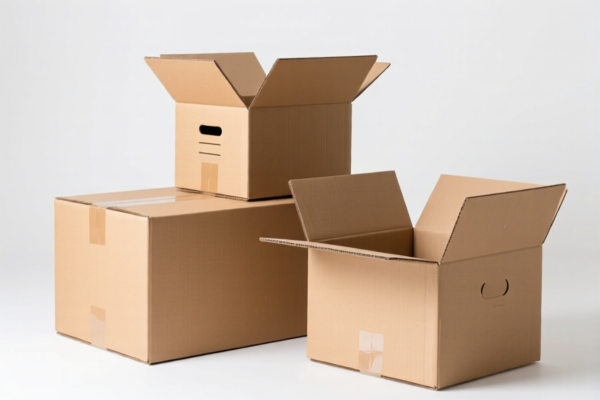
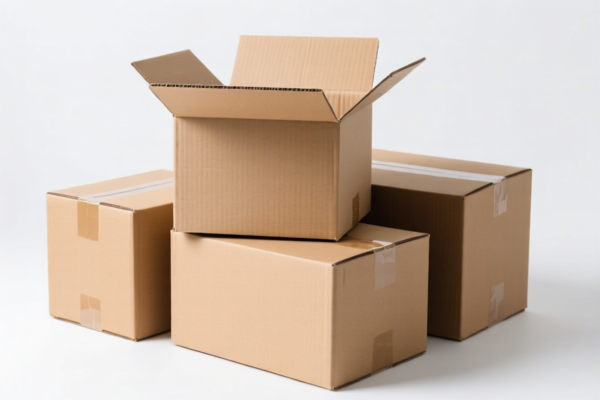
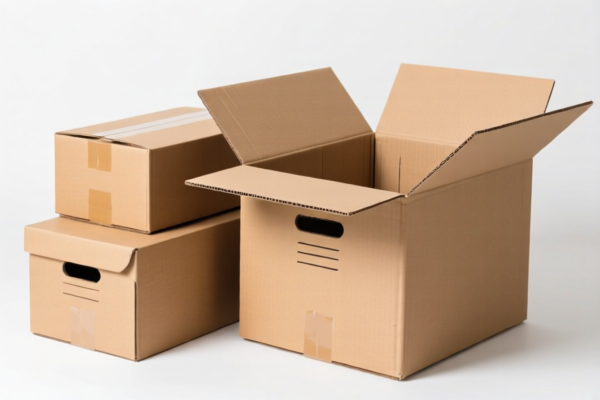
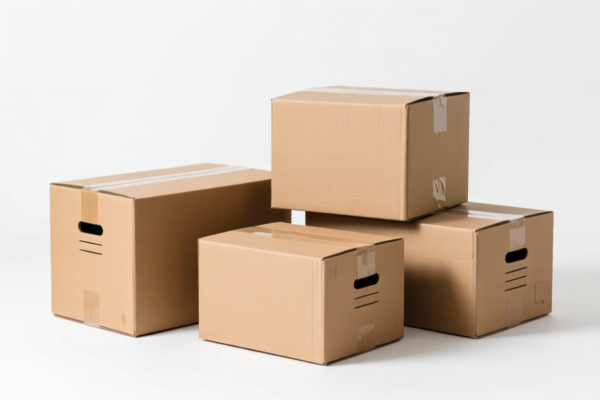
AI Analysis
📦 Recovered Carton Boxes (Recycled Paper/Cardboard)
🌐 HS Code Reference & Customs Clearance Guide | 2026 Latest Tariff Analysis | Professional Compliance Strategy
📌 1. Product Definition & Classification: Do You Understand "Recovered Carton Boxes"?
Recovered carton boxes refer to used, discarded, or post-consumer cardboard/paper packaging that has been collected for recycling purposes. In international trade, these materials are treated as secondary raw materials rather than finished goods.
The critical distinction lies in the state of the material: * Used/Recycled (Recovered): Boxes that have been used and are destined for paper mills to be pulped and reprocessed. → HS Code Chapter 47 (Pulp of wood or of other fibrous cellulosic material; recovered paper and paperboard). * New/Unused: Brand new, unused corrugated or folding cartons. → HS Code Chapter 48 (Paper and paperboard; articles of paper pulp, of paper or of paperboard).
⚠️ Key Distinction Point:
- If the boxes are waste, used, or intended for recycling → Must classify under 4707 (Recovered paper/cardboard).
- If the boxes are new, unused, or sold as packaging material → Must classify under 4819 or 4805 (New paper products).
- Misclassification Risk: Declaring "Recover Carton Boxes" under 4819 (New Boxes) is a major red flag. Customs may reject it or apply severe penalties for misdeclaration of waste/recyclable material.
📦 2. HS Code Classification Details (Based on Provided Data)
Based on the input data provided, the possible HS Codes for "Recovered carton boxes" are analyzed below. Note that the data indicates a high correlation between "paper/cardboard" and "recycling/recovery," leading to two main groups: Recycled Waste (47xx) and New Finished Boxes (48xx).
| HS Code | Product Description | Applicable Scenario | Material Status |
|---|---|---|---|
4707.10.00.00 |
Recovered paper: Unbleached kraft paper or kraft linerboard, corrugated paper or paperboard, and paper or paperboard made from recovered fibers other than that of item 4707.10 or 4707.20 | Recycled kraft, corrugated base, or mixed recovered paper/cardboard | ✅ Used/Recycled |
4707.90.00.00 |
Other recovered paper and paperboard (e.g., recovered paper other than unbleached kraft, or mixed recycled paper/cardboard not specified elsewhere) | Mixed recovered carton boxes, consumer waste cardboard | ✅ Used/Recycled |
4819.10.00.40 |
Boxes, sacks and bags, of corrugated paper or paperboard | New corrugated boxes (MISCLASSIFICATION if truly "Recovered") | ❌ New/Unused |
4805.93.40.10 |
Folding carton board (Folding carton board) | New folding cartons (MISCLASSIFICATION if truly "Recovered") | ❌ New/Unused |
4805.92.40.10 |
Other paper and paperboard, creped or crinkled, in sheets or rolls of a kind used for domestic or toilet purposes; folding carton board | New folding carton board (MISCLASSIFICATION if truly "Recovered") | ❌ New/Unused |
🔍 Critical Reminder:
- The term "Recovered" strongly implies Chapter 47 (4707.xx).
- If the boxes are new but simply called "carton boxes," they fall under Chapter 48 (4819.10 / 4805.xx).
- Do not mix: Do not declare used, dirty, or recycled boxes under 4819. This is a common error that leads to customs holds.
- 4707.10.00.00 is specific to unbleached kraft/corrugated recovered fibers.
- 4707.90.00.00 is the catch-all for other types of recovered paper/cardboard.
💰 3. 2026 Latest Tariff Rate Breakdown (Including Surcharges & Policy Add-ons)
✅ Applicable Country: United States (US)
✅ Origin: China (CN)
✅ Effective Date: From November 10, 2025 (including subsequent imports)
All HS codes listed in the data share the same tax structure. This is crucial for budgeting.
🎯 1. 4707.10.00.00 & 4707.90.00.00 — Recovered Paper/Cardboard
| Item | Content |
|---|---|
| Base Tariff | 0% (ad valorem) |
| USITC Surcharge (Section 301) | +25% (From USITC Footnote 9903.88.01) |
| IEEPA Surcharge (Section 122/IEEPA) | +10% (Against Chinese/HK products, from Nov 10, 2025) |
| Total Tariff Rate | 35% |
| Tax Calculation | CIF Value × 35% |
| De Minimis Exemption? | ❌ NOT Applicable (deny_de_minimis) |
| Legal Basis Path | IEEPA:9903.01.25 → IEEPA:9903.01.24 → USITC:4707.xx.xx.xx → FOOTNOTE:9903.88.01 |
📌 Explanation:
- "USITC Surcharge 25%": This is the Section 301 tariff imposed on a wide range of Chinese goods, including paper products and recyclables.
- "IEEPA Surcharge 10%": This is an additional tariff under the International Emergency Economic Powers Act targeting Chinese imports.
- Total 35%: This is a high tariff rate. For bulk recycling materials, this significantly impacts cost margins.
- No De Minimis: Unlike small packages (under $800), bulk imports of recovered paper do not qualify for the de minimis exemption. Every shipment is subject to full duty calculation.
🎯 2. 4819.10.00.40 & 4805.9x.xx.xx — New Paper Boxes
⚠️ Note: Although the prompt asks for "Recovered" boxes, the data includes new box codes. If you mistakenly declare used boxes under these codes: - The tariff is still 35% (0% Base + 25% USITC + 10% IEEPA). - However, the legal risk is much higher because you are misdeclaring waste/recyclables as new manufactured goods. Customs can impose fraud penalties or seizure.
🛠️ 4. Customs Clearance Practical Advice (Real-World Pitfall Guide)
✅ 1. Required Documents Checklist (Non-negotiable)
| Document | Mandatory? | Explanation |
|---|---|---|
| ✅ Contract/Invoice | ✔️ | Must clearly state "Recovered Paper/Cardboard" or "Used Carton Boxes". Do not just write "Cartons". |
| ✅ Packing List | ✔️ | Must specify the weight and quantity of recycled material. |
| ✅ Product Photo | ✔️ | Clear photos showing the boxes are used, flattened, and baled (if applicable). Avoid photos of new, printed boxes. |
| ✅ Customs Declaration | ✔️ | Use the exact HS Code: 4707.10.00.00 or 4707.90.00.00. |
| ✅ Certificate of Origin | ✔️ | To verify Chinese origin for accurate tariff calculation (35%). |
| ✅ Recycling Permit/Export License | ✔️ | Check if the exporting country (China) requires an export license for waste/recycled paper. |
✅ 2. Declaration Tips (Key Mnemonics)
🔥 "Recover is Waste, Not New; Declare 4707, Not 4819!"
| Situation | Correct Declaration | Wrong Practice | Consequence |
|---|---|---|---|
| Used, dirty boxes | 4707.90.00.00 (Recovered Paper) |
Declare as 4819.10.00.40 (New Boxes) |
Customs rejection, fines, or return shipment. |
| Flattened, baled cardboard | 4707.10.00.00 (Recovered Kraft/Corrugated) |
Declare as packaging material | Misclassification risk, 35% duty applies anyway, but legal trouble added. |
| New, unused boxes | 4819.10.00.40 |
Declare as 4707 |
Incorrect classification, potential fraud investigation. |
| Mixed batch (New + Used) | Split the shipment or declare correctly | Declare all as new | High risk of audit and penalty. |
✅ 3. Special Circumstances
| Situation | Handling Advice |
|---|---|
| Contaminated Boxes | If boxes have plastic, tape, or food residue, they may be classified as solid waste (HS Code 3915/4707 with stricter controls). Ensure they are clean enough for recycling. |
| OEM vs. Generic | For recovered boxes, branding doesn't matter. Focus on material composition (kraft, corrugated, mixed). |
| Small Quantity | Even small shipments of recovered paper are subject to the 35% tariff if imported as bulk/commercial cargo. No de minimis. |
| Documentation Mismatch | If the invoice says "Carton Boxes" but HS Code is 4707, provide a explanation letter clarifying that these are used/recovered boxes for recycling. |
🌍 5. Global Market Comparison (2026 Latest)
| Country/Region | Recommended HS Code | Tariff (China Origin) | Certification/Notes | Remarks |
|---|---|---|---|---|
| 🇺🇸 USA | 4707.10.00.00 / 4707.90.00.00 |
35% (25% + 10%) | None | High tariff, strict customs inspection. |
| 🇨🇳 China | 4707.10.00.00 / 4707.90.00.00 |
0% - 5% | May require recycling permit | Imports of recovered paper are regulated but often duty-free or low duty for recycling. |
| 🇪🇺 EU | 4707.10.00.00 / 4707.90.00.00 |
0% (if Ecolabel/Recycled) | CE, REACH | EU prefers recycled materials; check for plastic contamination limits. |
| 🇬🇧 UK | 4707.10.00.00 / 4707.90.00.00 |
0% | UKCA | Post-Brexit rules may vary; generally favorable for recycled goods. |
📌 Conclusion:
- USA is the most expensive market for recovered paper/cardboard due to the 35% total tariff.
- Recyclers must factor in the 35% cost when pricing imported recovered cardboard from China.
- Documentation clarity is key: Always use the word "Recovered" or "Used" in the declaration.
📌 6. Common Errors & Pitfall Guide (Lessons from Experience)
❌ Error 1: Declaring "Recover Carton Boxes" as 4819.10.00.40 (New Boxes)
👉 Consequence: Customs may flag it as misdeclaration. If found to be used/waste, you may face fraud penalties or shipment rejection.
❌ Error 2: Not specifying "Recovered" in the invoice
👉 Consequence: Customs may assume they are new boxes and apply different inspection standards. Or, if they are actually used, it’s a documentation mismatch.
❌ Error 3: Assuming de minimis applies
👉 Consequence: Recovered paper/cardboard does not qualify for de minimis. You must pay the 35% duty on every shipment, no matter the value.
❌ Error 4: Mixing new and used boxes in one HS Code
👉 Consequence: Audit risk. If 10% is used, 90% declared as new, the whole shipment can be held for inspection.
✅ Correct Practice:
"Recovered Corrugated Carton Boxes, Used, Flattened, Baled, for Recycling, Origin: China, HS Code: 4707.90.00.00"
🎯 7. Conclusion: Professional Declaration, Cost Control, Compliance!
🎯 Remember the Mnemonic:
🔹 "Recovered = 4707, New = 4819"
🔹 "35% Tariff is a Must, De Minimis is a Myth!"
🔹 "Document Clearly, Avoid Fines, Pass Customs Smoothly!"
📌 Pro Tip:
- If you are importing large volumes of recovered cardboard, consider pre-classification rulings from US Customs to confirm the exact HS Code.
- Ensure the boxes are free of hazardous materials (e.g., chemicals, pesticides) to avoid EPA/USDA inspections.
- Negotiate with Suppliers: Since the tariff is 35%, factor this into your purchase price. Consider sourcing from non-Chinese countries (e.g., Southeast Asia) if possible, but verify their HS codes and tariffs too.
📣 Immediate Action:
📞 Contact a licensed customs broker + Provide clear photos + Confirm HS Code
4707.xx.xx.xx
🚀 Let your recovered cardboard boxes clear customs efficiently, control costs, and recycle sustainably!
✨ Professional clearance starts with accurate classification!
💼 Every dollar saved is a dollar earned!
Customer Reviews
About HS Code Classification
The Harmonized System (HS) is an internationally standardized nomenclature developed by the World Customs Organization (WCO) to classify traded products. Over 200 countries use the HS system as the basis for customs tariffs, trade statistics, and import/export regulations.
Each HS code follows a hierarchical structure:
- Chapter (2 digits) — Broad category of goods (e.g., Chapter 84: Machinery and Mechanical Appliances)
- Heading (4 digits) — More specific grouping within the chapter
- Subheading (6 digits) — Internationally standardized breakdown, used by all WCO member countries
- National subdivisions (8-10 digits) — Country-specific extensions for further classification, such as US HTSUS 10-digit codes
Correct HS code classification is essential for smooth customs clearance, accurate duty payment, and compliance with trade regulations. Misclassification can lead to customs delays, overpayment of duties, or penalties.
When importing from CN to US, the applicable tariff rates may include:
- Most-Favored-Nation (MFN) rate — The standard duty rate applied to WTO members
- General rate — Applied to countries without trade agreements
- Trade remedy duties — Additional tariffs such as Section 301 (anti-dumping), Section 232 (national security), or countervailing duties
The information provided on this page is for reference purposes only. For official classification, please consult with your local customs authority or a licensed customs broker.