Recovered newsprint
CN → US| HS Code | Tariff Rate | Origin | Destination | Doc |
|---|---|---|---|---|
| 4818100000 | 35.0% | CN | US | Official Doc |
| 4818900020 | 17.5% | CN | US | Official Doc |
| 4823700040 | 35.0% | CN | US | Official Doc |
| 4823690040 | 35.0% | CN | US | Official Doc |
| 4819100040 | 35.0% | CN | US | Official Doc |
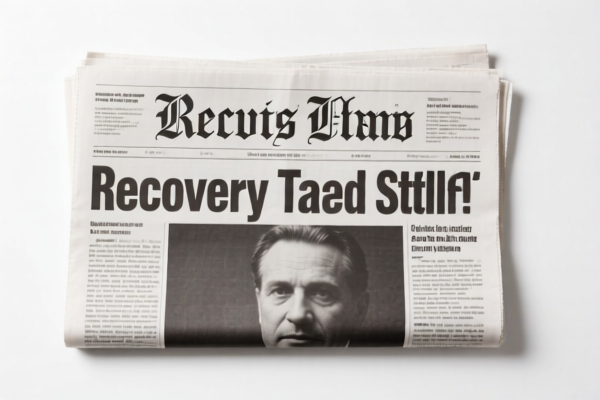
Product Images



AI Analysis
📰 Recovered Newsprint (Waste Paper for Recycling)
🌐 HS Code Reference & Customs Clearance Guide | 2026 Latest Tariff Analysis | Professional Clearance Strategy
📌 I. Product Definition & Classification: What Exactly is "Recovered Newsprint"?
Recovered Newsprint refers to waste paper, specifically old newspaper and newsprint, collected for recycling. In international trade, the classification depends heavily on the intended use (hygienic vs. packaging) and the final form of the recycled paper product.
Two Main Categories: 1. Hygienic/Sanitary Goods: Recycled products intended for personal hygiene (e.g., tissues, toilet paper, wipes). 2. Packaging/Materials: Recycled products used for containers, cushions, or industrial packaging (e.g., paper pulp molding, cartons).
⚠️ Key Distinction Point:
- If the recycled paper is processed into sanitary/hygiene products →归类 to 4818 series.
- If the recycled paper is processed into packaging materials (molded, cut, or formed) → 归类 to 4823 or 4819 series.
📦 II. HS Code Classification Details (2026 Latest Tariff Authority Cross-Reference)
| HS Code | Product Description | Application Scenario | Tax Rate |
|---|---|---|---|
4818.10.00.00 |
Recovered Hygiene Paper: Sanitary tissues, toilet paper, paper handkerchiefs made from recycled newsprint. | Personal care, household hygiene, wet wipes. | 35.0% |
4818.90.00.20 |
Other Recycled Sanitary Paper: Specialized hygienic papers not specified elsewhere in 4818.10. | Medical hygiene, specialized cleanroom paper, non-standard hygiene items. | 17.5% |
4823.70.00.40 |
Recycled Packaging: Pulp Molded/Pressed: Egg cartons, fruit trays, protective cushioning, paper pulp containers. | Food packaging, electronics protection, industrial packaging. | 35.0% |
4823.69.00.40 |
Recycled Packaging: Other Paper: Corrugated boards, paper bags, or other paper packaging not elsewhere specified. | General logistics packaging, retail bags, wrapping materials. | 35.0% |
4819.10.00.40 |
Recycled Packaging: Containers: Foldable cartons, fiberboard boxes, containers made from recycled newsprint pulp. | Shipping containers, product boxes, retail packaging boxes. | 35.0% |
🔍 Important Reminder:
- "Recovered" implies the raw material is waste paper, but the HS Code depends on the final processed product.
- If you are exporting waste newsprint (raw bales), different codes may apply (e.g., 4707/4807), but based on the provided data, these codes refer to processed recycled paper products.
- Packaging products generally attract a higher tariff base due to stricter environmental and trade policies on paper packaging.
💰 III. 2026 Latest Tariff Rate Breakdown (Including Surcharges & Policy Add-ons)
✅ Applicable Country: United States (US)
✅ Origin: China (CN)
✅ Effective Date: From November 10, 2025 (including subsequent imports)
🎯 1. 4818.10.00.00 & 4823.70.00.40, 4823.69.00.40, 4819.10.00.40 —— Recycled Hygiene & Packaging Products
| Item | Content |
|---|---|
| Base Tariff | 0% (ad valorem) |
| USITC Surcharge | +25% (Under USITC Footnote 9903.88.01 / Section 301) |
| IEEPA Surcharge | +10% (Against Chinese/HK products, effective Nov 10, 2025) |
| Total Tariff | 35.0% |
| Tax Calculation | CIF Value × 35% |
| De Minimis Exemption | ❌ Not Eligible (deny_de_minimis) |
| Legal Basis Path | IEEPA:9903.01.25 → IEEPA:9903.01.24 → USITC:4818.10.00.00 / 4823.70.00.40 / 4823.69.00.40 / 4819.10.00.40 → FOOTNOTE:9903.88.01 |
📌 Explanation:
- The 25% USITC surcharge is part of the Section 301 tariff on Chinese goods; - The 10% IEEPA surcharge is an additional penalty under the International Emergency Economic Powers Act; - Combined at 35%, this is a high tariff, requiring advance cost calculation.
🎯 2. 4818.90.00.20 —— Other Recycled Sanitary Paper
| Item | Content |
|---|---|
| Base Tariff | 0% |
| USITC Surcharge | +7.5% (Lower rate for specific subcategory) |
| IEEPA Surcharge | +10% (Against Chinese/HK products) |
| Total Tariff | 17.5% |
| Tax Calculation | CIF × 17.5% |
| De Minimis Exemption | ❌ Not Eligible |
| Legal Basis Path | IEEPA:9901.25 → IEEPA:9903.01.24 → USITC:4818.90.00.20 → FOOTNOTE:9903.88.01 |
📌 Note:
- This is the only lower-rate option in the provided data; - Applies to non-standard hygiene papers that don't fall under 4818.10.00.00; - Even if it's "recycled," the 10% IEEPA penalty remains, but the USITC portion is lower (7.5% vs. 25%).
🛠️ IV. Customs Clearance Practical Advice (Real-World Pitfall Avoidance Guide)
✅ 1. Documentation Checklist (Mandatory)
| Document | Required | Description |
|---|---|---|
| ✅ Product Specification Sheet | ✔️ | Must clearly state "Recycled/Recovered Content %," final product type (hygiene/packaging), and processing method. |
| ✅ Production Process Flowchart | ✔️ | To prove the goods are processed recycled products, not raw waste paper. |
| ✅ Product Photos (Labeled) | ✔️ | Show end-use (e.g., tissue roll, egg carton) to justify HS Code. |
| ✅ Commercial Invoice | ✔️ | Must explicitly state: "Recycled Paper Products for [Hygiene/Packaging] Use." |
| ✅ Packing List | ✔️ | Detail net/gross weight; avoid mixing hygiene and packaging in one shipment unless separately declared. |
| ✅ Certificate of Origin (CO) | ✔️ | Required for origin verification (China). |
| ✅ Third-Party Test Report | ✔️ | Proof of recycled content percentage (if claiming green certifications). |
✅ 2. Declaration Techniques (Key Mnemonics)
🔥 "Packaging 35, Hygiene Varies, Raw Waste Rejected, Clear Description Saves Money!"
| Scenario | Correct Declaration | Incorrect Practice |
|---|---|---|
| Recycled Tissues/Toilet Paper | 4818.10.00.00 |
Misdeclared as "Packaging" → 35% (Same, but wrong description risks delay) |
| Recycled Egg Cartons/Pulp Molded | 4823.70.00.40 |
Misdeclared as "Raw Paper" → High duty + Inspection |
| Recycled Tissue (Specialized) | 4818.90.00.20 |
Misdeclared as 4818.10.00.00 → Overpay tax (35% vs 17.5%) |
| Recycled Boxes/Cartons | 4819.10.00.40 or 4823.69.00.40 |
Vague term "Paper Goods" → Manual classification → Delay |
✅ 3. Special Cases Handling
| Situation | Handling Advice |
|---|---|
| OEM Recycled Products | Provide customer design specs to confirm final product form (e.g., molded pulp vs. flat paper). |
| Mixed Shipment (Hygiene + Packaging) | Separate declarations required. Do not mix 4818 and 4823 in one line item. |
| "Waste Paper" vs. "Recycled Product" | If importing raw waste bales, different codes apply (e.g., 4707/4807). The provided codes are for processed products. Ensure your goods are processed. |
| High Recycled Content Claim | If claiming "100% Recycled," provide test reports. Misrepresentation can lead to fines. |
🌍 V. Global Market Clearance Comparison (2026 Latest)
| Country/Region | Recommended HS Code | Tariff | Certification | Notes |
|---|---|---|---|---|
| 🇺🇸 USA | 4818.10.00.00 / 4823.70.00.40 etc. |
35% (Packaging/Hygiene) | FDA (if food contact), FSC | 17.5% for 4818.90.00.20 |
| 🇨🇳 China | 4818.10.00.00 |
~5-10% | CCC (if applicable) | No Section 301 tariffs |
| 🇪🇺 EU | 4818.10.00.00 |
0% (if FSC certified) | CE, REACH | Carbon Border Adjustment Mechanism (CBAM) may apply in future |
| 🇯🇵 Japan | 4818.10.00.00 |
0-3% | JIS | Strict hygiene standards |
📌 Conclusion:
- USA has the highest tariffs due to Section 301 and IEEPA; - China-origin recycled paper products face 17.5%-35% tariffs; - Packaging products (4823,4819) are generally taxed at 35%, while specialized hygiene (4818.90.00.20) is 17.5%.
📌 VI. Common Mistakes & Pitfalls (Lessons Learned)
❌ Mistake 1: Declaring "Recovered Newsprint" as raw waste when it's a processed product
👉 Consequence: Misclassification → 35% + Inspection Delay + Fines
❌ Mistake 2: Mixing Hygiene and Packaging products in one HS Code
👉 Consequence: Customs may reject the declaration → Resubmission & Demurrage Fees
❌ Mistake 3: Using vague terms like "Paper Goods" without specifying use
👉 Consequence: Customs officer assigns a default code → Higher Tariff or Additional Documentation Requests
❌ Mistake 4: Ignoring IEEPA 10% Surcharge
👉 Consequence: Underpayment of tax → Penalty + Interest
✅ Correct Practice:
"Recycled Tissue Paper, 100% Post-Consumer Waste, Sanitary Use, Model XYZ, FDA Compliant"
OR
"Molded Pulp Packaging, Recycled Newsprint, Egg Tray, Model ABC"
🎯 VII. Conclusion: Professional Declaration, Save Time & Money!
🎯 Remember the Mnemonic:
🔹 "Packaging 35, Special Hygiene 17.5, Raw Waste Not Here, Clear Use Saves Dollars!"
🔹 "HS Code Determines Tax, 17.5% vs 35% is Big Difference, Declare Accurately!"
📌 Pro Tip:
If your recycled paper products are originating from Vietnam, Mexico, Thailand, or Malaysia, you may qualify for IEEPA Exemptions, reducing tariffs to 0%-5%.
Recommend Advance Ruling Application before shipment to avoid clearance risks.
📣 Take Action Now:
📞 Contact Professional Customs Broker + Provide Product Photos + Apply for HS Code Advance Ruling
🚀 Let Your Recycled Products Clear Smoothly, Export Efficiently, Maximize Profits!
✨ Professional Clearance Starts with Accurate Classification!
💼 Every Cent of Cost Deserves Precision!
Customer Reviews
About HS Code Classification
The Harmonized System (HS) is an internationally standardized nomenclature developed by the World Customs Organization (WCO) to classify traded products. Over 200 countries use the HS system as the basis for customs tariffs, trade statistics, and import/export regulations.
Each HS code follows a hierarchical structure:
- Chapter (2 digits) — Broad category of goods (e.g., Chapter 84: Machinery and Mechanical Appliances)
- Heading (4 digits) — More specific grouping within the chapter
- Subheading (6 digits) — Internationally standardized breakdown, used by all WCO member countries
- National subdivisions (8-10 digits) — Country-specific extensions for further classification, such as US HTSUS 10-digit codes
Correct HS code classification is essential for smooth customs clearance, accurate duty payment, and compliance with trade regulations. Misclassification can lead to customs delays, overpayment of duties, or penalties.
When importing from CN to US, the applicable tariff rates may include:
- Most-Favored-Nation (MFN) rate — The standard duty rate applied to WTO members
- General rate — Applied to countries without trade agreements
- Trade remedy duties — Additional tariffs such as Section 301 (anti-dumping), Section 232 (national security), or countervailing duties
The information provided on this page is for reference purposes only. For official classification, please consult with your local customs authority or a licensed customs broker.