Recovered tissue paper
CN → US| HS Code | Tariff Rate | Origin | Destination | Doc |
|---|---|---|---|---|
| 4818900020 | 17.5% | CN | US | Official Doc |
| 4805247000 | 12.0% | CN | US | Official Doc |
| 4707900000 | 35.0% | CN | US | Official Doc |
| 4823901000 | 35.0% | CN | US | Official Doc |
| 4707100000 | 35.0% | CN | US | Official Doc |
Product Images


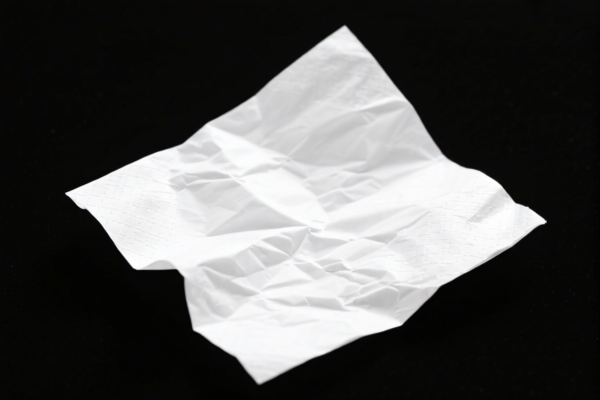

AI Analysis
🧻 Recovered Tissue Paper (HS Code Classification & Tariff Analysis)
🌐 HS Code Reference & Customs Clearance Guide | 2026 Latest Tariff Analysis | Professional Compliance Strategy
📌 I. Product Definition & Classification: Do You Really Understand “Recovered Tissue Paper”?
Recovered tissue paper refers to paper products made from recycled fibers, primarily used for sanitary purposes (e.g., toilet paper, paper towels, facial tissues) or industrial testing/lining. In international trade, it is strictly categorized based on material composition, end-use, and recycling stage.
⚠️ Key Distinction:
- If the product is finished sanitary paper (e.g., rolls, sheets, tissues) → It falls under 4818.90.00.20.
- If the product is recycled paper/cardboard waste (raw material for pulping) → It falls under 4707 or 4805.24.70.00, depending on quality and form.
- Crucial Point: The term "Recovered" can mean either "made from recovered fibers" (finished product) or "waste/recovered material" (raw material). This distinction dramatically affects classification and tax liability.
📦 II. HS Code Classification Details (2026 Latest Tariff Authority Comparison)
Based on the provided data, here are the precise HS Codes for different forms of "Recovered Paper/Tissue":
| HS Code | Product Description | Applicable Scenario | Material/Form | Finished vs. Raw |
|---|---|---|---|---|
4818.90.00.20 |
Recovered sanitary paper, classified under paper products for sanitary use | Finished tissue paper (toilet rolls, paper towels) | Paper, sanitary purpose | ✅ Finished Product |
4805.24.70.00 |
Paper recycling, classified as recycled paper & test liner material | Recycled test liners, medium-weight recycled paper | Paper, test liner | ✅ Processed Paper (Semi-finished) |
4707.90.00.00 |
Paper recycling, classified as recovered paper & cardboard | General recovered paper/cardboard waste | Paper/Cardboard waste | ❌ Raw Material (Waste) |
4823.90.10.00 |
Paper recycling, classified as pulp-based/paper material | Pulp-based recycled paper products | Paper/Pulp material | ✅ Processed Paper |
4707.10.00.00 |
Paper recycling, classified as recovered paper/cardboard | Specific recovered paper/cardboard (e.g., corrugated) | Paper/Cardboard waste | ❌ Raw Material (Waste) |
🔍 Critical Reminder:
- Finished sanitary tissue (e.g., branded toilet paper) must be classified under 4818.90.00.20.
- Bales of used paper/cardboard intended for recycling are classified under 4707 series.
- Never mix finished sanitary products with raw recycled paper waste in one shipment, as this will lead to customs delays and potential penalties.
💰 III. 2026 Latest Tariff Rate Details (Including Additional Taxes & Policy Surcharges)
✅ Applicable Country: United States (US)
✅ Country of Origin: China (CN)
✅ Effective Date: From November 10, 2025 (including subsequent imports)
🎯 1. 4818.90.00.20 —— Recovered Sanitary Paper (Finished Product)
| Item | Details |
|---|---|
| Basic Tariff | 0% (ad valorem) |
| USITC Additional Tariff | +7.5% (Under USITC Footnote related to Section 301) |
| IEEPA Additional Tariff | +10% (For China/HK products, effective Nov 10, 2025) |
| Total Tariff Rate | 17.5% |
| Tax Calculation | CIF Value × 17.5% |
| De Minimis Exemption | ❌ Not Eligible (deny_de_minimis) |
| Legal Basis Path | IEEPA:9903.01.25 → USITC:4818.90.00.20 → FOOTNOTE:Section 301 |
📌 Explanation:
- The 17.5% total rate is relatively moderate compared to other paper products.
- The 7.5% is the specific Section 301 additional tariff for this subheading.
- The 10% IEEPA tariff is applied to all Chinese-origin goods under this category.
- This is the correct classification for retail-ready toilet paper, paper towels, or facial tissues made from recycled fiber.
🎯 2. 4805.24.70.00 —— Recycled Paper (Test Liner Material)
| Item | Details |
|---|---|
| Basic Tariff | 0% |
| USITC Additional Tariff | +2.0% |
| IEEPA Additional Tariff | +10% |
| Total Tariff Rate | 12.0% |
| Tax Calculation | CIF Value × 12.0% |
| De Minimis Exemption | ❌ Not Eligible |
| Legal Basis Path | IEEPA:9901.25 → USITC:4805.24.70.00 → FOOTNOTE:Section 301 |
📌 Note:
- This code applies to recycled paper used as test liners or similar industrial applications, not direct consumer sanitary tissues.
- The 12.0% rate is lower than finished sanitary paper, reflecting its industrial nature.
🎯 3. 4707.90.00.00 & 4823.90.10.00 & 4707.10.00.00 —— Recovered Paper/Cardboard Waste (Raw Material)
| Item | Details |
|---|---|
| Basic Tariff | 0% |
| USITC Additional Tariff | +25.0% |
| IEEPA Additional Tariff | +10% |
| Total Tariff Rate | 35.0% |
| Tax Calculation | CIF Value × 35.0% |
| De Minimis Exemption | ❌ Not Eligible |
| Legal Basis Path | IEEPA:9901.25 → USITC:4707.90.00.00 / 4823.90.10.00 / 4707.10.00.00 → FOOTNOTE:Section 301 |
📌 Critical Warning:
- These codes apply to bales of used paper, cardboard, or pulp-based recycled material intended for remanufacturing.
- The 35.0% rate is highly punitive and applies to most recycled paper waste from China.
- Do not misclassify raw recycled paper waste as finished sanitary paper (4818.90.00.20) to avoid 35% tax, as customs will verify the product form and usage.
🛠️ IV. Customs Clearance Practical Advice (Battle-Tested Pitfall Avoidance Guide)
✅ 1. Document Checklist (None Can Be Missing)
| Document | Required | Notes |
|---|---|---|
| ✅ Product Specification Sheet | ✔️ | Include fiber content, softness, absorbency, end-use (sanitary vs. industrial) |
| ✅ Product Photos (with label) | ✔️ | Clear image showing packaging, brand, and product type (e.g., toilet roll vs. paper bale) |
| ✅ Certificate of Origin (CO) | ✔️ | If not China-origin, may qualify for preferential rates |
| ✅ Commercial Invoice | ✔️ | Must clearly state: "Recovered Sanitary Paper" or "Recovered Paper Waste" |
| ✅ Packing List | ✔️ | Detail net/gross weight, dimensions, and number of packages |
| ✅ Third-Party Test Report | ✔️ | ISO, FSC, or recycling certification if applicable |
✅ 2. Declaration Tips (Key Mnemonic)
🔥 “Finished Tissue = 17.5%, Raw Waste = 35%! Don’t Mix, Don’t Lie!”
| Scenario | Correct Declaration | Incorrect Practice |
|---|---|---|
| Retail toilet paper, paper towels | 4818.90.00.20 |
Misdeclare as "waste paper" → 35% tax + fraud penalty |
| Bales of used cardboard for recycling | 4707.90.00.00 |
Misdeclare as "sanitary paper" → 35% tax (higher than 17.5%? No, but still costly and risky) |
| Recycled test liner paper | 4805.24.70.00 |
Misdeclare as "waste" → 35% instead of 12% |
| Mixed shipment (tissue + waste) | Split Declaration | Combined declaration → Customs rejection, inspection delay |
✅ 3. Special Cases Handling
| Case | Recommendation |
|---|---|
| OEM Custom Sanitary Paper | Provide customer order + design specs to prove end-use as sanitary product |
| Paper Towels with Printed Design | Still classified under 4818.90.00.20 if for sanitary use |
| Mixed Bales (Clean vs. Dirty Paper) | Clean recycled paper may qualify for 4805.24.70.00; dirty waste falls under 4707 |
| Papertissue for Industrial Testing | Classify under 4805.24.70.00 (12%) instead of sanitary (17.5%) if proven |
🌍 V. Global Market Comparison (2026 Latest)
| Country/Region | Recommended HS Code | Tariff | Certification | Notes |
|---|---|---|---|---|
| 🇺🇸 USA | 4818.90.00.20 |
17.5% (China) | FSC, ISO | 35% for raw waste |
| 🇨🇳 China | 4818.90.00.20 |
5% | CCC | No additional tariffs |
| 🇪🇺 EU | 4818.90.00.20 |
0% (if FSC certified) | CE, FSC | No IEEPA tariffs |
| 🇬🇧 UK | 4818.90.00.20 |
0% | UKCA | No additional tariffs |
| 🇯🇵 Japan | 4818.90.00.20 |
3.4% | FSC | No additional tariffs |
📌 Conclusion:
- The US is the only market imposing significant additional tariffs on Chinese-origin recovered paper products.
- Raw recycled paper waste faces the highest tax burden (35%), so exporting finished sanitary products is more cost-effective if the product qualifies.
- EU and UK offer preferential or zero rates, making them attractive markets for Chinese paper exporters.
📌 VI. Common Mistakes & Pitfall Avoidance (Lessons from Blood & Tears)
❌ Mistake 1: Declaring raw recycled paper bales as "sanitary tissue"
👉 Consequence: Customs inspection reveals mismatch → 35% tax applied, potential fraud investigation
❌ Mistake 2: Mixing finished tissue and waste paper in one container
👉 Consequence: Customs separates and reclassifies → Delays, storage fees, and higher total tax
❌ Mistake 3: Not providing proof of end-use for "sanitary" classification
👉 Consequence: Customs doubts classification → Audited at 35% rate
❌ Mistake 4: Using vague terms like "Recovered Paper" without specifying form
👉 Consequence: Customs ambiguity → 30-60 day inspection delay
✅ Correct Practice:
"Recycled Toilet Paper Rolls, 100% Post-Consumer Waste, 2-Ply, White, Pack of 12, HS 4818.90.00.20"
🎯 VII. Conclusion: Precise Classification Saves Money!
🎯 Remember the Mnemonic:
🔹 "Sanitary Tissue = 17.5%, Raw Waste = 35%!"
🔹 "Form Determines Code, Code Determines Cost!"
📌 Pro Tip:
If your recovered paper is sourced from Vietnam, Mexico, or Thailand, you may apply for IEEPA Exemption, reducing the tariff to 0%~5%.
It is recommended to apply for an Advance Ruling before shipment to avoid customs disputes.
📣 Immediate Action:
📞 Contact a licensed customs broker + Provide product photos + Apply for HS Code Advance Ruling
🚀 Ensure your recovered tissue paper clears customs smoothly, efficiently, and cost-effectively!
✨ Professional Clearance Starts with Accurate Classification!
💼 Every cent of your cost deserves precise calculation!
Customer Reviews
About HS Code Classification
The Harmonized System (HS) is an internationally standardized nomenclature developed by the World Customs Organization (WCO) to classify traded products. Over 200 countries use the HS system as the basis for customs tariffs, trade statistics, and import/export regulations.
Each HS code follows a hierarchical structure:
- Chapter (2 digits) — Broad category of goods (e.g., Chapter 84: Machinery and Mechanical Appliances)
- Heading (4 digits) — More specific grouping within the chapter
- Subheading (6 digits) — Internationally standardized breakdown, used by all WCO member countries
- National subdivisions (8-10 digits) — Country-specific extensions for further classification, such as US HTSUS 10-digit codes
Correct HS code classification is essential for smooth customs clearance, accurate duty payment, and compliance with trade regulations. Misclassification can lead to customs delays, overpayment of duties, or penalties.
When importing from CN to US, the applicable tariff rates may include:
- Most-Favored-Nation (MFN) rate — The standard duty rate applied to WTO members
- General rate — Applied to countries without trade agreements
- Trade remedy duties — Additional tariffs such as Section 301 (anti-dumping), Section 232 (national security), or countervailing duties
The information provided on this page is for reference purposes only. For official classification, please consult with your local customs authority or a licensed customs broker.