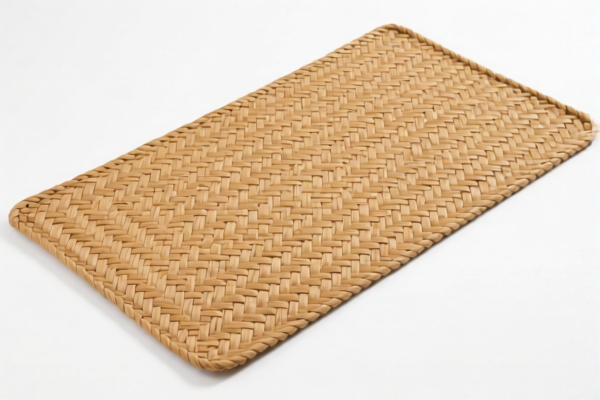
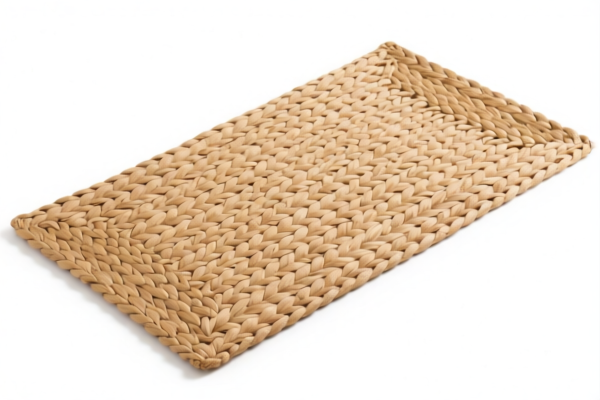
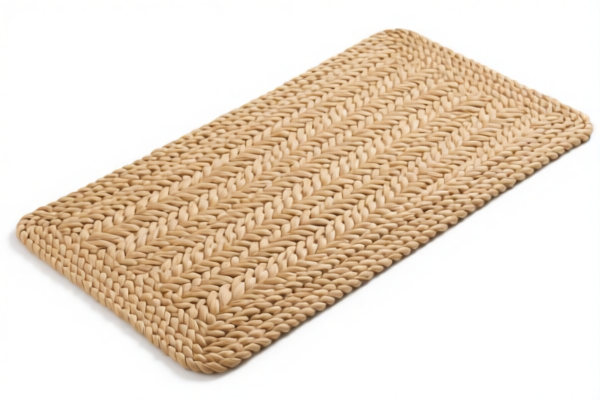
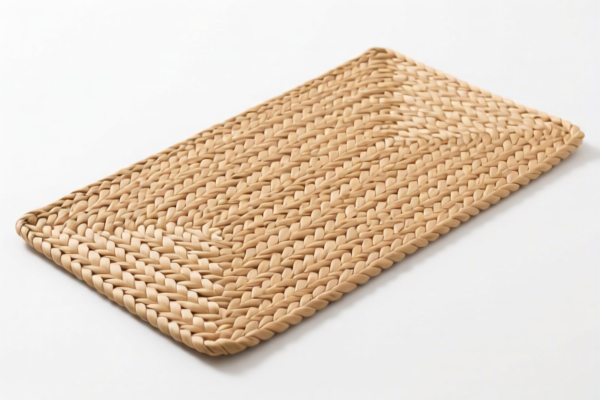
Rectangular Plant Fiber Woven Carpet
CN → US| HS Code | Tariff Rate | Origin | Destination | Doc |
|---|---|---|---|---|
| 4602191800 | 39.5% | CN | US | Official Doc |
| 5705001000 | 35.0% | CN | US | Official Doc |
| 5705002090 | 38.3% | CN | US | Official Doc |
| 4602198000 | 37.3% | CN | US | Official Doc |
Product Images
AI Analysis
🧶 Rectangular Plant Fiber Woven Carpet
🌐 HS Code Reference & Customs Clearance Guide | 2026 Latest Tariff Analysis | Professional Compliance Strategy
📌 I. Product Definition & Classification: What Exactly is a "Plant Fiber Woven Carpet"?
A rectangular plant fiber woven carpet is a floor covering made from natural, plant-based fibers (such as sisal, jute, seagrass, coir, or water hyacinth) that are mechanically woven or knitted. In international trade, the classification hinges on two critical factors: Material Composition (is it treated as an article of basketry/plaiting or a textile floor covering?) and Structure (does it have a backing or pile?).
Misclassification is the #1 cause of customs delays and penalties for this product. The debate often lies between: 1. Chapter 46: Articles of basketry, wickerwork, or other plaiting materials (treated as non-textile crafts/containers). 2. Chapter 57: Carpets, rugs, mats, and other textile floor coverings (treated as textile products).
⚠️ Critical Distinction:
- If the item is a flat weave, lacking a textile backing or significant pile, and primarily viewed as a "plaited article," it may fall under Chapter 46 (Baskets/Bags).
- If it is explicitly designed for floor covering, has a rug-like structure, or includes a non-woven backing, it typically falls under Chapter 57 (Carpets).
- US Customs View: The US CBP often scrutinizes "plant fiber" carpets heavily. If it is a simple flat weave without a textile base, it might be classified as a basket/plaited article (Ch 46) rather than a carpet (Ch 57), leading to different tariff implications.
📦 II. HS Code Classification Details (2026 Latest Tariff Authority)
| HS Code | Product Description | Application Scenario | Key Classification Logic |
|---|---|---|---|
4602.19.18.00 |
Woven Plant Fiber Carpets classified under other woven articles of plaiting materials. | Simple flat-weave mats, non-textile floor coverings, craft-style rugs without textile backing. | Treated as Basketry/Plaited Goods. Not a textile carpet. |
5705.00.10.00 |
Rectangular Plant Fiber Carpets suitable for floor covering, made of plant fiber. | Rectangular rugs intended specifically for floor use, meeting textile floor covering standards. | Treated as Textile Floor Covering. Explicitly "Rectangular" and "Floor Covering." |
5705.00.20.90 |
Plant Fiber Woven Carpets categorized under other carpets and textile floor coverings. | Irregular shapes, high pile, or complex weaves that don't fit the specific "rectangular" sub-heading. | Treated as Other Textile Floor Coverings. General category for carpets. |
4602.19.80.00 |
Plant Fiber Woven Articles meeting the morphological characteristics of plaited goods. | General plaited items, baskets, trays, or ambiguous mats not strictly defined as "carpets." | Treated as Other Woven Articles of Plaiting Materials. Fallback for non-textile items. |
🔍 Key Reminder:
- Chapter 46 (4602) implies the product is a "plaited article" (like a basket or bag). This is often used for simpler, flat-weave plant fiber mats without a textile base. - Chapter 57 (5705) implies the product is a "carpet" or "textile floor covering." This is used for rectangular rugs specifically designed for floor decor. - Shape Matters: The HS Code5705.00.10.00specifically mentions "Rectangular." If your carpet is round or oval, you cannot use this code.
💰 III. 2026 Latest Tariff Rate Breakdown (Including Surcharge, Policy Add-ons)
✅ Applicable Country: United States (US)
✅ Origin: China (CN)
✅ Effective Date: From November 10, 2025 (including subsequent imports)
🎯 1. 4602.19.18.00 —— Woven Plant Fiber Carpets (Basketry/Plaited Category)
| Item | Content |
|---|---|
| Base Tariff | 4.5% (ad valorem) |
| Section 301 Surcharge | +25.0% (From USITC Footnote 9903.88.01) |
| Section 122 Tariff | +10.0% (Specific surcharge for certain Chinese goods) |
| Total Rate | 39.5% |
| Tax Calculation | CIF Value × 39.5% |
| De Minimis Eligibility | ❌ No (deny_de_minimis) |
| Legal Path | USITC:4602.19.18.00 → FOOTNOTE:9903.88.01 (301) + Section 122 |
📌 Explanation:
- Although classified under Chapter 46 (often lower base rates), the Section 301 (25%) and Section 122 (10%) surcharges make the total cost very high. - This code is used when the carpet is deemed a "plaited article" rather than a textile carpet.
🎯 2. 5705.00.10.00 —— Rectangular Plant Fiber Carpets (Floor Covering Category)
| Item | Content |
|---|---|
| Base Tariff | 0.0% (ad valorem) |
| Section 301 Surcharge | +25.0% |
| Section 122 Tariff | +10.0% |
| Total Rate | 35.0% |
| Tax Calculation | CIF Value × 35.0% |
| De Minimis Eligibility | ❌ No (deny_de_minimis) |
| Legal Path | USITC:5705.00.10.00 → FOOTNOTE:9903.88.01 (301) + Section 122 |
📌 Note:
- Best Base Rate: This code has a 0% base tariff, which is lower than Chapter 46 (4.5%). - Specificity: Only use this if the carpet is Rectangular and explicitly intended as a floor covering. - Total Savings: 35.0% is 4.5% lower than code4602.19.18.00. If your product qualifies, this is the optimal code.
🎯 3. 5705.00.20.90 —— Plant Fiber Woven Carpets (Other Floor Coverings)
| Item | Content |
|---|---|
| Base Tariff | 3.3% (ad valorem) |
| Section 301 Surcharge | +25.0% |
| Section 122 Tariff | +10.0% |
| Total Rate | 38.3% |
| Tax Calculation | CIF Value × 38.3% |
| De Minimis Eligibility | ❌ No (deny_de_minimis) |
| Legal Path | USITC:5705.00.20.90 → FOOTNOTE:9903.88.01 (301) + Section 122 |
📌 Explanation:
- Use this if the carpet is NOT rectangular (e.g., oval, round, irregular) or does not fit the specific description of5705.00.10.00. - Higher total rate (38.3%) compared to the rectangular specific code.
🎯 4. 4602.19.80.00 —— Other Plant Fiber Woven Articles
| Item | Content |
|---|---|
| Base Tariff | 2.3% (ad valorem) |
| Section 301 Surcharge | +25.0% |
| Section 122 Tariff | +10.0% |
| Total Rate | 37.3% |
| Tax Calculation | CIF Value × 37.3% |
| De Minimis Eligibility | ❌ No (deny_de_minimis) |
| Legal Path | USITC:4602.19.80.00 → FOOTNOTE:9903.88.01 (301) + Section 122 |
📌 Explanation:
- A fallback code for plant fiber woven items that are not specifically "carpets" or "basketry." - Total rate (37.3%) is higher than the rectangular carpet code (35.0%).
🛠️ IV. Customs Clearance Practical Advice (Real-World Pitfall Guide)
✅ 1. Required Documentation Checklist (Non-Negotiable)
| Document | Must Provide | Description |
|---|---|---|
| ✅ Product Specification Sheet | ✔️ | Must detail: Material (e.g., 100% Sisal), Weave Type (Flat/Woven), Dimensions, Intended Use (Floor Covering). |
| ✅ Product Photos (High Res) | ✔️ | Show front, back, and side. Must show rectangular shape clearly. Show any backing material. |
| ✅ Commercial Invoice | ✔️ | Clearly state: "Rectangular Plant Fiber Woven Carpet, Floor Covering, Model XYZ." Avoid vague terms like "Mat" or "Rug" without context. |
| ✅ Bill of Lading / Packing List | ✔️ | Consistent weight and dimensions with invoice. |
| ✅ Origin Certificate (if applicable) | ✔️ | To prove CN origin for surcharge calculation. |
✅ 2. Declaration Tips (Critical Mantra)
🔥 “Shape Dictates Code, Rectangular is 35%, Non-Rectangular is 38%+!”
| Scenario | Correct Declaration | Wrong Declaration |
|---|---|---|
| Rectangular Plant Fiber Rug | 5705.00.10.00 |
4602.19.18.00 → Overpaid 4.5% |
| Round/Oval Plant Fiber Rug | 5705.00.20.90 |
5705.00.10.00 → Customs Rejection (Wrong Shape) |
| Flat Weave Basket-Mat | 4602.19.18.00 |
5705.00.10.00 → Customs Rejection (Not a Carpet) |
| General Woven Plant Item | 4602.19.80.00 |
5705.00.20.90 → Customs Rejection (Not a Floor Covering) |
✅ 3. Special Circumstances Handling
| Situation | Handling Advice |
|---|---|
| With Non-Woven Backing | If the plant fiber is laminated to a non-woven fabric backing, it is more likely to be classified as 5705.00.10.00 (Textile Carpet) rather than 4602 (Plaited Article). |
| "Mat" vs. "Carpet" | Use the term "Carpet" or "Floor Covering" in documents. "Mat" may trigger Chapter 46 (Basketry) classification, leading to a 39.5% rate instead of 35.0%. |
| Sample vs. Bulk | Ensure samples match bulk production in shape and material. Discrepancies lead to misclassification penalties. |
| Dyeing/Processing | If heavily dyed or treated with chemicals, ensure the material is still recognized as "Plant Fiber" and not synthetic blends that would fall under different HTS codes (e.g., 5702). |
🌍 V. Global Market Comparison (2026 Latest)
| Country/Region | Recommended HS Code | Tariff Rate | Certification | Notes |
|---|---|---|---|---|
| 🇺🇸 USA | 5705.00.10.00 |
35.0% | None specific | Highest surcharges (301+122). Rectangular shape is key for lowest rate. |
| 🇨🇳 China | 5705.00.10.00 |
0% ~ 5% | CCC (if applicable) | No Section 301 or 122 surcharges. Much lower cost for domestic/export from CN. |
| 🇪🇺 EU | 5705.00.10.00 |
0% ~ 5% | CE, REACH | No punitive surcharges. Focus on chemical compliance (REACH) for plant treatments. |
| 🇬🇧 UK | 5705.00.10.00 |
0% ~ 5% | UKCA | Post-Brexit rules apply. Similar to EU structure. |
| 🇦🇺 Australia | 5705.00.10.00 |
0% ~ 5% | RCM | No high surcharges. Free Trade Agreement benefits may apply. |
📌 Conclusion:
- The US market is uniquely punitive with 35%+ total tariffs due to Section 301 and 122. - Accurate Shape Declaration is the single most important factor to save money in the US. - Rectangular =5705.00.10.00is the cheapest legal code.
📌 VI. Common Mistakes & Pitfalls (Blood & Tears Lessons)
❌ Mistake 1: Calling a "Rectangular Carpet" a "Woven Mat" to try and avoid textile regulations.
👉 Result: Customs may classify it as 4602.19.18.00 → 39.5% Tax. You paid 4.5% extra for no benefit.
❌ Mistake 2: Using 5705.00.10.00 for a Round carpet.
👉 Result: Customs rejection, delay, and potential penalties for misdeclaration. Must use 5705.00.20.90 (38.3%).
❌ Mistake 3: Ignoring the "Plant Fiber" definition.
👉 Result: If the carpet is blended with synthetic fibers (>50%), it may fall under Chapter 57 but different sub-headings with different base rates. Verify material composition!
❌ Mistake 4: Assuming "Carpet" always means Textile.
👉 Result: Some flat-weave plant fiber items are ruled as Basketry (Ch 46) by CBP if they lack a textile backing. Check CBP rulings for your specific product structure.
✅ Correct Practice:
"Rectangular Plant Fiber Woven Carpet, 100% Sisal, Flat Weave, No Textile Backing, Floor Covering Use, Model ABC."
🎯 VII. Conclusion: Precise Declaration, Cost Optimization!
🎯 Remember the Mantra:
🔹 "Rectangular is 35%, Round is 38%, Basket is 39%!"
🔹 "Shape defines Code, Code defines Cost, Declare Right to Save Cash!"
📌 Pro Tip:
If your plant fiber carpet is not from China (e.g., Vietnam, India), the Section 301 and 122 surcharges do not apply. The total rate may drop to Base Rate only (0% - 4.5%). Always check origin eligibility!
📣 Immediate Action:
📞 Verify Shape (Rectangular vs. Others)
📞 Confirm Material (100% Plant Fiber vs. Blend)
📞 Choose Code:5705.00.10.00(Best Rate) if Rectangular.
🚀 Clear Customs Smoothly, Maximize Profit Margins!
✨ Professional Customs Compliance Starts with Accurate Classification!
💼 Every Percent Saved is Pure Profit!
Customer Reviews
About HS Code Classification
The Harmonized System (HS) is an internationally standardized nomenclature developed by the World Customs Organization (WCO) to classify traded products. Over 200 countries use the HS system as the basis for customs tariffs, trade statistics, and import/export regulations.
Each HS code follows a hierarchical structure:
- Chapter (2 digits) — Broad category of goods (e.g., Chapter 84: Machinery and Mechanical Appliances)
- Heading (4 digits) — More specific grouping within the chapter
- Subheading (6 digits) — Internationally standardized breakdown, used by all WCO member countries
- National subdivisions (8-10 digits) — Country-specific extensions for further classification, such as US HTSUS 10-digit codes
Correct HS code classification is essential for smooth customs clearance, accurate duty payment, and compliance with trade regulations. Misclassification can lead to customs delays, overpayment of duties, or penalties.
When importing from CN to US, the applicable tariff rates may include:
- Most-Favored-Nation (MFN) rate — The standard duty rate applied to WTO members
- General rate — Applied to countries without trade agreements
- Trade remedy duties — Additional tariffs such as Section 301 (anti-dumping), Section 232 (national security), or countervailing duties
The information provided on this page is for reference purposes only. For official classification, please consult with your local customs authority or a licensed customs broker.