Recycled Cardboard Box
CN → US| HS Code | Tariff Rate | Origin | Destination | Doc |
|---|---|---|---|---|
| 4707100000 | 35.0% | CN | US | Official Doc |
| 4805245000 | 35.0% | CN | US | Official Doc |
| 4707900000 | 35.0% | CN | US | Official Doc |
| 4805247000 | 12.0% | CN | US | Official Doc |
Product Images
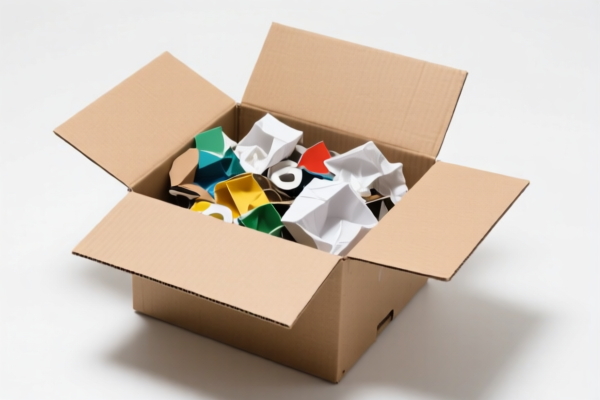
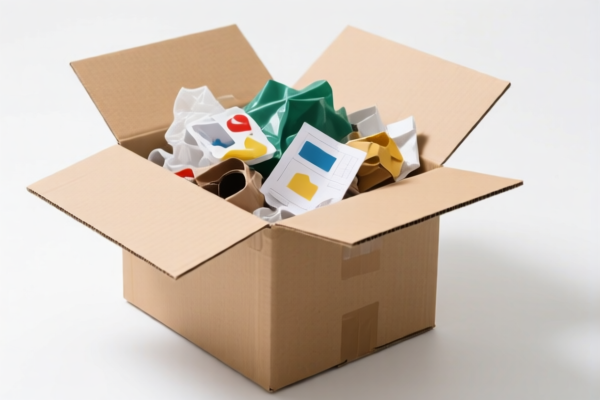
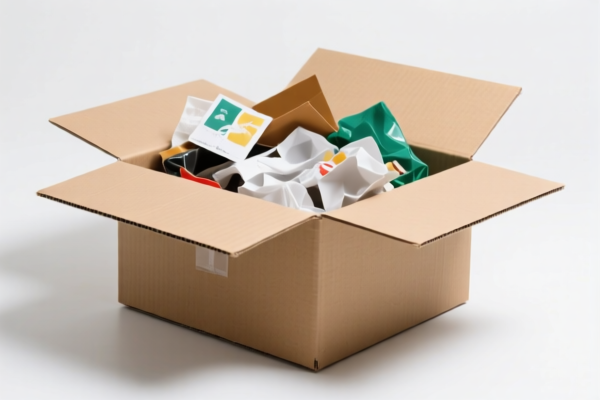
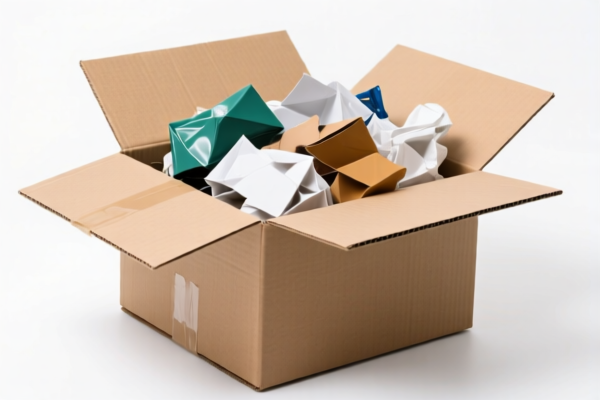
AI Analysis
📦 Recycled Cardboard Box (Waste & Scrap)
🌐 HS Code Reference & Customs Clearance Guide | 2026 Latest Tariff Analysis | Professional Entry Strategy
📌 I. Product Definition & Classification: What is "Recycled Cardboard"?
In international trade, "Recycled Cardboard" is not a single entity. Its classification depends heavily on whether it is raw waste/scrap material (for recycling) or a finished secondary product (like linerboard). Misclassification leads to drastic tax differences (12% vs. 35%).
1. Waste & Scrap (The Input Material):
Cardboard boxes that are torn, crushed, or used, intended solely for recycling into new paper pulp. These fall under Chapter 47 (Pulp of wood or of other fibrous cellulosic material) or Chapter 48 (Paper and paperboard) depending on the specific form and state.
2. Recycled Paperboard/Liner (The Output Material):
New paper products made from recycled fibers, specifically "Linerboard" (the flat outer layer of corrugated boxes). These fall under Chapter 48.
⚠️ Key Distinction:
- If you are importing scrap, waste, or bales of used cardboard destined for a recycling plant → Look at 4707 series.
- If you are importing new rolls/sheets of paper made from recycled pulp (e.g., for printing or box manufacturing) → Look at 4805 series.
📦 II. HS Code Classification Details (2026 Latest Tariff Authority Match)
Based on your data, here are the precise matches for Recycled Cardboard items:
| HS Code | Product Description | Application Scenario | Tariff Rate |
|---|---|---|---|
4707.10.00.00 |
Recycled paper and paperboard, matching the material and use of recycled (waste/scrap) paper and paperboard | Raw Waste/Scrap: Bales of used corrugated boxes, mixed paper waste for recycling. | 35.0% |
4805.24.50.00 |
Recycled paper, matching the material attributes of test liner paper (recycled liner) | Finished Product: Recycled Test Liner used in corrugated box manufacturing. | 35.0% |
4707.90.00.00 |
Paper and paperboard, matching the category of recovered paper and paperboard within the scope of recycling | Mixed Waste: Unsorted recycled paper/paperboard waste not specifically categorized as white-top or test liner. | 35.0% |
4805.24.70.00 |
Recycled paper, matching the material requirements for recycled linerboard and within the scope of paper and paperboard | Finished Product: Higher-grade Recycled Linerboard (often white-top or specific strength specs). | 12.0% |
🔍 Critical Note:
- Section 47 vs. Section 48: Items in 4707 are considered "Waste/Scrap" (Chapter 47 covers pulp, but 4707 specifically covers waste paper). Items in 4805 are "Manufactured Paper Products" (Chapter 48). - Tax Disparity: The difference between 12% and 35% is massive. Importing scrap (4707) is taxed higher than importing recycled linerboard (4805.70) in some contexts due to US trade policies. Wait, check data:
-4707.10&4707.90&4805.24.50= 35%
-4805.24.70= 12%
- This suggests that specific types of recycled linerboard (4805.24.70) enjoy a lower rate than general waste paper (4707) or lower-grade recycled paper (4805.24.50).
💰 III. 2026 Latest Tariff Rate Breakdown (Including Surcharges)
✅ Applicable Country: United States (US)
✅ Country of Origin: China (CN) (Assumed based on typical 122/301 clause context)
✅ Effective Date: 2025-11-10 onwards (for IEEPA surcharges)
🎯 1. The "High Tariff" Cluster: 4707.10.00.00, 4707.90.00.00, 4805.24.50.00
Total Tax: 35.0%
| Item | Content |
|---|---|
| Base Rate | 0.0% (Ad Valorem) |
| Section 301 Surcharge | +25.0% (USITC Footnote for Chinese goods) |
| 122-Clause Surcharge (IEEPA) | +10.0% (Targeting China/HK products, effective Nov 2025) |
| Total Effective Rate | 35.0% |
| Tax Calculation | CIF Value × 35% |
| De Minimis Exemption | ❌ NOT Eligible (Deny De Minimis) |
| Legal Basis Path | USITC:4707.xxxx / USITC:4805.24.50 → FOOTNOTE:9903.88.01 → IEEPA:9903.01.24 |
📌 Explanation:
- 0% Base: Standard MFN duty is 0%.
- 25% (Section 301): The standard tariff on Chinese goods under Trade Act of 1974, Section 301.
- 10% (122-Clause/IEEPA): A new additional levy targeting specific Chinese imports to counter trade practices.
- Result: Even though the base duty is zero, the 35% total hit is prohibitive for low-value waste.
🎯 2. The "Lower Tariff" Cluster: 4805.24.70.00
Total Tax: 12.0%
| Item | Content |
|---|---|
| Base Rate | 0.0% (Ad Valorem) |
| Section 301 Surcharge | +2.0% (Reduced rate for specific subcategories) |
| 122-Clause Surcharge (IEEPA) | +10.0% |
| Total Effective Rate | 12.0% |
| Tax Calculation | CIF Value × 12% |
| De Minimis Exemption | ❌ NOT Eligible (Deny De Minimis) |
| Legal Basis Path | USITC:4805.24.70 → FOOTNOTE:Reduced Rate → IEEPA:9903.01.24 |
📌 Strategy Insight:
- This code (4805.24.70) attracts only a 2% Section 301 surcharge instead of 25%.
- Why? It is likely classified as a "Recycled Linerboard" with specific physical properties that fall into a preferential sub-category within the 301 list, OR it is subject to a different quota/rate band.
- Crucial: If you can prove your goods meet the "Recycled Liner" specs for4805.24.70, you save 23 percentage points (35% - 12% = 23%).
🛠️ IV. Customs Clearance Practical Advice (Real-World Pitfall Guide)
✅ 1. Documentation Checklist (Non-negotiable)
| Document | Required? | Explanation |
|---|---|---|
| ✅ Commercial Invoice | ✔️ | Must clearly state "Recycled Paper/Cardboard" and specify if it is "Waste/Scrap" or "Finished Paper". |
| ✅ Packing List | ✔️ | Detail weight (Net/Gross) and dimensions. |
| ✅ Phytosanitary Certificate | ✔️ | Critical for Waste Paper. Must prove the scrap is free of pests, soil, and hazardous waste. Required by US EPA/USDA. |
| ✅ Certificate of Recycling | ✔️ | For 4805.24 codes, provide proof that the input material was recycled (e.g., from a recycling partner). |
| ✅ Product Specification Sheet | ✔️ | Describe fiber content, moisture content, and density. Crucial for distinguishing between 4707 (waste) and 4805 (manufactured). |
✅ 2. Classification Strategy (The "Save $$$$" Tip)
| Scenario | Correct HS Code | Risk |
|---|---|---|
| Importing Bales of Used Boxes (Waste) | 4707.10.00.00 or 4707.90.00.00 |
High Tax (35%). Ensure Phytosanitary cert is flawless to avoid quarantine rejection. |
| Importing Recycled Linerboard Rolls (New Product) | 4805.24.70.00 |
Preferred. Lower Tax (12%). Requires proof of "Linerboard" spec. |
| Importing Low-Grade Recycled Paper | 4805.24.50.00 |
High Tax (35%). Often confused with 4805.24.70. Be precise about "Test Liner" vs. "Linerboard". |
🔥 Golden Rule:
"Scrap is Waste (4707) = 35%. Recycled Liner (4805.24.70) = 12%.
Prove it's 'Linerboard', not 'Paper Waste', to save 23%!"
✅ 3. Special Handling for "122 Clause" & "Section 301"
-
De Minimis Exemption Denied:
- Under current US regulations (including the recent IEEPA expansions), shipments valued under $800 (De Minimis) do NOT apply to goods subject to Section 301 or IEEPA tariffs if they originate from China.
- Action: Do not attempt to split shipments into small parcels to avoid tax. CBP has advanced tracking for paper/cardboard waste from China.
-
Phytosanitary Inspections:
- Recycled cardboard is high-risk for invasive species (e.g., Asian Longhorned Beetle eggs hidden in folds).
- Action: Ensure the supplier has fumigated or heat-treated the bales before shipping. Provide the Fumigation Certificate. Without it, cargo will be held or destroyed.
-
Country of Origin Marking:
- Each bale/roll must be clearly marked "Made in China".
- Unmarked goods may be denied entry or forced to bear the marking on a container, leading to storage fees.
🌍 V. Global Market Comparison (2026)
| Market | HS Code | Duty Rate | Notes |
|---|---|---|---|
| 🇺🇸 USA | 4707.10 |
35% | High due to 301 + 122 clauses. Strict EPA rules on waste imports. |
| 🇺🇸 USA | 4805.24.70 |
12% | Preferable for recycled products (linerboard), not waste. |
| 🇨🇳 China | 4707.10 |
0% | China imports recycled waste, but has banned many types. Check latest "Solid Waste Ban" list. |
| 🇪🇺 EU | 4707.10 |
0% | EU has strict restrictions on plastic-contaminated paper waste. |
| 🇮🇳 India | 4707.10 |
Varies | Often restricts waste imports to protect local recycling industry. |
📌 VI. Common Mistakes & Pitfalls (Blood & Tears)
❌ Mistake 1: Calling "Recycled Linerboard" (a manufactured product) "Waste Paper" to try and find a lower rate.
👉 Reality: CBP will inspect the physical goods. If it's rolls/sheets, it's Chapter 48. If it's bales of scrap, it's Chapter 47. Misdeclaration leads to penalties + back duties.
❌ Mistake 2: Ignoring the "122 Clause" (IEEPA).
👉 Reality: Even if you think 301 is only 25%, the extra 10% (IEEPA) pushes you to 35%. Factor this into your FOB/CIF quotes.
❌ Mistake 3: Failing to provide a Phytosanitary Certificate.
👉 Reality: 100% Rejection/Destruction Risk. US Customs and Border Protection (CBP) and USDA APHIS will seize shipments without valid phytosanitary proof for recycled paper waste.
✅ Correct Approach:
For Waste: Ship to
4707.10.00.00with full Phytosanitary docs. Budget 35% tax.
For Product: Ship4805.24.70.00(Recycled Linerboard) with technical specs proving it meets "Liner" standards. Budget 12% tax.
🎯 VII. Conclusion: Precision is Profit!
🎯 Remember the Mantra:
🔹 "Scrap is Waste (4707) → 35% Tax.
🔹 Liner is Product (4805.24.70) → 12% Tax.
🔹 "No De Minimis for China Paper!
🔹 "Phytosanitary Cert is King!"**
📌 Pro Tip:
If you are a manufacturer importing recycled fiber, consider importing finished Recycled Linerboard (4805.24.70) rather than raw Waste Cardboard (4707). You save 23% in tariffs and face fewer customs hurdles regarding "solid waste" bans.
📣 Immediate Action:
📞 Consult a US Customs Broker BEFORE shipping.
📄 Request a Product Specification Sheet from your supplier to confirm if it fits4805.24.70or4707.
🚀 Optimize your supply chain and tariff burden today!
✨ Professional Classification, Lower Costs, Faster Clearance!
💼 Your Bottom Line Depends on the First 4 Digits!
Customer Reviews
About HS Code Classification
The Harmonized System (HS) is an internationally standardized nomenclature developed by the World Customs Organization (WCO) to classify traded products. Over 200 countries use the HS system as the basis for customs tariffs, trade statistics, and import/export regulations.
Each HS code follows a hierarchical structure:
- Chapter (2 digits) — Broad category of goods (e.g., Chapter 84: Machinery and Mechanical Appliances)
- Heading (4 digits) — More specific grouping within the chapter
- Subheading (6 digits) — Internationally standardized breakdown, used by all WCO member countries
- National subdivisions (8-10 digits) — Country-specific extensions for further classification, such as US HTSUS 10-digit codes
Correct HS code classification is essential for smooth customs clearance, accurate duty payment, and compliance with trade regulations. Misclassification can lead to customs delays, overpayment of duties, or penalties.
When importing from CN to US, the applicable tariff rates may include:
- Most-Favored-Nation (MFN) rate — The standard duty rate applied to WTO members
- General rate — Applied to countries without trade agreements
- Trade remedy duties — Additional tariffs such as Section 301 (anti-dumping), Section 232 (national security), or countervailing duties
The information provided on this page is for reference purposes only. For official classification, please consult with your local customs authority or a licensed customs broker.