Recycled Newsprint Sheets
CN → US| HS Code | Tariff Rate | Origin | Destination | Doc |
|---|---|---|---|---|
| 4802616040 | 35.0% | CN | US | Official Doc |
| 4705000000 | 35.0% | CN | US | Official Doc |
| 4818100000 | 35.0% | CN | US | Official Doc |
| 4818900020 | 17.5% | CN | US | Official Doc |
Product Images
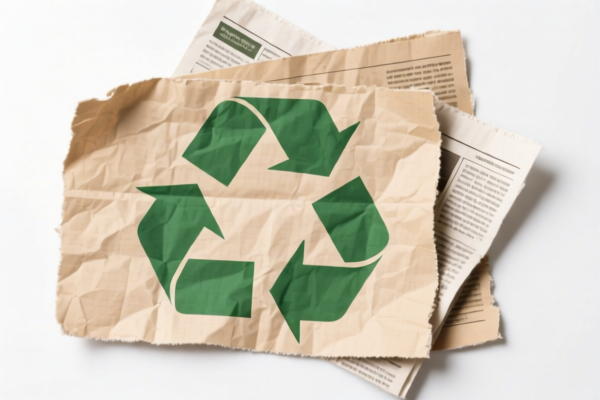

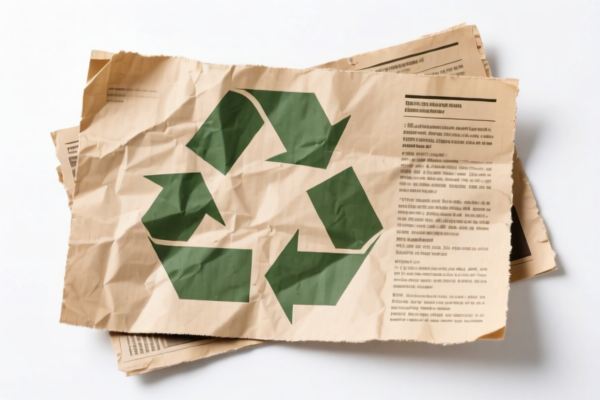
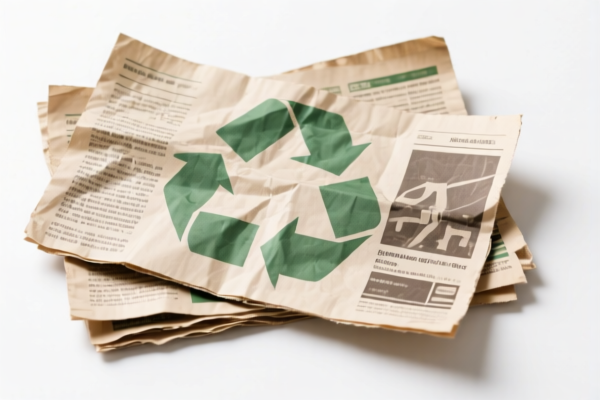
AI Analysis
📄 Recycled Newsprint Sheets (再生新闻纸)
🌐 HS Code Reference & Customs Clearance Guide | 2026 Latest Tariff Analysis | Professional Entry Strategy
📌 I. Product Definition & Classification: Do You Truly Understand "Recycled Newsprint"?
Recycled newsprint sheets are unprinted or printed paper products made from waste paper, primarily used for writing, printing, or graphic purposes. In international trade, their classification hinges on physical properties (weight, type) and source material (recycled vs. virgin).
⚠️ Key Distinction Point:
- If the paper is newsprint (unprinted), it falls under Chapter 48, specifically 4802. - If the product is pulp (raw fiber), it falls under 4705. - If the product is tissue/hygiene paper, it falls under 4818. - Crucially: US Origin vs. China Origin triggers massive tariff differences due to Section 301 and Section 122 tariffs.
📦 II. HS Code Classification Details (2026 Latest Tariff Authority Cross-Reference)
Based on the provided <DATA>, here are the specific HS codes and their logical mapping for "Recycled Newsprint Sheets" and related paper products.
| HS Code | Product Description | Logical Mapping & Application |
|---|---|---|
| 4802.61.60.40 | Recycled Newsprint, Paper Material, for Writing/Printing | Direct Match: This is the precise classification for recycled newsprint sheets used for graphic/writing purposes. It fits the "Unprinted Paper" category. |
| 4705.00.00.00 | Recycled Newspaper (Pulp Pre-cursor) | Raw Material: If the product is essentially waste newspaper pulp (fiber precursor) rather than formed sheets, it classifies here. Fits the "Fiber Material" logic. |
| 4818.10.00.00 | Recycled Toilet Paper (Hygiene Use) | Alternative Use: If the "newsprint" is actually processed into tissue/hygiene sheets, it moves to Chapter 4818. Material: Paper (Recycled). |
| 4818.90.00.20 | Recycled Hygiene Paper (Other) | Sub-category: A sub-type of hygiene paper. Material: Paper/Cellulose. Usage: Hygiene. |
🔍 Important Note:
- The input "Recycled Newsprint Sheets" most directly maps to 4802.61.60.40. - However, customs may scrutinize 4705 if the product is deemed "waste/pulp" rather than "paper." - Products like 4818 are included in the<DATA>as related recycled paper items, likely for cross-reference or if the product description is ambiguous (e.g., "soft" newsprint used for wrapping).
💰 III. 2026 Latest Tariff Rate Breakdown (Detailed Tax Clauses)
✅ Applicable Country: China (CN) as Exporter/Origin
✅ Destination Market: Implicitly US/EU context based on "122 Section" and "Additional Tariffs" mentioned in data.
✅ Effective Time: Current 2026 Tariff Structure
The <DATA> specifies a complex tariff structure involving Base Duty, Additional Tariffs (Section 301), and Section 122 Tariffs.
🎯 1. 4802.61.60.40 —— Recycled Newsprint Sheets (Core Product)
| Item | Content |
|---|---|
| Base Duty | 0.0% (Ad Valorem) |
| Additional Tariff (Section 301) | +25.0% |
| Section 122 Tariff | +10.0% |
| Total Tariff Rate | 35.0% |
| Tax Calculation | CIF Value × 35% |
| Legal Basis Path | Base: 0% → Add: 25% → 122: 10% |
📌 Explanation:
- Base 0%: Standard MFN rate for certain paper products is often 0%. - 25% Additional: Reflects the standard Section 301 tariffs on Chinese-origin goods. - 10% Section 122: A specific additional tariff applied to this category (likely related to trade remedy measures or specific country provisions). - Total Impact: 35% is a high barrier. You must factor this into your landed cost.
🎯 2. 4705.00.00.00 —— Recycled Newspaper Pulp (Raw Material)
| Item | Content |
|---|---|
| Base Duty | 0.0% |
| Additional Tariff | +25.0% |
| Section 122 Tariff | +10.0% |
| Total Tariff Rate | 35.0% |
| Tax Calculation | CIF Value × 35% |
📌 Note:
- Same tariff burden as finished newsprint. - Classification depends on whether the product is formed sheets (4802) or loose pulp/waste (4705). - Risk: Misclassification from 4705 to 4802 (or vice versa) does not change the rate here, but affects legal compliance.
🎯 3. 4818.10.00.00 —— Recycled Toilet Paper (Hygiene)
| Item | Content |
|---|---|
| Base Duty | 0.0% |
| Additional Tariff | +25.0% |
| Section 122 Tariff | +10.0% |
| Total Tariff Rate | 35.0% |
| Tax Calculation | CIF Value × 35% |
📌 Note:
- If your "newsprint sheets" are actually soft tissue for hygiene, this code applies. - Warning: Do not classify hygiene paper as newsprint. Customs may reject it, leading to delays.
🎯 4. 4818.90.00.20 —— Recycled Hygiene Paper (Other)
| Item | Content |
|---|---|
| Base Duty | 0.0% |
| Additional Tariff | +7.5% (Reduced Additional) |
| Section 122 Tariff | +10.0% |
| Total Tariff Rate | 17.5% |
| Tax Calculation | CIF Value × 17.5% |
📌 Critical Insight:
- This is the ONLY item in the provided<DATA>with a lower total tariff (17.5%). - The "Additional Tariff" is only 7.5% instead of 25%. - Strategy: If your product can be classified as "Other Hygiene Paper" (e.g., specialized soft paper), this offers a significant cost saving (17.5% vs 35%). - Constraint: Must meet the definition of "Hygiene Paper" (Paper, Cellulose Wadding, etc.) and not be "Newsprint" for writing.
🛠️ IV. Customs Clearance Practical Advice (Battle-Tested Pitfall Guide)
✅ 1. Documentation Checklist (Non-negotiable)
| Document | Must Provide | Explanation |
|---|---|---|
| ✅ Product Specification Sheet | ✔️ | Clearly state: "Recycled," "Newsprint Type," "Grammage," "Usage (Writing vs. Hygiene)." |
| ✅ Material Composition | ✔️ | % of recycled content, fiber type. Crucial for distinguishing 4802 (Paper) vs 4705 (Pulp). |
| ✅ Product Photos | ✔️ | Show texture, print status, packaging. |
| ✅ Commercial Invoice | ✔️ | Accurate description matching HS Code. |
| ✅ Packing List | ✔️ | Weight and dimensions for duty calculation. |
✅ 2. Classification Strategy & Tariff Optimization
| Scenario | Recommended HS Code | Total Tariff | Risk Level |
|---|---|---|---|
| Standard Recycled Newsprint (for printing) | 4802.61.60.40 |
35.0% | Low (Direct Match) |
| Waste Newspaper Pulp (Raw) | 4705.00.00.00 |
35.0% | Medium (Must prove it's pulp, not paper) |
| Soft Recycled Paper (Hygiene Use) | 4818.10.00.00 |
35.0% | High (Risk of rejection if not hygiene) |
| Specialized Hygiene Paper (Other) | 4818.90.00.20 |
17.5% | HIGH RISK / HIGH REWARD |
🔥 Strategic Tip:
- If your product is not strictly for writing/printing, but is a soft, absorbent paper, investigate classification under 4818.90.00.20 to save 17.5% in tariffs. - However, you must have strong product evidence (e.g., absorbency tests, intended hygiene use) to defend this classification. Misclassification can lead to penalties.
✅ 3. Special Case Handling
| Situation | Handling Advice |
|---|---|
| "Is it Paper or Pulp?" | If it's in sheet form, it's Paper (4802). If it's loose fibers/bales, it's Pulp (4705). |
| "Is it Newsprint or Hygiene?" | Newsprint is for printing/writing. Hygiene is for body contact. Do not mix these descriptions. |
| Section 122 Tariff Application | Ensure your invoice clearly states the country of origin to trigger the correct 10% Section 122 tariff. |
| Value Declaration | Declare CIF value accurately. Duty is calculated on CIF (Cost, Insurance, Freight). |
🌍 V. Global Market Comparison (2026 Update)
| Market | Recommended HS Code | Estimated Total Duty | Notes |
|---|---|---|---|
| 🇨🇳 China (Export) | 4802.61.60.40 |
35.0% | Includes 25% Add + 10% Sec 122. |
| 🇺🇸 US (Import from China) | Same Codes Apply | 35.0% | Note: US may have different additional tariffs; check USITC. |
| 🇪🇺 EU | 4802.55 / 4802.61 |
0% - 6.5% | EU does not apply Section 301 or Section 122 tariffs. Much lower cost. |
| 🇬🇧 UK | 4802.55 |
0% - 6.5% | Post-Brexit tariff structure. |
📌 Conclusion:
- China-to-US/China-to-Special-Regions: Tariff burden is 35%. - China-to-EU/UK: Tariff burden is significantly lower. - Strategy: If possible, consider shipping to EU/UK for transshipment (where legal) or diversifying markets to avoid the 35% hit.
📌 VI. Common Mistakes & Pitfalls (Blood Lessons)
❌ Mistake 1: Classifying Hygiene Paper as Newsprint
👉 Consequence: Duty paid at 35% when 17.5% might be applicable (if correctly classified as hygiene).
👉 Correction: Analyze product use. If it's for hygiene, use 4818.
❌ Mistake 2: Confusing Pulp with Paper
👉 Consequence: Customs may reject 4705 declaration if sheets are present.
👉 Correction: Ensure physical form matches code. Sheets = 4802. Pulp = 4705.
❌ Mistake 3: Ignoring Section 122 Tariff
👉 Consequence: Under-declaration of duty. Customs will assess 10% extra + penalties.
👉 Correction: Always include 10% in your cost calculation for these codes.
❌ Mistake 4: Using vague descriptions like "Paper Sheets"
👉 Consequence: Customs will assign a default code, likely with higher duties.
👉 Correction: Be specific: "Recycled Newsprint, Unprinted, for Printing."
✅ Correct Approach:
"Recycled Newsprint Sheets, Unprinted, GSM 45, for Newspaper Printing, Made in China, HS Code: 4802.61.60.40"
🎯 VII. Conclusion: Precision in Classification, Maximization of Profit!
🎯 Key Takeaway:
🔹 "Newsprint is 35%, Hygiene (Other) is 17.5%!"
🔹 "Check product use: Writing vs. Hygiene!"
🔹 "Pulp vs. Paper: Form matters!"
📌 Pro Tip:
If your product is high-grade recycled paper, consider EU/UK markets where tariffs are <10%, to offset the 35% US/Section 122 burden.
Always apply for a Binding Tariff Information (BTI) or Advance Ruling before shipment to lock in the HS Code and tariff rate.
📣 Immediate Action:
📞 Review Product Specs: Is it Newsprint (4802) or Hygiene (4818)?
💸 Calculate Landed Cost: Add 35% for 4802/4705/4818.10, or 17.5% for 4818.90.20.
🚀 Secure Your Margin: Correct classification is your best defense against customs audits.
✨ Professional Customs Clearance Starts with Accurate Classification!
💼 Every Percentage Point of Duty Saved is Pure Profit!
Customer Reviews
About HS Code Classification
The Harmonized System (HS) is an internationally standardized nomenclature developed by the World Customs Organization (WCO) to classify traded products. Over 200 countries use the HS system as the basis for customs tariffs, trade statistics, and import/export regulations.
Each HS code follows a hierarchical structure:
- Chapter (2 digits) — Broad category of goods (e.g., Chapter 84: Machinery and Mechanical Appliances)
- Heading (4 digits) — More specific grouping within the chapter
- Subheading (6 digits) — Internationally standardized breakdown, used by all WCO member countries
- National subdivisions (8-10 digits) — Country-specific extensions for further classification, such as US HTSUS 10-digit codes
Correct HS code classification is essential for smooth customs clearance, accurate duty payment, and compliance with trade regulations. Misclassification can lead to customs delays, overpayment of duties, or penalties.
When importing from CN to US, the applicable tariff rates may include:
- Most-Favored-Nation (MFN) rate — The standard duty rate applied to WTO members
- General rate — Applied to countries without trade agreements
- Trade remedy duties — Additional tariffs such as Section 301 (anti-dumping), Section 232 (national security), or countervailing duties
The information provided on this page is for reference purposes only. For official classification, please consult with your local customs authority or a licensed customs broker.