Recycled Rubber Granules
CN → US| HS Code | Tariff Rate | Origin | Destination | Doc |
|---|---|---|---|---|
| 4003000000 | 35.0% | CN | US | Official Doc |
| 4002990000 | 35.0% | CN | US | Official Doc |
| 4004000000 | 35.0% | CN | US | Official Doc |
| 4002190019 | 35.0% | CN | US | Official Doc |
| 4016991000 | 20.8% | CN | US | Official Doc |
Product Images
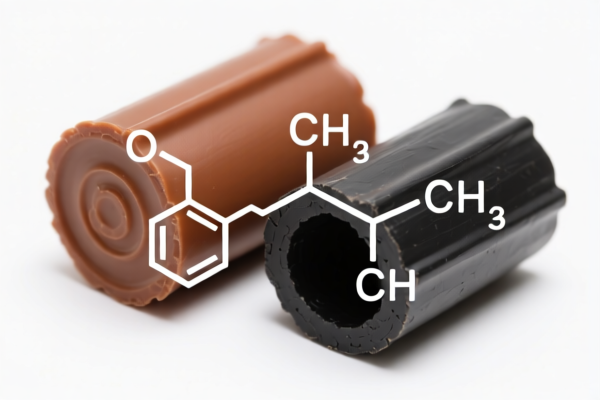

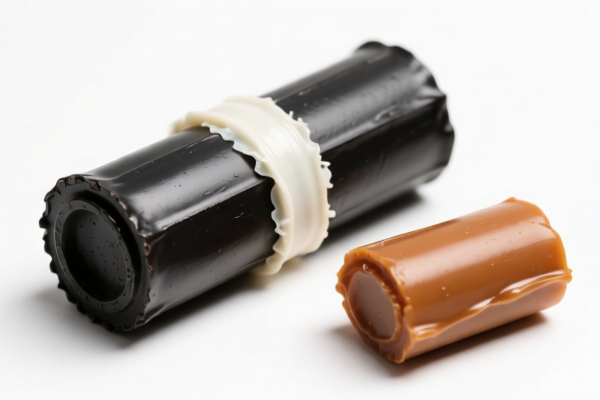
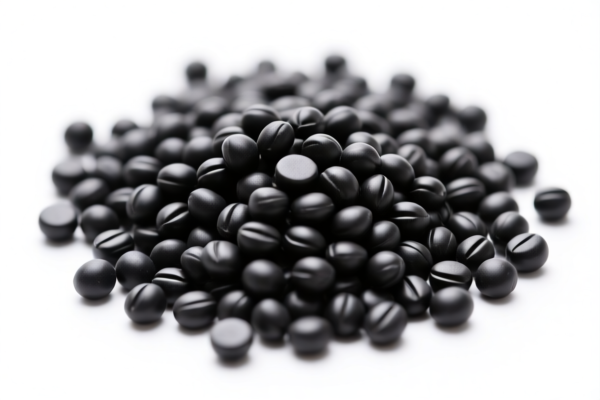
AI Analysis
🏭 Recycled Rubber Granules (Regenerated Rubber)
🌐 HS Code Reference & Customs Clearance Guide | 2026 Latest Tariff Analysis | Professional Clearance Strategy
📌 I. Product Definition: What Exactly Are "Recycled Rubber Granules"?
In international trade, "Recycled Rubber Granules" are not a single, unified commodity. They are classified based on their material composition, state of processing, and origin. Misclassification is the #1 cause of customs delays and heavy penalties for this product category.
There are two main categories: 1. Regenerated Rubber (Vulcanized waste/debris processed into rubber): High value-add, complex classification. 2. Rubber Scrap/Off-cuts: Raw waste material, often treated as refuse or secondary raw material.
⚠️ Critical Distinction:
- If it is purely waste or unprocessed scraps → It often falls under "Waste/Scrap" categories (e.g., 4004).
- If it is processed/reclaimed rubber (chemically or mechanically treated) → It falls under "Regenerated Rubber" (4003) or Synthetic Rubber (4002).
- Do NOT mix these up. The tax rate difference can be significant, and the regulatory scrutiny differs greatly.
📦 II. HS Code Classification Details (2026 Latest Tariff Concordance)
Based on the provided data, here are the four most common HS Codes for Recycled Rubber Granules, along with their specific scenarios.
| HS Code | Product Description | Applicable Scenario | Key Characteristics |
|--------|--------------------------|--------------------------|
| 4003.00.00.00 | Regenerated Rubber (Vulcanized) | High-quality reclaimed rubber, suitable for new manufacturing | ✅ Primary Choice for processed "Regenerated Rubber"
Meets material & primary form requirements |
| 4002.99.00.00 | Synthetic Rubber & Derivatives | Recycled synthetic rubber that retains synthetic properties | ✅ Used if the granules are derived from synthetic rubber (SBR, NBR, etc.) and fit the "derived product" definition |
| 4004.00.00.00 | Rubber Waste, Scraps & Off-cuts | Low-grade recycled rubber, granules from tire shredding, industrial waste | ✅ Waste/Refuse Category. Used if the product is defined as scrap/waste rather than "regenerated" material |
| 4002.19.00.19 | Synthetic Rubber (Catch-all) | Synthetic rubber granules not specified elsewhere | ✅ Fallback Category for synthetic rubber granules that don’t fit other specific synthetic rubber subheadings |
🔍 Important Note:
-4003.00.00.00is the most accurate for "Regenerated Rubber" (regenerated from vulcanized rubber).
-4004.00.00.00is for waste/scraps. If you import high-quality reclaimed rubber, classifying it as waste (4004) may trigger suspicion of undervaluation or incorrect declaration.
-4002codes are used when the recycled material is specifically synthetic rubber and fits the legal definition of synthetic rubber derivatives.
💰 III. 2026 Latest Tariff Rate Breakdown (Including Surcharges)
✅ Applicable Country: United States (US)
✅ Origin: China (CN)
✅ Effective Date: 2025-11-10 onwards
🎯 1. Regenerated Rubber & Synthetic Rubber Granules (4003, 4002.99, 4002.19, 4004)
| Item | Detail |
|---|---|
| Base Tariff | 0.0% |
| Section 301 Additional Tariff | +25.0% (USITC Footnote 9903.88.01 / General Trade) |
| IEEPA Additional Tariff | +10.0% (China-specific surcharge, effective Nov 10, 2025) |
| Total Tariff Rate | 35.0% |
| Tax Calculation | CIF Value × 35% |
| De Minimis Exemption | ❌ Not Eligible (Deny de minimis) |
| Legal Basis Path | IEEPA:9903.01.25 → USITC:4003/4002/4004 → FOOTNOTE:301 |
📌 Explanation:
- All four HS codes listed above (4003.00.00.00,4002.99.00.00,4004.00.00.00,4002.19.00.19) attract a combined 35% tariff.
- This includes a 25% Section 301 tariff + 10% IEEPA tariff.
- No base tariff applies, but the additional surcharges make the cost high.
- ⚠️ Critical: These goods are NOT eligible for de minimis (Section 321) exemption. Even small shipments are subject to full customs clearance and taxation.
🎯 2. Recycled Rubber Strips/Profiles (4016.99.10.00)
Note: This HS code is for "Recycled Rubber Strips" (硫化橡胶制品 - Vulcanized Rubber Articles), NOT granules. If your product is strictly granules, do NOT use this code unless it is explicitly marketed as "strips" or "profiles."
| Item | Detail |
|---|---|
| Base Tariff | 3.3% |
| Section 301 Additional Tariff | +7.5% |
| IEEPA Additional Tariff | +10.0% |
| Total Tariff Rate | 20.8% |
| Tax Calculation | CIF Value × 20.8% |
| De Minimis Exemption | ❌ Not Eligible (Likely) |
| Legal Basis Path | IEEPA:9903.01.25 → USITC:4016.99.10.00 → FOOTNOTE:301 |
📌 Explanation:
- If your product can be classified as vulcanized rubber articles (e.g., strips, mats, profiles) rather than "granules" or "regenerated rubber," the tariff drops to 20.8%.
- However, if you are importing granules (powder/pellets), using4016is highly risky and likely incorrect. Customs may reject it as a false declaration, leading to penalties.
- Only use4016.99.10.00if the product is physically a strip/profile, not granules.
🛠️ IV. Customs Clearance Practical Advice (Pitfall Avoidance Guide)
✅ 1. Essential Documentation Checklist
| Document | Required? | Purpose |
|---|---|---|
| ✅ Product Specification Sheet | ✔️ | Must clearly state: "Recycled Rubber Granules," material origin (natural/synthetic), processing method. |
| ✅ Certificate of Origin (CO) | ✔️ | To prove origin as China (triggers 35% tariff). |
| ✅ Bill of Lading / Invoice | ✔️ | Must match the HS code description exactly. |
| ✅ Third-Party Inspection Report | ✔️ | Proof of quality, composition, and form (granules vs. waste). |
| ✅ Detailed Packing List | ✔️ | Net weight, gross weight, number of packages. |
✅ 2. Declaration Tips (Key Mantra)
🔥 "Granules are Regenerated/Synthetic (35%), NOT Strips (20.8%)."
| Scenario | Correct HS Code | Wrong HS Code | Consequence |
|---|---|---|---|
| Rubber Granules/Pellets | 4003.00.00.00 or 4004.00.00.00 |
4016.99.10.00 |
Penalty for Misdeclaration. 35% tax owed + fines. |
| Synthetic Rubber Granules | 4002.99.00.00 |
4004.00.00.00 |
Possible dispute over "Waste" vs. "Product." 35% applies either way, but compliance risk exists. |
| Rubber Waste/Scrap | 4004.00.00.00 |
4003.00.00.00 |
If declared as "Regenerated" but is actually waste, customs may seize goods for environmental violations. |
✅ 3. Special Cases & Risk Management
| Situation | Recommendation |
|---|---|
| OEM/Private Label | Provide clear labeling. Avoid ambiguous terms like "Rubber Dust" (suspicious for asbestos or waste). Use "Regenerated Rubber Granules." |
| Import for Environmental Recycling | Ensure you have the necessary EPA/State permits. Rubber waste imports are heavily regulated for environmental safety. |
| Misclassification Risk | If unsure, apply for an Advance Ruling from CBP. The cost is low compared to potential penalties. |
| "Strips" vs. "Granules" | Do NOT try to classify granules as "strips" (4016) to save 14.2%. CBP inspects physical samples. Physical mismatch = Seizure. |
🌍 V. Global Market Comparison (2026 Latest)
| Country/Region | Recommended HS Code | Total Tariff (China Origin) | Notes |
|---|---|---|---|
| 🇺🇸 USA | 4003.00.00.00 / 4004.00.00.00 |
35.0% | High additional tariffs (25% + 10%). |
| 🇨🇳 China (Export) | 4003.00.00.00 |
0% | No export duty on most rubber products. |
| 🇪🇺 EU | 4003.00.00 |
0% (MFN) | Check for anti-dumping duties. No IEEPA. |
| 🇲🇽 Mexico | 4003.00.00 |
0% (Under USMCA) | If meeting Rules of Origin, may be duty-free. |
📌 Conclusion:
- The US is the most expensive market for recycled rubber due to the 35% combined tariff.
- Consider supply chain adjustments (e.g., processing in a third country) if tariffs are too high, but be aware of transshipment rules.
📌 VI. Common Mistakes & Pitfalls (Lessons Learned)
❌ Mistake 1: Declaring "Granules" as "Rubber Strips" (4016) to save tax.
👉 Result: CBP physical inspection reveals granules. Seizure + Penalty.
❌ Mistake 2: Using "Waste" HS code (4004) for high-quality regenerated rubber.
👉 Result: Customs may suspect undervaluation or environmental violation. Delay + Inspection.
❌ Mistake 3: Ignoring IEEPA 10% surcharge.
👉 Result: Underpayment of duties. Interest + Penalties upon audit.
✅ Correct Approach:
"Recycled Rubber Granules, Synthetic/Natural, Regenerated Form, Model XXX, HS 4003.00.00.00, Country of Origin: China"
🎯 VII. Conclusion: Precise Classification Saves Money!
🎯 Remember:
🔹 "Granules = 35% (4003/4002/4004)"
🔹 "Strips = 20.8% (4016) – BUT ONLY IF STRIPS!"
🔹 "No De Minimis! Every shipment is taxed."
📌 Pro Tip:
If your granules are synthetic, try to qualify for 4002.99.00.00 if it fits the "derivative" definition better than 4004. However, both incur 35%. There is no tariff advantage between 4003, 4002, and 4004 for China-origin goods under current rules. Focus on correct documentation to avoid audits.
📣 Immediate Action:
📞 Consult a licensed customs broker.
📄 Provide photos of granules + technical spec sheet.
🚀 Accurate HS Code = Smooth Clearance + Predictable Costs.
✨ Professional Customs Clearance Starts with Accurate Classification!
💼 Don’t let a 0.0% base tariff fool you—the 35% additional tariff is the real cost driver!
Customer Reviews
About HS Code Classification
The Harmonized System (HS) is an internationally standardized nomenclature developed by the World Customs Organization (WCO) to classify traded products. Over 200 countries use the HS system as the basis for customs tariffs, trade statistics, and import/export regulations.
Each HS code follows a hierarchical structure:
- Chapter (2 digits) — Broad category of goods (e.g., Chapter 84: Machinery and Mechanical Appliances)
- Heading (4 digits) — More specific grouping within the chapter
- Subheading (6 digits) — Internationally standardized breakdown, used by all WCO member countries
- National subdivisions (8-10 digits) — Country-specific extensions for further classification, such as US HTSUS 10-digit codes
Correct HS code classification is essential for smooth customs clearance, accurate duty payment, and compliance with trade regulations. Misclassification can lead to customs delays, overpayment of duties, or penalties.
When importing from CN to US, the applicable tariff rates may include:
- Most-Favored-Nation (MFN) rate — The standard duty rate applied to WTO members
- General rate — Applied to countries without trade agreements
- Trade remedy duties — Additional tariffs such as Section 301 (anti-dumping), Section 232 (national security), or countervailing duties
The information provided on this page is for reference purposes only. For official classification, please consult with your local customs authority or a licensed customs broker.