Recycled Rubber Strip
CN → US| HS Code | Tariff Rate | Origin | Destination | Doc |
|---|---|---|---|---|
| 4016991000 | 20.8% | CN | US | Official Doc |
| 3926909989 | 22.8% | CN | US | Official Doc |
| 3912110000 | 40.6% | CN | US | Official Doc |
| 3926906090 | 39.2% | CN | US | Official Doc |
| 3916903000 | 41.5% | CN | US | Official Doc |
Product Images
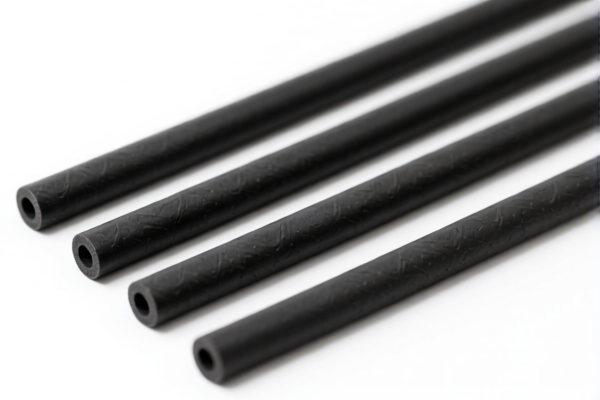
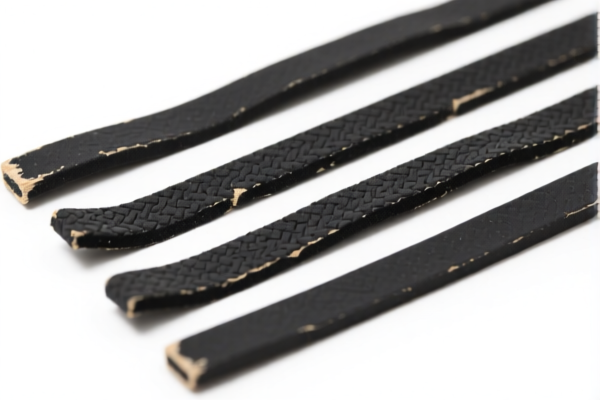
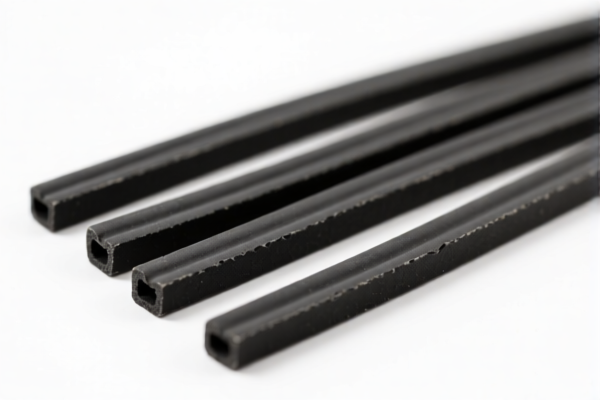
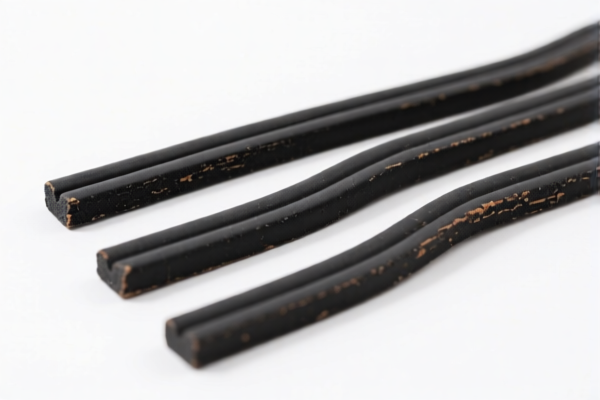
AI Analysis
🛢️ Recycled Rubber Strip: HS Code Classification & US Customs Clearance Guide
🌐 HS Code Reference & Customs Strategy | 2026 Latest Tariff Analysis | Professional Compliance Guide
📌 I. Product Definition & Classification: What Exactly is a "Recycled Rubber Strip"?
A "Recycled Rubber Strip" is a semi-finished or finished good made from reclaimed rubber materials. In international trade, the classification depends heavily on the material composition and physical form. While the term "Recycled" often implies sustainability, US Customs and Border Protection (CBP) prioritizes the chemical composition and physical characteristics for tariff determination.
Crucially, if the product is primarily cellulose-based (e.g., recycled paper/plastic composites) rather than pure synthetic/natural rubber, it may fall under plastic/cellulose chapters (Chapter 39), not Chapter 40 (Rubber). This distinction significantly impacts tax rates.
⚠️ Key Distinction:
- Pure/Blended Rubber Strips: Belong to Chapter 40 (Rubber Articles).
- Cellulose-Based/Plastic Composite Strips: Belong to Chapter 39 (Plastics and Articles Thereof).
- Form Factor: If shaped like rods/bars, it may fall under "Profiles" (HS 3916). If loose strips, it may fall under "Other" (HS 4016/3926).
📦 II. HS Code Classification Details (2026 Latest Tariff Mapping)
Based on the provided data, here are the five potential HS Codes for "Recycled Rubber/Cellulose Strips," ranked by material specificity and tax implication.
| HS Code | Product Description | Material/State | Tax Logic & Summary |
|---|---|---|---|
| 4016.99.10.00 | Recycled Rubber Strip (Pure Rubber) | Material: Rubber Form: Strip Category: Other vulcanized rubber articles |
Lowest Tax Option. Fits the literal definition of "Recycled Rubber Strip." |
| 3926.90.99.89 | Recycled Cellulose Plastic Strip | Material: Cellulose Plastic Form: Strip Category: Other plastic articles |
Mid-Tax. Classified as general plastic if not specifically cellulose derivative. |
| 3926.90.60.90 | Recycled Cellulose Plastic Strip (Belt Logic) | Material: Recycled Cellulose Plastic Form: Strip Category: Belt/Strap extension |
Mid-High Tax. Logic extends from belt-like applications. |
| 3912.11.00.00 | Recycled Cellulose Plastic Strip (Derivative) | Material: Regenerated Cellulose Form: Strip Category: Cellulose Derivatives |
High Tax. Specific to regenerated cellulose materials. |
| 3916.90.30.00 | Recycled Cellulose Plastic Strip (Profile) | Material: Plastic Form: Strip (Bar/Profile) |
Highest Tax. Treated as plastic rods/profiles due to shape. |
🔍 Critical Insight:
- Only4016.99.10.00truly qualifies as a "Rubber" strip under Chapter 40.
- The other four codes (39xx series) classify the product as Plastic/Cellulose.
- Misclassification Risk: Declaring a cellulose-plastic strip as "Rubber" (4016) to save taxes will lead to severe penalties if proven otherwise. Conversely, declaring a rubber strip as "Plastic" (3926) increases tax burden unnecessarily.
💰 III. 2026 US Tariff Rate Breakdown (China-Origin Products)
✅ Applicable Country: United States (US)
✅ Country of Origin: China (CN)
✅ Effective Date: Post-2025 (Including Section 301 & IEEPA Add-ons)
🎯 1. 4016.99.10.00 —— Recycled Rubber Strip (The Ideal Fit)
Best for products strictly made from reclaimed rubber.
| Item | Detail |
|---|---|
| Base Duty | 3.3% (Ad Valorem) |
| Section 301 (Add-on) | 7.5% |
| 122 Clause (Trump-era) | 10% |
| Total Tax Rate | 20.8% |
| Calculation Base | CIF Value × 20.8% |
| De Minimis Exemption | ❌ Not Eligible (Section 301 goods excluded) |
| Legal Pathway | USITC:4016.99.10.00 → Section 301: 7.5% → 122 Clause: 10% |
📌 Analysis:
This is the most favorable HS code for a genuine "Recycled Rubber Strip." The total tax burden is 20.8%, which is significantly lower than the plastic equivalents.
- Why? Chapter 40 generally enjoys lower base tariffs than Chapter 39 for certain articles.
- Caution: You must prove the material is vulcanized rubber derived from recycling processes (grinding, devulcanization), not just plastic granules.
🎯 2. 3926.90.99.89 —— Recycled Cellulose Plastic Strip (General Plastic)
| Item | Detail |
|---|---|
| Base Duty | 5.3% |
| Section 301 (Add-on) | 7.5% |
| 122 Clause (Trump-era) | 10% |
| Total Tax Rate | 22.8% |
| Calculation Base | CIF Value × 22.8% |
📌 Analysis:
Slightly higher than rubber (4016). Use this if the product contains plastic binders or is a mixed polymer that doesn't qualify as pure cellulose derivative.
🎯 3. 3926.90.60.90 —— Recycled Cellulose Plastic Strip (Belt Logic)
| Item | Detail |
|---|---|
| Base Duty | 4.2% |
| Section 301 (Add-on) | 25.0% |
| 122 Clause (Trump-era) | 10% |
| Total Tax Rate | 39.2% |
📌 Analysis:
Major Pitfall! Although the base duty is lower (4.2%), the Section 301 tariff jumps to 25%. This results in a 39.2% total rate. Do not use this code unless the product is specifically categorized under "belts/straps" logic in Chapter 39.
🎯 4. 3912.11.00.00 —— Regenerated Cellulose (High Tax Risk)
| Item | Detail |
|---|---|
| Base Duty | 5.6% |
| Section 301 (Add-on) | 25.0% |
| 122 Clause (Trump-era) | 10% |
| Total Tax Rate | 40.6% |
📌 Analysis:
Highest Risk Zone. If your "rubber" strip contains significant regenerated cellulose (e.g., rayon-like fibers, viscose blends), CBP may classify it here. The 25% Section 301 tariff makes this extremely expensive.
🎯 5. 3916.90.30.00 —— Plastic Profiles/Rods (Highest Tax)
| Item | Detail |
|---|---|
| Base Duty | 6.5% |
| Section 301 (Add-on) | 25.0% |
| 122 Clause (Trump-era) | 10% |
| Total Tax Rate | 41.5% |
📌 Analysis:
If the strip is shaped like a rod, bar, or profile (cross-section > 1mm uniform shape), CBP may apply Chapter 39, Section 3916. The 25% Section 301 tariff applies, leading to the highest possible tax of 41.5%. Avoid this classification for flexible strips.
🛠️ IV. Customs Clearance Practical Advice (Avoiding Pitfalls)
✅ 1. Documentation Checklist (Mandatory)
| Document | Requirement | Notes |
|---|---|---|
| ✅ Material Composition Statement | ✔️ Essential | Must explicitly state: "100% Recycled Vulcanized Rubber" or "Composition of Cellulose Plastic." |
| ✅ Certificate of Origin (CO) | ✔️ Essential | Proves China origin for Section 301 calculation. |
| ✅ Product Photos (Cross-section) | ✔️ Critical | Show texture to distinguish rubber (elastic, porous) from plastic (smooth, uniform). |
| ✅ Recycling Process Description | ✔️ Recommended | Explain the devulcanization/recycling method to justify Chapter 40. |
| ✅ Commercial Invoice | ✔️ Mandatory | Must match the declared HS Code exactly. |
✅ 2. Classification Strategy (Key Tips)
🔥 “Prove Rubber, Not Plastic. Prove Strip, Not Profile.”
| Scenario | Recommended HS Code | Why? |
|---|---|---|
| Pure Recycled Rubber Strips | 4016.99.10.00 |
Lowest tax (20.8%). Fits description perfectly. |
| Rubber-Plastic Blend (Minor Plastic) | 4016.99.10.00 |
If rubber is the essential character, it stays in Ch. 40. |
| Recycled Paper/Cellulose Composite | 3912.11.00.00 or 3926... |
Cannot claim rubber classification. Prepare for ~40% tax. |
| Rigid Plastic Rods | 3916.90.30.00 |
High tax (41.5%). Avoid if possible by proving flexibility. |
✅ 3. Common Errors & Consequences
❌ Error 1: Declaring cellulose-plastic strips as "Rubber" (4016)
👉 Consequence: CBP conducts lab testing. If plastic is found, penalties + back taxes + 25% Section 301 retroactively applied.
❌ Error 2: Declaring flexible strips as "Plastic Profiles" (3916)
👉 Consequence: Overpaying taxes. You pay 41.5% instead of 20.8%. Loss of 20.7% margin.
❌ Error 3: Ignoring "122 Clause"
👉 Consequence: Some older Section 301 lists still include 122 Clause penalties. Always verify if the 10% is stacked. In this dataset, it is stacked.
✅ 4. Clearance Recommendations
- Pre-Classification Ruling: File an ACE Pre-classification Request with CBP before shipment if the material composition is ambiguous.
- Sample Submission: Provide physical samples to your customs broker to verify elasticity and material type.
- Supply Chain Audit: Ensure your supplier provides a Material Safety Data Sheet (MSDS) or Test Report confirming rubber content.
- Alternative Sourcing: If the product is cellulose-based, consider sourcing from Vietnam or Mexico to mitigate US-China tariffs (if eligible for USMCA or TPA benefits).
🌍 V. Global Market Comparison (2026 Outlook)
| Market | Recommended HS Code | Estimated Tax (China Origin) | Notes |
|---|---|---|---|
| 🇺🇸 USA | 4016.99.10.00 |
20.8% | Includes 301 + 122 Clause. |
| 🇨🇳 China (Import) | 4016.99.90.90 |
~5-10% | Lower base tariff, no Section 301. |
| 🇪🇺 EU | 4016.93.00 |
~3-5% | No equivalent Section 301. |
| 🇬🇧 UK | 4016.93.90 |
~3-5% | Post-Brexit rules apply. |
📌 Conclusion:
The US market is the most expensive due to layered tariffs (Base + 301 + 122). Accurate classification is financially critical. A $100,000 shipment misclassified from4016(20.8%) to3916(41.5%) results in a $20,700 tax difference.
📌 VI. Final Checklist for Exporters
- [ ] Confirm Material: Is it 100% rubber or a blend?
- [ ] Confirm Form: Is it flexible (strip) or rigid (profile)?
- [ ] Select HS Code: Prefer
4016.99.10.00for genuine rubber. - [ ] Calculate Tax: Budget for 20.8% total duty for US imports.
- [ ] Prepare Docs: Have test reports and photos ready for CBP inspection.
🎯 Pro Tip:
"Rubber is Rubber, Plastic is Plastic. Mix them up, and the Taxman takes it all!"
✨ Professional Customs Broker Advice:
When in doubt, choose the lower-risk HS Code (
4016) but be prepared to substantiate with lab tests. If the product is clearly plastic/cellulose, disclose it and pay the higher tax to avoid fraud allegations.
📞 Contact Your Customs Broker Today to verify the exact material composition and lock in the 20.8% rate for your Recycled Rubber Strips!
💼 Precision in Classification = Profit in Clearance
Customer Reviews
About HS Code Classification
The Harmonized System (HS) is an internationally standardized nomenclature developed by the World Customs Organization (WCO) to classify traded products. Over 200 countries use the HS system as the basis for customs tariffs, trade statistics, and import/export regulations.
Each HS code follows a hierarchical structure:
- Chapter (2 digits) — Broad category of goods (e.g., Chapter 84: Machinery and Mechanical Appliances)
- Heading (4 digits) — More specific grouping within the chapter
- Subheading (6 digits) — Internationally standardized breakdown, used by all WCO member countries
- National subdivisions (8-10 digits) — Country-specific extensions for further classification, such as US HTSUS 10-digit codes
Correct HS code classification is essential for smooth customs clearance, accurate duty payment, and compliance with trade regulations. Misclassification can lead to customs delays, overpayment of duties, or penalties.
When importing from CN to US, the applicable tariff rates may include:
- Most-Favored-Nation (MFN) rate — The standard duty rate applied to WTO members
- General rate — Applied to countries without trade agreements
- Trade remedy duties — Additional tariffs such as Section 301 (anti-dumping), Section 232 (national security), or countervailing duties
The information provided on this page is for reference purposes only. For official classification, please consult with your local customs authority or a licensed customs broker.