Recycled Unbleached Corrugated Paper
CN → US| HS Code | Tariff Rate | Origin | Destination | Doc |
|---|---|---|---|---|
| 4707900000 | 35.0% | CN | US | Official Doc |
| 4707100000 | 35.0% | CN | US | Official Doc |
| 4804210000 | 35.0% | CN | US | Official Doc |
| 4804110000 | 35.0% | CN | US | Official Doc |
Product Images
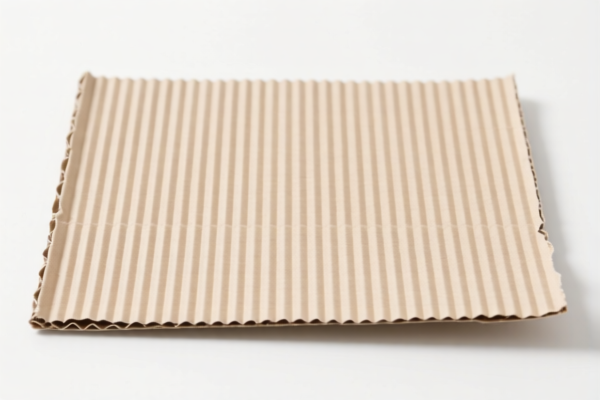
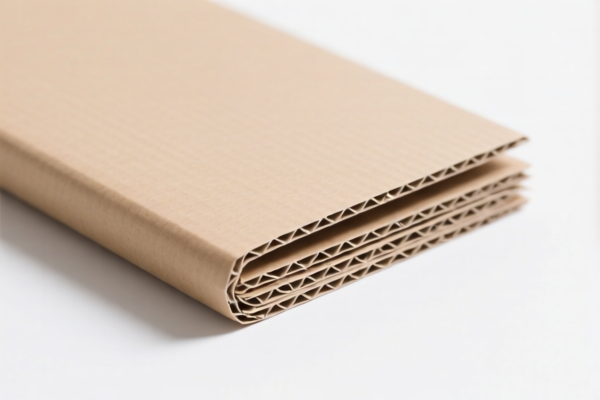
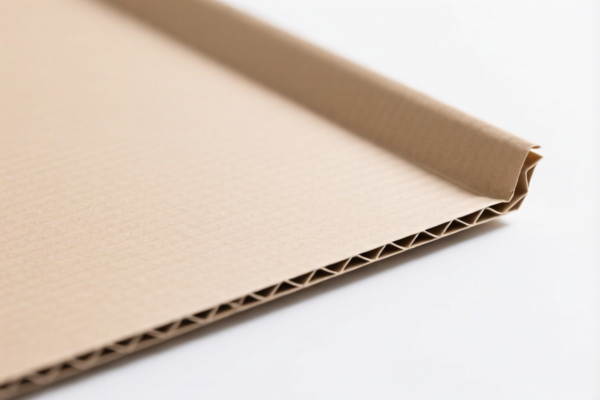
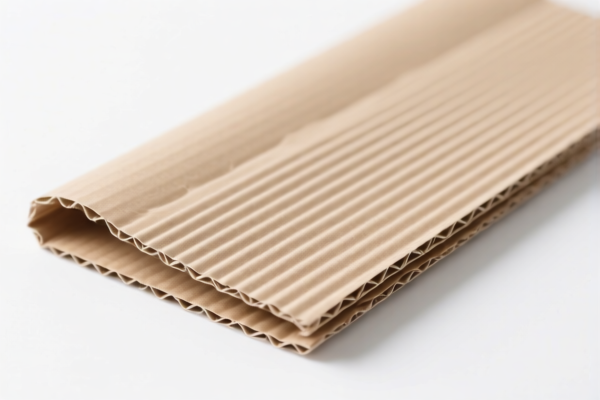
AI Analysis
📦 Recycled Unbleached Corrugated Paper (Kraft Paper Chips/Shreds)
🌐 HS Code Reference & Customs Clearance Guide | 2026 Latest Tariff Analysis | Professional Clearance Strategy
📌 I. Product Definition & Classification: Do You Really Know "Recycled Kraft Paper"?
Recycled Unbleached Corrugated Paper refers to waste or scrap paper derived from kraft paper packaging, specifically corrugated boards. In international trade, its classification depends heavily on its state of recovery (scrap vs. usable material) and pulp composition.
Based on the provided data, the product falls into two main categories: 1. Recycled/Scrap Paper: If the material is waste, scrap, or off-cuts intended for recycling/pulping. 2. Finished/Recoverable Paper: If the material is clean, unbleached kraft paper sheets/shards intended for use in corrugated manufacturing (classified as unbleached paper).
⚠️ Key Distinction:
- If the item is waste, dirty, or shredded for disposal/recycling →归入 4707 (Pulp/Waste paper).
- If the item is clean, unused, or high-grade off-cuts acting as raw material for corrugation →归入 4804 (Unbleached Kraft Paper/Board).
📦 II. HS Code Classification Details (2026 Latest Tariff Authority Comparison)
| HS Code | Product Description | Applicable Scenario | Status |
|---|---|---|---|
4707.10.00.00 |
Recovered (waste and scrap) unbleached kraft paper and unbleached corrugated paper | Most Likely: Waste, scrap, shreds, or off-cuts from kraft paper production intended for recycling. | ✅ Waste/Scrap |
4707.90.00.00 |
Other recovered waste and scrap paper (excluding kraft/corrugated) | Fits if the material is classified as "other" paper scraps, though 4707.10 is more precise for kraft. The data suggests this as a fallback for "paper chips/shards" not strictly defined as corrugated board. | ✅ Waste/Scrap (Other) |
4804.21.00.00 |
Unbleached kraft paper or paperboard, in rolls or sheets, for corrugated paper use | Fits if the material is clean, unbleached kraft paper (shards/sheets) used as a layer in corrugated board manufacturing. | ✅ Finished Paper |
4804.11.00.00 |
Unbleached kraft paper or paperboard, in sheets, for linerboard application | Fits if the material is specifically linerboard (surface layer of corrugated paper) made of unbleached kraft. | ✅ Finished Paper |
🔍 Critical Reminder:
- 4707 Series: Apply to used, waste, or scrap paper. The summary states: "Material matches kraft paper, form matches paper chips, belongs to recycled waste paper."
- 4804 Series: Apply to new, unbleached, virgin or recycled fiber paper that is not yet waste. The summary states: "Material is 'kraft paper', form is 'sheet', use is 'for corrugated paper'."
- Risk: Misdeclaring "clean unused paper" as "waste" (or vice versa) can lead to misclassification penalties. The key is contamination status and intent.
💰 III. 2026 Latest Tariff Rate Breakdown (Including Surcharges & Policy Add-ons)
✅ Applicable Country: United States (US)
✅ Origin: China (CN)
✅ Effective Date: November 10, 2025 (and subsequent imports)
🎯 1. 4707.10.00.00 —— Recovered Unbleached Kraft/Corrugated Paper (Waste/Scrap)
| Item | Content |
|---|---|
| Basic Tariff | 0.0% (ad valorem) |
| Section 301 Surcharge | +25.0% (USITC Footnote related to Section 301) |
| IEEPA Surcharge (Section 122) | +10.0% (Targeting China/HK products, effective Nov 10, 2025) |
| Total Effective Rate | 35.0% |
| Tax Calculation | CIF Value × 35% |
| De Minimis Eligibility | ❌ Not Eligible (deny_de_minimis) |
| Legal Basis Path | IEEPA:9903.01.25 → IEEPA:9903.01.24 → USITC:4707.10.00.00 → FOOTNOTE:301/122 |
📌 Explanation:
- "Basic 0%": Paper waste/scrap often has low basic duty.
- "25% Section 301": Standard USITC surcharge for many Chinese goods.
- "10% IEEPA/122": Additional tariff under the International Emergency Economic Powers Act (often referred to as Section 122 tariffs in recent contexts for specific Chinese materials).
- Total 35%: A significant cost barrier for scrap imports.
🎯 2. 4707.90.00.00 —— Other Recovered Waste/Scrap Paper
| Item | Content |
|---|---|
| Basic Tariff | 0.0% |
| Section 301 Surcharge | +25.0% |
| IEEPA Surcharge (Section 122) | +10.0% |
| Total Effective Rate | 35.0% |
| Tax Calculation | CIF Value × 35% |
| De Minimis Eligibility | ❌ Not Eligible |
| Legal Basis Path | IEEPA:9903.01.25 → IEEPA:9903.01.24 → USITC:4707.90.00.00 |
📌 Note:
- Same tariff structure as 4707.10. The distinction lies in the specific waste type. If customs determines it’s not strictly "kraft/corrugated" but "other paper waste," this code applies.
- The summary notes: "Matches kraft material... but falls under 'other' category of recycled paper."
🎯 3. 4804.21.00.00 —— Unbleached Kraft Paper (for Corrugated Use)
| Item | Content |
|---|---|
| Basic Tariff | 0.0% |
| Section 301 Surcharge | +25.0% |
| IEEPA Surcharge (Section 122) | +10.0% |
| Total Effective Rate | 35.0% |
| Tax Calculation | CIF Value × 35% |
| De Minimis Eligibility | ❌ Not Eligible |
| Legal Basis Path | IEEPA:9903.01.25 → IEEPA:9903.01.24 → USITC:4804.21.00.00 |
📌 Note:
- Even though it is "finished paper," it still attracts the same 35% total tariff due to current US trade policies on Chinese paper products.
- Summary: "Material is 'kraft paper', form is 'sheet', use is 'for corrugated paper'."
🎯 4. 4804.11.00.00 —— Unbleached Kraft Paper (Linerboard)
| Item | Content |
|---|---|
| Basic Tariff | 0.0% |
| Section 301 Surcharge | +25.0% |
| IEEPA Surcharge (Section 122) | +10.0% |
| Total Effective Rate | 35.0% |
| Tax Calculation | CIF Value × 35% |
| De Minimis Eligibility | ❌ Not Eligible |
| Legal Basis Path | IEEPA:9903.01.25 → IEEPA:9903.01.24 → USITC:4804.11.00.00 |
📌 Note:
- Summary: "Material is 'kraft paper', form is 'sheet', use is 'for corrugated paper', aligns with unbleached kraft linerboard attributes."
- Same 35% rate. No tariff advantage over waste paper in this specific policy context.
🛠️ IV. Customs Clearance Practical Advice (Battle-Tested Pitfall Avoidance)
✅ 1. Documentation Checklist (Non-negotiable)
| Document | Required? | Explanation |
|---|---|---|
| ✅ Product Specification Sheet | ✔️ | Must detail: Moisture content, contamination level, fiber type (kraft), form (shards/chips/sheets). |
| ✅ Commercial Invoice | ✔️ | Must clearly state: "Recycled Unbleached Kraft Paper" or "Unbleached Kraft Paper Sheets." Avoid vague terms like "Paper Waste" if it’s clean paper. |
| ✅ Packing List | ✔️ | Weight details (Net/Gross), number of bundles/pallets. |
| ✅ Certificate of Origin (CO) | ✔️ | Essential for proving Chinese origin (triggers 35% tariff). If originating elsewhere, apply for preferential rates. |
| ✅ Photographs | ✔️ | Clear images showing the material’s condition (clean vs. dirty, sheet vs. shred). |
| ✅ Third-Party Lab Report | ✔️ | Crucial: Test for contamination, moisture, and fiber composition to justify HS Code (4707 vs 4804). |
✅ 2. Declaration Tips (Key Mnemonic)
🔥 "Clean Sheet = 4804, Dirty Scrap = 4707; Both 35%, No De Minimis!"
| Scenario | Correct HS Code | Wrong Practice | Consequence |
|---|---|---|---|
| Clean, unused kraft paper shards | 4804.21.00.00 / 4804.11.00.00 |
Declare as "Scrap" | Under-declaration risk, penalty for misclassification. |
| Dirty, used, or off-cut waste | 4707.10.00.00 / 4707.90.00.00 |
Declare as "New Paper" | Over-declaration risk, duty evasion penalty. |
| Mixed batch (Clean + Dirty) | Separate Declaration | Mixed declaration | High Risk: Customs may reject the entire shipment or apply the highest duty. |
| Small Sample (<800 USD) | ❌ No De Minimis | Claiming Section 321 | Seizure: Paper products from China are explicitly denied de minimis. |
✅ 3. Special Situation Handling
| Situation | Handling Advice |
|---|---|
| High Moisture Content | Declare moisture % clearly. Excessive moisture may lead to weight discrepancies or fungal contamination flags. |
| Contaminated Paper | If ink, glue, or plastic is mixed in, it must be declared as 4707 (Scrap). Clean paper (4804) has strict purity standards. |
| OEM Custom Kraft Paper | Provide client orders + design specs. If it’s custom-made for corrugation, 4804 is appropriate. |
| Recycled Fiber vs. Virgin | The HS Code 4707 implies "Recovered/Waste." If the paper is made from recycled pulp but is new product, it might still fall under 4804 depending on manufacturing stage. Clarify with lab tests. |
🌍 V. Global Market Clearance Comparison (2026 Latest)
| Country/Region | Recommended HS Code | Tariff Rate | Certification Requirements | Notes |
|---|---|---|---|---|
| 🇺🇸 USA | 4707.10.00.00 / 4804.21.00.00 |
35% (0% + 25% + 10%) | No special certs, but strict De Minimis denial. | Highest cost market for Chinese paper. |
| 🇨🇳 China | 4707.10.00.00 / 4804.21.00.00 |
0% - 5% | CCC (if applicable), Environmental Standards. | Domestic recycling hubs. |
| 🇪🇺 EU | 4707.10.00 / 4804.21.00 |
0% - 2.7% | CE (not for paper), REACH compliance. | No Section 301 equivalent, but Green Deal rules apply. |
| 🇬🇧 UK | 4707.10.00 / 4804.21.00 |
0% - 2.5% | No special certs. | Post-Brexit tariffs generally low for paper waste. |
| 🇦🇺 Australia | 4707.10.00 / 4804.21.00 |
0% - 5% | No special certs. | Biodegradable waste import rules apply. |
📌 Conclusion:
- USA is the most expensive market due to the 35% cumulative tariff.
- EU/UK/Australia are significantly cheaper, but environmental regulations on waste imports are tightening.
- China has low tariffs but strict restrictions on importing foreign waste.
📌 VI. Common Errors & Pitfall Avoidance (Lessons from the Field)
❌ Error 1: Misclassifying clean kraft paper sheets as waste paper (4707)
👉 Consequence: While duty is same (35%), it triggers unnecessary "waste import" inspections and delays.
✅ Fix: Use 4804 for clean, usable material.
❌ Error 2: Attempting De Minimis (Section 321) clearance for paper under $800
👉 Consequence: Package Seized. Paper from China is explicitly excluded from de minimis benefits.
✅ Fix: Always declare formally, even for small samples.
❌ Error 3: Vague Description: "Paper Stuff"
👉 Consequence: Customs assessment delay, potential 35% duty applied to highest applicable code, plus penalties.
✅ Fix: Use precise terms: "Recycled Unbleached Kraft Paper Shreds" or "Unbleached Kraft Paper Linerboard Sheets."
❌ Error 4: Ignoring Moisture/Contamination Levels
👉 Consequence: If declared as clean paper (4804) but arrives dirty, customs reclassifies as waste (4707) and imposes back-duties/penalties.
✅ Fix: Ensure product matches description. Provide lab reports.
🎯 VII. Conclusion: Precision in Declaration Saves Money & Time
🎯 Remember the Mnemonic:
🔹 "Kraft Sheet = 4804, Waste Scrap = 4707. Both 35%, No De Minimis!"
🔹 "Clean vs. Dirty decides the Code, 35% Tax is the Rule, Don’t Guess, Verify!"
📌 Pro Tip:
If your paper originates from Vietnam, Mexico, Thailand, or Malaysia, you may qualify for IEEPA Exemptions or lower tariffs.
Recommendation: Apply for a Pre-Ruling (Advance Ruling) from US CBP if the classification is ambiguous.
📣 Immediate Action:
📞 Contact a Professional Customs Broker + Provide Product Photos + Apply for HS Code Pre-Ruling
🚀 Ensure Recycled Unbleached Corrugated Paper clears customs smoothly, efficiently, and profitably!
✨ Professional Clearance Starts with Accurate Classification!
💼 Every cent of your cost deserves precise calculation!
Customer Reviews
About HS Code Classification
The Harmonized System (HS) is an internationally standardized nomenclature developed by the World Customs Organization (WCO) to classify traded products. Over 200 countries use the HS system as the basis for customs tariffs, trade statistics, and import/export regulations.
Each HS code follows a hierarchical structure:
- Chapter (2 digits) — Broad category of goods (e.g., Chapter 84: Machinery and Mechanical Appliances)
- Heading (4 digits) — More specific grouping within the chapter
- Subheading (6 digits) — Internationally standardized breakdown, used by all WCO member countries
- National subdivisions (8-10 digits) — Country-specific extensions for further classification, such as US HTSUS 10-digit codes
Correct HS code classification is essential for smooth customs clearance, accurate duty payment, and compliance with trade regulations. Misclassification can lead to customs delays, overpayment of duties, or penalties.
When importing from CN to US, the applicable tariff rates may include:
- Most-Favored-Nation (MFN) rate — The standard duty rate applied to WTO members
- General rate — Applied to countries without trade agreements
- Trade remedy duties — Additional tariffs such as Section 301 (anti-dumping), Section 232 (national security), or countervailing duties
The information provided on this page is for reference purposes only. For official classification, please consult with your local customs authority or a licensed customs broker.