Recycled Uncoated Paper
CN → US| HS Code | Tariff Rate | Origin | Destination | Doc |
|---|---|---|---|---|
| 4811596000 | 35.0% | CN | US | Official Doc |
| 4810297025 | 35.0% | CN | US | Official Doc |
| 4810297035 | 35.0% | CN | US | Official Doc |
| 4811592000 | 35.0% | CN | US | Official Doc |
| 4811594040 | 35.0% | CN | US | Official Doc |
| 4810291025 | 35.0% | CN | US | Official Doc |
Product Images
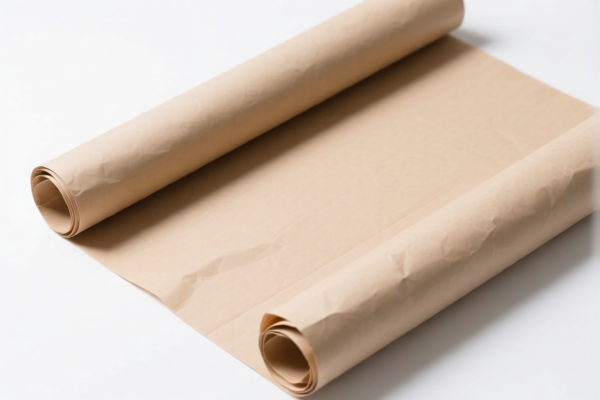
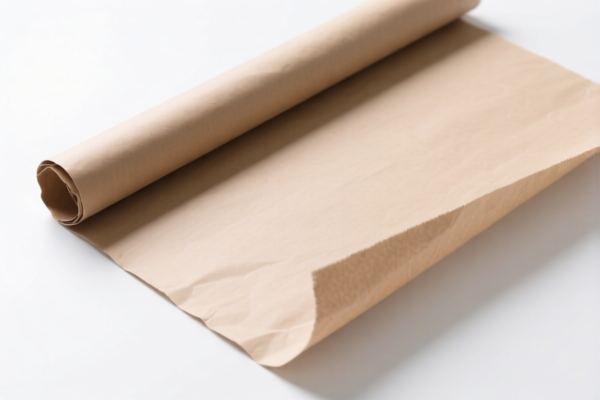
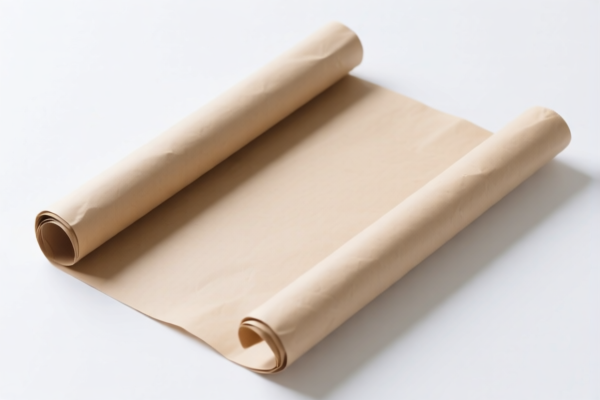
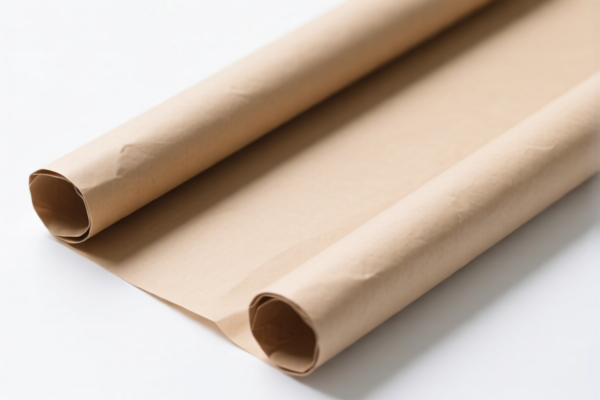
AI Analysis
📄 Recycled Uncoated Paper (Misalignment Alert & Strategic Guide)
🌐 HS Code Reference & Customs Clearance Guide | Critical Misclassification Warning | 2026 Trade Compliance Strategy
📌 I. Product Definition & The "Coated vs. Uncoated" Trap: Understanding the Discrepancy
Recycled Uncoated Paper is fundamentally distinct from Recycled Coated Paper. In international trade, the presence or absence of a coating (such as clay, latex, or polymer layers) is the primary determinant for HS Code classification.
⚠️ CRITICAL DISCLAIMER:
The input data provided in<DATA>strictly classifies Recycled COATED Paper (涂布纸).
"Recycled Uncoated Paper" (未涂布纸) does NOT match any HS Code listed in your provided data.Forcing "Uncoated" paper into "Coated" codes (
4810or4811) is a major misclassification error that leads to severe penalties, audits, and shipment delays.This guide explains WHY the provided codes do not apply to "Uncoated" paper and provides the CORRECT strategic advice.
❌ II. Why the Provided HS Codes Are INAPPROPRIATE for "Uncoated Paper"
The HS Codes in your dataset (4811.59.60.00, 4810.29.70.25, etc.) all explicitly describe Recycled COATED Paper (再生涂布纸).
| HS Code from Data | Summary Provided | Why It Fails for "Uncoated" |
|---|---|---|
4811.59.60.00 |
Recycled coated paper... matching coating features | ❌ Uncoated paper lacks the "coating features" described here. |
4810.29.70.25 |
Recycled coated paper... matching coated paper definition | ❌ Chapter 4810 covers paper impregnated/coated with certain substances. Uncoated paper belongs elsewhere. |
4810.29.70.35 |
Recycled coated paper... shape characteristics | ❌ Still requires the presence of coating. |
4811.59.20.00 |
Recycled coated paper... plastic covering features | ❌ Uncoated paper has no plastic covering/coating layer. |
4811.59.40.40 |
Recycled coated paper... other class rules | ❌ Specific to coated products. |
🔍 Key Distinction:
- Coated Paper (涂布纸): Surface treated for smoothness/printability (e.g., glossy magazine paper). → Codes 4810/4811.
- Uncoated Paper (未涂布纸): Standard copy paper, newsprint, tissue, plain kraft paper. → Codes 4802/4804/4810 (if uncoated) but NOT the specific "Coated" sub-headings provided.
📦 III. Correct HS Code Landscape for "Recycled Uncoated Paper"
Since the provided data is for Coated paper, here is where Recycled Uncoated Paper should typically be classified under US HTSUS (Harmonized Tariff Schedule of the United States):
| Likely HS Code Category | Product Description | Typical Duty Rate (Base) |
|---|---|---|
| 4802.58 | Other paper and paperboard, uncoated, containing ≥80% recovered fibers (e.g., copy paper) | 0% - 6.4%* |
| 4804.11 | Linerboard, uncoated, containing ≥80% recovered fibers | 0% - 6.4%* |
| 4804.31 | Kraft linerboard, uncoated, containing ≥80% recovered fibers | 0% - 6.4%* |
| 4810.29 | Paper/coated paper, uncoated, in rolls, of a kind used for wrapping (if specific use) | 0% - 6.4%* |
* Note: Base duty is often 0% or low for recycled paper, BUT... see Section IV for Trade War Impact.
💰 IV. 2026 Latest Tariff Rate Details (US Market / China Origin)
Even though the HS codes in your data are for Coated paper, the Trade Policy (Section 301 + IEEPA) applies broadly to many Chinese paper imports. However, Uncoated paper generally faces lower total tariffs than Coated paper because it often falls under base 0% rates.
🎯 1. For Typical Recycled Uncoated Paper (e.g., HTS 4802.58)
| Item | Content |
|---|---|
| Base Rate | 0% (Most recycled uncoated paper has 0% MFN duty) |
| Section 301 (USITC) | +7.5% or +25% (Depending on exact HTS and 2024/2025 list updates) |
| IEEPA (122 Clause) | +10% (Effective Nov 10, 2025, for many categories) |
| Total Estimated Rate | ~10% - 35% (Varies by specific uncoated type) |
📌 Contrast with Provided Data:
The provided data shows 35% Total for Coated paper (0% Base + 25% Section 301 + 10% IEEPA).
Uncoated paper may have a lower base, but is still subject to Section 301 and IEEPA.
🎯 2. For the Provided "Coated" Codes (For Reference Only)
| Item | Content |
|---|---|
| HS Codes | 4811.59..., 4810.29... |
| Base Rate | 0% |
| Section 301 | +25% |
| IEEPA | +10% |
| Total | 35% |
🛠️ V. Customs Clearance Practical Advice (Avoiding the "Uncoated vs. Coated" Trap)
✅ 1. Preparation Checklist (Crucial for Uncoated Paper)
| Material | Must Provide | Explanation |
|---|---|---|
| ✅ Product Spec Sheet | ✔️ | Must explicitly state "UNCOATED" (未涂布). Do not use vague terms like "Glossy" or "Matte Finish" if it's just texture, not coating. |
| ✅ Manufacturing Process Description | ✔️ | Confirm no clay, latex, or polymer coating was applied after the paper machine. |
| ✅ Physical Sample | ✔️ | Customs officers may scratch the surface. If pigment rubs off, it's likely coated. If not, it's uncoated. |
| ✅ Commercial Invoice | ✔️ | Clearly state: "Recycled Uncoated Paper, For Copying/Printing/Wrapping" |
| ✅ Packing List | ✔️ | Weight and dimensions. |
✅ 2. Declaration Strategy (Key Mantras)
🔥 "Declare Uncoated Correctly, Don't Force Coated Codes!"
| Scenario | Correct Declaration | Incorrect Declaration | Risk |
|---|---|---|---|
| Standard Copy Paper | HS 4802.58 (Uncoated) | HS 4811.59 (Coated) | 45% Penalty Risk (Misclassification) |
| Newsprint | HS 4802.55 (Uncoated) | HS 4810.29 (Coated) | Audit Flag |
| Tissue/Toilet Paper | HS 4803.00 (Uncoated) | Any 4811 code | Severe Misclassification |
| Glossy Magazine Paper | HS 4810.29/4811.59 (Coated) | HS 4802 (Uncoated) | Underpayment of Duty |
✅ 3. Special Handling for "Uncoated"
| Situation | Handling Advice |
|---|---|
| "Matte Finish" | Matte is a surface texture, not necessarily a coating. If no chemical coating was added, it is still Uncoated → Use 4802/4804 codes. |
| "Sized Paper" (施胶) | Internal sizing (starch/chemicals inside pulp) does NOT make it "Coated." It is still Uncoated. |
| "Watermarked" | Watermarks are pressed, not coated. Still Uncoated. |
| "High Brightness" | Brightness is achieved via bleaching, not coating. Still Uncoated. |
🌍 VI. Global Market Comparison (2026 Update)
| Country/Region | Recommended HS Code for Recycled Uncoated Paper | Base Duty | Section 301 / Extra Tariff | Total Est. Duty |
|---|---|---|---|---|
| 🇺🇸 USA | 4802.58, 4804.11, etc. |
0% | +7.5% to +25% (Sec 301) +10% (IEEPA) | 10% - 35% |
| 🇨🇳 China | 4802.58, 4804.11 |
0% - 5% | None | 0% - 5% |
| 🇪🇺 EU | 4802, 4804 |
6.5% | None | 6.5% |
| 🇦🇺 Australia | 4802, 4804 |
5% | None | 5% |
📌 Conclusion:
- USA remains the highest cost market due to Section 301 + IEEPA.
- EU/AU have stable, lower duties for uncoated recycled paper.
- China is the primary source of recycled uncoated paper with competitive pricing.
📌 VII. Common Errors & Pitfalls (Blood & Tears Lessons)
❌ Error 1: Declaring "Uncoated Paper" as "Coated Paper" to use a specific HS Code in your data.
👉 Consequence: If caught, customs will reclassify, demand back taxes, and impose civil penalties. The 35% rate might be correct for coated, but if you're uncoated, you might owe 0% base but still face fines for misdeclaration.
❌ Error 2: Using the HS codes 4811.59... for plain white copy paper.
👉 Consequence: 4811 is for paper treated with plastics, resins, or coatings. Plain paper is 4802. Misclassification leads to audit.
❌ Error 3: Ignoring the "IEEPA 10%" clause.
👉 Consequence: Even if base duty is 0%, the 10% IEEPA tariff applies to most Chinese paper imports post-Nov 2025.
✅ Correct Practice:
"Recycled Uncoated Paper, 80% Recycled Content, 20 lbs/ream, Unbleached/Bleached, No Surface Coating, For Office Use."
🎯 VIII. Conclusion: Precision is Profit!
🎯 Remember the Mantra:
🔹 "Uncoated ≠ Coated. Don't force the 4811 code!"
🔹 "Check the Surface: Coated? Go 4810/4811. Uncoated? Go 4802/4804."
🔹 "IEEPA 10% hits everyone. Plan for it."
📌 Pro Tip:
If you are importing Recycled Uncoated Paper, do NOT use the HS codes provided in your <DATA> set (4811.59..., 4810.29...). They are legally incorrect for uncoated products.
Consult a customs broker to confirm the exact 8-digit HTS code for your specific paper type (Copy Paper vs. Linerboard vs. Tissue).
📣 Immediate Action:
📞 Verify Product Type: Is it truly UNCOATED?
📄 Request Spec Sheet: From manufacturer confirming "No Coating".
🚀 Use Correct HS:4802.58(Copy) or4804.11(Liner) instead of the provided Coated codes.
✨ Accurate Classification, Smooth Clearance, Maximized Profit!
💼 Don't let "Coated" codes cost you a lawsuit!
Customer Reviews
About HS Code Classification
The Harmonized System (HS) is an internationally standardized nomenclature developed by the World Customs Organization (WCO) to classify traded products. Over 200 countries use the HS system as the basis for customs tariffs, trade statistics, and import/export regulations.
Each HS code follows a hierarchical structure:
- Chapter (2 digits) — Broad category of goods (e.g., Chapter 84: Machinery and Mechanical Appliances)
- Heading (4 digits) — More specific grouping within the chapter
- Subheading (6 digits) — Internationally standardized breakdown, used by all WCO member countries
- National subdivisions (8-10 digits) — Country-specific extensions for further classification, such as US HTSUS 10-digit codes
Correct HS code classification is essential for smooth customs clearance, accurate duty payment, and compliance with trade regulations. Misclassification can lead to customs delays, overpayment of duties, or penalties.
When importing from CN to US, the applicable tariff rates may include:
- Most-Favored-Nation (MFN) rate — The standard duty rate applied to WTO members
- General rate — Applied to countries without trade agreements
- Trade remedy duties — Additional tariffs such as Section 301 (anti-dumping), Section 232 (national security), or countervailing duties
The information provided on this page is for reference purposes only. For official classification, please consult with your local customs authority or a licensed customs broker.