Red Cedar Logs with Bark
CN → US| HS Code | Tariff Rate | Origin | Destination | Doc |
|---|---|---|---|---|
| 4403260155 | 35.0% | CN | US | Official Doc |
| 4403250155 | 35.0% | CN | US | Official Doc |
| 4401110000 | 35.0% | CN | US | Official Doc |
| 4403210130 | 35.0% | CN | US | Official Doc |
| 4403220165 | 35.0% | CN | US | Official Doc |
Product Images
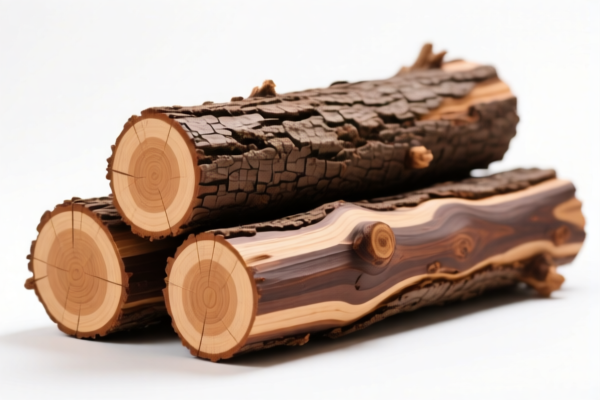
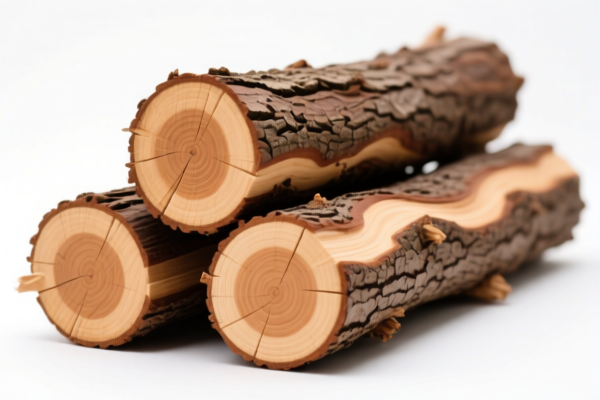
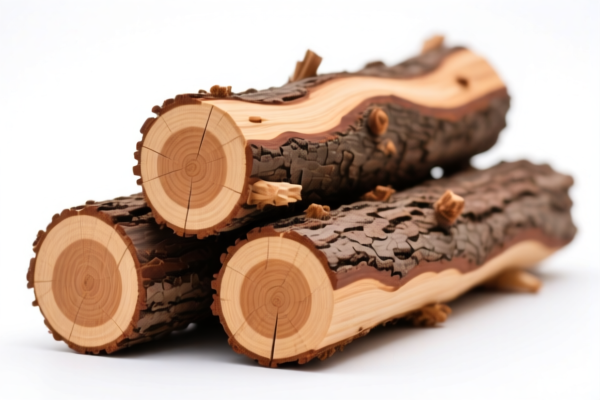
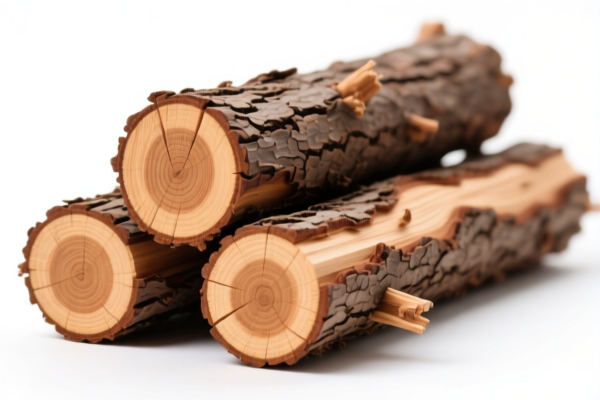
AI Analysis
🌲 Red Cedar Logs with Bark
🌐 HS Code Reference & Customs Clearance Guide | 2026 Latest Tariff Analysis | Professional Clearance Strategy for North American Timber
📌 I. Product Definition and Classification: Understanding "Red Cedar Logs with Bark"
Red Cedar (specifically Western Red Cedar, Thuja plicata, or related species) is a high-value softwood used in construction, outdoor decking, and luxury interior finishes. In international trade, the classification depends strictly on the state of processing and species specificity.
Key Distinction:
- Logs with Bark: Classified under Chapter 44 as "Wood, simply sawn or chipped, of a kind used primarily for joinery or construction." The presence of bark indicates it is in its primary, unprocessed form.
- Sawn/Lumber: If the bark is removed and the wood is planed or cut to standard sizes, it falls under different subheadings (e.g., 4407).
- Specific Species: Red Cedar is a coniferous (needle-leaved) tree. Therefore, it falls under heading 4403 (Wood, freshly felled, whether or not stripped of bark or sapwood, or roughly squared), specifically under subheadings for coniferous wood.
⚠️ Critical Classification Point:
- If the wood is stripped of bark but still rough/log-like → 4403.26 (Western Red Cedar) or 4403.25 (Other Coniferous).
- If the wood is with bark → Still generally 4403.26 if identifiable as Western Red Cedar, or 4403.25 if classified under "Other coniferous" due to species ambiguity, or 4401.11 if deemed generic "Fuel Wood" (less likely for high-grade cedar).
- Note: The provided data suggests specific classifications for "Red Cedar" (4403.26.01.55, 4403.25.01.55) and generic "Logs with Bark" (4401.11.00.00, 4403.21.01.30, 4403.22.01.65).
📦 II. HS Code Classification Details (2026 Latest Tariff Authority Comparison)
Based on the provided data, here are the specific HS Codes and their rationales for Red Cedar Logs with Bark. All listed codes carry a Total Tax Rate of 35.0% due to US trade measures.
| HS Code | Product Description | Rationale for Classification | Tax Rate |
|---|---|---|---|
4403.26.01.55 |
Red Cedar Logs with Bark | Specific Species: Directly identifies "Red Cedar" (Western Red Cedar). The description confirms "with bark" and "needle-leaved wood." | 35.0% |
4403.25.01.55 |
Red Cedar Logs with Bark (General Coniferous) | General Coniferous: If species verification is insufficient, it falls under "Other coniferous wood." Still identified as red cedar in summary. | 35.0% |
4401.11.00.00 |
Generic Logs with Bark | Generic/Fuel Grade: Used when species is not clearly identified as cedar or when classified broadly as "wood in the rough." Described as "raw logs with bark, needle-leaved or broad-leaved." | 35.0% |
4403.21.01.30 |
Generic Logs with Bark (Other) | Other Coniferous: Broad category for coniferous logs with bark, not specifically identified as cedar or fir. | 35.0% |
4403.22.01.65 |
Generic Logs with Bark (Pine/Spruce/Fir) | Common Softwoods: Applies to other common needle-leaved woods with bark. Description notes "common form with bark." | 35.0% |
🔍 Key Takeaway:
- 4403.26.01.55 is the most precise code if you can prove the wood is Red Cedar via species testing or supplier certification.
- 4401.11.00.00 or 4403.21/22 are fallbacks if the wood is not clearly labeled or tested as Red Cedar.
- All codes attract the same high tax rate (35%), so the choice depends on compliance accuracy and audit risk, not tax savings.
💰 III. 2026 Latest Tariff Rate Breakdown (Including Surcharges & Policy Additions)
✅ Applicable Country: United States (US)
✅ Origin: China (CN) (Implied by the 25% Section 301 and 10% Section 122 surcharges)
✅ Effective Date: Ongoing (Current US Trade Policy)
🎯 1. 4403.26.01.55 – Red Cedar Logs with Bark (Specific)
| Item | Content |
|---|---|
| Basic Tariff | 0% (MFN rate for wood products) |
| Section 301 Tariff | +25% (USITC Footnote 9903.88.01 / Section 301) |
| Section 122 Tariff | +10% (USITC Section 122 / National Security) |
| Total Rate | 35.0% |
| Tax Calculation | CIF Value × 35% |
| De Minimis Exemption | ❌ Not Applicable |
| Legal Path | Section 301:9903.88.01 → Section 122:9903.01.25 → USITC:4403.26.01.55 |
📌 Explanation:
- 0% Base: Wood logs typically have low base tariffs.
- +25% (Sec 301): Applies to most Chinese-origin wood products as part of the trade war tariffs.
- +10% (Sec 122): Additional national security-related tariff on imports from China.
- 35% Total: This is a high-cost entry. Profit margins must absorb this or be passed to consumers.
🎯 2. 4403.25.01.55 – Red Cedar Logs with Bark (General Coniferous)
| Item | Content |
|---|---|
| Basic Tariff | 0% |
| Section 301 Tariff | +25% |
| Section 122 Tariff | +10% |
| Total Rate | 35.0% |
| Tax Calculation | CIF Value × 35% |
| De Minimis Exemption | ❌ Not Applicable |
| Legal Path | Section 301:9903.88.01 → Section 122:9903.01.24 → USITC:4403.25.01.55 |
📌 Note: Same tax burden as specific Red Cedar. The classification difference is for phytosanitary and species tracking, not tax.
🎯 3. 4401.11.00.00 – Generic Logs with Bark
| Item | Content |
|---|---|
| Basic Tariff | 0% |
| Section 301 Tariff | +25% |
| Section 122 Tariff | +10% |
| Total Rate | 35.0% |
| Tax Calculation | CIF Value × 35% |
| De Minimis Exemption | ❌ Not Applicable |
| Legal Path | Section 301:9903.88.01 → Section 122:9903.01.24 → USITC:4401.11.00.00 |
📌 Warning: Using generic codes like
4401.11.00.00for high-value Red Cedar may trigger USDA/APHIS scrutiny for species misdeclaration.
🛠️ IV. Customs Clearance Practical Advice (Real-World Pitfall Guide)
✅ 1. Required Documentation (Non-Negotiable)
| Document | Must Provide | Explanation |
|---|---|---|
| ✅ Phytosanitary Certificate | ✔️ | Critical. Issued by the exporting country’s plant protection agency. Must state "No live pests" and confirm wood is treated (if required). |
| ✅ Species Identification | ✔️ | Lab test or supplier certificate confirming "Thuja plicata" (Western Red Cedar). Needed for 4403.26. |
| ✅ Commercial Invoice | ✔️ | Must clearly state "Red Cedar Logs with Bark," HS Code, CIF value, and country of origin. |
| ✅ Packing List | ✔️ | Detail volume (MBF or cubic meters), number of logs, and bark status. |
| ✅ Lumber Tag/Marking | ✔️ | Some ports require visible species tags on logs for quick inspection. |
| ✅ PPQ 587 (Import Permit) | ✔️ | Required for wood from certain countries to prevent invasive species. |
✅ 2. Declaration Tips (Key Mnemonic)
🔥 "Bark On, Species Proven, Tax at 35, Don't Guess the Code!"
| Scenario | Correct Declaration | Incorrect Action | Consequence |
|---|---|---|---|
| Red Cedar with Bark | 4403.26.01.55 |
Declare as 4403.25.01.55 (Other Coniferous) |
May be accepted, but species misclassification risk if audited. |
| Unknown Wood with Bark | 4401.11.00.00 or 4403.21.01.30 |
Declare as Red Cedar without proof | Penalty for fraud, seizure, or forced re-classification. |
| Sawn Cedar (Bark Removed) | 4407.10.00.00 (Example) |
Declare as 4403.26.01.55 |
Wrong HTS, delays, fines. |
| Wood Chips/Rubbish | 4401.21.00.00 |
Declare as Logs | Wrong HS, severe penalties. |
✅ 3. Special Handling
| Situation | Recommendation |
|---|---|
| High Moisture Content | Ensure wood is dried or treated to meet ISPM 15 standards if packaged in wood pallets. Logs themselves may need fumigation. |
| Bark Integrity | If bark is damaged or missing, clearly note "Partial Bark Removal" to avoid disputes with USDA inspectors. |
| Origin Fraud | Do not misdeclare Chinese Red Cedar as "Canadian" or "US Domestic." CBP and USDA use DNA testing. Fines can exceed $10,000 per violation. |
| Value Declaration | Declare CIF value accurately. 35% tax on under-declared values leads to double penalties. |
🌍 V. Global Market Clearance Comparison (2026 Latest)
| Country/Region | Recommended HS Code | Tariff (China Origin) | Certification | Notes |
|---|---|---|---|---|
| 🇺🇸 USA | 4403.26.01.55 |
35% (0% + 25% + 10%) | Phytosanitary + APHIS | Highest barrier. Strict species verification. |
| 🇨🇳 China | 4403.26.01.55 |
0-10% (Variable) | None | Import restrictions may apply on wood. |
| 🇪🇺 EU | 4403.26 |
0-10% | EUTR (Due Diligence) | Requires proof of legal harvest. |
| 🇯🇵 Japan | 4403.26 |
0-5% | None | Focus on pest-free status. |
📌 Conclusion:
- The USA is the most challenging market due to the 35% combined tariff.
- Species accuracy is more important than cost-saving here, as misclassification leads to seizure, not just fines.
📌 VI. Common Errors & Pitfalls (Lessons Learned)
❌ Error 1: Declaring Red Cedar as "Other Coniferous" (4403.25) to "simplify" paperwork.
👉 Consequence: If audited, penalties for false declaration and potential loss of trust with US Customs.
❌ Error 2: Ignoring the Phytosanitary Certificate.
👉 Consequence: Hold at port, potential destruction of cargo by USDA if pests are detected.
❌ Error 3: Assuming "Bark" means "Fuel Wood" (4401.11).
👉 Consequence: Misclassification. Red Cedar is a high-value construction material, not fuel. This can trigger anti-dumping or countervailing duty investigations if misapplied.
❌ Error 4: Under-declaring Value.
👉 Consequence: With a 35% tax, even a 10% under-declaration results in massive fines and possible criminal charges.
✅ Correct Practice:
"Western Red Cedar Logs (Thuja plicata), with Bark, Roughly Squared, Origin: China, HS Code: 4403.26.01.55, Phytosanitary Cert Attached, Value: $X CIF."
🎯 VII. Conclusion: Precision Pays Off!
🎯 Remember the Mnemonic:
🔹 "Bark On, Code Specific, Tax 35, Don't Guess!"
🔹 "Phyto Cert is Key, Species Proof is King, 35% Tax Will Sting, Compliance is Everything!"
📌 Pro Tip:
If your Red Cedar is not from China (e.g., from Canada, EU, or NZ), you may avoid the 35% tariff (or pay significantly less).
- Canada/NAFTA/USMCA: Often 0% tariff for originating goods.
- Action: Always verify Country of Origin on the invoice. If not China, update HS Code and claim preferential duty rates.
📣 Immediate Action:
📞 Contact a Licensed Customs Broker
📸 Provide Photos of Logs (Bark + End Grain)
📄 Request Phytosanitary Certificate from Supplier
🚀 Ensure Smooth Customs Clearance, Avoid Seizure, Maximize Profit!
✨ Professional Clearance Starts with Accurate Classification!
💼 Every Percent of Tax Saved is Profit Earned!
Customer Reviews
About HS Code Classification
The Harmonized System (HS) is an internationally standardized nomenclature developed by the World Customs Organization (WCO) to classify traded products. Over 200 countries use the HS system as the basis for customs tariffs, trade statistics, and import/export regulations.
Each HS code follows a hierarchical structure:
- Chapter (2 digits) — Broad category of goods (e.g., Chapter 84: Machinery and Mechanical Appliances)
- Heading (4 digits) — More specific grouping within the chapter
- Subheading (6 digits) — Internationally standardized breakdown, used by all WCO member countries
- National subdivisions (8-10 digits) — Country-specific extensions for further classification, such as US HTSUS 10-digit codes
Correct HS code classification is essential for smooth customs clearance, accurate duty payment, and compliance with trade regulations. Misclassification can lead to customs delays, overpayment of duties, or penalties.
When importing from CN to US, the applicable tariff rates may include:
- Most-Favored-Nation (MFN) rate — The standard duty rate applied to WTO members
- General rate — Applied to countries without trade agreements
- Trade remedy duties — Additional tariffs such as Section 301 (anti-dumping), Section 232 (national security), or countervailing duties
The information provided on this page is for reference purposes only. For official classification, please consult with your local customs authority or a licensed customs broker.