Red Clay Stove
CN → US| HS Code | Tariff Rate | Origin | Destination | Doc |
|---|---|---|---|---|
| 6914908000 | 40.6% | CN | US | Official Doc |
| 6914108000 | 44.0% | CN | US | Official Doc |
| 6910100050 | 15.8% | CN | US | Official Doc |
| 9403896015 | 35.0% | CN | US | Official Doc |
| 6910900000 | 23.2% | CN | US | Official Doc |
Product Images
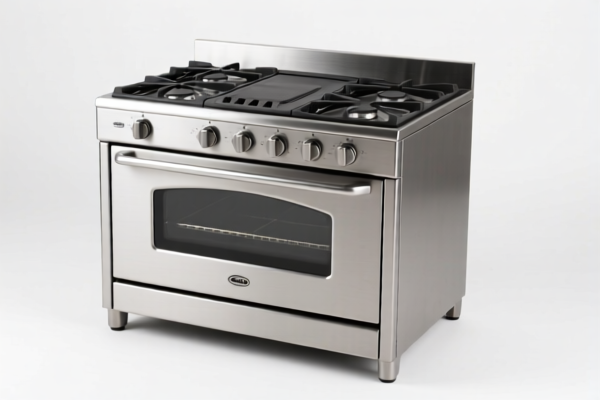
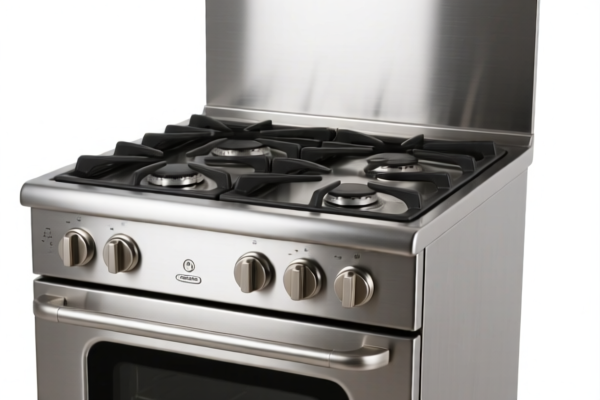
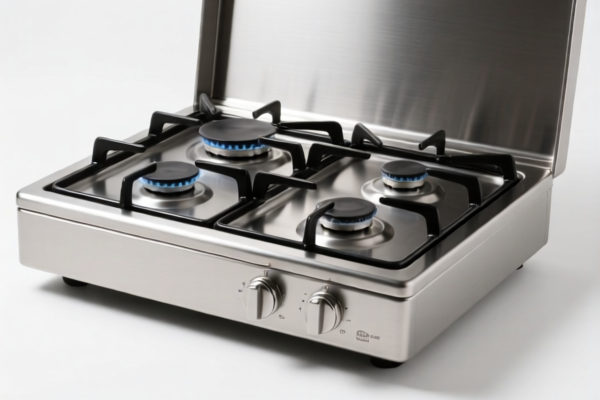
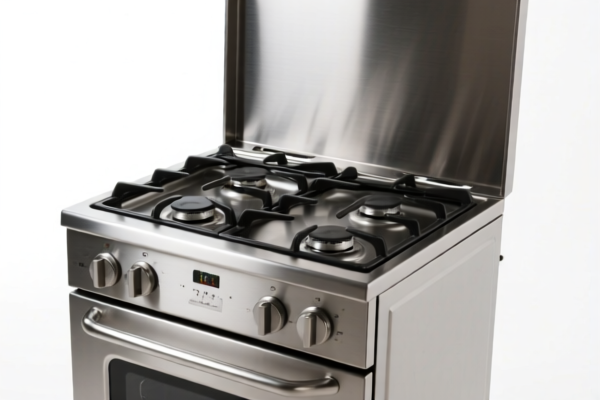
AI Analysis
🔥 Red Clay Stove (Hong Tao Lu Tai)
🌐 HS Code Reference & Customs Clearance Guide | 2026 Latest Tariff Analysis | Professional Classification Strategy
📌 I. Product Definition & Classification: What Exactly is a "Red Clay Stove"?
A "Red Clay Stove" (often referred to as Hong Tao Lu Tai) is a heating appliance or accessory typically constructed from fired terracotta or ceramic materials. In international trade, its classification is highly sensitive to material composition (earthenware vs. porcelain), structure (complete unit vs. accessory), and intended use (heating appliance vs. sanitary accessory vs. furniture).
Misclassification can lead to drastic tariff differences—ranging from 15.8% to 44.0%—due to varying additional duties (Section 301 and Section 122) applied to Chinese-origin goods.
⚠️ Critical Distinction Points:
- Material Matters: Is it "Earthenware/Terra Cotta" (6914, 6910) or "Porcelain/Ceramic" (6914.10)?
- Function Matters: Is it a heating component (6914.90), a sanitary fixture support (6910.10), or furniture (9403)?
- Structure Matters: Is it a standalone stove or an accessory/part?
📦 II. HS Code Classification Details (2026 Latest Tariff Authority Comparison)
| HS Code | Product Description | Application Scenario | Material/Type | Total Tax Rate (China Origin) |
|---|---|---|---|---|
6910.10.00.50 |
Ceramic Sanitary Ware Accessories (Supports/Bases) | Used as a bracket, stand, or base for sanitary fixtures | Terracotta/Earthenware | 15.8% |
6910.90.00.00 |
Other Ceramic Sanitary Ware (Accessory Vessels) | Companion vessel or accessory for sanitary equipment | Ceramic | 23.2% |
9403.89.60.15 |
Other Household Furniture (Mineral/Terracotta) | Household item, decorative vessel, or furniture component | Terracotta/Mineral | 35.0% |
6914.90.80.00 |
Other Ceramic Articles (Stove Parts/Components) | Accessory part for stoves/heating devices | Ceramic | 40.6% |
6914.10.80.00 |
Other Ceramic Articles (Porcelain/Vessels) | Porcelain vessel or article | Porcelain/Ceramic | 44.0% |
🔍 Key Insight:
- The lowest tax burden falls under6910.10.00.50(15.8%) if the item can be legally defined as a sanitary ware support/base.
- The highest tax burden applies to6914.10.80.00(44.0%) if the material is classified as porcelain rather than standard terracotta.
- Classification as furniture (9403.89.60.15) avoids the base tariff but incurs high Section 301/122 duties, resulting in 35.0%.
💰 III. 2026 Latest Tariff Rate Breakdown (Including Additional Duties)
✅ Applicable Country: United States (US)
✅ Country of Origin: China (CN)
✅ Effective Date: Current (Includes Section 301 & Section 122 Surcharges)
🎯 1. 6910.10.00.50 — Ceramic Sanitary Ware Accessories (Best Rate)
| Item | Details |
|---|---|
| Base Tariff | 5.8% |
| Section 301 Surtax | 0.0% (Exempt from this specific surcharge) |
| Section 122 Surcharge | 10.0% |
| Total Tax Rate | 15.8% |
| Tax Calculation | CIF Value × 15.8% |
| De Minimis Eligibility | ❌ No (Subject to scrutiny) |
| Legal Path | HTSUS:6910.10.00.50 → Footnote:122 |
📌 Explanation:
- This classification leverages a 0% Section 301 surcharge, significantly lowering the total cost.
- However, the product must be demonstrably a "support or base" for sanitary ware. If it is clearly a heating stove, customs may reclassify it.
🎯 2. 6910.90.00.00 — Other Ceramic Sanitary Ware
| Item | Details |
|---|---|
| Base Tariff | 5.7% |
| Section 301 Surtax | 7.5% |
| Section 122 Surcharge | 10.0% |
| Total Tax Rate | 23.2% |
| Tax Calculation | CIF Value × 23.2% |
| De Minimis Eligibility | ❌ No |
| Legal Path | HTSUS:6910.90.00.00 → Footnote:301 & 122 |
📌 Explanation:
- Suitable if the item is a standalone ceramic vessel associated with sanitary functions but not a simple support.
- Incurs a modest Section 301 surcharge.
🎯 3. 9403.89.60.15 — Other Household Furniture
| Item | Details |
|---|---|
| Base Tariff | 0.0% |
| Section 301 Surtax | 25.0% |
| Section 122 Surcharge | 10.0% |
| Total Tax Rate | 35.0% |
| Tax Calculation | CIF Value × 35.0% |
| De Minimis Eligibility | ❌ No |
| Legal Path | HTSUS:9403.89.60.15 → Footnote:301 & 122 |
📌 Explanation:
- 0% Base Tariff is attractive, but the 25% Section 301 surcharge makes it expensive.
- Only applicable if the "stove" is primarily decorative or classified as a household furnishing rather than a heating appliance.
🎯 4. 6914.90.80.00 — Other Ceramic Articles (Stove Parts)
| Item | Details |
|---|---|
| Base Tariff | 5.6% |
| Section 301 Surtax | 25.0% |
| Section 122 Surcharge | 10.0% |
| Total Tax Rate | 40.6% |
| Tax Calculation | CIF Value × 40.6% |
| De Minimis Eligibility | ❌ No |
| Legal Path | HTSUS:6914.90.80.00 → Footnote:301 & 122 |
📌 Explanation:
- The most common classification for stove accessories or non-porcelain ceramic heating components.
- Standard 301/122 surcharges apply.
🎯 5. 6914.10.80.00 — Other Ceramic Articles (Porcelain)
| Item | Details |
|---|---|
| Base Tariff | 9.0% |
| Section 301 Surtax | 25.0% |
| Section 122 Surcharge | 10.0% |
| Total Tax Rate | 44.0% |
| Tax Calculation | CIF Value × 44.0% |
| De Minimis Eligibility | ❌ No |
| Legal Path | HTSUS:6914.10.80.00 → Footnote:301 & 122 |
📌 Explanation:
- Highest Tax Bracket.
- Applies only if the "red clay" is technically classified as porcelain or high-fired ceramic vessels.
- Avoid this code unless the material is definitively porcelain.
🛠️ IV. Customs Clearance Practical Advice (Pitfall Avoidance Guide)
✅ 1. Documentation Checklist (Essential)
| Document | Required | Notes |
|---|---|---|
| ✅ Product Specifications | ✔️ | Must detail material (e.g., "Earthenware," "Terra Cotta," not just "Ceramic"), dimensions, and weight. |
| ✅ Product Photos | ✔️ | Clear images of the item showing its structure (is it a base? a vessel? a stove?). |
| ✅ Commercial Invoice | ✔️ | Must accurately describe the item. Avoid vague terms like "Pot." Use "Ceramic Stove Support" or "Terracotta Heating Accessory." |
| ✅ Bill of Lading/Air Waybill | ✔️ | Standard shipping docs. |
| ✅ Material Certificate | ✔️ | Critical: Proves the material is Earthenware/Terracotta, NOT Porcelain, to avoid 6914.10.80.00. |
✅ 2. Declaration Tips (Crucial for Tariff Optimization)
🔥 Golden Rule:
"Define Function, Specify Material, Optimize Code!"
| Scenario | Recommended Code | Why? |
|---|---|---|
| Item acts as a stand/support for a stove or sink | 6910.10.00.50 |
Lowest Tax (15.8%). Must prove it is a "support." |
| Item is a decorative ceramic piece resembling a stove | 9403.89.60.15 |
Moderate Tax (35.0%). Useful if it’s furniture/decor. |
| Item is clearly a stove part/accessory | 6914.90.80.00 |
Standard Tax (40.6%). Most common for functional parts. |
| Item is porcelain | 6914.10.80.00 |
Highest Tax (44.0%). Avoid if material is actually earthenware. |
⚠️ Warning:
- Do not mislabel a porcelain stove as earthenware. Customs laboratories can test material density and firing temperature.
- Do not claim it is "furniture" if it is clearly a functional heating appliance.
✅ 3. Special Handling
| Situation | Advice |
|---|---|
| Mixed Shipments | If shipping both stoves and accessories, declare them separately. Mixing may trigger higher classification for all. |
| OEM Custom Parts | Provide engineering drawings to prove the item is a specific "component" rather than a general vessel. |
| Origin Labeling | Ensure "Made in China" is clearly marked on the product and packaging to avoid origin fraud penalties. |
🌍 V. Global Market Comparison (2026 Latest)
| Country/Region | Recommended HS Code | Est. Tariff (China Origin) | Notes |
|---|---|---|---|
| 🇺🇸 USA | 6910.10.00.50 |
15.8% | Best option if classified as sanitary support. |
| 🇺🇸 USA | 6914.90.80.00 |
40.6% | Standard for stove parts. |
| 🇨🇳 China | 6914.90.80.00 |
~10-15% (Export/Import varies) | Lower base tariffs outside US Section 301. |
| 🇪🇺 EU | 6914.90.80.00 |
~6.5% | No Section 301/122 surcharges. |
📌 Conclusion:
- The US market imposes significant punitive tariffs (301 & 122).
- Classification strategy is paramount. Shifting from6914.90(40.6%) to6910.10(15.8%) can save 24.8% on duties.
📌 VI. Common Mistakes & Pitfalls (Lessons Learned)
❌ Mistake 1: Calling the product "Ceramic Vase" to avoid appliance duties.
👉 Consequence: Customs rejects it as inconsistent with function → Delays & Seizure.
❌ Mistake 2: Assuming all "Red Clay" is Earthenware.
👉 Consequence: If fired at high temperatures (>1200°C), it may be deemed Porcelain → 44.0% Tax.
❌ Mistake 3: Splitting the invoice between "Stove" and "Clay Parts" to lower rates.
👉 Consequence: Customs sees one functional unit → Bills you on the highest rate for the whole shipment.
✅ Correct Approach:
"Ceramic Stove Support Base, Terracotta Material, Non-Electrical, Model XYZ"
HS Code:6910.10.00.50
Rate: 15.8%
🎯 VII. Conclusion: Professional Declaration Saves Money!
🎯 Remember the Key Takeaways:
🔹 "Support = 15.8%, Part = 40.6%, Porcelain = 44.0%"
🔹 "Material proof is key to avoiding the 44% trap."
🔹 "Section 301 & 122 are unavoidable for China origin—optimize the base code instead."
📌 Pro Tip:
If your Red Clay Stove can be convincingly argued as a "sanitary ware accessory" (e.g., a base for a bidet or sink), use 6910.10.00.50. This offers the most significant cost savings in the US market. Always provide material certificates and detailed function descriptions to support this classification.
📣 Immediate Action:
📞 Consult a licensed customs broker.
📄 Prepare Material Test Reports (Earthenware vs. Porcelain).
🚀 Accurate HS Code selection = Maximum Profit Margin.
✨ Precision in Classification, Precision in Profit!
💼 Don't let tariff mistakes eat your margin.
Customer Reviews
About HS Code Classification
The Harmonized System (HS) is an internationally standardized nomenclature developed by the World Customs Organization (WCO) to classify traded products. Over 200 countries use the HS system as the basis for customs tariffs, trade statistics, and import/export regulations.
Each HS code follows a hierarchical structure:
- Chapter (2 digits) — Broad category of goods (e.g., Chapter 84: Machinery and Mechanical Appliances)
- Heading (4 digits) — More specific grouping within the chapter
- Subheading (6 digits) — Internationally standardized breakdown, used by all WCO member countries
- National subdivisions (8-10 digits) — Country-specific extensions for further classification, such as US HTSUS 10-digit codes
Correct HS code classification is essential for smooth customs clearance, accurate duty payment, and compliance with trade regulations. Misclassification can lead to customs delays, overpayment of duties, or penalties.
When importing from CN to US, the applicable tariff rates may include:
- Most-Favored-Nation (MFN) rate — The standard duty rate applied to WTO members
- General rate — Applied to countries without trade agreements
- Trade remedy duties — Additional tariffs such as Section 301 (anti-dumping), Section 232 (national security), or countervailing duties
The information provided on this page is for reference purposes only. For official classification, please consult with your local customs authority or a licensed customs broker.