Red Oak Rough Wood
CN → US| HS Code | Tariff Rate | Origin | Destination | Doc |
|---|---|---|---|---|
| 4407910022 | 35.0% | CN | US | Official Doc |
| 4407910063 | 35.0% | CN | US | Official Doc |
Product Images
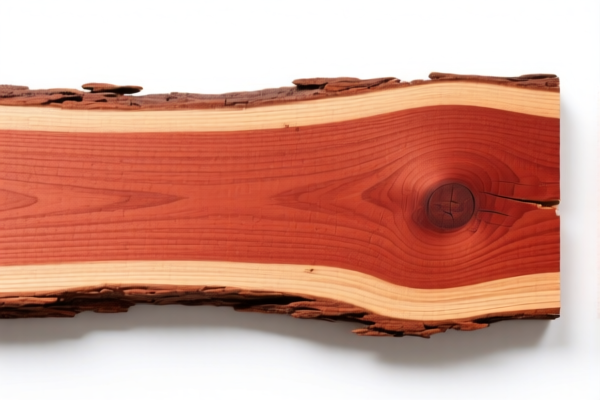
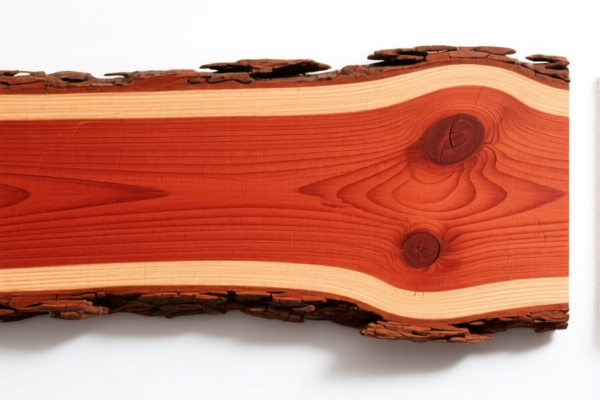
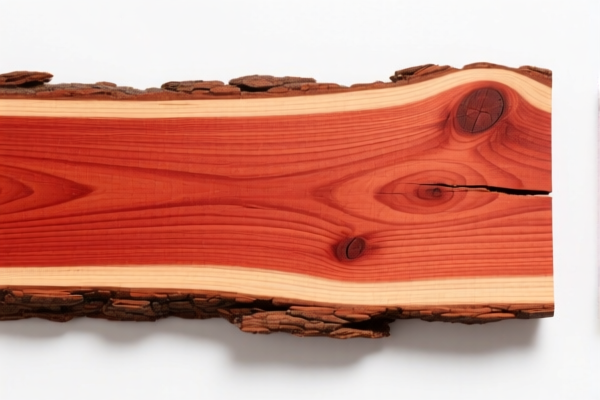
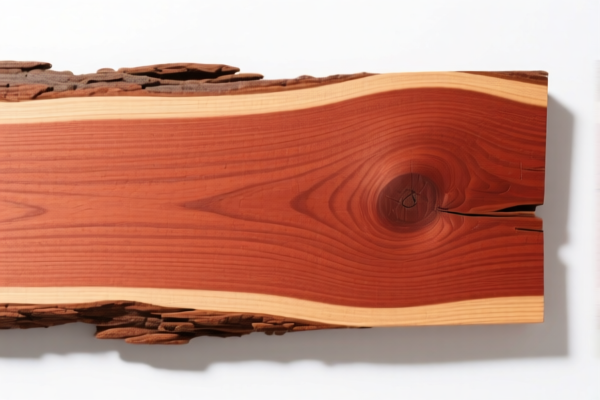
AI Analysis
🌳 Red Oak Rough Wood (Unprocessed Lumber)
🌐 HS Code Reference & Customs Clearance Guide | 2026 Latest Tariff Analysis | Professional Clearance Strategy
📌 1. Product Definition & Classification: Do You Really Know "Red Oak Rough Wood"?
Red Oak, botanically classified under Quercus species, is one of the most widely traded hardwoods in global commerce. When described as "Rough Wood" (also known as "Slab," "Lumber," or "Sawn Wood"), it refers to timber that has been cut from logs but has not been further processed into finished goods (like furniture, flooring, or cabinetry).
In international trade, the classification depends strictly on the thickness and processing level: * Thickness > 6mm: Classifies as "Sawn Wood" (Chapter 44). * Thickness ≤ 6mm: Classifies as "Wood Veneer" or "Shavings" (Chapter 44, different subheading).
⚠️ Key Distinction for Red Oak:
- "Red Oak" specifically refers to Quercus rubra and related red oak species.
- Thickness is Critical: If the wood is thicker than 6mm, it falls under HS Code 4407.
- "Rough" vs. "Planed": "Rough sawn" means it has been cut but not smoothed, planed, or sanded. Even if planed or sanded, if it is still raw lumber (not furniture), it generally remains under 4407, provided it hasn't been shaped into final products.
📦 2. HS Code Classification Details (2026 Latest Tariff Authority对照)
Based on the provided data, Red Oak Rough Wood (thickness > 6mm) is categorized into two primary HS Codes depending on the specific sub-type or intended market designation.
| HS Code | Product Description | Applicable Scenario | Tax Rate (Total) |
|---|---|---|---|
| 4407.91.00.22 | Wood, thickness > 6mm: Of Oak (Quercus spp.): Red Oak | Red Oak logs/slabs cut to length, rough sawn, planed, sanded, or end-jointed. | 25.0% |
| 4407.91.00.63 | Wood, thickness > 6mm: Of Oak (Quercus spp.): Other | Other types of Oak (e.g., White Oak, or unspecified Oak species not explicitly "Red"). | 25.0% |
🔍 Important Note:
- Both HS Codes carry the exact same total tax rate of 25.0%.
- The distinction between.22(Red Oak) and.63(Other Oak) is primarily for statistical tracking and origin verification.
- Why it matters: If you import "Red Oak" but declare it as "Other Oak" (.63), customs may flag a discrepancy if your Certificate of Origin specifies Quercus rubra. Conversely, importing "White Oak" as "Red Oak" is fraud.
- Thickness Check: Ensure all boards are > 6mm. If mixed with thin veneers (≤ 6mm), those pieces must be declared separately under different HS codes.
💰 3. 2026 Latest Tariff Rate Breakdown (Including Surcharge)
✅ Applicable Country: United States (US)
✅ Country of Origin: China (CN) (Based on typical 25% surcharge context)
✅ Effective Date: Ongoing under Section 301 Tariffs
🎯 1. HS Code 4407.91.00.22 —— Red Oak Sawn Wood (> 6mm)
| Item | Content |
|---|---|
| Basic Tariff | 0.0% |
| Section 301 Surcharge | +25.0% |
| Total Tax Rate | 25.0% |
| Tax Calculation | CIF Value × 25% |
| De Minimis Exemption? | ❌ NO (Deny de minimis) |
| Legal Basis | USITC Footnote 9903.88.01 / Section 301 Trade Action |
📌 Explanation:
- The Basic Tariff for sawn wood from China is 0% under normal MFN (Most Favored Nation) treatment.
- The 25% Surcharge is imposed under Section 301 of the Trade Act of 1974 due to trade tensions. This is a fixed additional duty on Chinese-origin wood products.
- No Exemptions: Unlike some electronics or machinery, wood products generally do not qualify for the de minimis exemption (for shipments under $800). Every single shipment is subject to this 25% tax.
🎯 2. HS Code 4407.91.00.63 —— Other Oak Sawn Wood (> 6mm)
| Item | Content |
|---|---|
| Basic Tariff | 0.0% |
| Section 301 Surcharge | +25.0% |
| Total Tax Rate | 25.0% |
| Tax Calculation | CIF Value × 25% |
| De Minimis Exemption? | ❌ NO (Deny de minimis) |
| Legal Basis | Same as above |
📌 Note:
- If you are importing White Oak (Quercus alba), you must use.63.
- If you are importing Red Oak (Quercus rubra), you must use.22.
- The tax burden is identical, but misclassification can lead to customs penalties, delays, or audits.
🛠️ 4. Practical Customs Clearance Advice (Avoiding Pitfalls)
✅ 1. Required Documentation (Must-Haves)
| Document | Required? | Explanation |
|---|---|---|
| Commercial Invoice | ✅ Yes | Must clearly state: "Red Oak Lumber," "HS Code 4407.91.00.22," "Origin: China," and "CIF Value." |
| Packing List | ✅ Yes | Detail the number of boards, dimensions, and total volume (board feet or cubic meters). |
| Phytosanitary Certificate | ✅ Yes | Critical for wood! Issued by the exporting country’s plant protection agency. Proves the wood is free of pests/diseases. |
| Fumigation Certificate | ✅ Yes | Often required alongside Phytosanitary cert. Shows wood was treated (e.g., MB fumigation or Heat Treatment). |
| Bill of Lading/Air Waybill | ✅ Yes | Standard shipping document. |
| Certificate of Origin | ✅ Yes | To prove origin is China (triggering the 25% tariff). If from Vietnam, different rules apply. |
⚠️ Critical Warning:
- Wood without a Phytosanitary Certificate will be rejected or destroyed at US ports.
- Ensure the wood is heat-treated (HT) or fumigated. Look for the IPPC Mark on the bundles.
✅ 2. Declaration Tips (Key Mnemonics)
🔥 "Thickness > 6mm, HS 4407, 25% Tax, Phytosanitary Mandatory!"
| Scenario | Correct Declaration | Wrong Practice |
|---|---|---|
| Red Oak, 1 inch thick | 4407.91.00.22 |
Declaring as "Wood Products" (Vague) |
| White Oak, 2 cm thick | 4407.91.00.63 |
Declaring as "Red Oak" (Misclassification) |
| Red Oak Veneer (2mm thick) | Wrong HS Code! Use Veneer Code (e.g., 4408.10) | Declaring as 4407.91.00.22 (Over-taxing yourself or misclassifying) |
| Furniture made of Red Oak | Wrong HS Code! Use Furniture Code (e.g., 9403.50) | Declaring as 4407.91.00.22 (Under-taxing if furniture has higher duty, or causing confusion) |
✅ 3. Special Handling
| Situation | Recommendation |
|---|---|
| Mixed Species | If a shipment contains both Red Oak and White Oak, you must separate them or declare with accurate proportions. Mixed declarations lead to holds. |
| End-Jointed Wood | Even if boards are glued together (finger-jointed), if the final piece is still "sawn wood" and not a finished part, it may still fall under 4407. Confirm with a broker. |
| Origin Shifting | If the wood is milled in Canada from Chinese logs, the Country of Origin may be Canada. Check rules of origin carefully to avoid 25% surcharge (if applicable to Canada). |
🌍 5. Global Market Comparison (2026)
| Country/Region | Recommended HS Code | Tariff Rate (China Origin) | Certification | Notes |
|---|---|---|---|---|
| 🇺🇸 USA | 4407.91.00.22 |
25.0% (0% Base + 25% Section 301) | Phytosanitary + Fumigation | High duty, strict wood regulations |
| 🇨🇳 China | 4407.91.00.22 |
0% | N/A | Import duty for Chinese wood is 0% |
| 🇪🇺 EU | 4407.91.00.22 |
0% (Most cases) | EUTR (EU Timber Regulation) | No tariffs, but strict legality proof required |
| 🇬🇧 UK | 4407.91.00.22 |
0% | UK Timber Regulation | Post-Brexit, aligns with EU timber laws |
| 🇯🇵 Japan | 4407.91.00.22 |
0% | Fumigation | No tariffs, but pest checks are strict |
📌 Conclusion:
- The USA is the only major market imposing the 25% Section 301 surcharge on Chinese Red Oak.
- China, EU, UK, and Japan have 0% tariffs on raw sawn wood, but non-tariff barriers (Phytosanitary/EUTR) are strict.
📌 6. Common Errors & Pitfalls (Lessons Learned)
❌ Error 1: Forgetting the Phytosanitary Certificate
👉 Consequence: Cargo quarantined, fumigated at owner’s expense, or returned. Delays of 2-4 weeks.
❌ Error 2: Misclassifying White Oak as Red Oak
👉 Consequence: Customs audit, potential fines for misdeclaration. While tax is the same, it shows lack of compliance knowledge.
❌ Error 3: Ignoring Thickness
👉 Consequence: If wood is ≤ 6mm, declaring under 4407 is wrong. It should be classified as veneer or shavings, which may have different duty rates or regulations.
❌ Error 4: Assuming De Minimis Applies
👉 Consequence: For shipments under $800, US Customs denies de minimis for Section 301 items. You must pay the 25% tax even on small parcels.
✅ Best Practice:
"Verify IPPC Mark, Get Phytosanitary Cert, Declare Exact Species, Pay 25% in US."
🎯 7. Conclusion: Professional Clearance, Cost Efficiency, Compliance!
🎯 Remember the Mantra:
🔹 "Red Oak, >6mm, HS 4407.91.00.22, 25% US Tax."
🔹 "No Phyto Cert? No Entry! No Origin Proof? No Entry!"
🔹 "25% is Non-Negotiable for US Imports from China."
📌 Pro Tip:
If you are sourcing Red Oak from Vietnam, Mexico, or Canada, you may avoid the 25% Section 301 surcharge.
✅ Action:
📞 Contact a licensed customs broker to verify Country of Origin rules.
🚀 Optimize Supply Chain: If possible, source from non-China origins to save 25% on every shipment.
✨ Professional Clearance Starts with Accurate Classification!
💼 Every Percent Saved is Pure Profit!
Customer Reviews
About HS Code Classification
The Harmonized System (HS) is an internationally standardized nomenclature developed by the World Customs Organization (WCO) to classify traded products. Over 200 countries use the HS system as the basis for customs tariffs, trade statistics, and import/export regulations.
Each HS code follows a hierarchical structure:
- Chapter (2 digits) — Broad category of goods (e.g., Chapter 84: Machinery and Mechanical Appliances)
- Heading (4 digits) — More specific grouping within the chapter
- Subheading (6 digits) — Internationally standardized breakdown, used by all WCO member countries
- National subdivisions (8-10 digits) — Country-specific extensions for further classification, such as US HTSUS 10-digit codes
Correct HS code classification is essential for smooth customs clearance, accurate duty payment, and compliance with trade regulations. Misclassification can lead to customs delays, overpayment of duties, or penalties.
When importing from CN to US, the applicable tariff rates may include:
- Most-Favored-Nation (MFN) rate — The standard duty rate applied to WTO members
- General rate — Applied to countries without trade agreements
- Trade remedy duties — Additional tariffs such as Section 301 (anti-dumping), Section 232 (national security), or countervailing duties
The information provided on this page is for reference purposes only. For official classification, please consult with your local customs authority or a licensed customs broker.