Refined Beeswax Granules
CN → US| HS Code | Tariff Rate | Origin | Destination | Doc |
|---|---|---|---|---|
| 3406000000 | 17.5% | CN | US | Official Doc |
| 1521904000 | 17.5% | CN | US | Official Doc |
| 1521902000 | 22.3% | CN | US | Official Doc |
Product Images
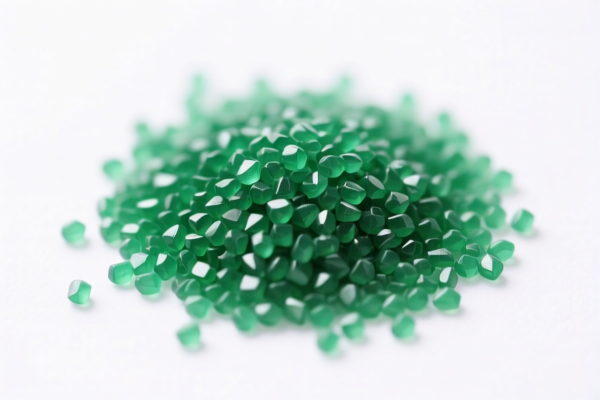
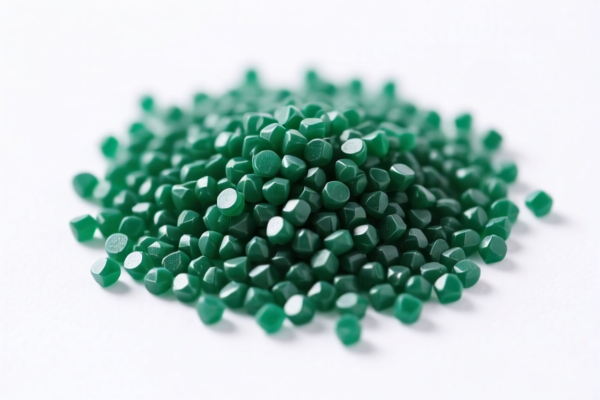

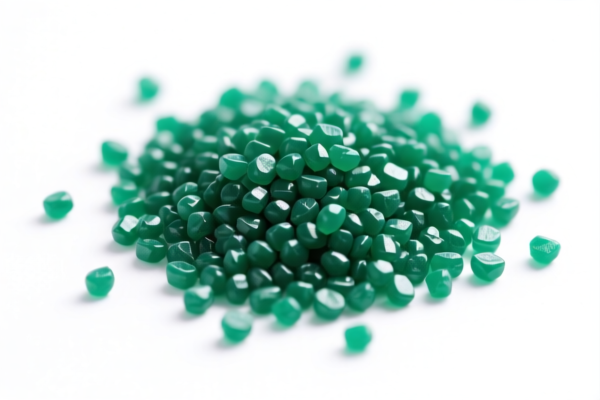
AI Analysis
🐝 Refined Beeswax Granules (Refined Beeswax)
🌐 HS Code Reference & Customs Clearance Guide | 2026 Latest Tariff Analysis | Professional Clearance Strategy
📌 I. Product Definition & Classification: Understanding "Refined Beeswax Granules"
Refined beeswax granules are a natural wax product derived from honeycombs, cleaned and processed to remove impurities (pollen, propolis, dead bees) and standardized for color and scent. In international trade, beeswax is primarily classified under Chapter 15 (Animal or Vegetable Fats and Oils and Their Cleavage Products) or Chapter 34 (Wax, Prepared Waxes). The specific HS Code depends on whether it is considered a raw material or a finished cosmetic/candle ingredient.
⚠️ Key Distinction:
- If the beeswax is unrefined or minimally processed (raw honeycomb wax), it may fall under different subheadings.
- Refined beeswax (granules, flakes, blocks) intended for cosmetics, pharmaceuticals, or candles is typically classified under HS Code 3406.00.00 or 1521.90 depending on the specific chemical treatment and end-use documentation.
- Crucial Point: Customs authorities often scrutinize the degree of refinement. If significant chemical bleaching or deodorizing is involved, it might still fall under Chapter 15 (Animal/ Vegetable Fats) as a processed animal product.
📦 II. HS Code Classification Details (2026 Latest Tariff Authority Match)
Based on the provided data, here are the three potential HS Codes for Refined Beeswax Granules, along with their justification and tax implications:
| HS Code | Product Description | Justification for Classification | Total Tax Rate |
|---|---|---|---|
3406.00.00.00 |
Candles, Tapers, and Similar Articles; Scented Waxes | Summary: Beeswax is a natural wax raw material that fits the material attributes of candles and similar products in the classification. | 17.5% |
1521.90.40.00 |
Animal or Vegetable Fats and Oils; Other Waxes, Refined | Summary: The product material (beeswax) is completely consistent with the core material in this classification. | 17.5% |
1521.90.20.00 |
Other Waxes, Refined; Not Elsewhere Specified | Summary: The product name "Beeswax" is completely consistent with the material in this category, belonging to the "other" category. | 22.3% |
🔍 Critical Analysis:
-3406.00.00.00is often used for beeswax when it is specifically marketed for candle-making or as a scented wax component.
-1521.90.40.00is a strong candidate for industrial or cosmetic-grade refined beeswax, as Chapter 15 covers "Animal or Vegetable Fats and Oils" and their cleavage products, including refined waxes.
-1521.90.20.00applies if the beeswax is considered a generic "other refined wax" not specifically for candles, potentially attracting a higher base tariff.
💰 III. 2026 Latest Tariff Rate Details (Including Surcharges & Policy Add-ons)
✅ Applicable Country: United States (US)
✅ Origin: China (CN)
✅ Effective Date: Post-November 10, 2025 (for subsequent imports)
🎯 1. 3406.00.00.00 —— Candles, Tapers, and Similar Articles (Including Beeswax for Candles)
| Item | Detail |
|---|---|
| Base Tariff | 0.0% (ad valorem) |
| Section 301 Surcharge | +7.5% (Additional Tariff) |
| IEEPA Surcharge | +10% (122 Clause Tariff for Chinese Products) |
| Total Effective Rate | 17.5% |
| Tax Calculation | CIF Value × 17.5% |
| De Minimis Eligibility | ❌ No (High value threshold, likely subject to full inspection) |
| Legal Basis Path | USITC:3406.00.00.00 → Section 301: 7.5% → IEEPA: 10% |
📌 Explanation:
- Base 0%: Beeswax for candles often enters duty-free under the base HTSUS.
- 7.5% Surcharge: Applied under U.S. Trade Law Section 301 for goods of Chinese origin.
- 10% IEEPA Surcharge: Imposed under the International Emergency Economic Powers Act for specific categories of Chinese goods.
- Total 17.5%: This is the landed cost multiplier for this classification.
🎯 2. 1521.90.40.00 —— Other Waxes, Refined (Consistent Material)
| Item | Detail |
|---|---|
| Base Tariff | 0.0% (ad valorem) |
| Section 301 Surcharge | +7.5% (Additional Tariff) |
| IEEPA Surcharge | +10% (122 Clause Tariff for Chinese Products) |
| Total Effective Rate | 17.5% |
| Tax Calculation | CIF Value × 17.5% |
| De Minimis Eligibility | ❌ No |
| Legal Basis Path | USITC:1521.90.40.00 → Section 301: 7.5% → IEEPA: 10% |
📌 Note:
- Same tax structure as3406.00.00.00.
- This classification is safer for cosmetic/pharmaceutical-grade beeswax that is not explicitly for candles.
- Ensure your Commercial Invoice specifies "Refined Beeswax for Cosmetic Use" to support this classification.
🎯 3. 1521.90.20.00 —— Other Waxes, Refined (Generic Category)
| Item | Detail |
|---|---|
| Base Tariff | 4.8% (ad valorem) |
| Section 301 Surcharge | +7.5% (Additional Tariff) |
| IEEPA Surcharge | +10% (122 Clause Tariff for Chinese Products) |
| Total Effective Rate | 22.3% |
| Tax Calculation | CIF Value × 22.3% |
| De Minimis Eligibility | ❌ No |
| Legal Basis Path | USITC:1521.90.20.00 → Section 301: 7.5% → IEEPA: 10% |
📌 Warning:
- This classification has a higher base tariff (4.8%) because it is considered a "generic" refined wax without specific cosmetic or candle application justification.
- Recommendation: Avoid this HS Code if possible by providing evidence of specific end-use (e.g., cosmetic formulation, candle making) to justify1521.90.40.00or3406.00.00.00.
🛠️ IV. Customs Clearance Practical Advice (Actionable Risk Mitigation)
✅ 1. Required Documentation Checklist (Non-Negotiable)
| Document | Mandatory? | Notes |
|---|---|---|
| ✅ Commercial Invoice | ✔️ | Must clearly state: "Refined Beeswax Granules, Origin: China". Do not use vague terms like "Wax Material." |
| ✅ Product Specification Sheet | ✔️ | Include melting point, viscosity, acid value, and refining process (e.g., filtered, bleached, deodorized). |
| ✅ Certificate of Analysis (COA) | ✔️ | Essential to prove "Refined" status. Must show impurity levels < X%. |
| ✅ Fumigation Certificate | ✔️ | Required for natural products to prove no pests/diseases. |
| ✅ Declaration of Non-GMO & Natural Origin | ✔️ | Beeswax is natural; confirm no synthetic additives. |
| ✅ Proof of End-Use | ✔️ | Letter from buyer stating use in cosmetics, pharmaceuticals, or candles to justify HS Code 1521.90.40.00 or 3406.00.00.00. |
✅ 2. Declaration Tips (Key Mantra)
🔥 "Clear Name, Refine Proof, End-Use Claim, Lower Tax!"
| Scenario | Correct Declaration | Incorrect Practice |
|---|---|---|
| Cosmetic-Grade Beeswax | HS 1521.90.40.00 + "Refined Beeswax for Cosmetics" |
Vague "Wax" → Risk of 1521.90.20.00 (22.3%) |
| Candle-Making Beeswax | HS 3406.00.00.00 + "Beeswax for Candle Manufacturing" |
"Beeswax" → Risk of misclassification |
| Raw Beeswax (Unrefined) | Different HS Code (Chapter 15 or 21) | Claiming "Refined" → Fraud/Penalty |
| Blended Wax (Beeswax + Paraffin) | Full composition declaration | Hiding paraffin → Smuggling risk |
✅ 3. Special Circumstances Handling
| Situation | Handling Advice |
|---|---|
| OEM Private Label | Provide supplier contract + COA to prove material identity. |
| Mixed Container (Beeswax + Other Waxes) | Separate Declaration Required. Do not combine. Mixed containers trigger higher scrutiny. |
| Sample Shipments | Even samples are subject to tariffs. Declare as "Sample for Testing" but pay applicable duty. |
| Origin Marking | Ensure each package is marked "Made in China". Failure to do so can result in penalties. |
🌍 V. Global Market Comparison (2026 Latest)
| Country/Region | Recommended HS Code | Tariff Rate (China Origin) | Certification Requirements | Notes |
|---|---|---|---|---|
| 🇺🇸 United States | 1521.90.40.00 or 3406.00.00.00 |
17.5% | FDA Compliance (for cosmetics/food contact) | Highest scrutiny for natural products |
| 🇪🇺 European Union | 1521.90.99 |
0-6.5% | REACH, CPSR (Cosmetic Product Safety Report) | No Section 301 surcharge, but high compliance costs |
| 🇨🇳 China | 1521.90.90 |
1-5% | CCC (if for specific uses) | Low duty, but import licenses may be needed |
| 🇬🇧 United Kingdom | 1521.90.99 |
0-6.5% | UKCA Marking | Post-Brexit rules apply |
📌 Conclusion:
- The US is the most tax-affected market for Chinese beeswax due to Section 301 (7.5%) and IEEPA (10%) surcharges.
- Total 17.5% is manageable for high-value cosmetic/pharma products but cuts margins significantly for commodity candle wax.
- EU offers lower tariffs (0-6.5%) but stricter REACH/CPSR regulations.
📌 VI. Common Mistakes & Pitfalls (Lessons Learned)
❌ Mistake 1: Declaring as "Natural Wax" without specifying "Refined"
👉 Consequence: Customs may classify as 1521.90.20.00 (22.3%) instead of 17.5%.
❌ Mistake 2: Using vague descriptions like "Bee Wax" in invoice
👉 Consequence: Delayed clearance, request for additional documentation, potential fines.
❌ Mistake 3: Ignoring Fumigation Certificate
👉 Consequence: Goods held at port for fumigation treatment → Demurrage charges.
❌ Mistake 4: Claiming "Duty-Free" under De Minimis for large shipments
👉 Consequence: Seizure or penalty for evasion. Beeswax is rarely eligible for de minimis exemption above $800.
✅ Correct Approach:
"Refined Beeswax Granules, Chemical Name: C25H50O2, Origin: China, Used in: Cosmetic Emulsions, HS Code: 1521.90.40.00"
🎯 VII. Conclusion: Professional Declaration Saves Money!
🎯 Remember:
🔹 "Refined is Key: 17.5% vs 22.3% – A 4.8% Difference!"
🔹 "End-Use Proof: Cosmetics or Candles? Justify Your HS Code!"
🔹 "Fumigation is Mandatory: No Certificate, No Entry!"
📌 Pro Tip:
If your beeswax is sourced from Vietnam, Thailand, or Malaysia (non-China origin), you may qualify for lower or zero tariffs under USMCA or ASEAN agreements.
Recommendation: Always request a Pre-Ruling from CBP if unsure about the HS Code.
📣 Immediate Action:
📞 Engage a licensed customs broker + Provide COA + Specify End-Use
🚀 Ensure smooth customs clearance, avoid delays, and protect your profit margins!
✨ Professional Customs Clearance Starts with Accurate Classification!
💼 Every Percent of Duty Saved is Pure Profit!
Customer Reviews
About HS Code Classification
The Harmonized System (HS) is an internationally standardized nomenclature developed by the World Customs Organization (WCO) to classify traded products. Over 200 countries use the HS system as the basis for customs tariffs, trade statistics, and import/export regulations.
Each HS code follows a hierarchical structure:
- Chapter (2 digits) — Broad category of goods (e.g., Chapter 84: Machinery and Mechanical Appliances)
- Heading (4 digits) — More specific grouping within the chapter
- Subheading (6 digits) — Internationally standardized breakdown, used by all WCO member countries
- National subdivisions (8-10 digits) — Country-specific extensions for further classification, such as US HTSUS 10-digit codes
Correct HS code classification is essential for smooth customs clearance, accurate duty payment, and compliance with trade regulations. Misclassification can lead to customs delays, overpayment of duties, or penalties.
When importing from CN to US, the applicable tariff rates may include:
- Most-Favored-Nation (MFN) rate — The standard duty rate applied to WTO members
- General rate — Applied to countries without trade agreements
- Trade remedy duties — Additional tariffs such as Section 301 (anti-dumping), Section 232 (national security), or countervailing duties
The information provided on this page is for reference purposes only. For official classification, please consult with your local customs authority or a licensed customs broker.