Refined Casting Desulfurization Agent
CN → US| HS Code | Tariff Rate | Origin | Destination | Doc |
|---|---|---|---|---|
| 3810905000 | 40.0% | CN | US | Official Doc |
| 3824999397 | 40.0% | CN | US | Official Doc |
| 3810100000 | 40.0% | CN | US | Official Doc |
| 3824999386 | 40.0% | CN | US | Official Doc |
Product Images
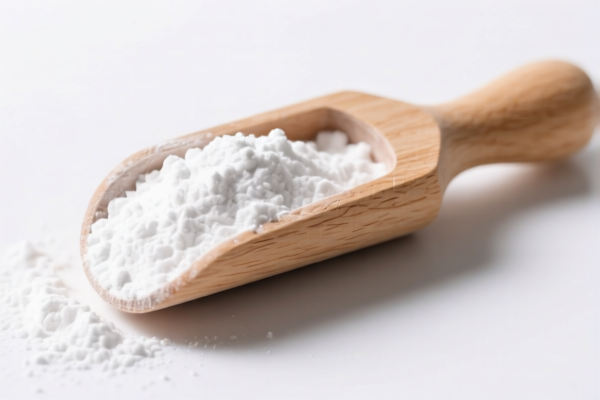
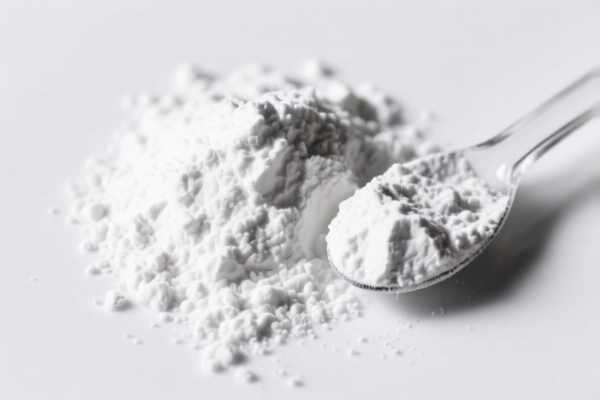


AI Analysis
🔥 Refined Casting Desulfurization Agent (Casting Flux/Modifier)
🌐 HS Code Reference & Customs Clearance Guide | 2026 Latest Tariff Analysis | Professional Clearance Strategy
📌 I. Product Definition & Classification: What is a "Casting Desulfurization Agent"?
A Refined Casting Desulfurization Agent is a critical chemical auxiliary used in metallurgy, specifically in iron and steel casting processes. Its primary function is to remove sulfur (S) from molten metal, thereby improving the mechanical properties, toughness, and weldability of the final casting.
In international trade, these agents are classified under Chapter 38 (Miscellaneous Chemical Products). However, the specific HS Code depends heavily on the composition (e.g., magnesium-based, calcium-based) and the primary function (e.g., general chemical preparation vs. surface treatment aid).
⚠️ Key Classification Logic:
- If it is a mixture specifically designed for chemical treatment of metals → 3810 or 3824.
- If it acts as a surface cleaning/pre-treatment agent (acid pickling aid) → 3810.10.
- If it is a generic chemical mixture (e.g., Mg/Ca compounds) not fitting specific sub-headings → 3824.99.
📦 II. HS Code Classification Details (2026 Latest Tariff Authoritative Comparison)
Based on the provided data, here are the four possible HS Code classifications for Refined Casting Desulfurization Agents, along with their specific rationales:
| HS Code | Summary Description | Applicability Logic | Key Component/Feature |
|---|---|---|---|
3810.90.50.00 |
Desulfurizing agent for casting, belongs to chemical preparations for metal treatment | Auxiliary Chemicals: Fits the definition of preparations for metal processing/alteration | General-purpose chemical preparation for metal handling |
3824.99.93.97 |
Desulfurizing agent for casting, material belongs to chemical preparations | Chemical Products: Fits the category of chemical products and preparations (miscellaneous) | General chemical mixture, no specific single-purpose subheading |
3810.10.00.00 |
Desulfurizing agent for casting, use aligns with metal surface pickling and related chemical preparations | Surface Treatment Aid: Aligns with acid pickling and surface cleaning agents | Often contains acids or fluxes for surface preparation |
3824.99.93.86 |
Desulfurizing agent for casting, belongs to magnesium-containing desulfurizing mixtures | Specific Composition: Fits the logic of chemical preparations, specifically Mg-based mixtures | High Magnesium content (Mg-Desulfurizer) |
🔍 Important Note:
- 3810.90.50.00 is often used when the product is viewed as a specialized "aid" for the metalworking process.
- 3824.99.93.86 is highly specific to Magnesium-based desulfurizers. If your agent is Mg-rich, this is a strong candidate.
- 3824.99.93.97 is a "catch-all" for chemical mixtures that don't fit the more specific descriptions of 3810.
- 3810.10.00.00 should only be used if the agent's primary function overlaps significantly with surface pickling or surface cleaning aids.
💰 III. 2026 Latest Tariff Rate Breakdown (Including Surcharges & Policy Add-ons)
✅ Applicable Country: United States (US)
✅ Origin: China (CN)
✅ Effective Time: Ongoing (Section 301 & IEEPA provisions)
All four HS Codes listed below share the exact same tax structure according to the provided data. This is common for chemical imports from China subject to trade restrictions.
🎯 Uniform Tax Structure for All Listed HS Codes
| Item | Content |
|---|---|
| Basic Tariff (MFN) | 5.0% (Ad valorem) |
| Section 301 Additional Tariff | +25.0% |
| Section 122 Tariff (IEEPA) | +10.0% |
| Total Effective Tax Rate | 40.0% |
| Tax Calculation Basis | CIF Value (Cost + Insurance + Freight) × 40% |
| De Minimis Exemption Eligible? | ❌ No (Generally, Section 301 and IEEPA tariffs apply to all commercial shipments, regardless of value) |
| Legal Authority Path | USITC:3810/3824 → Section 301 (Footnote 9903) → IEEPA (Section 122) |
📌 Explanation:
- 5% Basic Tariff: The standard Most Favored Nation (MFN) rate for Chapter 38 chemicals.
- 25% Section 301 Tariff: Imposed on specific Chinese goods, including many chemical products, under the U.S. Trade Act of 1974.
- 10% Section 122 Tariff: Imposed under the International Emergency Economic Powers Act (IEEPA) as an additional national security or trade measure.
- Total 40%: This is a very high tariff rate. It significantly impacts profit margins. Importers must factor this into their landed cost calculations immediately.
🛠️ IV. Customs Clearance Practical Advice (实战避坑指南)
✅ 1. Documentation Checklist (Must-Haves)
| Document | Required | Explanation |
|---|---|---|
| ✅ Product Specification Sheet | ✔️ | Must detail chemical composition (e.g., % Mg, % Ca, other impurities). |
| ✅ Material Safety Data Sheet (MSDS/SDS) | ✔️ | Critical for chemical imports. Must comply with GHS standards. |
| ✅ Commercial Invoice | ✔️ | Clearly state "Desulfurizing Agent for Metal Casting" and the specific HS Code chosen. |
| ✅ Certificate of Analysis (COA) | ✔️ | Proves the chemical composition matches the declared HS Code (especially for Mg-content). |
| ✅ Bill of Lading (B/L) | ✔️ | Standard shipping document. |
| ✅ Anti-Dumping Countervailing Duty (AD/CVD) Statement | ✔️ | Confirm if the product is subject to AD/CVD (some chemical mixtures are). |
✅ 2. Declaration Tips (Key Rules)
🔥 "Match Composition to HS Code, Don't Guess the Subheading!"
| Scenario | Correct Declaration | Risk of Error |
|---|---|---|
| Product is >50% Magnesium | Prefer 3824.99.93.86 |
Misclassification → Audit risk + potential penalties |
| Product is general chemical mix | Use 3824.99.93.97 or 3810.90.50.00 |
Using a specific Mg-code for a Ca-based product → Rejection |
| Product includes acid components for surface prep | Consider 3810.10.00.00 |
Must prove primary use is surface pickling, not just desulfurization |
| Vague Description ("Casting Chemical") | ❌ Avoid | Customs will assign the highest duty rate or hold the cargo for classification review |
✅ 3. Special Situations
| Situation | Handling Advice |
|---|---|
| Mg-Based vs. Ca-Based | 3824.99.93.86 explicitly mentions "Magnesium-containing". If your product is Calcium-based, use 3824.99.93.97 or 3810.90.50.00. |
| Refractory Grade vs. Metal Grade | If it's used for furnace linings, it might fall under Chapter 69 (Ceramics). But for in-mold desulfurization, Chapter 38 is correct. |
| Bulk vs. Package | Large bulk shipments vs. small bags: Ensure the invoice clearly states the net/gross weight and packaging type. |
🌍 V. Global Main Market Comparison (2026 Latest)
| Country/Region | Recommended HS Code | Tariff Rate (China Origin) | Certification/Notes |
|---|---|---|---|
| 🇺🇸 USA | 3824.99.93.86 / 3810.90.50.00 etc. |
40% (5% Base + 25% Sec 301 + 10% IEEPA) | High compliance barrier. SDS required. |
| 🇨🇳 China | 3824.99.93.97 (Export) |
0% (VAT rebate possible) | Standard export declaration. |
| 🇪🇺 EU | 3824.99.93 |
Varies (0-5%) | REACH Registration is MANDATORY. |
| 🇮🇳 India | 3824.99 |
10-15% | Basic Customs Duty + Social Welfare Surcharge. |
📌 Conclusion:
- The US market is the most costly due to the additional 35% in surcharges on top of the base duty.
- EU requires REACH compliance, which is a separate administrative hurdle.
- Accurate chemical declaration is vital to avoid delays at US ports.
📌 VI. Common Mistakes & Pitfalls (Blood & Tears Lessons)
❌ Mistake 1: Declaring "Chemical Mix" without specifying composition
👉 Consequence: Customs may classify it under a higher duty rate or require a formal ruling, causing 30-60 day delays.
❌ Mistake 2: Using 3810.10.00.00 for non-acid desulfurizers
👉 Consequence: If it's not primarily for surface pickling, it's misclassified. Risk of penalty + back taxes.
❌ Mistake 3: Ignoring the "Section 122" 10% tariff
👉 Consequence: Under-quoting duties. The importer will be liable for the shortfall + interest upon inspection.
✅ Correct Practice:
"Magnesium-Based Casting Desulfurizing Agent, Chemical Mixture, Not for Medical Use, SDS Attached, HS Code: 3824.99.93.86"
🎯 VII. Conclusion: Professional Declaration Saves Money!
🎯 Remember the Rules:
🔹 "Check the Magnesium!" → If Mg-rich, lean towards
3824.99.93.86.
🔹 "Total Tariff is 40%!" → Budget accordingly. There is no de minimis exemption.
🔹 "SDS is Key!" → No SDS, no entry in the US.
📌 Pro Tip:
If you are importing large volumes, consider applying for a HTSUS Exclusion (if available for your specific chemical) or consult a licensed customs broker to file a Binding Ruling before shipment. This provides legal certainty on the 40% rate application.
📣 Immediate Action:
📞 Contact a Customs Broker + Provide Chemical Composition Report + SDS
🚀 Ensure accurate HS Code selection to avoid customs holds, penalties, and unexpected costs!
✨ Professional Clearance Starts with Precise Classification!
💼 Every percent of duty counts in your landed cost!
Customer Reviews
About HS Code Classification
The Harmonized System (HS) is an internationally standardized nomenclature developed by the World Customs Organization (WCO) to classify traded products. Over 200 countries use the HS system as the basis for customs tariffs, trade statistics, and import/export regulations.
Each HS code follows a hierarchical structure:
- Chapter (2 digits) — Broad category of goods (e.g., Chapter 84: Machinery and Mechanical Appliances)
- Heading (4 digits) — More specific grouping within the chapter
- Subheading (6 digits) — Internationally standardized breakdown, used by all WCO member countries
- National subdivisions (8-10 digits) — Country-specific extensions for further classification, such as US HTSUS 10-digit codes
Correct HS code classification is essential for smooth customs clearance, accurate duty payment, and compliance with trade regulations. Misclassification can lead to customs delays, overpayment of duties, or penalties.
When importing from CN to US, the applicable tariff rates may include:
- Most-Favored-Nation (MFN) rate — The standard duty rate applied to WTO members
- General rate — Applied to countries without trade agreements
- Trade remedy duties — Additional tariffs such as Section 301 (anti-dumping), Section 232 (national security), or countervailing duties
The information provided on this page is for reference purposes only. For official classification, please consult with your local customs authority or a licensed customs broker.