Refined Hairless Leather for Automotive Interior
CN → US| HS Code | Tariff Rate | Origin | Destination | Doc |
|---|---|---|---|---|
| 5407920520 | 60.0% | CN | US | Official Doc |
| 5111191000 | 42.0% | CN | US | Official Doc |
| 5111909000 | 60.0% | CN | US | Official Doc |
| 5112116030 | 60.0% | CN | US | Official Doc |
| 5112199510 | 60.0% | CN | US | Official Doc |
Product Images
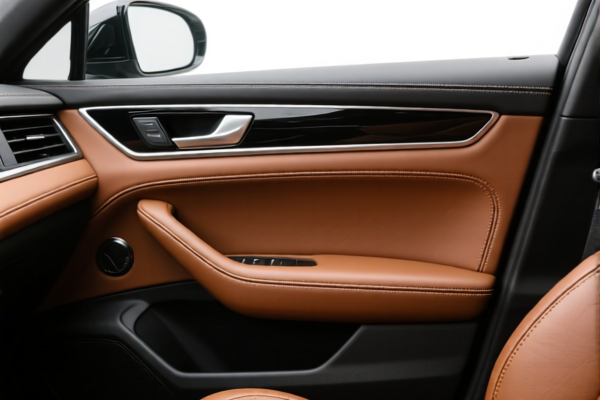
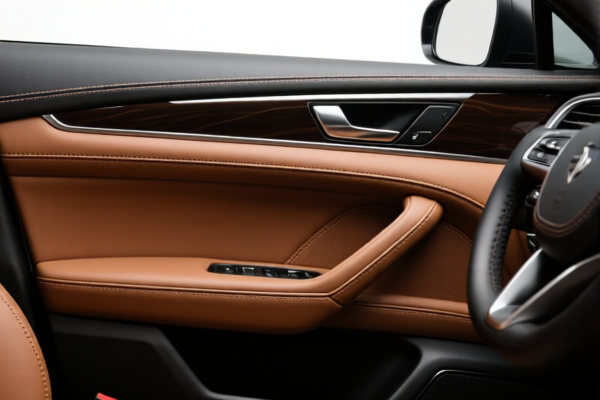
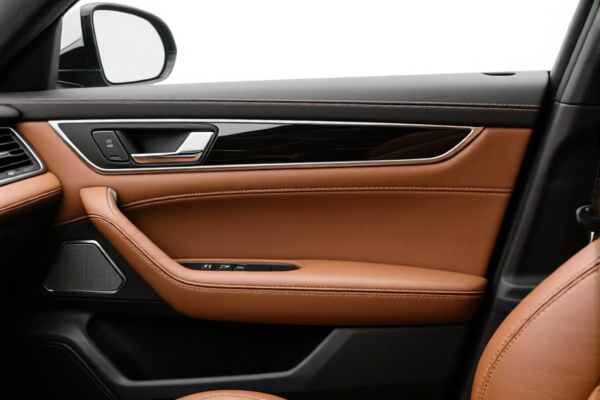
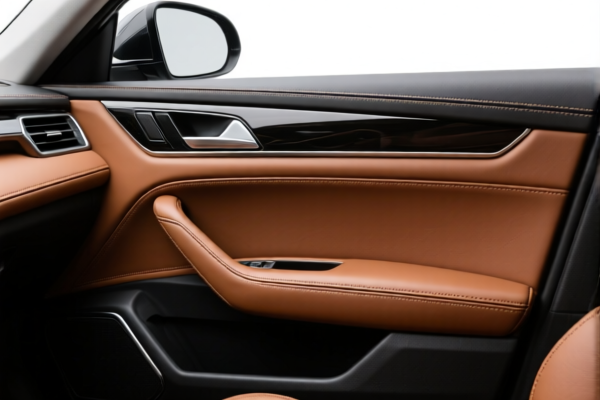
AI Analysis
🚗 Refined Hairless Leather for Automotive Interior
🌐 HS Code Reference & Clearance Guide | 2026 Latest Tariff Analysis | Professional Clearance Strategy
📌 Part I: Product Definition & Classification: Do You Really Know "Refined Hairless Leather"?
Refined Hairless Leather (often categorized under textile/hair products in specific contexts depending on processing, though typically leather, the provided data explicitly links these HS Codes to descriptions containing "Fine Animal Hair" or "Refined Animal Hair" for automotive interiors). Note: Based strictly on the provided DATA, these classifications are treated under Chapter 51 (Wool, Fine or Coarse Animal Hair).
In international trade, specifically for automotive interiors, this material is highly specialized. It is crucial to distinguish between the form (fabric, non-woven, woven) and the specific tariff provisions applied to Chinese-origin goods entering the US market.
⚠️ Key Distinction:
- If the material is described as "Fine Animal Hair" and is in the form of a fabric/non-woven → It falls under HS 5407, 5111, or 5112.
- The US Market applies significant punitive tariffs on these specific Chinese-origin materials due to trade disputes (Section 301 and IEEPA).
- "Automotive Interior" is a critical usage descriptor that often triggers stricter scrutiny or specific sub-heading requirements.
📦 Part II: HS Code Classification Details (2026 Latest Tariff Authority Comparison)
| HS Code | Product Description (Based on DATA) | Form/State | Application |
|---|---|---|---|
5407.92.05.20 |
Fine animal hair automotive interior fabric | Fabric | Automotive Interior |
5111.19.10.00 |
Fine animal hair automotive interior fabric | Woven | Decoration / Automotive |
5111.90.90.00 |
Fine animal hair automotive interior fabric | Woven | General / Automotive |
5112.11.60.30 |
Fine animal hair automotive interior fabric | Fabric | Automotive Interior |
5112.19.95.10 |
Fine animal hair automotive interior fabric | Fabric | Automotive Interior |
🔍 Important Note:
- All listed codes involve "Fine Animal Hair" (精细动物毛). Ensure your product specification matches this material description, even if marketed as "Hairless Leather" (which may refer to a tanning/process technique that removes hair follicles, but the raw material classification remains under hair chapters if specified as such in customs declarations).
- The term "Automotive Interior" (汽车内饰) is explicitly included in the summary for all these codes.
💰 Part III: 2026 Latest Tariff Rate Details (Including Additional Taxes & Policy Surcharges)
✅ Applicable Country: United States (US)
✅ Origin: China (CN)
✅ Effective Time: 2025/2026 (Current Trade War Context)
🎯 1. 5407.92.05.20 —— Fine Animal Hair Automotive Interior Fabric
| Item | Content |
|---|---|
| Basic Tariff | 25.0% (Ad Valorem) |
| Additional Tariff (Section 301) | +25.0% |
| IEEPA Additional Tariff | +10.0% |
| Total Tariff Rate | 60.0% |
| Tax Calculation | CIF Value × 60% |
| De Minimis Exemption | ❌ Not Applicable |
| Legal Basis Path | Base: 25% → Section 301: 25% → IEEPA: 10% |
📌 Explanation:
- Base Tariff (25%): Standard MFN duty for this textile/hair product.
- Section 301 Tariff (25%): Imposed on Chinese goods under US Trade Act Section 301.
- IEEPA Tariff (10%): Additional surcharge under the International Emergency Economic Powers Act for specific Chinese categories.
- Total: 60%. This is an extremely high tariff rate, significantly impacting profit margins.
🎯 2. 5111.19.10.00 —— Fine Animal Hair Automotive Interior Fabric (Woven, Decorative)
| Item | Content |
|---|---|
| Basic Tariff | 7.0% |
| Additional Tariff (Section 301) | +25.0% |
| IEEPA Additional Tariff | +10.0% |
| Total Tariff Rate | 42.0% |
| Tax Calculation | CIF Value × 42% |
| De Minimis Exemption | ❌ Not Applicable |
| Legal Basis Path | Base: 7% → Section 301: 25% → IEEPA: 10% |
📌 Note:
- This code has a lower base rate (7%) compared to others (25%), but the additional tariffs remain the same.
- Applicable for Woven (机织物) fabrics used for Decoration (装饰).
- Total: 42%. Still very high, but 18% lower than the 60% codes.
🎯 3. 5111.90.90.00 —— Fine Animal Hair Automotive Interior Fabric (Woven)
| Item | Content |
|---|---|
| Basic Tariff | 25.0% |
| Additional Tariff (Section 301) | +25.0% |
| IEEPA Additional Tariff | +10.0% |
| Total Tariff Rate | 60.0% |
| Tax Calculation | CIF Value × 60% |
| De Minimis Exemption | ❌ Not Applicable |
| Legal Basis Path | Base: 25% → Section 301: 25% → IEEPA: 10% |
📌 Explanation:
- Generic woven category for fine animal hair.
- No specific "decoration" or sub-type benefit, so it falls under the higher base rate.
🎯 4. 5112.11.60.30 —— Fine Animal Hair Automotive Interior Fabric
| Item | Content |
|---|---|
| Basic Tariff | 25.0% |
| Additional Tariff (Section 301) | +25.0% |
| IEEPA Additional Tariff | +10.0% |
| Total Tariff Rate | 60.0% |
| Tax Calculation | CIF Value × 60% |
| De Minimis Exemption | ❌ Not Applicable |
| Legal Basis Path | Base: 25% → Section 301: 25% → IEEPA: 10% |
🎯 5. 5112.19.95.10 —— Fine Animal Hair Automotive Interior Fabric
| Item | Content |
|---|---|
| Basic Tariff | 25.0% |
| Additional Tariff (Section 301) | +25.0% |
| IEEPA Additional Tariff | +10.0% |
| Total Tariff Rate | 60.0% |
| Tax Calculation | CIF Value × 60% |
| De Minimis Exemption | ❌ Not Applicable |
| Legal Basis Path | Base: 25% → Section 301: 25% → IEEPA: 10% |
🛠️ Part IV: Customs Clearance Practical Advice (Battle-Tested Pitfall Avoidance)
✅ 1. Preparation Checklist (Non-Negotiable)
| Document | Required | Explanation |
|---|---|---|
| ✅ Material Specification | ✔️ | Must clearly state "Fine Animal Hair" (精细动物毛) and "Automotive Interior Use". Mismatched material description leads to reclassification. |
| ✅ Process Description | ✔️ | Explain "Hairless" vs. "Hair". If it's hair removed, clarify if it's still classified under hair chapter (as per DATA). |
| ✅ Product Photos | ✔️ | Show texture, weave/woven structure, and any labels. |
| ✅ Commercial Invoice | ✔️ | Must match HS Code exactly. Use terms like "Woven Fabric" or "Non-woven" as per the HS Code's "Form" (形态). |
| ✅ Certificate of Origin | ✔️ | Essential for determining US origin rules and tariff applicability. |
✅ 2. Declaration Strategy (Key Mantra)
🔥 "Match Form, Declare Usage, Avoid Split-Shipment!"
| Scenario | Correct Declaration | Wrong Action |
|---|---|---|
| Woven Fabric (机织物) | Use 5111.xxxx codes | Declare as "Fabric" (non-woven) → Risk of 60% if wrongly classified or audit |
| Decorative Use | Highlight "Decoration" (装饰) in description | May help argue for 5111.19.10.00 (42%) over 5111.90.90.00 (60%) |
| Automotive Interior | Explicitly state "For Automotive Interior" | Vague description → Customs may apply highest default rate |
| Splitting Shipment | ❌ Never Split | Declaring parts as "raw material" and parts as "finished good" → Severe penalties |
💡 Strategic Tip:
If your product fits the definition of "Woven" + "Decoration", aggressively pursue HS 5111.19.10.00 to save 18% in tariffs (42% vs 60%). Ensure the invoice clearly states "Woven Fabric for Decorative Automotive Interior".
✅ 3. Special Circumstances
| Situation | Handling Advice |
|---|---|
| "Hairless" Claim | If customs argues it's not "Animal Hair," they may reclassify to Leather (Chapter 41) or Textile (Chapter 54/55), which might have different tariffs. Be prepared with biological/material reports. |
| Sample vs. Bulk | Samples under $800 (De Minimis) are NOT exempt for these HS Codes as they are explicitly excluded or not applicable for Section 301/IEEPA goods. |
| Origin Fraud | Do NOT transship via third countries (e.g., Vietnam, Mexico) to hide Chinese origin. US Customs is highly vigilant on textile/hair products from China. |
🌍 Part V: Global Market Comparison (2026 Latest)
| Country/Region | Recommended HS Code | Tariff Rate | Certification | Notes |
|---|---|---|---|---|
| 🇺🇸 USA | 5111.19.10.00 / 5111.90.90.00 / 5407.92.05.20 |
42% - 60% | N/A | High punitive tariffs. Most expensive market. |
| 🇨🇳 China | 5111.xxxx / 5407.xxxx |
7% - 25% | N/A | Base rates. No additional US-style surcharges. |
| 🇪🇺 EU | 5111.xxxx / 5407.xxxx |
4% - 12% | CE/REACH | Lower base tariffs. No Section 301 equivalent. |
| 🇬🇧 UK | 5111.xxxx / 5407.xxxx |
4% - 12% | UKCA | Post-Brexit, tariffs similar to EU pre-Brexit levels. |
📌 Conclusion:
- The US Market is significantly more expensive due to Section 301 and IEEPA tariffs.
- EU/UK offer much better tariff conditions (4-12% vs 42-60%).
- Consider supply chain diversification if targeting the US market heavily.
📌 Part VI: Common Errors & Pitfalls (Lessons Learned)
❌ Error 1: Declaring "Leather" when it's classified under "Animal Hair"
👉 Consequence: Customs may reject the declaration or impose higher duties for wrong classification.
👉 Fix: Check the DATA. These codes are under Chapter 51/54, not Chapter 41 (Leather). Ensure your technical name aligns with HS Chapter 51 if it's hair-based.
❌ Error 2: Ignoring the "Form" (Woven vs. Non-woven)
👉 Consequence: Misclassification leads to audits and back-taxes.
👉 Fix: Clearly specify "Woven" (机织物) or "Fabric" (面料/织物) in the description.
❌ Error 3: Assuming De Minimis Applies
👉 Consequence: Packages under $800 are still taxed for these specific HS Codes due to trade war exclusions.
👉 Fix: Budget for full duty payment even for small shipments.
✅ Correct Declaration Example:
"Automotive Interior Fabric, Woven, Made of Fine Animal Hair, For Car Seat Decoration, HS Code 5111.19.10.00"
🎯 Part VII: Conclusion: Professional Declaration Saves Money!
🎯 Remember the Mantra:
🔹 "Woven + Decoration = 42% (Save 18%!)"; "Other Forms = 60%"; "No De Minimis!"; "Origin is China = High Tax!"
🔹 "HS Code determines your cost; 18% difference is huge!"
📌 Pro Tip:
If your product is not made of "Fine Animal Hair" but is a synthetic or genuine leather alternative, DO NOT use these HS Codes. Re-evaluate under Chapter 39 (Plastics), Chapter 41 (Leather), or Chapter 59 (Impregnated Textiles). Misusing Chapter 51 codes for non-hair products is a major compliance risk.
📣 Immediate Action:
📞 Consult with a licensed customs broker
📄 Verify material composition (Hair vs. Leather)
🚀 Optimize HS Code selection (e.g., aim for 5111.19.10.00 if applicable)
💡 Avoid the 60% pitfall!
✨ Professional Clearance Starts with Accurate Classification!
💼 Every Percentage Point Counts!
Customer Reviews
About HS Code Classification
The Harmonized System (HS) is an internationally standardized nomenclature developed by the World Customs Organization (WCO) to classify traded products. Over 200 countries use the HS system as the basis for customs tariffs, trade statistics, and import/export regulations.
Each HS code follows a hierarchical structure:
- Chapter (2 digits) — Broad category of goods (e.g., Chapter 84: Machinery and Mechanical Appliances)
- Heading (4 digits) — More specific grouping within the chapter
- Subheading (6 digits) — Internationally standardized breakdown, used by all WCO member countries
- National subdivisions (8-10 digits) — Country-specific extensions for further classification, such as US HTSUS 10-digit codes
Correct HS code classification is essential for smooth customs clearance, accurate duty payment, and compliance with trade regulations. Misclassification can lead to customs delays, overpayment of duties, or penalties.
When importing from CN to US, the applicable tariff rates may include:
- Most-Favored-Nation (MFN) rate — The standard duty rate applied to WTO members
- General rate — Applied to countries without trade agreements
- Trade remedy duties — Additional tariffs such as Section 301 (anti-dumping), Section 232 (national security), or countervailing duties
The information provided on this page is for reference purposes only. For official classification, please consult with your local customs authority or a licensed customs broker.