Refined Lizard Skin
CN → US| HS Code | Tariff Rate | Origin | Destination | Doc |
|---|---|---|---|---|
| 4302197500 | 36.7% | CN | US | Official Doc |
| 4113306000 | 35.0% | CN | US | Official Doc |
| 4106400000 | 35.0% | CN | US | Official Doc |
| 4106920000 | 38.3% | CN | US | Official Doc |
| 4302196000 | 38.5% | CN | US | Official Doc |
Product Images
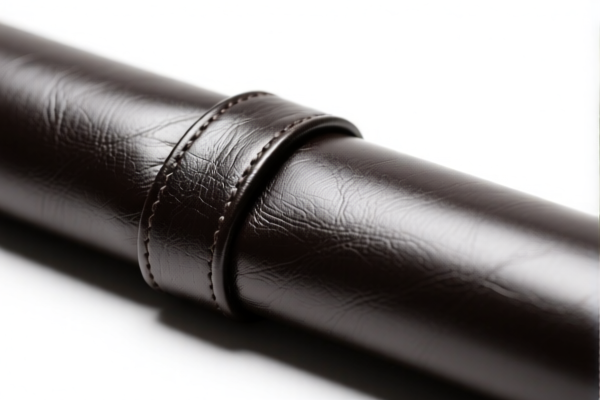
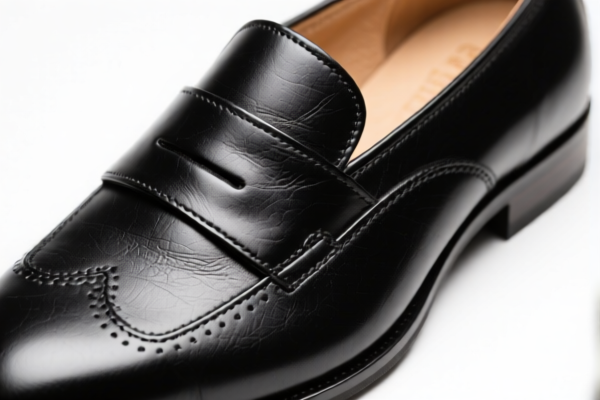
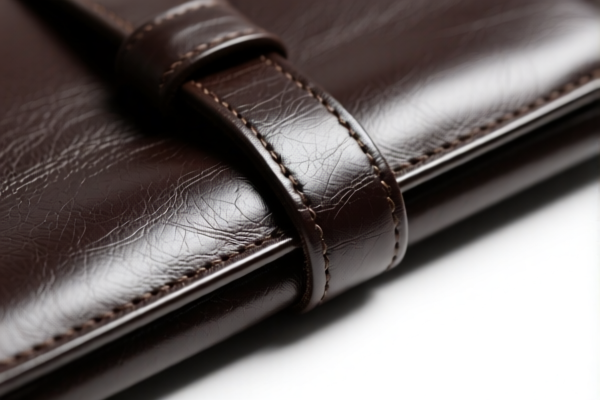

AI Analysis
🦎 Refined Lizard Skin (Processed Reptile Leather)
🌐 HS Code Reference & Customs Clearance Guide | 2026 Latest Tariff Analysis | Professional-Level Entry Strategy
📌 I. Product Definition & Classification: Do You Really Understand "Refined Lizard Skin"?
Refined Lizard Skin refers to leather derived from lizards, a category of reptiles. In international trade, it is primarily classified under Chapter 41 (Leather) or Chapter 43 (Furskins and Artificial Fur). The key distinction lies in the state of processing (tanned vs. raw/unprocessed) and the legal interpretation of "reptile skin" versus "furskin."
1. Chapter 41 (Leather):
If the lizard skin is tanned, half-tanned, or fully dressed (even if not yet assembled into goods), it falls under Chapter 41. This is the most common classification for high-end exotic leathers used in luxury goods (bags, wallets, shoes).
* Key Criteria: The skin has undergone chemical or physical treatment to preserve it and make it durable.
2. Chapter 43 (Furskins):
If the skin is classified as a "furskin" (even without hair, if it fits the statutory definition of unfinished furs) or if specific national interpretations categorize reptile skins under this chapter for certain finishes, it may fall here.
* Key Criteria: Often applies to raw, unprocessed, or minimally processed skins, or where local customs authorities explicitly place reptile leathers in Chapter 43 for tariff reasons.
⚠️ Critical Distinction Point:
- If the skin is tanned/finished leather → Generally Chapter 41 (HS Codes 4113, 4106).
- If the skin is considered a raw/unassembled furskin or specific local rules apply → Chapter 43 (HS Codes 4302).
- Misclassification Risk: Misclassifying tanned leather as raw furskin (or vice versa) can lead to severe penalties due to differing base duties and additional trade restrictions.
📦 II. HS Code Classification Details (2026 Latest Tariff Authority Comparison)
| HS Code | Product Description | Applicable Scenario | Processing State |
|---|---|---|---|
4302.19.75.00 |
Specialty Lizard Leather, Material: Tanned/Processed Furskin, Form: Unassembled Full Skin | Raw or semi-processed skins categorized as furskins; strict "furskin" interpretation | ✅ Tanned/Processed (as Furskin) |
4113.30.60.00 |
Specialty Lizard Leather, Lizard = Reptile, Leather fits "Reptile Patterned Leather" classification | Standard exotic reptile leather; specific subheading for patterned reptile hides | ✅ Tanned/Finished Leather |
4106.40.00.00 |
Specialty Lizard Leather, Lizard = Reptile, Leather fits "Tanned or Half-Tanned" requirement | General tanned reptile leather; broad category for processed reptile skins | ✅ Tanned/Processed Leather |
4106.92.00.00 |
Specialty Lizard Leather, Material: Other Animal Leather, Form: Leather | Lizard skin not fitting specific reptile pattern codes; classified as "other" animal leather | ✅ Tanned/Finished Leather |
4302.19.60.00 |
Specialty Lizard Leather, Material: Lizard Leather, Form: Leather, fits "Undyed Whole Pelt" logic | Specific classification for undyed, whole lizard pelts under furskin chapter | ✅ Tanned/Processed (as Furskin) |
🔍 Key Reminder:
- All tanned/finished lizard skins should ideally be classified under Chapter 41 (4113or4106) unless specific national customs rulings mandate Chapter 43.
- Chapter 43 (4302) codes are often used for raw, undyed, or minimally processed skins, or where specific "furskin" definitions are applied broadly to all animal skins without hair.
- Do not split shipments: If you import tanned leather, declare it as leather, not as raw pelts, to avoid customs audits.
💰 III. 2026 Latest Tariff Rate Breakdown (Including Surtaxes & Policy Surcharges)
✅ Applicable Country: United States (US)
✅ Origin: China (CN)
✅ Effective Date: From November 10, 2025 (inclusive)
🎯 1. 4302.19.75.00 —— Specialty Lizard Leather (Tanned Furskin Category)
| Item | Content |
|---|---|
| Base Duty Rate | 1.7% (ad valorem) |
| Section 301 Surtax | +25.0% (USITC Footnote) |
| Section 122 Surtax | +10.0% (Specific Chinese goods provision) |
| Total Tax Rate | 36.7% |
| Tax Calculation | CIF Value × 36.7% |
| De Minimis Exemption | ❌ Not Eligible (deny_de_minimis) |
| Legal Basis Path | Base: 4302.19.75.00 → Surtax: 25% → Add-on: 10% |
📌 Explanation:
- This classification assumes the skin is treated under the "furskin" chapter but subject to full surtaxes.
- The 36.7% total rate is high. Ensure the physical product matches the "tanned furskin" description to avoid being reclassified to Chapter 41, which might have different surtax nuances (though both are heavily taxed).
🎯 2. 4113.30.60.00 —— Specialty Lizard Leather (Reptile Patterned Leather)
| Item | Content |
|---|---|
| Base Duty Rate | 0.0% (ad valorem) |
| Section 301 Surtax | +25.0% |
| Section 122 Surtax | +10.0% |
| Total Tax Rate | 35.0% |
| Tax Calculation | CIF Value × 35.0% |
| De Minimis Exemption | ❌ Not Eligible |
| Legal Basis Path | Base: 4113.30.60.00 → Surtax: 25% → Add-on: 10% |
📌 Note:
- This is often the most accurate classification for finished, patterned exotic leathers.
- The 0% base duty is offset by the 35% total surtax.
- Crucial: Must prove the skin is "patterned reptile leather" and properly tanned.
🎯 3. 4106.40.00.00 —— Specialty Lizard Leather (General Tanned Reptile)
| Item | Content |
|---|---|
| Base Duty Rate | 0.0% |
| Section 301 Surtax | +25.0% |
| Section 122 Surtax | +10.0% |
| Total Tax Rate | 35.0% |
| Tax Calculation | CIF Value × 35.0% |
| De Minimis Exemption | ❌ Not Eligible |
| Legal Basis Path | Base: 4106.40.00.00 → Surtax: 25% → Add-on: 10% |
📌 Note:
- Similar to4113, but a broader category for "tanned reptile leather."
- Use this if the specific "patterned" subheading does not strictly apply.
- Same 35% total rate, so cost impact is identical.
🎯 4. 4106.92.00.00 —— Specialty Lizard Leather (Other Animal Leather)
| Item | Content |
|---|---|
| Base Duty Rate | 3.3% |
| Section 301 Surtax | +25.0% |
| Section 122 Surtax | +10.0% |
| Total Tax Rate | 38.3% |
| Tax Calculation | CIF Value × 38.3% |
| De Minimis Exemption | ❌ Not Eligible |
| Legal Basis Path | Base: 4106.92.00.00 → Surtax: 25% → Add-on: 10% |
📌 Note:
- This is the "catch-all" for animal leathers not fitting specific categories.
- Higher base duty (3.3%) results in a higher total tax (38.3%).
- Avoid this code if possible; strive for4113or4106.40for better rates.
🎯 5. 4302.19.60.00 —— Specialty Lizard Leather (Undyed Whole Pelt)
| Item | Content |
|---|---|
| Base Duty Rate | 3.5% |
| Section 301 Surtax | +25.0% |
| > Section 122 Surtax | +10.0% |
| Total Tax Rate | 38.5% |
| Tax Calculation | CIF Value × 38.5% |
| De Minimis Exemption | ❌ Not Eligible |
| Legal Basis Path | Base: 4302.19.60.00 → Surtax: 25% → Add-on: 10% |
📌 Note:
- Applies to undyed, whole pelts classified under furskins.
- Highest total tax (38.5%) among the options.
- Only use if the goods are strictly undyed and fit the "whole pelt" definition in Chapter 43.
🛠️ IV. Customs Clearance Practical Advice (Battle-Tested Pitfall Guide)
✅ 1. Preparation Checklist (Non-Negotiable)
| Document | Required | Explanation |
|---|---|---|
| ✅ Product Specification Sheet | ✔️ | Must detail: Species (Lizard), Tanning Process (Vegetable/Synthetic), Finish (Dyed/Undyed), Dimensions |
| ✅ Technical Data Sheet | ✔️ | Confirms "Leather" status (Chapter 41) vs. "Furskin" status (Chapter 43) |
| ✅ Product Photos (Clear) | ✔️ | Show texture, grain pattern, edges, and any branding |
| ✅ Third-Party Inspection Report | ✔️ | CITES permits (if endangered species) + Quality certification |
| ✅ Commercial Invoice | ✔️ | Clearly state "Tanned Lizard Leather" or "Reptile Skin, Tanned" |
| ✅ CITES Permit (if applicable) | ✔️ | Critical: If the lizard species is CITES-listed, import/export permits are mandatory. Check Appendix I/II status. |
| ✅ Packing List | ✔️ | Detail weight, volume, and packaging type |
✅ 2. Declaration Tactics (Key Mantra)
🔥 "State the Process, Specify the Species, Avoid Ambiguity!"
| Scenario | Correct Declaration | Incorrect Practice |
|---|---|---|
| Tanned, Dyed Leather | 4113.30.60.00 (Specialty Lizard Leather) |
Calling it "Raw Skin" → 38.5% |
| Tanned, Undyed Leather | 4302.19.60.00 OR 4106.40.00.00 (Check specific rules) |
Generic "Animal Leather" → 38.3% |
| General Tanned Reptile | 4106.40.00.00 |
Missing species detail → Audit Risk |
| Specific Furskin Category | 4302.19.75.00 |
Incorrect chapter → 36.7% |
✅ 3. Special Situation Handling
| Situation | Handling Advice |
|---|---|
| CITES Listed Species | STOP: Do not import without a valid CITES permit. Violation leads to seizure and fines. Verify species against CITES Appendix I/II. |
| Mixed Shipments | If mixing lizard with other leathers (cow, sheep), declare separately. Mixing may trigger higher scrutiny on the exotic item. |
| Samples vs. Commercial | Both are subject to the same tariffs. De minimis (under $800) may apply if eligible, but exotic leathers are often restricted. Verify de minimis eligibility for luxury goods in your specific context. |
| Value Declaration | Ensure the declared value reflects the actual transaction value. Customs often audits exotic leathers for undervaluation. |
🌍 V. Global Market Clearance Comparison (2026 Latest)
| Country/Region | Recommended HS Code | Tariff Rate | Certification Requirements | Notes |
|---|---|---|---|---|
| 🇺🇸 USA | 4113.30.60.00 / 4106.40.00.00 |
35.0% (Total) | CITES (if applicable) | High surtaxes (25% + 10%). Strict CITES enforcement. |
| 🇨🇳 China | 4113.30.60.00 |
~5-7% (Varies) | CITES | Lower base duties. Focus on authenticity. |
| 🇪🇺 EU | 4113.30.60.00 |
~0-12% | CITES + EUTR (Timber? No, but similar scrutiny) | EU has strict wildlife trade regulations (CITES). |
| 🇬🇧 UK | 4113.30.60.00 |
~5-12% | CITES + UK Wildlife Trade Licensing | Post-Brexit rules apply. |
| 🇯🇵 Japan | 4113.30.60.00 |
~0-10% | CITES | High demand for exotic leathers. |
📌 Conclusion:
- USA is the most expensive market due to Section 301 and Section 122 surtaxes.
- CITES compliance is global. Regardless of the destination, if the lizard species is protected, you need permits.
- China-origin goods face 35% total tax in the US. Factor this into your pricing strategy.
📌 VI. Common Mistakes & Pitfall Guide (Lessons Learned)
❌ Mistake 1: Declaring tanned leather as "Raw Skin" to avoid Chapter 41 scrutiny
👉 Consequence: Customs reclassifies, adds penalties, delays clearance.
❌ Mistake 2: Ignoring CITES requirements
👉 Consequence: Seizure of goods, heavy fines, and potential criminal charges.
❌ Mistake 3: Using generic terms like "Exotic Leather" without specifying "Lizard"
👉 Consequence: Customs may classify under a higher, less specific code (e.g., 4106.92), leading to 38.3% instead of 35.0%.
❌ Mistake 4: Assuming De Minimis ($800) applies automatically
👉 Consequence: Many exotic animal products are excluded from de minimis thresholds. Check specific US CBP rules.
✅ Correct Practice:
"Lizard Leather, Tanned, Dyed Black, Patterned, Species: Dumeril's Monitor, CITES Permit #XYZ-123, CIF Value $10,000"
🎯 VII. Conclusion: Professional Declaration, Save Time & Money!
🎯 Remember the Mantra:
🔹 "Tanned = Chapter 41, Raw = Chapter 43, CITES is King!"
🔹 "35% is the magic number for US, but 38.5% if misclassified!"
🔹 "No Permit, No Entry!"
📌 Pro Tip:
If your lizard skin is sourced from non-CITES species and tanned in a non-restricted country, you may have more flexibility. However, always verify the species and tanning origin.
Consider applying for an Advance Ruling from US CBP if you are unsure about the Chapter 41 vs. Chapter 43 classification.
📣 Immediate Action:
📞 Contact a licensed customs broker + Provide CITES permits + Verify species
🚀 Ensure your lizard leather clears customs smoothly, legally, and cost-effectively!
✨ Professional Customs Clearance Starts with Accurate Classification!
💼 Every Percentage Point Saved is Pure Profit!
Customer Reviews
About HS Code Classification
The Harmonized System (HS) is an internationally standardized nomenclature developed by the World Customs Organization (WCO) to classify traded products. Over 200 countries use the HS system as the basis for customs tariffs, trade statistics, and import/export regulations.
Each HS code follows a hierarchical structure:
- Chapter (2 digits) — Broad category of goods (e.g., Chapter 84: Machinery and Mechanical Appliances)
- Heading (4 digits) — More specific grouping within the chapter
- Subheading (6 digits) — Internationally standardized breakdown, used by all WCO member countries
- National subdivisions (8-10 digits) — Country-specific extensions for further classification, such as US HTSUS 10-digit codes
Correct HS code classification is essential for smooth customs clearance, accurate duty payment, and compliance with trade regulations. Misclassification can lead to customs delays, overpayment of duties, or penalties.
When importing from CN to US, the applicable tariff rates may include:
- Most-Favored-Nation (MFN) rate — The standard duty rate applied to WTO members
- General rate — Applied to countries without trade agreements
- Trade remedy duties — Additional tariffs such as Section 301 (anti-dumping), Section 232 (national security), or countervailing duties
The information provided on this page is for reference purposes only. For official classification, please consult with your local customs authority or a licensed customs broker.