Refined Olive Oil Blend
CN → USProduct Images


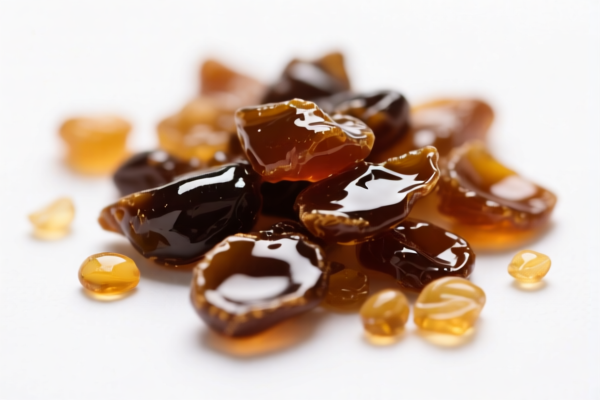
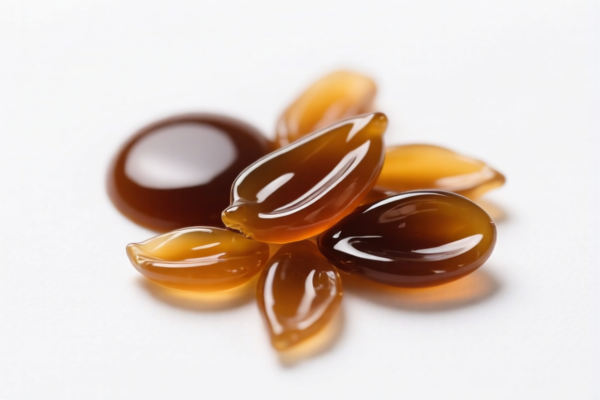
AI Analysis
🫒 Refined Olive Oil Blend
🌐 HS Code Reference & Customs Clearance Guide | 2026 Updated Tariff Analysis | Professional Import Strategy
📌 One: Product Definition & Classification – What Exactly Is “Refined Olive Oil Blend”?
A Refined Olive Oil Blend refers to a mixture of refined olive oils (or refined olive oil fractions) with or without other oils or fractions from heading 1509, but not chemically modified, and produced solely from olives. This category includes blends where the primary component is olive oil, even if refined or blended with other non-olive oils (as long as they are not chemically altered).
⚠️ Key Classification Rule:
- If the product is solely from olives, not chemically modified, and refined, it falls under olive oil and its fractions (heading 1509).
- If it's blended with oils/fractions from other sources (e.g., sunflower, soybean), it may fall under other oils and their fractions (heading 1510).
- Crucially: If the blend is not chemically modified, and the olive oil component is the sole source, it is still classified under olive oil.
📦 Two: HS Code Classification Details (2026 Official Tariff Reference)
| HS Code | Product Description | Container Weight | Applicable Scenario |
|---|---|---|---|
1509.90.20.00 |
Olive oil and its fractions, refined, not chemically modified: Weighing with immediate container under 18 kg | <18 kg | Small retail packaging (e.g., 1L bottle, 500ml tin) |
1509.90.40.00 |
Olive oil and its fractions, refined, not chemically modified: Other | ≥18 kg | Bulk shipments, industrial use, large containers |
1510.90.20.00 |
Other oils and their fractions from olives, refined, not chemically modified, in containers under 18 kg | <18 kg | Blends with non-olive oils, but still derived solely from olives |
1510.90.90.00 |
Other oils and their fractions from olives, refined, not chemically modified: Other | ≥18 kg | Bulk or industrial-scale olive oil blends |
🔍 Critical Distinction:
- "Solely from olives" means the oil is extracted only from olives, even if refined or blended with other unmodified olive fractions.
- If non-olive oils are added (e.g., sunflower oil), it no longer qualifies as "olive oil" and must be classified under 1510.90.90.00 (or 1510.90.20.00 for small containers).
- Chemical modification (e.g., esterification, hydrogenation) disqualifies the product from this heading.
💰 Three: 2026 Updated Tariff Rates (With Detailed Tax Breakdown)
✅ Applicable Country: United States (US)
✅ Origin: Italy, Spain, Greece, Tunisia, or other olive-producing nations
✅ Effective Date: 2025–2026 (as per current US Harmonized Tariff Schedule)
🎯 1. 1509.90.20.00 — Olive Oil, Refined, Not Chemically Modified (Under 18 kg)
| Item | Detail |
|---|---|
| Base Duty | 0.0% (ad valorem) |
| Additional Duty | 0.0% |
| Total Duty | 0.0% |
| Tax Calculation | CIF Value × 0% |
| De Minimis Threshold | ✅ Yes (10% of value, $800 per shipment) |
| Legal Basis | HTSUS 1509.90.20.00 – No附加税 |
📌 Explanation:
- This code applies only to olive oil (not blends with other oils).
- No additional tariffs are imposed under IEEPA or USITC for this code.
- Small retail packaging (<18 kg) qualifies for zero duty and de minimis exemption.
🎯 2. 1509.90.40.00 — Olive Oil, Refined, Not Chemically Modified (Other)
| Item | Detail |
|---|---|
| Base Duty | 0.0% |
| Additional Duty | 0.0% |
| Total Duty | 0.0% |
| Tax Calculation | CIF Value × 0% |
| De Minimis Threshold | ✅ Yes (10% of value, $800) |
| Legal Basis | HTSUS 1509.90.40.00 – No附加税 |
📌 Note:
- Applies to bulk shipments (≥18 kg) of pure refined olive oil.
- Still 0% duty, even for large containers.
- No IEEPA or USITC附加税 for olive oil.
🎯 3. 1510.90.20.00 — Other Oils from Olives (Blends), Not Chemically Modified (Under 18 kg)
| Item | Detail |
|---|---|
| Base Duty | 0.0% |
| Additional Duty | 0.0% |
| Total Duty | 0.0% |
| Tax Calculation | CIF Value × 0% |
| De Minimis Threshold | ✅ Yes |
| Legal Basis | HTSUS 1510.90.20.00 – No附加税 |
📌 Explanation:
- Applies to blends of olive oil fractions with other non-olive oils, but only if the blend is not chemically modified.
- Still 0% duty if the product is solely from olives and not chemically altered.
- No additional tariffs apply.
🎯 4. 1510.90.90.00 — Other Oils from Olives (Blends), Not Chemically Modified (Other)
| Item | Detail |
|---|---|
| Base Duty | 8.8¢ per kg |
| Additional Duty | 7.5% |
| Total Duty | 8.8¢/kg + 7.5% of CIF value |
| Tax Calculation | (Weight in kg × 8.8¢) + (CIF value × 7.5%) |
| De Minimis Threshold | ❌ No (not eligible) |
| Legal Basis | HTSUS 1510.90.90.00 – Applies to blended oils not classified as olive oil |
📌 Critical Warning:
- This code applies only if the product is a blend with non-olive oils (e.g., sunflower, canola, soybean) and is not chemically modified.
- Even if the blend contains 90% olive oil, if any non-olive oil is present, it must be classified here.
- 7.5% ad valorem is not a flat rate — it applies to the CIF value, not just the weight.
- No de minimis exemption — even small shipments are fully taxed.
🛠️ Four: Customs Clearance Best Practices (Pro Tips to Avoid Penalties)
✅ 1. Required Documentation (Must-Have Checklist)
| Document | Required? | Purpose |
|---|---|---|
| ✅ Commercial Invoice | ✔️ | Must clearly state: "Refined Olive Oil Blend – 95% Olive Oil, 5% Sunflower Oil" |
| ✅ Product Specification Sheet | ✔️ | Include: origin, refining process, composition, fatty acid profile |
| ✅ Lab Test Report (GC-MS) | ✔️ | Prove no chemical modification and olive oil content |
| ✅ Certificate of Origin (CO) | ✔️ | If claiming preferential treatment (e.g., EU, CAFTA) |
| ✅ Packing List | ✔️ | Show weight per container, total weight, number of units |
| ✅ MSDS / Safety Data Sheet | ✔️ | For food-grade oils, required for compliance |
✅ 2.申报技巧 (Key Rules for Accurate Classification)
🔥 "If it’s from olives, not chemically modified, and not pure olive oil? It’s 1510.90.90.00!"
| Scenario | Correct HS Code | Common Mistake |
|---|---|---|
| Pure refined olive oil, 1L bottle | 1509.90.20.00 |
❌ Misclassified as 1510.90.20.00 |
| Refined olive oil blend (90% olive, 10% sunflower), 10 kg | 1510.90.90.00 |
❌ Claimed as 1509.90.40.00 |
| Bulk refined olive oil (20 kg) | 1509.90.40.00 |
❌ Misclassified as 1510.90.90.00 |
| Olive oil blend (15 kg), no non-olive oils | 1509.90.20.00 |
✅ Correct |
✅ 3. Special Cases & Risk Mitigation
| Situation | Recommended Action |
|---|---|
| Blend contains 99% olive oil, 1% sunflower | Still must use 1510.90.90.00 — even 1% non-olive oil triggers this code |
| Olive oil fraction blended with olive oil | Can still use 1509.90.20.00 or 1509.90.40.00 — no additional tax |
| Olive oil blended with palm oil (non-olive) | Must use 1510.90.90.00 — 7.5% ad valorem applies |
| Chemical modification (e.g., esterification) | Not eligible for any olive oil code — must be classified under other headings |
🌍 Five: Global Market Customs Comparison (2026)
| Country/Region | Recommended HS Code | Tariff Rate | Certification Required | Notes |
|---|---|---|---|---|
| 🇺🇸 USA | 1509.90.20.00 / 1510.90.90.00 |
0% (pure) / 8.8¢/kg + 7.5% (blends) | FDA, FDA GRAS | No de minimis for blends |
| 🇨🇳 China | 1509.90.20.00 |
5% (most-favored-nation) | China Food Safety Standards | No additional tariffs |
| 🇪🇺 EU | 1509.90.20.00 |
0% (if origin is EU/olive-producing) | CE, ISO 22000 | No附加税 |
| 🇦🇺 Australia | 1509.90.20.00 |
0% (if origin is EU) | FSANZ | No附加税 |
| 🇯🇵 Japan | 1509.90.20.00 |
0% | JAS | No附加税 |
📌 Insight:
- The U.S. is the only market with a dual-duty structure (per kg + ad valorem) for olive oil blends.
- China and EU offer favorable treatment for pure olive oil.
- Always verify origin — some countries offer preferential tariffs under trade agreements.
📌 Six: Common Mistakes & How to Avoid Them (Real-World Pitfalls)
❌ Mistake 1: Classifying a 90% olive oil + 10% sunflower oil blend as 1509.90.40.00
👉 Result: $15,000+ in underpaid duties + penalties + audit risk
❌ Mistake 2: Not disclosing non-olive oil content on the invoice
👉 Result: Customs seizure, delayed shipment, fines
❌ Mistake 3: Using "olive oil" as the product name without specifying blend composition
👉 Result: Incorrect HS code, reclassification, rejection
✅ Best Practice:
"Refined Olive Oil Blend – 95% Olive Oil, 5% Canola Oil, Not Chemically Modified, 5L Bottle, 4.8 kg"
🎯 Seven: Final Verdict – Smart Classification = Lower Costs
🎯 Golden Rule:
🔹 "Pure olive oil? Use 1509.90.20.00 or 1509.90.40.00 → 0% duty."
🔹 "Any non-olive oil added? Use 1510.90.90.00 → 8.8¢/kg + 7.5% of CIF value."
🔹 "No de minimis for blends — even 1kg counts!"
📌 Pro Tip:
📞 Apply for an Advance Ruling (AR) from U.S. Customs before shipment — especially for blends.
🚀 Get a pre-classification opinion to avoid costly errors.
📣 Take Action Now:
📞 Contact a licensed customs broker + provide lab report + composition
🚀 Ensure your HS code matches your product composition — not your intention!
✨ Precision in Classification = Smooth Customs Clearance = Profit Protection!
💼 Your olive oil blend’s duty cost depends on one word: “blend”
🔥 Don’t let a single ingredient ruin your margins!
Customer Reviews
About HS Code Classification
The Harmonized System (HS) is an internationally standardized nomenclature developed by the World Customs Organization (WCO) to classify traded products. Over 200 countries use the HS system as the basis for customs tariffs, trade statistics, and import/export regulations.
Each HS code follows a hierarchical structure:
- Chapter (2 digits) — Broad category of goods (e.g., Chapter 84: Machinery and Mechanical Appliances)
- Heading (4 digits) — More specific grouping within the chapter
- Subheading (6 digits) — Internationally standardized breakdown, used by all WCO member countries
- National subdivisions (8-10 digits) — Country-specific extensions for further classification, such as US HTSUS 10-digit codes
Correct HS code classification is essential for smooth customs clearance, accurate duty payment, and compliance with trade regulations. Misclassification can lead to customs delays, overpayment of duties, or penalties.
When importing from CN to US, the applicable tariff rates may include:
- Most-Favored-Nation (MFN) rate — The standard duty rate applied to WTO members
- General rate — Applied to countries without trade agreements
- Trade remedy duties — Additional tariffs such as Section 301 (anti-dumping), Section 232 (national security), or countervailing duties
The information provided on this page is for reference purposes only. For official classification, please consult with your local customs authority or a licensed customs broker.