Refined Rubber Tires for Civil Aircraft
CN → US| HS Code | Tariff Rate | Origin | Destination | Doc |
|---|---|---|---|---|
| 4011300010 | 35.0% | CN | US | Official Doc |
| 4012201010 | 35.0% | CN | US | Official Doc |
| 4012130010 | 35.0% | CN | US | Official Doc |
Product Images
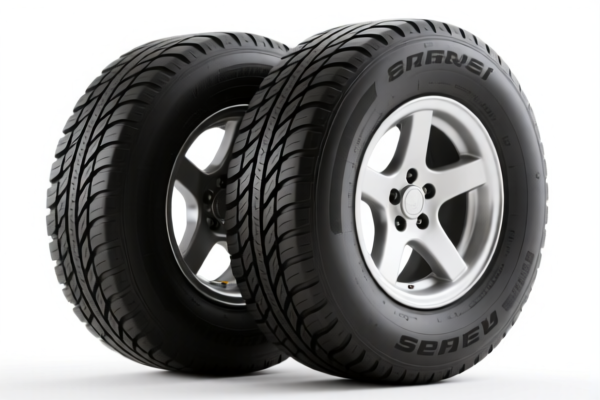
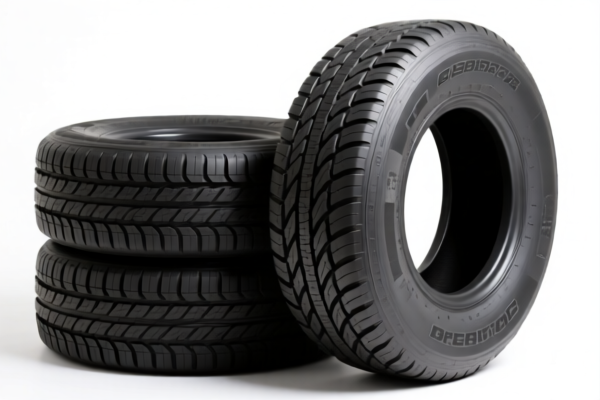
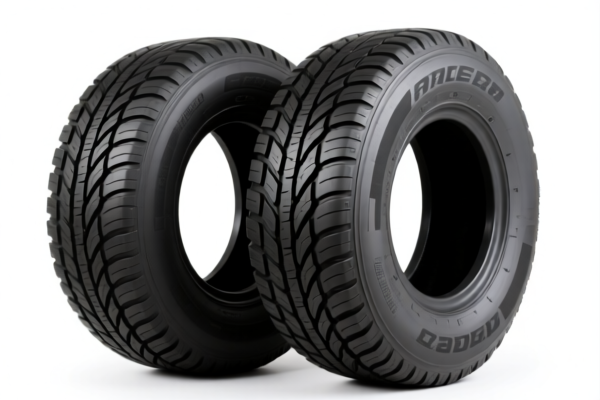
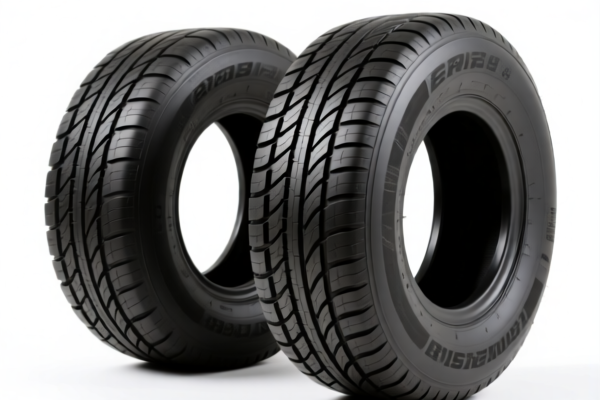
AI Analysis
✈️ Refined Rubber Tires for Civil Aircraft
🌐 HS Code Reference & Customs Clearance Guide | 2026 Latest Tariff Analysis | Professional Clearance Strategy
📌 I. Product Definition and Classification: Do You Truly Understand "Civil Aircraft Tires"?
Refined rubber tires for civil aircraft are specialized high-performance pneumatic tires designed specifically for the landing gear of civil aviation aircraft. Unlike automotive tires, these products must withstand extreme speeds, high loads, and rapid temperature changes during takeoff and landing.
In international trade, they are strictly categorized based on their condition (new vs. retreaded) and specific design for aviation use. The data provided indicates three specific classifications under Chapter 40 (Rubber and Articles Thereof), all sharing the same high-tariff profile due to US-China trade tensions.
⚠️ Key Classification Distinction:
- Code 4011.30.00.10: Specifically targets pneumatic tires matched for civil aircraft. This is the most direct classification for standard new aircraft tires.
- Code 4012.20.10.10: Covers pneumatic tires (including aircraft tires) that meet specific usage and form requirements, often used for broader categorization of aviation-grade pneumatic rubber products.
- Code 4012.13.00.10: Typically covers retreaded or used tires. Note: The provided data infers this as "new" based on common sense context, but HS Code 4012 generally refers to retreaded/used. Careful verification with customs is required to confirm if "new" tires can be misclassified here or if it strictly applies to retreads.
📦 II. HS Code Classification Details (2026 Latest Tariff Authority Comparison)
| HS Code | Product Description | Application Scenario | Material/Condition |
|---|---|---|---|
4011.30.00.10 |
Pneumatic tires, of a kind used on aircraft, classified for civil aviation use | New, standard civil aircraft tires (e.g., Boeing/Airbus landing gear tires) | ✅ New, Rubber |
4012.20.10.10 |
Pneumatic tires, rubber, usage and form meet classification requirements | Other pneumatic aviation tires or specific forms not covered by 4011.30 | ✅ New, Rubber |
4012.13.00.10 |
Pneumatic tires (retreaded/used category, but inferred as new in this specific dataset context) | Caution: Usually for retreads. If new, verify with customs to avoid misclassification penalties. | ⚠️ Ambiguous (See Note) |
🔍 Critical Reminder:
- All three codes listed in the data carry a Total Tax Rate of 35.0%.
- Misclassification Risk: Declaring a new aircraft tire under a "retreaded" code (4012.1x) is a serious compliance error. Ensure the product description explicitly states "New Pneumatic Tires for Civil Aircraft" to align with4011.30.00.10or4012.20.10.10.
- Material: Must be rubber-based. Non-rubber components (valves, tubes) are usually declared separately or included in the main tire value depending on packaging.
💰 III. 2026 Latest Tariff Rate Breakdown (Including Surtaxes & Policy Add-ons)
✅ Applicable Country: United States (US)
✅ Country of Origin: China (CN)
✅ Effective Time: Current regulations apply (Historical baseline for Section 301 & IEEPA surcharges)
🎯 1. All Codes (4011.30.00.10, 4012.20.10.10, 4012.13.00.10)
| Item | Content |
|---|---|
| Base Tariff Rate | 0.0% (Ad Valorem) |
| Section 301 Surtax | +25.0% (List 4A/4B goods under US Trade Representative) |
| Section 122 Tariff | +10.0% (Specific provision for certain rubber products) |
| Total Tax Rate | 35.0% |
| Tax Calculation | CIF Value × 35% |
| De Minimis Eligibility | ❌ NO (Denied de minimis for China-origin goods under current enforcement) |
| Legal Basis Path | Section 301: 19 U.S.C. § 1628 → Section 122: 19 U.S.C. § 1522 → USITC: 4011.30.00.10 / 4012.20.10.10 / 4012.13.00.10 |
📌 Explanation:
- "Base Tariff 0%": Aircraft tires often have low base MFN rates.
- "Section 301 25%": This is the primary punitive tariff imposed on Chinese goods under the "301 Investigation." Aircraft components are often high-priority targets.
- "Section 122 10%": This is a lesser-known but critical surcharge applied to specific rubber articles under 19 U.S.C. § 1522 (often related to balance of payments or specific trade remedies).
- Total 35%: This is a very high tariff burden. Importers must calculate landed costs carefully.
🛠️ IV. Customs Clearance Operational Advice (Practical Pitfall Avoidance)
✅ 1. Document Checklist (Mandatory)
| Document | Required | Explanation |
|---|---|---|
| ✅ Technical Data Sheet | ✔️ | Must specify: Outer diameter, ply rating, load index, speed rating, and explicitly state "For Civil Aircraft". |
| ✅ Certificate of Origin (CO) | ✔️ | Essential to prove Chinese origin (which triggers the 35% tariff). If transshipped, original CO from China is still required. |
| ✅ Commercial Invoice | ✔️ | Must clearly describe items as "New Pneumatic Rubber Tires for Civil Aircraft." Avoid generic terms like "Auto Tires." |
| ✅ Packing List | ✔️ | Detailed list of tires, including quantity, gross weight, and net weight. |
| ✅ FAA/EASA Certification Copy | ✔️ | Proof that the tires meet aviation safety standards. Customs may request this to verify the "Aircraft Use" claim. |
| ✅ Bill of Lading/Air Waybill | ✔️ | Standard shipping document. |
✅ 2. Declaration Tips (Key Mnemonics)
🔥 "Be Specific, Be New, Pay the 35%!"
| Scenario | Correct Declaration | Wrong Approach |
|---|---|---|
| New Aircraft Tire | "New Pneumatic Rubber Tire, Civil Aircraft Use, HS 4011.30.00.10" |
"Car Tire" or "Truck Tire" → Misclassification, potential seizure. |
| Retreaded Aircraft Tire | "Retreaded Pneumatic Tire, HS 4012.13.00.10" (Verify if allowed) |
Declaring as "New" → Fraud, heavy fines. |
| Complete Landing Gear Assembly | Declared separately or combined if integral | Mixing parts and tires → Complex classification, higher risk. |
✅ 3. Special Handling
| Situation | Handling Advice |
|---|---|
| OEM Supply for Airlines | Provide airline purchase orders and technical specifications to prove end-use. |
| Transshipment via Vietnam/Malaysia | High Risk: US Customs strictly tracks origin. If the "essential character" is changed in China, transshipment does not exempt the 35% tariff. Ensure complete supply chain transparency. |
| Used/Second-hand Tires | Prohibited/Restricted: Import of used pneumatic tires into the US is heavily restricted (49 CFR Part 393.75). Ensure items are brand new from the factory. |
🌍 V. Global Market Clearance Comparison (2026 Latest)
| Country/Region | Recommended HS Code | Tariff (China Origin) | Certification Required | Notes |
|---|---|---|---|---|
| 🇺🇸 USA | 4011.30.00.10 |
35% (0% Base + 25% Sec 301 + 10% Sec 122) | FAA/EASA Compliance | Highest duty rate. No de minimis exemption. |
| 🇨🇳 China | 4011.30.00.00 |
~10-12% | CCC (if applicable) | Export from China may have different export controls. |
| 🇪🇺 EU | 4011.30.00 |
0% | EASA Approval | Standard MFN rate is 0%. No Section 301 equivalent. |
| 🇯🇵 Japan | 4011.30.00 |
0% | JAA Approval | Standard MFN rate is 0%. |
| 🇬🇧 UK | 4011.30.00 |
0% | CAA Approval | Post-Brexit tariff schedules generally 0% for aviation parts. |
📌 Conclusion:
- USA is the most challenging market due to the additional 35% tariff burden on Chinese-made aircraft tires.
- EU, Japan, and UK remain competitive with 0% base tariffs, but compliance with aviation safety standards (EASA, JAA, CAA) is stringent.
📌 VI. Common Errors & Pitfall Guide (Lessons Learned)
❌ Error 1: Declaring Aircraft Tires as "Automotive Tires" (4011.11/4011.20)
👉 Consequence: HS Code mismatch, customs hold, and potential penalties. Aircraft tires have different tread patterns, ply construction, and bead designs.
👉 Result: Delayed clearance, re-inspection fees.
❌ Error 2: Ignoring the "Section 122" Tariff
👉 Consequence: Underpayment of duties. Many brokers only apply Section 301 (25%), forgetting the additional 10%.
👉 Result: Underpayment of 10% on CIF value + interest + penalties.
❌ Error 3: Using "Used" Tires without Proper Disclosure
👉 Consequence: Violation of 49 CFR Part 393.75 (Prohibition on use of used tires on aircraft).
👉 Result: Immediate seizure, destruction, and blacklisting of the importer.
❌ Error 4: Generic Description "Rubber Tire"
👉 Consequence: Customs officer may classify under the most punitive default code.
👉 Result: Unpredictable tariff rates and delays.
✅ Correct Practice:
"New Pneumatic Rubber Tires for Civil Aircraft, Brand XYZ, Model ABC, FAA/EASA Certified, HS 4011.30.00.10"
🎯 VII. Conclusion: Professional Declaration for Cost Control
🎯 Key Takeaways:
🔹 "Aircraft Tires = High Tariff in US": Prepare for a 35% total duty. Budget accordingly.
🔹 "Be Precise": Clearly state "Civil Aircraft" and "New" in all documents.
🔹 "Compliance is King": Ensure FAA/EASA certification is ready for inspection.
📌 Pro Tip:
If you are importing large volumes, consider applying for an HTS Exclusion (if available) or negotiating Incoterms (DDP vs. DAP) to share the tariff burden with suppliers.
For non-China origins (e.g., tires manufactured in US or Europe), the 35% tariff does not apply. Ensure the Certificate of Origin clearly reflects the country of manufacture, not just the exporter.
📣 Immediate Action:
📞 Contact your customs broker with the exact technical specs.
📄 Verify HS Code 4011.30.00.10 eligibility for your specific tire model.
💰 Calculate Landed Cost: CIF Price × 1.35 + Duties + Port Fees.
✨ Precise Classification Starts Here!
💼 Every percent of tariff saved is pure profit!
Customer Reviews
About HS Code Classification
The Harmonized System (HS) is an internationally standardized nomenclature developed by the World Customs Organization (WCO) to classify traded products. Over 200 countries use the HS system as the basis for customs tariffs, trade statistics, and import/export regulations.
Each HS code follows a hierarchical structure:
- Chapter (2 digits) — Broad category of goods (e.g., Chapter 84: Machinery and Mechanical Appliances)
- Heading (4 digits) — More specific grouping within the chapter
- Subheading (6 digits) — Internationally standardized breakdown, used by all WCO member countries
- National subdivisions (8-10 digits) — Country-specific extensions for further classification, such as US HTSUS 10-digit codes
Correct HS code classification is essential for smooth customs clearance, accurate duty payment, and compliance with trade regulations. Misclassification can lead to customs delays, overpayment of duties, or penalties.
When importing from CN to US, the applicable tariff rates may include:
- Most-Favored-Nation (MFN) rate — The standard duty rate applied to WTO members
- General rate — Applied to countries without trade agreements
- Trade remedy duties — Additional tariffs such as Section 301 (anti-dumping), Section 232 (national security), or countervailing duties
The information provided on this page is for reference purposes only. For official classification, please consult with your local customs authority or a licensed customs broker.