Refined Sheepskin (Hairless) for Car Interior
CN → US| HS Code | Tariff Rate | Origin | Destination | Doc |
|---|---|---|---|---|
| 4105300000 | 12.0% | CN | US | Official Doc |
| 4105109000 | 12.0% | CN | US | Official Doc |
| 4115100000 | 35.0% | CN | US | Official Doc |
| 4114100000 | 38.2% | CN | US | Official Doc |
| 4114207000 | 36.6% | CN | US | Official Doc |
Product Images
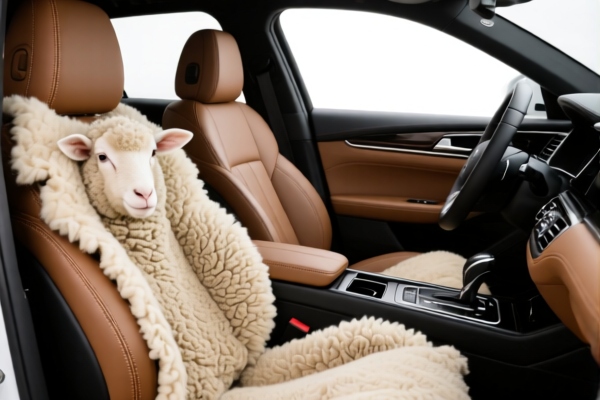
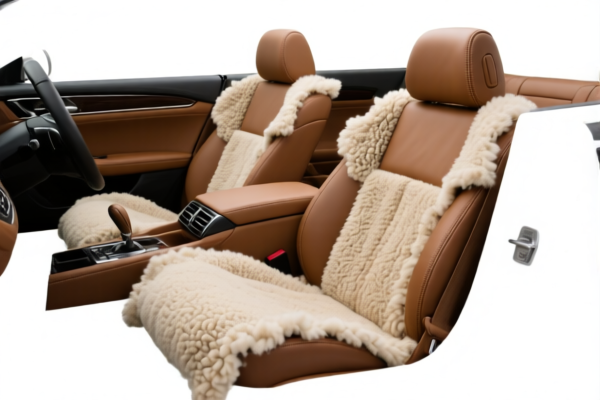
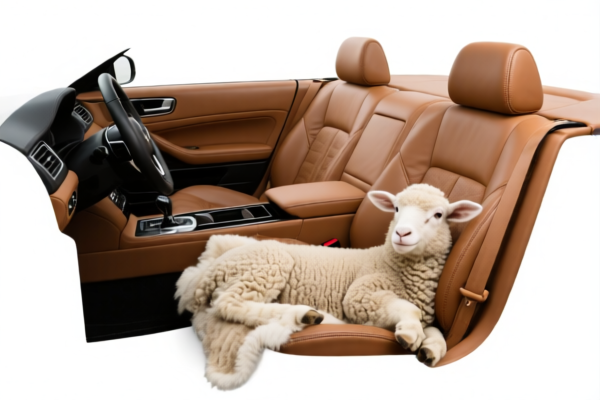
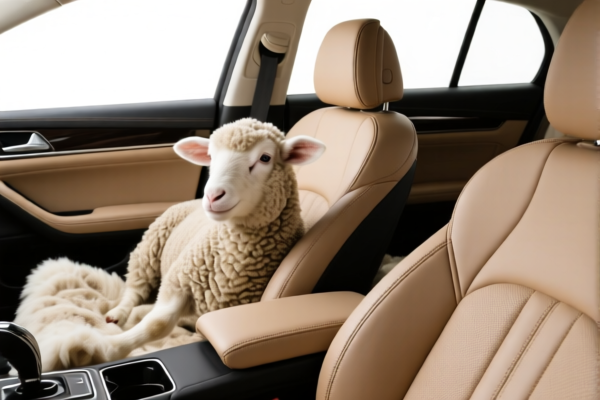
AI Analysis
🐑 Refined Sheepskin (Hairless) for Car Interior
🌐 HS Code Reference & Customs Clearance Guide | 2026 Latest Tariff Analysis | Professional Clearance Strategy
📌 I. Product Definition and Classification: Do You Really Understand "Car Interior Sheepskin"?
Refined sheepskin, specifically hairless and processed for automotive interiors, is a high-value material used in luxury vehicle seats, steering wheels, and door panels. In international trade, its classification depends heavily on processing state (tanned vs. compounded) and form (raw hide vs. composite). Misclassification can lead to massive tax disparities (from 12% to 38.2%).
Key Distinctions: * Pure Tanned Sheepskin: Simple tanning process, hair removed, no other materials added. → HS 4105.xxxx * Compounded/Composite Leather: Sheepskin base combined with other materials (e.g., backing, coating) for specific automotive durability. → HS 4115.xxxx * Special Finishes: Suede, patent, or lacquered finishes. → HS 4114.xxxx
⚠️ Critical Classification Point:
- If the product is pure leather (just tanned/sheared) →归入 4105 series (Lowest Tax).
- If the product is composite/compounded (mixed with plastics/fibers for car use) →归入 4115 series (Higher Tax).
- If the product has special surface finishes (suede/patent) →归入 4114 series (Highest Tax).
📦 II. HS Code Classification Details (2026 Latest Tariff Authority Comparison)
| HS Code | Product Description | Application Scenario | Processing State | Total Tax Rate |
|---|---|---|---|---|
4105.30.00.00 |
Sheepskins, tanned, meeting refined definition | Basic refined sheepskin, hairless | Pure Tanned Leather | 12.0% |
4105.10.90.00 |
Other sheepskins, tanned, hairless & refined | Alternative refined sheepskin variants | Pure Tanned Leather | 12.0% |
4115.10.00.00 |
Compounded leather, sheepskin base for auto interiors | Composite materials with backing/coating | Composite/Compounded | 35.0% |
4114.10.00.00 |
Suede or other finished leather, for auto interiors | Suede-like texture, specific automotive use | Finished/Special | 38.2% |
4114.20.70.00 |
Patent leather & lacquered leather, refined sheepskin | High-gloss/shiny finished sheepskin | Patented/Lacquered | 36.6% |
🔍 Key Reminder:
- "Compounded Leather" (4115) often triggers higher scrutiny because it involves manufacturing beyond simple tanning.
- "Suede/Patent" (4114) commands higher tariffs due to additional finishing processes.
- Always verify if the sheepskin is pure or composite before declaring.
💰 III. 2026 Latest Tariff Rate Detailed Explanation (Including Surcharges, Policy Add-ons)
✅ Applicable Country: United States (US)
✅ Country of Origin: China (CN)
✅ Effective Date: 2025 Nov 10 onwards (and subsequent imports)
🎯 1. 4105.30.00.00 & 4105.10.90.00 —— Refined Sheepskin (Pure Tanned)
| Item | Content |
|---|---|
| Base Tariff | 2.0% (ad valorem) |
| Section 301 Surcharge | 0.0% (No Section 301 tariff applied to these specific subheadings) |
| 122 Clause Tariff | +10% (Under IEEPA, targeting specific Chinese goods) |
| Total Tax Rate | 12.0% |
| Tax Calculation | CIF Value × 12% |
| De Minimis Eligibility | ❌ Not Eligible (deny_de_minimis) |
| Legal Basis Path | IEEPA:9903.01.25 → USITC:4105.30.00.00 |
📌 Explanation:
- These codes represent purely tanned and refined sheepskin.
- The 12% rate is relatively low compared to other leather goods.
- The 10% surcharge is due to the "122 Clause" (IEEPA), which applies to certain leather products from China.
- No Section 301 tariff applies here, making this the most cost-effective classification if the product qualifies as pure refined leather.
🎯 2. 4115.10.00.00 —— Compounded Leather (Auto Interior Base)
| Item | Content |
|---|---|
| Base Tariff | 0.0% |
| Section 301 Surcharge | +25% (USITC Footnote 9903.88.01) |
| 122 Clause Tariff | +10% (IEEPA surcharge) |
| Total Tax Rate | 35.0% |
| Tax Calculation | CIF Value × 35% |
| De Minimis Eligibility | ❌ Not Eligible |
| Legal Basis Path | IEEPA:9903.01.24 → USITC:4115.10.00.00 → FOOTNOTE:9903.88.01 |
📌 Explanation:
- Compounded leather involves combining leather with other materials (e.g., plastic film, fabric backing).
- The 25% Section 301 tariff significantly increases the cost.
- Even though the base tariff is 0%, the 35% total makes it expensive.
- Crucial: If your product is just tanned sheepskin, do not declare it as compounded leather to save taxes, but ensure it doesn’t contain additional composite materials that legally require this code.
🎯 3. 4114.10.00.00 —— Suede Leather (Auto Interior)
| Item | Content |
|---|---|
| Base Tariff | 3.2% |
| Section 301 Surcharge | +25% |
| 122 Clause Tariff | +10% |
| Total Tax Rate | 38.2% |
| Tax Calculation | CIF Value × 38.2% |
| De Minimis Eligibility | ❌ Not Eligible |
| Legal Basis Path | IEEPA:9901.25 → USITC:4114.10.00.00 |
📌 Explanation:
- Suede is a finished leather product with a napped surface.
- This category has the highest total tariff (38.2%) due to the combination of base, Section 301, and 122 tariffs.
- Only declare as suede if the product truly has a suede finish. Misdeclaration can lead to penalties.
🎯 4. 4114.20.70.00 —— Patent/Lacquered Leather (Refined Sheepskin)
| Item | Content |
|---|---|
| Base Tariff | 1.6% |
| Section 301 Surcharge | +25% |
| 122 Clause Tariff | +10% |
| Total Tax Rate | 36.6% |
| Tax Calculation | CIF Value × 36.6% |
| De Minimis Eligibility | ❌ Not Eligible |
| Legal Basis Path | IEEPA:9901.25 → USITC:4114.20.70.00 |
📌 Explanation:
- Patent/Lacquered leather has a glossy, coated surface.
- Total tax is 36.6%, which is slightly lower than suede but still significantly higher than pure refined sheepskin (12%).
- Ensure the product description accurately reflects the high-gloss/lacquered finish to avoid customs disputes.
🛠️ IV. Customs Clearance Practical Advice (Avoid Pitfalls Guide)
✅ 1. Documentation Checklist (Required)
| Document | Required | Explanation |
|---|---|---|
| ✅ Product Specification Sheet | ✔️ | Must detail: Material (Sheepskin), Process (Tanned/Compounded), Finish (Hairless/Suede/Patent) |
| ✅ Photos (Clear & Detailed) | ✔️ | Show texture, cross-section (if composite), and labels |
| ✅ Certificate of Origin (CO) | ✔️ | Prove Chinese origin (triggers tariffs) or preferential origin if applicable |
| ✅ Commercial Invoice | ✔️ | Clearly state: "Refined Sheepskin, Hairless, for Auto Interior" |
| ✅ Packing List | ✔️ | Detail quantity, weight, and packaging type |
| ✅ Third-Party Test Report | ✔️ | If claiming "Compounded," provide test results proving material composition |
✅ 2. Declaration Tips (Key Mnemonic)
🔥 "Pure Sheepskin is 12%, Compounded is 35%, Suede is 38% – Declare Correctly!"
| Situation | Correct Declaration | Wrong Practice |
|---|---|---|
| Pure tanned, hairless sheepskin | 4105.30.00.00 or 4105.10.90.00 |
Misdeclare as "Compounded" → 35% |
| Sheepskin with plastic/fiber backing | 4115.10.00.00 |
Misdeclare as "Pure" → 12% (Risk of penalty) |
| Suede-finish sheepskin | 4114.10.00.00 |
Misdeclare as "Refined" → 12% (High Risk) |
| Glossy/Lacquered sheepskin | 4114.20.70.00 |
Misdeclare as "Refined" → 12% (High Risk) |
📌 Note:
- Pure vs. Composite: If the leather is backed with fabric or plastic for durability, it is likely Compounded (4115) or Finished (4114), not Pure (4105).
- Finish Matters: Suede and Patent are distinct finishing processes that trigger higher tariffs.
✅ 3. Special Cases
| Situation | Handling Advice |
|---|---|
| OEM Custom Leather | Provide client orders + material specs to prove intended use (Auto Interior) |
| Mixed Shipments | Separate pure sheepskin from composite/suede in documentation to avoid confusion |
| Pre-Cutting vs. Raw Hides | Pre-cut shapes for car seats may still be classified under 4105 if not compounded, but verify with customs |
| EU/China FTA | If applicable, check for preferential rates under specific FTAs (though US tariffs remain high) |
🌍 V. Global Main Markets Clearance Comparison (2026 Latest)
| Country/Region | Recommended HS Code | Tariff Rate | Certification Requirements | Notes |
|---|---|---|---|---|
| 🇺🇸 USA | 4105.30.00.00 |
12% (Pure) / 35-38% (Other) | None specific, but accurate classification critical | High tariffs due to 122 Clause & Section 301 |
| 🇨🇳 China | 4105.30.00.00 |
5-8% | None | No additional surcharges |
| 🇪🇺 EU | 4105.30.00.00 |
6.5% | REACH (Chemical standards) | No Section 301 or 122 Clause |
| 🇬🇧 UK | 4105.30.00.00 |
6.5% | UKCA (if applicable) | Similar to EU post-Brexit |
| 🇦🇺 Australia | 4105.30.00.00 |
5% | None | Low tariff environment |
📌 Conclusion:
- USA is the most challenging market due to 122 Clause (10%) and potential Section 301 (25%) tariffs.
- Pure Refined Sheepskin (4105) is the most tax-efficient classification (12% total).
- Composite/Finished Leathers (4114/4115) face 35-38% total tariffs.
📌 VI. Common Errors & Pitfalls (Lessons Learned)
❌ Error 1: Declaring Composite Leather as Pure Refined Sheepskin
👉 Consequence: Customs may reclassify, leading to back taxes + penalties (from 12% to 35%).
❌ Error 2: Misidentifying Suede as Refined Leather
👉 Consequence: Underpayment of tax (12% vs 38.2%), leading to audits and fines.
❌ Error 3: Ignoring the 122 Clause (10%)
👉 Consequence: Even pure sheepskin incurs a 10% surcharge. Failing to account for this affects profit margin calculations.
❌ Error 4: Inaccurate Product Descriptions
👉 Consequence: Vague terms like "Leather for Cars" can lead to customs delays or incorrect classification.
✅ Correct Approach:
"Refined Sheepskin, Hairless, Tanned, Pure (No Composite), for Automotive Upholstery, Model XYZ"
OR
"Compounded Sheepskin Leather, Plastic-Backed, for Auto Interior Panels"
🎯 VII. Conclusion: Professional Declaration, Save Costs, Ensure Compliance!
🎯 Remember the Mnemonic:
🔹 "Pure Sheepskin is 12%, Compounded is 35%, Suede is 38% – Declare Correctly!"
🔹 "122 Clause adds 10%, Section 301 adds 25% – Know the Difference!"📌 Pro Tip:
If your product is compounded leather, consider if any component substitution (e.g., using non-Chinese backing materials) could alter the origin or classification.
For high-value shipments, consider Advance Rulings from US Customs to confirm HS Code classification.
📣 Immediate Action:
📞 Contact a Professional Customs Broker
📄 Provide Product Photos + Specifications
✅ Apply for HS Code Pre-Ruling if uncertain
✨ Professional Clearance Starts with Accurate Classification!
💼 Every Percent of Tax Matters – Optimize Your Supply Chain Today!
Customer Reviews
About HS Code Classification
The Harmonized System (HS) is an internationally standardized nomenclature developed by the World Customs Organization (WCO) to classify traded products. Over 200 countries use the HS system as the basis for customs tariffs, trade statistics, and import/export regulations.
Each HS code follows a hierarchical structure:
- Chapter (2 digits) — Broad category of goods (e.g., Chapter 84: Machinery and Mechanical Appliances)
- Heading (4 digits) — More specific grouping within the chapter
- Subheading (6 digits) — Internationally standardized breakdown, used by all WCO member countries
- National subdivisions (8-10 digits) — Country-specific extensions for further classification, such as US HTSUS 10-digit codes
Correct HS code classification is essential for smooth customs clearance, accurate duty payment, and compliance with trade regulations. Misclassification can lead to customs delays, overpayment of duties, or penalties.
When importing from CN to US, the applicable tariff rates may include:
- Most-Favored-Nation (MFN) rate — The standard duty rate applied to WTO members
- General rate — Applied to countries without trade agreements
- Trade remedy duties — Additional tariffs such as Section 301 (anti-dumping), Section 232 (national security), or countervailing duties
The information provided on this page is for reference purposes only. For official classification, please consult with your local customs authority or a licensed customs broker.