Refined Wool Free Sheepskin for Car Interior
CN → US| HS Code | Tariff Rate | Origin | Destination | Doc |
|---|---|---|---|---|
| 4205001000 | 35.0% | CN | US | Official Doc |
| 4205008000 | 35.0% | CN | US | Official Doc |
| 9401991010 | 17.5% | CN | US | Official Doc |
| 8708295160 | 0.0% | CN | US | Official Doc |
| 8708998180 | 37.5% | CN | US | Official Doc |
Product Images
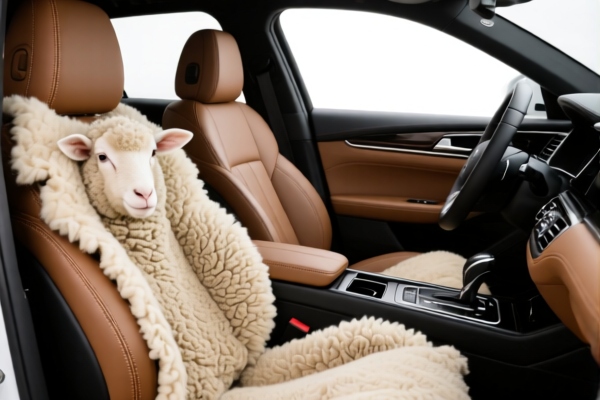
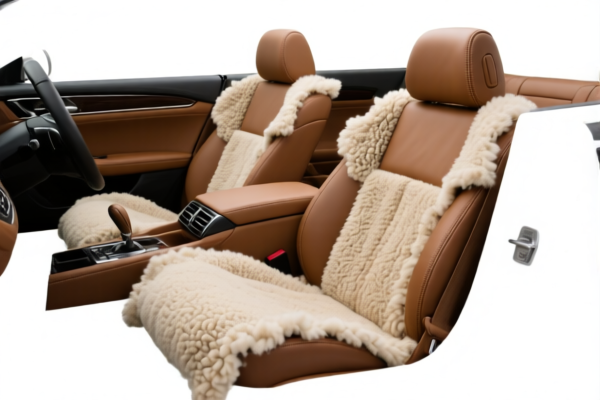
AI Analysis
🚗 Refined Wool Free Sheepskin for Car Interior
🌐 HS Code Reference & Customs Clearance Guide | 2026 Latest Tariff Analysis | Professional Clearance Strategy
📌 I. Product Definition & Classification: Do You Really Understand "Sheepskin Car Interiors"?
"Refined Wool Free Sheepskin" typically refers to leather hides from sheep or lambs that have undergone processing to remove wool/fleece, resulting in a smooth, supple leather surface. In international trade, when used for Car Interiors (such as seat covers, door panels, steering wheel covers, or dashboard trims), this product is classified based on two main criteria: 1. Material: It is a Leather Product (Chapter 42). 2. Function: It is a Motor Vehicle Part/Accessory (Chapter 87).
⚠️ Key Distinction:
- If the product is sold as a standalone leather material or finished leather goods not yet integrated into a specific vehicle part → Classified under Chapter 42. - If the product is specifically designed/used as a part of a car (e.g., cut-to-shape seat covers, trim kits) → Classified under Chapter 87.
📦 II. HS Code Classification Details (2026 Latest Tariff Authority)
| HS Code | Product Description | Application Scenario | Conflict Check |
|---|---|---|---|
4205.00.10.00 |
Leather car interiors, material is genuine leather, used for car interiors, belongs to leather goods. | Generic leather automotive trim materials. | ✅ No material conflict. |
4205.00.80.00 |
Leather car interiors, material is genuine leather, belongs to other leather goods, no material conflict. | Other finished leather automotive components not specified elsewhere. | ✅ No material conflict. |
9401.99.10.10 |
Leather car interiors, material is leather, used for automotive related items, fits seat or car interior classification. | Leather parts for car seats or specific interior fixtures. | ✅ Fits seat/interior category. |
8708.29.51.60 |
Leather car interiors, belongs to car body parts and accessories, material is genuine leather, no obvious conflict. | Leather body panels or exterior/interior body trim. | ⚠️ Special Rule: Steel, Aluminum, Copper products attract 50% additional duty. |
8708.99.81.80 |
Leather car interiors, belongs to other car parts and accessories, material inferred as leather, fits residual classification. | General automotive leather accessories (catch-all). | ✅ Fits residual category. |
🔍 Key Reminder:
- Chapter 42 Codes (4205.00): Treat the product as a Leather Good. Lower base duty, but high "Section 301" additional tariffs. - Chapter 87 Codes (8708.xx): Treat the product as a Car Part. Base duty varies; some codes have very low base rates but still attract high additional tariffs. - Section 9903 (122 Clause): Applies to almost all entries above with a 10% additional tariff.
💰 III. 2026 Latest Tariff Rate Breakdown (Including Surcharges & Policy Add-ons)
✅ Applicable Country: United States (US)
✅ Origin: China (CN)
✅ Effective Time: 2025/2026 (Current Trade War Rates)
🎯 1. 4205.00.10.00 —— Leather Car Interiors (Leather Good Category)
| Item | Content |
|---|---|
| Base Duty | 0.0% (Ad Valorem) |
| Section 301 Additional Duty | +25.0% |
| Section 122 Tariff (IEEPA) | +10.0% |
| Total Duty Rate | 35.0% |
| Tax Calculation | CIF Value × 35% |
| De Minimis Eligibility | ❌ Not Eligible (Deny De Minimis) |
| Legal Basis Path | USITC:4205.00.10.00 → FOOTNOTE:9903.88.01 → IEEPA:9903.01.24 |
📌 Explanation:
- Base duty is 0%, but the 25% Section 301 tariff is the primary cost driver. - The 10% Section 122 tariff (often associated with specific retaliatory measures or national security provisions) is added. - Total Cost Impact: 35% is a significant landed cost increase.
🎯 2. 4205.00.80.00 —— Other Leather Car Interiors
| Item | Content |
|---|---|
| Base Duty | 0.0% |
| Section 301 Additional Duty | +25.0% |
| Section 122 Tariff (IEEPA) | +10.0% |
| Total Duty Rate | 35.0% |
| Tax Calculation | CIF Value × 35% |
| De Minimis Eligibility | ❌ Not Eligible |
| Legal Basis Path | USITC:4205.00.80.00 → FOOTNOTE:9903.88.01 → IEEPA:9903.01.24 |
📌 Note:
- Identical tax burden to4205.00.10.00. - Use this code if the product doesn't fit the specific description of4205.00.10.00but is still clearly a leather good.
🎯 3. 9401.99.10.10 —— Leather Parts for Car Seats/Interiors
| Item | Content |
|---|---|
| Base Duty | 0.0% |
| Section 301 Additional Duty | +7.5% |
| Section 122 Tariff (IEEPA) | +10.0% |
| Total Duty Rate | 17.5% |
| Tax Calculation | CIF Value × 17.5% |
| De Minimis Eligibility | ❌ Not Eligible |
| Legal Basis Path | USITC:9401.99.10.10 → FOOTNOTE:9903.88.01 → IEEPA:9903.01.24 |
📌 Critical Insight:
- This code offers a significantly lower total duty (17.5%) compared to Chapter 42 codes. - The Section 301 rate here is only 7.5% (depending on specific listing exclusions or re-classification logic in 2026). - Best for: Products explicitly marketed as "Seat Parts" or "Interior Trim Components" rather than generic "Leather Goods."
🎯 4. 8708.29.51.60 —— Leather Body Parts & Accessories
| Item | Content |
|---|---|
| Base Duty | 2.5% |
| Section 301 Additional Duty | +25.0% |
| Section 122 Tariff (IEEPA) | Steel/Aluminum/Copper: +50% |
| Note on Material | If the leather product contains any metal components (stiffeners, frames), the 50% may apply to those parts. |
| Total Duty Rate | 2.5% + 85.0% (Complex) |
| Tax Calculation | Varies by component composition. |
| De Minimis Eligibility | ❌ Not Eligible |
| Legal Basis Path | USITC:8708.29.51.60 → USITC Footnote for Steel/Aluminum |
⚠️ Warning:
- This code carries a heavy risk. If the "Refined Wool Free Sheepskin" product includes any metal backing, stiffeners, or hardware, it may be subject to the 50% additional tariff under steel/aluminum/copper provisions. - Even without metal, the base 2.5% + 25% Section 301 = 27.5%, which is better than Chapter 42 but risky due to the metal clause.
🎯 5. 8708.99.81.80 —— Other Car Parts (Residual)
| Item | Content |
|---|---|
| Base Duty | 2.5% |
| Section 301 Additional Duty | +25.0% |
| Section 122 Tariff (IEEPA) | +10.0% |
| Total Duty Rate | 37.5% |
| Tax Calculation | CIF Value × 37.5% |
| De Minimis Eligibility | ❌ Not Eligible |
| Legal Basis Path | USITC:8708.99.81.80 → FOOTNOTE:9903.88.01 → IEEPA:9903.01.24 |
📌 Note:
- This is the "catch-all" for car parts. - Highest Total Rate (37.5%) among the options. - Only use this if no other specific car part code applies and the product is clearly a finished automotive part.
🛠️ IV. Customs Clearance Practical Advice (Real-World Pitfall Guide)
✅ 1. Preparation Checklist (Must-Haves)
| Document | Required | Explanation |
|---|---|---|
| ✅ Product Specification Sheet | ✔️ | Must state: "Refined Wool Free Sheepskin," material composition (100% Leather), and intended use (Car Interior). |
| ✅ Product Photos | ✔️ | Clear images showing the leather texture, lack of wool, and any stitching or shaping (if pre-formed for cars). |
| ✅ Commercial Invoice | ✔️ | Clearly describe as "Leather Automotive Trim" or "Car Interior Seat Cover," not just "Sheepskin." |
| ✅ Packing List | ✔️ | Detail dimensions and quantity to avoid volume disputes. |
| ✅ Third-Party Report | ✔️ | Chemical compliance (REACH, Prop 65) is critical for leather products in the US. |
✅ 2. Declaration Strategy (Key Mantra)
🔥 “Be Specific, Avoid ‘Leather’ Ambiguity, Choose Lower Rates!”
| Scenario | Correct Declaration | Wrong Approach | Result |
|---|---|---|---|
| Generic Leather Hides | Use 4205.00.10.00 or 80.00 |
Misdeclare as Car Part | Risk of penalty if not clearly auto-specific. |
| Pre-cut Seat Covers | Use 9401.99.10.10 |
Misdeclare as General Leather (4205) |
Savings: 17.5% vs 35%! |
| Body Trim Kits | Use 8708.29.51.60 (Check Metal) |
Ignore metal components | Risk of 50% steel tariff. |
| Finished Interior Panels | Use 8708.99.81.80 |
Use 9401 |
Higher duty (37.5% vs 17.5%). |
📌 Strategic Tip:
- If your product is pre-cut, pre-sewn, and ready to install in a specific car model, argue for9401.99.10.10(17.5% total duty) instead of4205(35%). - The key is to prove it is a part of the seat (9401) rather than just leather goods (4205).
✅ 3. Special Considerations
| Situation | Handling Advice |
|---|---|
| Mixed Materials | If the sheepskin has metal stiffeners or foam backing, ensure the invoice separates values. Metal parts may trigger the 50% steel/aluminum tariff under 8708.29.51.60. |
| "Wool-Free" Claim | Be prepared to provide a certificate or test report proving the absence of wool. If wool is detected, it may be reclassified as "Fur," which has different tariffs. |
| Origin Marking | Clearly mark "Made in China" on the packaging and product. US Customs strictly enforces origin labeling for high-tariff items. |
🌍 V. Global Market Comparison (2026 Latest)
| Country/Region | Recommended HS Code | Total Duty (China Origin) | Certifications | Notes |
|---|---|---|---|---|
| 🇺🇸 USA | 9401.99.10.10 |
17.5% | Prop 65, REACH (if EU bound) | Lowest US duty for auto-interior leather. |
| 🇺🇸 USA | 4205.00.10.00 |
35.0% | Prop 65 | High tariff due to Section 301. |
| 🇨🇳 China | 4205.00.10.00 |
8%~20% | CCC (if applicable) | Lower base duty, no Section 301. |
| 🇪🇺 EU | 4205.00.10.00 |
~6.5% | REACH | No Section 301; REACH compliance critical. |
| 🇯🇵 Japan | 8708.99.81.80 |
~5%~10% | JIS Standards | Variable based on specific auto part classification. |
📌 Conclusion:
- The USA is the most challenging market due to Section 301 and Section 122 tariffs. - Optimization Opportunity: Classify as9401.99.10.10(Seat Parts) to save 17.5% in duties compared to general leather goods (4205).
📌 VI. Common Errors & Pitfalls (Lessons Learned)
❌ Error 1: Declaring as "Sheepskin Leather" (General) when it's a "Car Seat Cover"
👉 Result: Duty jumps from 17.5% to 35%.
👉 Fix: Emphasize "Automotive Seat Part" in the description.
❌ Error 2: Ignoring metal components in trim kits
👉 Result: Unexpected 50% steel tariff on the entire shipment or metal parts.
👉 Fix: Separate metal and leather values in the invoice if possible.
❌ Error 3: Missing "Wool-Free" Proof
👉 Result: Customs suspects "Fur," leading to delays and potential reclassification.
👉 Fix: Provide supplier declaration and test reports confirming wool removal.
✅ Correct Declaration Example:
"Automotive Interior Seat Cover, Refined Wool-Free Sheepskin Leather, Pre-cut for 2025 Model X, 100% Genuine Leather, Prop 65 Compliant"
🎯 VII. Conclusion: Smart Classification Saves Money
🎯 Remember the Mantra:
🔹 "Seat Part = 17.5%, Leather Good = 35%, Metal Part = 85%!"
🔹 "Classify as Auto Part, not General Leather, to Slash Costs!"
📌 Pro Tip:
If your shipment is small (under $800), check if any exemptions apply (though unlikely for China origin due to Section 301).
For larger shipments, apply for a Binding Tariff Ruling from US CBP before shipment to lock in the9401.99.10.10classification.
📣 Immediate Action:
📞 Contact your customs broker with product photos and intended use.
🚀 Secure the 17.5% rate, avoid the 35% penalty, and keep your automotive interior business profitable!**
✨ Professional Customs Clearance Starts with Accurate Classification!
💼 Every percentage point saved is pure profit!
Customer Reviews
About HS Code Classification
The Harmonized System (HS) is an internationally standardized nomenclature developed by the World Customs Organization (WCO) to classify traded products. Over 200 countries use the HS system as the basis for customs tariffs, trade statistics, and import/export regulations.
Each HS code follows a hierarchical structure:
- Chapter (2 digits) — Broad category of goods (e.g., Chapter 84: Machinery and Mechanical Appliances)
- Heading (4 digits) — More specific grouping within the chapter
- Subheading (6 digits) — Internationally standardized breakdown, used by all WCO member countries
- National subdivisions (8-10 digits) — Country-specific extensions for further classification, such as US HTSUS 10-digit codes
Correct HS code classification is essential for smooth customs clearance, accurate duty payment, and compliance with trade regulations. Misclassification can lead to customs delays, overpayment of duties, or penalties.
When importing from CN to US, the applicable tariff rates may include:
- Most-Favored-Nation (MFN) rate — The standard duty rate applied to WTO members
- General rate — Applied to countries without trade agreements
- Trade remedy duties — Additional tariffs such as Section 301 (anti-dumping), Section 232 (national security), or countervailing duties
The information provided on this page is for reference purposes only. For official classification, please consult with your local customs authority or a licensed customs broker.