Reflectance Calibrator
CN → US| HS Code | Tariff Rate | Origin | Destination | Doc |
|---|---|---|---|---|
| 9001909000 | 35.0% | CN | US | Official Doc |
| 9001906000 | 35.0% | CN | US | Official Doc |
| 9031499000 | 35.0% | CN | US | Official Doc |
| 9031905900 | 35.0% | CN | US | Official Doc |
| 9018901000 | 10.0% | CN | US | Official Doc |
| 9027304040 | 35.0% | CN | US | Official Doc |
Product Images
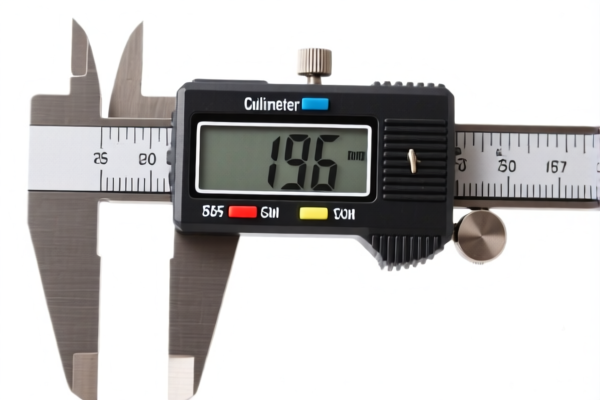
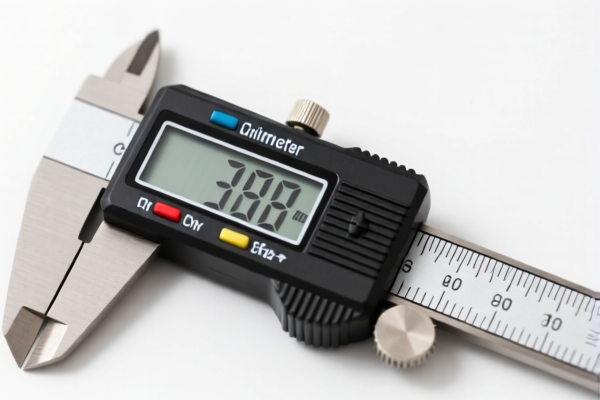
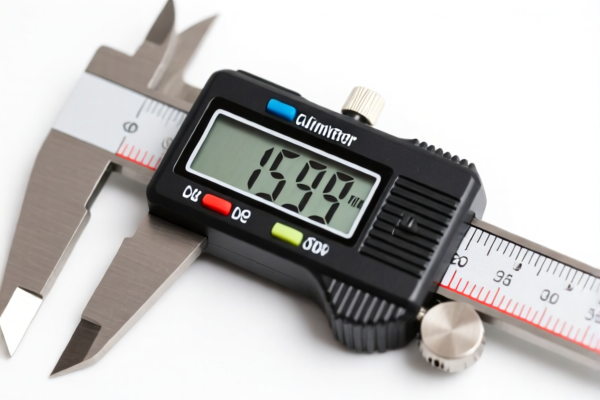
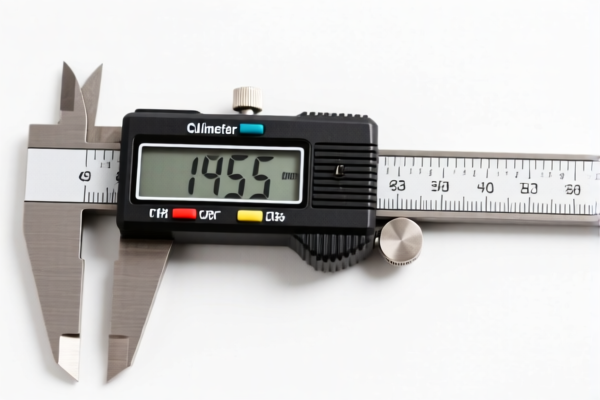
AI Analysis
🔭 Reflectance Calibrator (Reflectance Standards & Optical Measurement Tools)
🌐 HS Code Reference & Customs Clearance Guide | 2026 Latest Tariff Analysis | Professional-Level Clearance Strategy
📌 I. Product Definition & Classification: What Exactly Is a "Reflectance Calibrator"?
A Reflectance Calibrator is not a single commodity but a functional system used in spectrophotometry, colorimetry, and optical sensing. It consists of optical components (mirrors, lenses, diffusers) and measurement instruments (spectrometers, light sources). In international trade, classification depends heavily on whether the item is a standalone optical instrument, a part/accessory to such an instrument, or a bare optical component.
Core Components Breakdown: 1. The Instrument (Spectrophotometer/Reflectometer): The electronic device that measures light intensity. 2. The Calibration Standard (Reference Sample): A physical artifact (e.g., white ceramic tile, specular sphere) with known reflectance properties, used to calibrate the instrument. 3. Optical Accessories: Mirrors, lenses, or prisms used within the measurement path.
⚠️ Critical Distinction for HS Classification: * If it’s a complete instrument (including source, detector, and display) → Chapter 9031 (Measuring instruments). * If it’s just the optical elements (mirrors/lenses) unmounted → Chapter 9001 (Optical elements). * If it’s a specific reflectance standard material without electronics → Often falls under 9001.90 (Other optical elements) or 9031.49 (Appliances if integrated). * If it’s a part/accessory specifically for a medical or analytical instrument → Chapter 9018 or 9027.
📦 II. HS Code Classification Details (2026 Latest Tariff Alignment)
Based on the provided <DATA>, here are the precise mappings for components and systems related to Reflectance Calibration:
| HS Code | Product Description (From DATA) | Applicable Scenario | Tax Rate (CN Origin to US) |
|---|---|---|---|
9031.49.90.00 |
Measuring/checking instruments; Other optical instruments and appliances: Other: Other | Complete Reflectance Spectrophotometer or integrated calibration station with electronics/display. | 25.0% |
9031.90.59.00 |
Parts and accessories of optical instruments: Other (excluding test benches) | Detachable parts of a reflectance instrument (e.g., control modules, non-optical housings, specific non-optical adapters). | 25.0% |
9018.90.10.00 |
Instruments for medical/veterinary sciences: Optical instruments... Mirrors and reflectors | Reflectance standards/mirrors intended for medical use (e.g., endoscopy calibration mirrors). | 0.0% |
9001.90.60.00 |
Optical elements (unmounted): Mirrors | Bare mirrors or reflective surfaces not part of a complete instrument, used in calibration setups. | 25.0% |
9001.90.90.00 |
Optical elements (unmounted): Other (Other: Other: Other) | Lenses, diffusers, polarizers, or other unmounted optical components used in reflectance paths. | 25.0% |
9027.30.40.40 |
Physical/Chemical analysis instruments: Spectrophotometers: Electrical Spectrophotometers | High-end Electrical Spectrophotometers used for precise color/reflectance analysis in labs. | 25.0% |
🔍 Key Insight: * Most general industrial/lab reflectance calibrators fall under 9031 or 9027, both carrying a 25% total tariff. * Medical-specific reflectance mirrors/reflectors can be classified under 9018.90.10.00 for 0% duty, but this requires strict justification that the device is for medical diagnosis/treatment. * Unmounted optical parts (mirrors/lenses) are classified under 9001, also at 25%.
💰 III. 2026 Latest Tariff Rate Breakdown (Detailed Tax Clauses)
✅ Applicable Country: United States (US)
✅ Origin: China (CN)
✅ Effective Date: 2025 onwards (Section 301 Tariffs apply)
🎯 1. 9031.49.90.00 & 9027.30.40.40 — Integrated Instruments & Spectrophotometers
| Item | Content |
|---|---|
| Base Duty Rate | 0.0% |
| Section 301 Additional Duty | +25.0% |
| Total Effective Duty | 25.0% |
| Calculation Basis | CIF Value × 25% |
| De Minimis Exemption? | ❌ No (Value usually exceeds $800; even if <$800, Section 301 items are often excluded from de minimis depending on current enforcement). |
| Legal Reference Path | USITC:9031.49.90.00 / 9027.30.40.40 → Section 301: Footnote 9903.88.01 (Applies to Chapter 90 items). |
📌 Explanation: * These codes cover the core measuring instruments. The 25% duty is a Section 301 tariff imposed on Chinese goods in Chapter 90. * There is no base duty for most optical instruments, making the 25% the sole cost driver.
🎯 2. 9001.90.60.00 & 9001.90.90.00 — Unmounted Optical Elements (Mirrors/Lenses)
| Item | Content |
|---|---|
| Base Duty Rate | 0.0% |
| Section 301 Additional Duty | +25.0% |
| Total Effective Duty | 25.0% |
| Calculation Basis | CIF Value × 25% |
| De Minimis Exemption? | ❌ No |
| Legal Reference Path | USITC:9001.90.60.00 / 9001.90.90.00 → Section 301: Footnote 9903.88.01 |
📌 Note: * Even if you ship only the mirror or lens used in the calibrator, it is still subject to the 25% tariff. * Do not try to misdeclare as "plastic sheet" or "glass part" to avoid this; customs will require material certification.
🎯 3. 9018.90.10.00 — Medical Optical Reflectors (The Zero-Tariff Loophole)
| Item | Content |
|---|---|
| Base Duty Rate | 0.0% |
| Section 301 Additional Duty | 0.0% (Excluded or not listed for this specific medical subheading in many cases) |
| Total Effective Duty | 0.0% |
| Calculation Basis | CIF Value × 0% |
| Condition | Must be strictly for medical/veterinary diagnostic or therapeutic use. |
| Legal Reference Path | USITC:9018.90.10.00 |
📌 Critical Warning: * This 0% rate is ONLY for medical devices. * If you are a general industrial color-measurement company, you cannot use this code. Misclassification leads to severe penalties. * To qualify, the device must have FDA clearance (if applicable) and be marketed specifically for medical diagnostics (e.g., calibrating pulse oximeters or endoscopes).
🛠️ IV. Customs Clearance Practical Advice (Pitfall Avoidance Guide)
✅ 1. Required Documentation Checklist
| Document | Must Provide | Purpose |
|---|---|---|
| Product Specification Sheet | ✔️ | Details if it’s an instrument (9031) or part (9001/9031.90). Must list power supply, measurement range, and calibration accuracy. |
| Circuit/Block Diagram | ✔️ | Proves whether it’s an "instrument" (has electronics) or just "optical elements" (mirrors/lenses). |
| Commercial Invoice | ✔️ | Must clearly state "Reflectance Calibrator" or "Spectrophotometer" and include HS Code. |
| User Manual | ✔️ | Helps customs understand if it’s for industrial, medical, or laboratory use. |
| Medical Certifications (if claiming 0%) | ✔️ | FDA 510(k), CE MDR, or proof of medical intent for 9018.90.10.00. |
✅ 2. Classification Strategy (Key Mantra)
🔥 "Instrument is 25%, Medical Mirror is 0%, Parts are 25%!"
| Scenario | Correct HS Code | Duty | Reason |
|---|---|---|---|
| Complete Reflectance Spectrophotometer | 9031.49.90.00 or 9027.30.40.40 |
25% | It’s a measuring instrument. |
| Reflectance Standard Tile + Light Source (Integrated) | 9031.49.90.00 |
25% | Integrated system = Instrument. |
| Bare Mirror/Lens for Calibration | 9001.90.60.00 / 9001.90.90.00 |
25% | Unmounted optical element. |
| Medical Calibrator Mirror | 9018.90.10.00 |
0% | Specific medical optical accessory. |
| Part of a Spectrophotometer | 9031.90.59.00 |
25% | Accessory to an instrument. |
✅ 3. Special Cases & Handling
| Situation | Handling Advice |
|---|---|
| Shipped as "Sample" for Lab Testing | Still subject to duty. Do not mark as "Gift" or "No Commercial Value" unless truly exempt under customs rules (rare for calibration tools). |
| Kit (Instrument + Accessories) | Classify as the principal component (the instrument). Do not split shipment unless necessary for logistics, as it may trigger higher duties on parts. |
| Claiming 0% for Medical Use | Must provide Letter of Authorization from a medical facility or FDA registration number. Customs will verify end-use. |
| Chinese Origin Verification | Ensure Certificate of Origin states China. If re-exported from Vietnam/Mexico, ensure substantial transformation occurred to avoid Section 301. |
🌍 V. Global Market Comparison (2026)
| Country/Region | Recommended HS Code | Duty Rate (CN Origin) | Notes |
|---|---|---|---|
| 🇺🇸 USA | 9031.49.90.00 |
25% | Section 301 applies to all Chapter 90 optical instruments. |
| 🇪🇺 EU | 9031.49.90 (EU) |
0% | Most optical instruments have 0% duty in EU. No Section 301 equivalent. |
| 🇨🇳 China | 9031.49.90 |
0%~5% | Depends on specific subheading. Import into China is cheaper. |
| 🇬🇧 UK | 9031.49.90 |
0% | Post-Brexit, most high-tech optics are 0%. |
📌 Conclusion: * USA is the most expensive market due to Section 301 tariffs (25%). * EU/UK/China offer significantly lower or zero tariffs for the same products. * Strategy: If possible, source or assemble final instruments outside China for US export to avoid the 25% hit.
📌 VI. Common Errors & Pitfall Guide (Lessons Learned)
❌ Error 1: Declaring a "Reflectance Calibrator" as "Laboratory Glassware" (7017)
👉 Consequence: Incorrect classification. If it has electronics, it must be Chapter 90. Customs will reassess and charge 25% + penalties.
❌ Error 2: Using 9018.90.10.00 (0% duty) for industrial calibrators
👉 Consequence: High risk of audit. If the product is not for medical use, customs will deny the 0% rate and backcharge 25% + interest.
❌ Error 3: Splitting a kit into "Optical Part" and "Electrical Part" to avoid instrument classification
👉 Consequence: Customs views "parts of instruments" (9031.90.59.00) at 25% anyway. No savings, just more paperwork.
❌ Error 4: Ignoring "Section 301" applicability to Chapter 90 👉 Consequence: Assuming 0% base duty means 0% total tax. Wrong. The 25% additional tariff is mandatory for Chinese-made optics.
✅ Correct Practice:
"Reflectance Spectrophotometer, Model XYZ, Used for Color Measurement in Textile Industry, Includes Light Source and Detector, Made in China" → HS 9031.49.90.00, Duty 25%
🎯 VII. Conclusion: Precision in Classification, Savings in Compliance
🎯 Key Takeaway:
🔹 "Instrument = 25%. Medical Mirror = 0%. Don't Mix Them!"
🔹 "Chapter 90 items from China face a 25% surcharge. Plan accordingly."
📌 Tip: If your reflectance calibrator is used in medical diagnostics, rigorously document its medical purpose to potentially qualify for 9018.90.10.00 (0% duty). For all other industrial/lab uses, budget for the 25% tariff.
📣 Immediate Action:
📞 Verify End-Use: Is it medical or industrial?
📄 Prepare Specs: Include circuit diagrams to prove "instrument" vs. "part".
📉 Cost Analysis: Factor in 25% duty for US imports. Consider supply chain adjustments if margins are tight.
✨ Professional Clearance Starts with Accurate Classification!
💼 Don't let a 25% tariff erase your profit margin!
Customer Reviews
About HS Code Classification
The Harmonized System (HS) is an internationally standardized nomenclature developed by the World Customs Organization (WCO) to classify traded products. Over 200 countries use the HS system as the basis for customs tariffs, trade statistics, and import/export regulations.
Each HS code follows a hierarchical structure:
- Chapter (2 digits) — Broad category of goods (e.g., Chapter 84: Machinery and Mechanical Appliances)
- Heading (4 digits) — More specific grouping within the chapter
- Subheading (6 digits) — Internationally standardized breakdown, used by all WCO member countries
- National subdivisions (8-10 digits) — Country-specific extensions for further classification, such as US HTSUS 10-digit codes
Correct HS code classification is essential for smooth customs clearance, accurate duty payment, and compliance with trade regulations. Misclassification can lead to customs delays, overpayment of duties, or penalties.
When importing from CN to US, the applicable tariff rates may include:
- Most-Favored-Nation (MFN) rate — The standard duty rate applied to WTO members
- General rate — Applied to countries without trade agreements
- Trade remedy duties — Additional tariffs such as Section 301 (anti-dumping), Section 232 (national security), or countervailing duties
The information provided on this page is for reference purposes only. For official classification, please consult with your local customs authority or a licensed customs broker.