Reflective Advertising Plastic Film
CN → US| HS Code | Tariff Rate | Origin | Destination | Doc |
|---|---|---|---|---|
| 3926909925 | 22.8% | CN | US | Official Doc |
| 3926909989 | 22.8% | CN | US | Official Doc |
| 3920991000 | 41.0% | CN | US | Official Doc |
| 3920591000 | 41.0% | CN | US | Official Doc |
| 3926909925 | 22.8% | CN | US | Official Doc |
Product Images
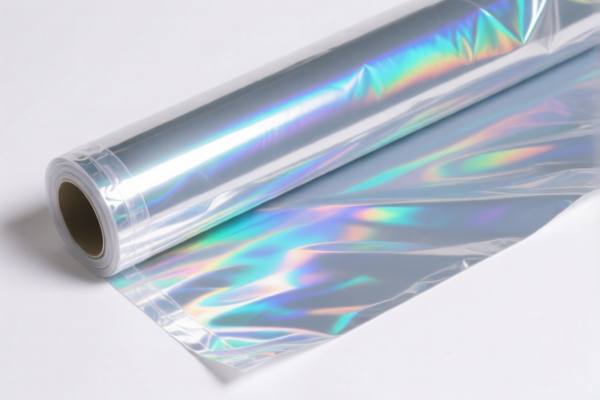

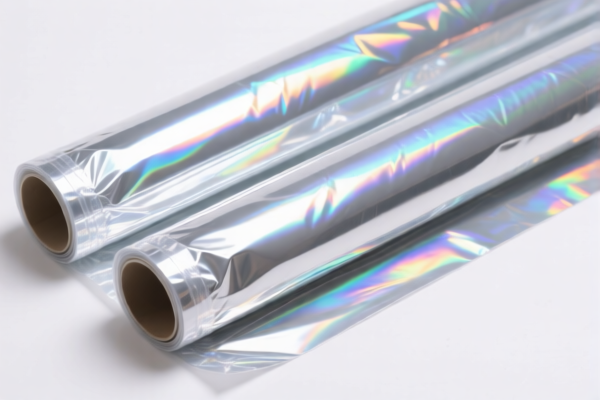
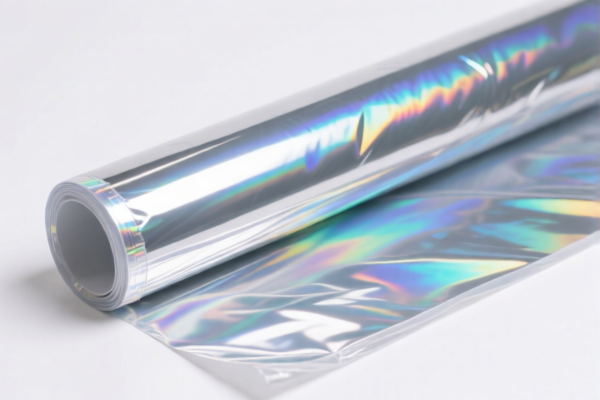
AI Analysis
🚧 Reflective Advertising Plastic Film: HS Code Classification & Customs Strategy
🌐 HS Code Reference & Customs Guide | 2026 Latest Tariff Analysis | Professional Clearance Strategy
📌 I. Product Definition & Classification: What is "Reflective Advertising Plastic Film"?
Reflective advertising plastic film is a specialized polymer material designed for high-visibility signage, traffic safety, and promotional displays. It typically consists of one or more layers of plastic (such as PET, PVC, or Acrylic) coated with retro-reflective glass beads or prismatic structures.
In international trade, the classification depends heavily on: 1. Material Composition: Is it pure plastic (Chapter 39) or a composite with other materials? 2. Form Factor: Is it a simple sheet/film, a complex composite plate, or an unclassified plastic article? 3. Intended Use: Is it for general signage or specific safety markings?
⚠️ Key Distinction Point:
- If the product is a composite of multiple plastic layers (e.g., base film + reflective layer + adhesive) and falls under specific heading 3920 (Plastics in primary forms, plates, sheets, film, foil, and strip), it may attract higher tariffs.
- If it is classified as an "other article of plastics" (Chapter 39, Heading 3926) due to its finished nature or unclassified form, it may benefit from a lower tariff rate.
- Acrylic-based reflective films often fall under specific subheadings for acrylic polymers, which can have different tariff implications.
📦 II. HS Code Classification Details (2026 Latest Tariff Authority Cross-Reference)
Based on the provided data, here are the valid HS Codes for Reflective Advertising Plastic Film:
| HS Code | Product Description | Application Scenario | Tariff Profile |
|---|---|---|---|
3926.90.99.25 |
Plastic reflective signs, material: plastic, use: reflective signs | General advertising signs, traffic reflective plates (finished articles) | Lower Tariff Tier |
3926.90.99.89 |
Plastic reflective signs, material: plastic, unclassified other plastic articles | Generic plastic reflective items not specifically listed elsewhere | Lower Tariff Tier |
3920.99.10.00 |
Plastic reflective signs, material: plastic, form: plate/sheet/film composite | Composite plastic layers, multi-layer reflective sheets | Higher Tariff Tier |
3920.59.10.00 |
Plastic reflective signs, material: acrylic polymer (plastic class), form: plate/sheet/film | Acrylic-based reflective films, high-clarity advertising displays | Higher Tariff Tier |
🔍 Critical Note:
-3926.90.99.25and3926.90.99.89are classified under "Other articles of plastic". These are often preferred if the product is considered a finished article or a generic plastic item.
-3920.99.10.00and3920.59.10.00are classified under "Plastics in primary forms" (plates, sheets, film). These attract significantly higher tariffs due to the "composite" or "acrylic polymer" designation.
- Do not mix these categories. Misclassification can lead to significant duty discrepancies.
💰 III. 2026 Latest Tariff Rate Breakdown (Including Additional Duties & Policy Surcharges)
✅ Applicable Country: United States (US)
✅ Country of Origin: China (CN)
✅ Effective Date: 2025/2026 (Current Tariff Structure)
🎯 1. Lower Tariff Tier: 3926.90.99.25 & 3926.90.99.89
| Item | Content |
|---|---|
| Base Tariff Rate | 5.3% (Ad Valorem) |
| Section 301 Additional Tariff | +7.5% (Targeted US-China trade duty) |
| Section 122 Tariff | +10% (Specific policy surcharge) |
| Total Effective Tax Rate | 22.8% |
| Tax Calculation | CIF Value × 22.8% |
| De Minimis Eligibility | ❌ Not Eligible (Subject to full duty collection) |
| Legal Basis Path | Section 122: 10% → Section 301: 7.5% → Base: 5.3% |
📌 Explanation:
- This is the most favorable rate among the options.
- Suitable for products classified as "other plastic articles" rather than specific plastic sheets/films.
- Savings: Significantly lower than the 41% rate for composite/acrylic products.
🎯 2. Higher Tariff Tier: 3920.99.10.00 & 3920.59.10.00
| Item | Content |
|---|---|
| Base Tariff Rate | 6.0% (Ad Valorem) |
| Section 301 Additional Tariff | +25.0% (Targeted US-China trade duty) |
| Section 122 Tariff | +10% (Specific policy surcharge) |
| Total Effective Tax Rate | 41.0% |
| Tax Calculation | CIF Value × 41.0% |
| De Minimis Eligibility | ❌ Not Eligible (Subject to full duty collection) |
| Legal Basis Path | Section 122: 10% → Section 301: 25% → Base: 6.0% |
📌 Explanation:
- This rate applies to composite plastic layers (3920.99.10.00) or acrylic polymer sheets (3920.59.10.00).
- The 25% Section 301 duty is the primary driver of this high cost.
- Warning: If your product is an acrylic-based reflective film, it almost certainly falls here, costing nearly double the3926category.
🛠️ IV. Customs Clearance Practical Advice (Real-World Pitfall Avoidance Guide)
✅ 1. Required Documentation Checklist (Non-Negotiable)
| Document | Mandatory? | Notes |
|---|---|---|
| ✅ Product Specification Sheet | Yes | Must detail material composition (e.g., PET vs. Acrylic), layer structure, and reflective technology (beads vs. prismatic). |
| ✅ Material Safety Data Sheet (MSDS) | Yes | For chemical components, especially if adhesives or coatings are involved. |
| ✅ Product Photos | Yes | Show the full product, labels, and any reflective effect. |
| ✅ Commercial Invoice | Yes | Clearly state "Plastic Reflective Sign/Film" and specify HS Code. |
| ✅ Packing List | Yes | Detail weight, dimensions, and package count. |
| ✅ Origin Certificate | Conditional | If claiming preferential treatment (not applicable for China→US in this context). |
✅ 2. Classification Strategy & Declaration Tips
🔥 Key Mantra:
"Material Matters, Form Defines, Code Saves!"
| Scenario | Recommended HS Code | Risk if Misclassified |
|---|---|---|
| Generic Plastic Reflective Sign (e.g., PVC-based, unclassified article) | 3926.90.99.25 |
Misclassifying as 3920 → 18.2% extra duty cost! |
| Acrylic Reflective Sheet (High clarity, polymer-based) | 3920.59.10.00 |
Misclassifying as 3926 → Severe underpayment penalty + back taxes |
| Multi-layer Composite Film (Plastic + Reflective Layer + Adhesive) | 3920.99.10.00 |
Misclassifying as 3926 → Severe underpayment penalty + back taxes |
💡 Pro Tip:
- If your product is a finished sign (e.g., pre-cut with graphics, mounted on backing), argue for3926.90.99.25("Other articles of plastic") to avoid the higher composite tariffs.
- If it is a raw film/roll used for manufacturing, it may be classified under3920. Be honest about the form factor.
- Acrylic content is the biggest risk. If >50% of the material is acrylic, expect the 41% rate.
✅ 3. Special Cases & Mitigation Strategies
| Situation | Handling Advice |
|---|---|
| OEM Custom Signs | Provide design files and proof of customization. This supports the "Other Article" classification (3926). |
| Mixed Materials | If the reflective layer is non-plastic (e.g., metalized), clarify if it changes the chapter. Usually, plastic remains the principal material. |
| Small Samples (De Minimis) | ❌ Not Eligible. Even small shipments are subject to full duty calculation for these HS codes. |
| Pre-Ruling Application | ✅ Highly Recommended. Submit an Advance Ruling Request to CBP to confirm the HS Code before shipping. This avoids post-clearance liabilities. |
🌍 V. Global Market Comparison (2026 Context)
| Country/Region | Recommended HS Code | Approx. Duty Rate | Notes |
|---|---|---|---|
| 🇺🇸 USA | 3926.90.99.25 / 3920.59.10.00 |
22.8% / 41.0% | Highest barrier. Section 301 & 122 apply. |
| 🇨🇳 China (Import) | 3926.90.99.25 / 3920.59.10.00 |
~5-6% | No Section 301. Lower cost for exporters to China. |
| 🇪🇺 EU | 3920.59 / 3926.90 |
~6.5% | No major punitive tariffs. Standard MFN rates apply. |
| 🇲🇽 Mexico | 3926.90 / 3920.59 |
~5% | USMCA may apply if originating in North America. |
📌 Conclusion:
- The US market is the most challenging due to combined Section 301 and Section 122 tariffs.
- Cost Optimization: If possible, structure the product as a "finished plastic article" (3926) rather than a "plastic film/sheet" (3920) to save 18.2% in duties.
- Material Choice: Avoid pure acrylic if the lower tariff classification is critical, unless the product's performance demands it.
📌 VI. Common Mistakes & Pitfalls (Lessons Learned)
❌ Mistake 1: Declaring all reflective films as 3926.90.99.25 to save money.
👉 Consequence: If the product is actually an acrylic sheet (3920.59.10.00), CBP will reclassify, issue a 25% duty difference, and add penalties.
❌ Mistake 2: Ignoring Section 122 tariffs.
👉 Consequence: Many importers only account for Section 301. Section 122 adds an extra 10% on top, significantly impacting margins.
❌ Mistake 3: Using vague descriptions like "Plastic Sheet".
👉 Consequence: CBP may request additional documentation, causing clearance delays and potential audit flags.
❌ Mistake 4: Assuming De Minimis applies.
👉 Consequence: These goods are excluded from the $800 de minimis exemption. All duties must be paid at entry.
✅ Correct Approach:
"Reflective PVC Sign, Finished Article, 12x12 inch, with Adhesive Backing, HS Code 3926.90.99.25"
vs.
"Acrylic Reflective Film, Roll, Unfinished, HS Code 3920.59.10.00"
🎯 VII. Conclusion: Precise Classification, Cost Control, Compliance!
🎯 Remember the Mantra:
🔹 "Finished Article = 22.8% | Plastic Film = 41.0%"
🔹 "Don't Guess the Code, Pre-Rule for Peace of Mind"
🔹 "Section 301 + 122 = High Cost, Plan Ahead"
📌 Actionable Tip:
If your product is borderline between 3926 and 3920, request a CBP Advance Ruling. The small fee for a ruling can save you thousands in potential back duties and penalties.
📣 Immediate Action:
📞 Contact your customs broker with product samples and specs.
📄 Prepare a detailed specification sheet highlighting material composition and form.
🚀 Optimize your supply chain to minimize the 41% tariff exposure by choosing the correct classification from day one.
✨ Professional Clearance Starts with Accurate Classification!
💼 Every Dollar Saved is a Dollar Earned!
Customer Reviews
About HS Code Classification
The Harmonized System (HS) is an internationally standardized nomenclature developed by the World Customs Organization (WCO) to classify traded products. Over 200 countries use the HS system as the basis for customs tariffs, trade statistics, and import/export regulations.
Each HS code follows a hierarchical structure:
- Chapter (2 digits) — Broad category of goods (e.g., Chapter 84: Machinery and Mechanical Appliances)
- Heading (4 digits) — More specific grouping within the chapter
- Subheading (6 digits) — Internationally standardized breakdown, used by all WCO member countries
- National subdivisions (8-10 digits) — Country-specific extensions for further classification, such as US HTSUS 10-digit codes
Correct HS code classification is essential for smooth customs clearance, accurate duty payment, and compliance with trade regulations. Misclassification can lead to customs delays, overpayment of duties, or penalties.
When importing from CN to US, the applicable tariff rates may include:
- Most-Favored-Nation (MFN) rate — The standard duty rate applied to WTO members
- General rate — Applied to countries without trade agreements
- Trade remedy duties — Additional tariffs such as Section 301 (anti-dumping), Section 232 (national security), or countervailing duties
The information provided on this page is for reference purposes only. For official classification, please consult with your local customs authority or a licensed customs broker.