Reflective Architectural Decorative Film
CN → US| HS Code | Tariff Rate | Origin | Destination | Doc |
|---|---|---|---|---|
| 7018901000 | 20.7% | CN | US | Official Doc |
| 3920992000 | 39.2% | CN | US | Official Doc |
| 7018105000 | 35.0% | CN | US | Official Doc |
| 3926909989 | 22.8% | CN | US | Official Doc |
Product Images
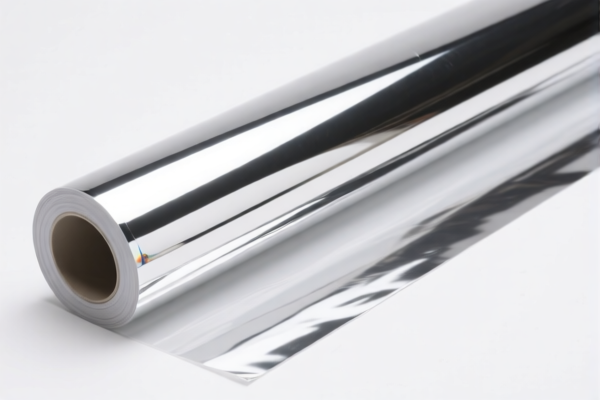
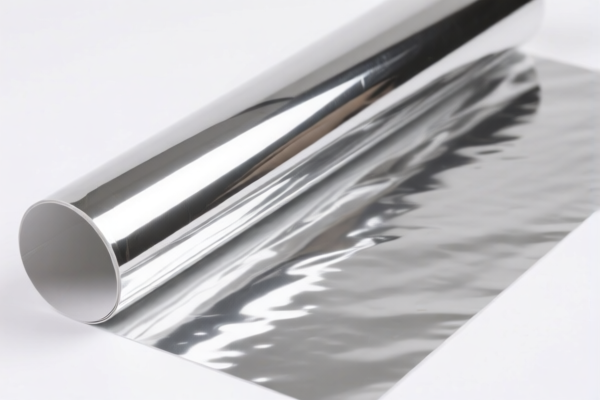

AI Analysis
🏛️ Reflective Architectural Decorative Film (Glass Bead & Plastic Composite)
🌐 HS Code Reference & Customs Clearance Guide | 2024-2025 Latest Tariff Analysis | Professional-Level Strategy
📌 I. Product Definition & Classification: What Exactly Is "Reflective Film"?
Reflective Architectural Decorative Film is a composite material primarily used for façade enhancement, signage, and safety markings. In international trade, its classification depends heavily on its primary material composition and structural form. It is not a single unified category but splits into two main branches:
- Pure Glass Bead Film (
7018): Where the defining characteristic is the glass beads themselves, often bonded to a substrate, classified under "Glass Beads." - Plastic/Resin Composite Film (
3920/3926): Where the plastic substrate and lamination process are dominant, classified under "Plastics and Articles Thereof."
⚠️ Key Distinction Point:
- If the product is described as "Glass Beads" or primarily valued for its glass content → Chapter 70 (Glass)
- If the product is described as "Plastic Film" with reflective properties → Chapter 39 (Plastics)
📦 II. HS Code Classification Details (Based on Provided Data)
| HS Code | Product Description | Application Scenario | Material Composition |
|---|---|---|---|
7018.90.10.00 |
Glass Bead Reflective Film for Architectural Decoration | Glass-based reflective materials in bead/film form | Glass (Beads and small articles) |
3920.99.20.00 |
Reflective Architectural Film | Plastic substrate with laminated glass beads | Plastic Base + Glass Beads Layer |
3926.90.99.89 |
Reflective Outdoor Advertising Film / Reflective Architectural Decorative Film | Plastic/resin-based reflective films (including English labeled versions) | Plastic/Resin Class |
7018.10.50.00 |
Glass Bead Reflective Film (Fallback Category) | General glass bead articles if specific film codes don't apply | Glass (Other glass articles) |
🔍 Critical Note:
- The HS Code3926.90.99.89appears twice in the data, once for Chinese description and once for English (Reflective Architectural Decorative Film). This indicates English descriptions often default to this broad plastic residual category. - Misclassification Risk: Declaring a glass-bead-heavy product as3920(Plastic) might trigger higher duties due to Section 301/Trade Act specifics, while7018(Glass) may have different base rates.
💰 III. 2024-2025 Tariff Rate Breakdown (Including Additional Duties)
✅ Applicable Country: USA (US)
✅ Origin: China (CN) (Assumed based on "Section 301/122" context in data)
✅ Effective Time: Current Trade Restrictions Apply
🎯 1. 7018.90.10.00 —— Glass Bead Reflective Film (Glass Material)
| Item | Content |
|---|---|
| Base Duty Rate | 3.2% (Ad Valorem) |
| Additional Duty (Section 301) | +7.5% |
| Section 122 Duty | +10% |
| Total Tax Rate | 20.7% |
| Tax Calculation | CIF Value × 20.7% |
| De Minimis Exemption? | ❌ No (Usually >$800 threshold required; bulk industrial goods often excluded) |
| Legal Basis | HTSUS 7018.90.10 → Section 301 Footnotes → Section 122 (if applicable to specific glass goods) |
📌 Explanation:
- This is the lowest tax burden option among the provided codes.
- It relies on the argument that the product is fundamentally "Glass Beads" rather than "Plastic Film."
- Strategy: If your product is heavy on glass beads, this is the most cost-effective classification.
🎯 2. 3920.99.20.00 —— Plastic Substrate with Glass Beads (Laminated)
| Item | Content |
|---|---|
| Base Duty Rate | 4.2% |
| Additional Duty (Section 301) | +25.0% |
| Section 122 Duty | +10% |
| Total Tax Rate | 39.2% |
| Tax Calculation | CIF Value × 39.2% |
| De Minimis Exemption? | ❌ No |
| Legal Basis | HTSUS 3920.99.20 → Section 301 (High Tariff Bracket for Plastics) → Section 122 |
📌 Explanation:
- This is a high-tax scenario.
- The 25% Section 301 duty is typical for many plastic articles from China.
- Strategy: Avoid this code unless your product is overwhelmingly plastic with minimal glass content.
🎯 3. 3926.90.99.89 —— Reflective Outdoor/Architectural Film (Plastic/Resin)
| Item | Content |
|---|---|
| Base Duty Rate | 5.3% |
| Additional Duty (Section 301) | +7.5% |
| Section 122 Duty | +10% |
| Total Tax Rate | 22.8% |
| Tax Calculation | CIF Value × 22.8% |
| De Minimis Exemption? | ❌ No |
| Legal Basis | HTSUS 3926.90.99.89 → Section 301 (Moderate Bracket) → Section 122 |
📌 Explanation:
- This code applies to "Other Plastic Articles".
- It is commonly used for English-labeled products or generic reflective films.
- Cost: Slightly higher than the Glass classification (7018) but significantly lower than the Laminated Plastic code (3920).
- Strategy: Use this if the product is a standard plastic reflective sheet and you cannot justify "Glass Bead" priority.
🎯 4. 7018.10.50.00 —— Other Glass Articles (Fallback)
| Item | Content |
|---|---|
| Base Duty Rate | 0.0% |
| Additional Duty (Section 301) | +25.0% |
| Section 122 Duty | +10% |
| Total Tax Rate | 35.0% |
| Tax Calculation | CIF Value × 35.0% |
| De Minimis Exemption? | ❌ No |
| Legal Basis | HTSUS 7018.10.50 → Section 301 (High Bracket) → Section 122 |
📌 Explanation:
- Despite 0% base duty, the 25% Section 301 duty makes this expensive.
- This is a "catch-all" for glass items not specifically listed elsewhere.
- Strategy: Generally avoid unless no other code fits, as the total rate (35%) is higher than7018.90.10.00(20.7%).
🛠️ IV. Customs Clearance Practical Advice (Pitfall Avoidance Guide)
✅ 1. Documentation Checklist (Mandatory)
| Document | Required? | Notes |
|---|---|---|
| ✅ Product Specification Sheet | ✔️ | Must clearly state: Material Composition % (e.g., 60% Glass Beads, 40% Plastic). |
| ✅ Photos (Cross-Section) | ✔️ | Show the layer structure: Glass beads embedded in plastic vs. pure glass. |
| ✅ Commercial Invoice | ✔️ | Must match HS Code description exactly. Do not use vague terms like "Decorative Material." |
| ✅ Bill of Lading | ✔️ | Ensure weight/volume matches invoice. |
| ✅ Certificate of Origin | ✔️ | Required for Section 301 duty determination. |
✅ 2. Classification Strategy (Key Mnemonics)
🔥 "Glass First, Plastic Second, Section 301 is the Killer!"
| Scenario | Recommended HS Code | Why? |
|---|---|---|
| High Glass Bead Content | 7018.90.10.00 |
Lowest Tax (20.7%). Prioritize if beads are the main value driver. |
| Standard Reflective Sheet | 3926.90.99.89 |
Moderate Tax (22.8%). Safe fallback for plastic-based films. |
| Laminated Plastic-Glass | 3920.99.20.00 |
Highest Tax (39.2%). Avoid unless specified by customer. |
| Generic Glass Item | 7018.10.50.00 |
High Tax (35.0%). Use only if no specific glass code fits. |
✅ 3. Critical Warnings
| Risk | Consequence | Mitigation |
|---|---|---|
| Mislabeling "Plastic Film" as "Glass" | Customs may reclassify and apply 39.2% or 35.0% instead of 20.7%. | Provide material test reports proving glass content. |
| Vague Description ("Reflective Film") | High risk of audit and delay. | Use precise terms: "Glass Bead Reflective Film, 2mm thick, for architectural use." |
| Ignoring Section 122 | Underpayment of duties. | Ensure all invoices include Section 122 liability if applicable to your trade route. |
🌍 V. Global Market Comparison (2024-2025)
| Country/Region | Recommended HS Code | Estimated Total Tax | Certification |
|---|---|---|---|
| 🇺🇸 USA | 7018.90.10.00 |
20.7% | Low |
| 🇺🇸 USA | 3926.90.99.89 |
22.8% | Low |
| 🇪🇺 EU | 3920.99.99 |
~6-12% | CE, REACH |
| 🇨🇳 China | 7018.90.10 |
~8-10% | CCC (if applicable) |
📌 Conclusion:
- The US market is the most complex due to Section 301 and 122 tariffs.
- Optimization Opportunity: Shifting classification from3920(39.2%) to7018(20.7%) saves ~18.5% in duties.
📌 VI. Common Mistakes & Pitfalls (Lessons Learned)
❌ Mistake 1: Calling it just "Reflective Film" without specifying material.
👉 Result: Customs assigns the highest default duty (often Chapter 39 high-tier).
✅ Fix: Specify "Glass Bead" or "Plastic Composite".
❌ Mistake 2: Assuming all plastic films have the same tax rate.
👉 Result: 3920 (25% Section 301) vs. 3926 (7.5% Section 301). Huge difference!
✅ Fix: Analyze the manufacturing process (extrusion vs. lamination) to choose the correct subheading.
❌ Mistake 3: Ignoring "Section 122" in the tax calculation.
👉 Result: Underpayment, leading to penalties and interest.
✅ Fix: Always include the 10% Section 122 in your landed cost model.
🎯 VII. Conclusion: Strategic Classification for Profit Maximization
🎯 Remember the Golden Rule:
🔹 "Glass = 20.7% | Plastic Sheet = 22.8% | Laminated Plastic = 39.2%"
🔹 "Specify 'Glass Beads' to unlock the lower 20.7% rate!"
📌 Pro Tip:
If your product is primarily plastic but contains glass beads, consider negotiating with suppliers to increase glass content or restructure the lamination to qualify for
7018.90.10.00.
Always apply for an Advance Ruling from CBP if the classification is borderline.
📣 Immediate Action:
📞 Contact your freight forwarder with the exact material composition.
📄 Request a Pre-Classification Ruling from CBP for7018.90.10.00vs3926.90.99.89.
🚀 Optimize your tax burden by 18%+ through precise HS Code selection!
✨ Professional Customs Clearance Starts with Accurate Classification!
💼 Every Percent Matters in Global Trade!
Customer Reviews
About HS Code Classification
The Harmonized System (HS) is an internationally standardized nomenclature developed by the World Customs Organization (WCO) to classify traded products. Over 200 countries use the HS system as the basis for customs tariffs, trade statistics, and import/export regulations.
Each HS code follows a hierarchical structure:
- Chapter (2 digits) — Broad category of goods (e.g., Chapter 84: Machinery and Mechanical Appliances)
- Heading (4 digits) — More specific grouping within the chapter
- Subheading (6 digits) — Internationally standardized breakdown, used by all WCO member countries
- National subdivisions (8-10 digits) — Country-specific extensions for further classification, such as US HTSUS 10-digit codes
Correct HS code classification is essential for smooth customs clearance, accurate duty payment, and compliance with trade regulations. Misclassification can lead to customs delays, overpayment of duties, or penalties.
When importing from CN to US, the applicable tariff rates may include:
- Most-Favored-Nation (MFN) rate — The standard duty rate applied to WTO members
- General rate — Applied to countries without trade agreements
- Trade remedy duties — Additional tariffs such as Section 301 (anti-dumping), Section 232 (national security), or countervailing duties
The information provided on this page is for reference purposes only. For official classification, please consult with your local customs authority or a licensed customs broker.