Reflective Body Decoration Tape
CN → US| HS Code | Tariff Rate | Origin | Destination | Doc |
|---|---|---|---|---|
| 3919905010 | 40.8% | CN | US | Official Doc |
| 3919101010 | 41.5% | CN | US | Official Doc |
| 5903102090 | 35.0% | CN | US | Official Doc |
| 5903102010 | 35.0% | CN | US | Official Doc |
| 3921110000 | 40.3% | CN | US | Official Doc |
Product Images
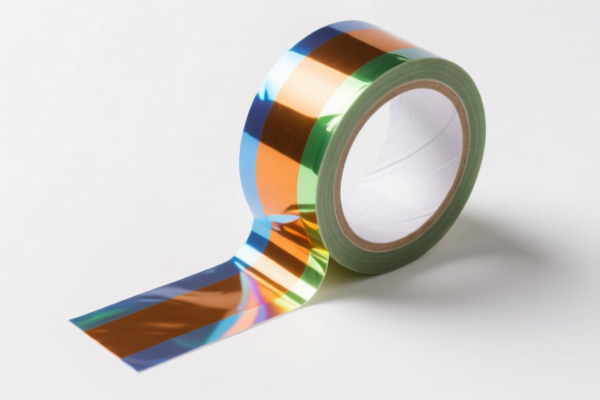
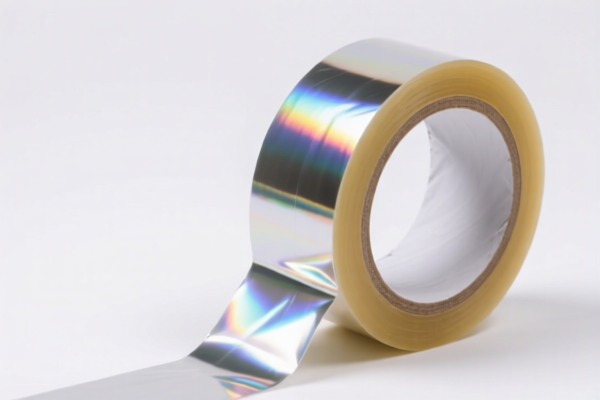
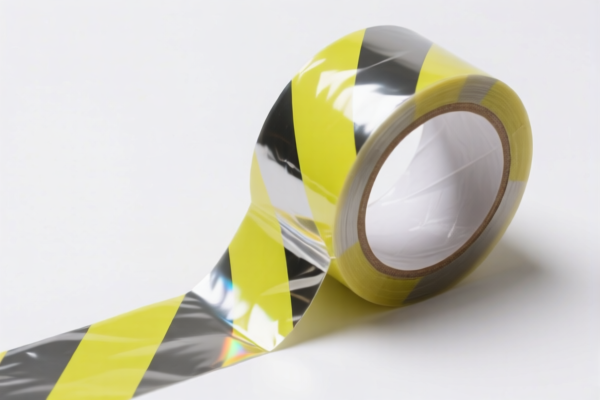
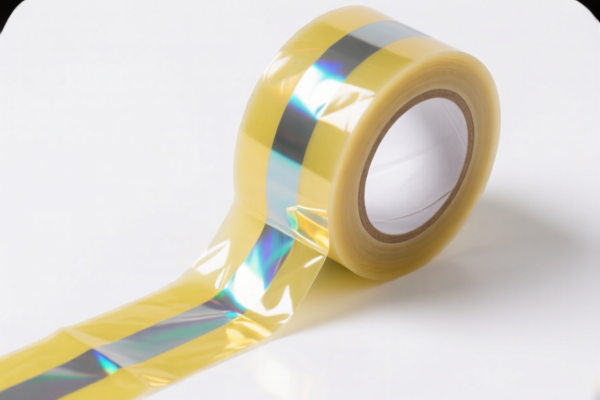
AI Analysis
🎨 Reflective Body Decoration Tape (Reflective Stickers/Films)
🌐 HS Code Reference & Customs Clearance Guide | 2026 Latest Tariff Analysis | Professional Clearance Strategy
📌 I. Product Definition & Classification: What Exactly is "Reflective Body Decoration Tape"?
Reflective Body Decoration Tape is a versatile safety and aesthetic product used primarily in automotive styling, traffic safety, logistics marking, and personal gear customization. In international trade, the classification depends heavily on the material composition (plastic vs. coated textile) and the manufacturing process (self-adhesive film vs. impregnated/coated fabric).
Key Distinction Logic: 1. Pure Plastic/Film Based: If the material is primarily plastic polymer, even if it has a reflective layer, it often falls under Chapter 39 (Plastics). 2. Textile/Coated Fabric Based: If the reflective property comes from plastic coating or impregnation on a textile base, it falls under Chapter 59 (Impregnated, Coated, Covered, or Laminate Textile Fabrics).
⚠️ Critical Classification Point:
- Is it a self-adhesive plastic film? → Look at Chapter 39 (3919or3921).
- Is it a textile/fabric coated with plastic for reflectivity? → Look at Chapter 59 (5903).
- Note: The "Self-Adhesive" nature (3919) is a strong classifier for pure plastic films, but if the base is textile,5903often takes precedence due to the "coated textile" definition.
📦 II. HS Code Classification Details (2026 Latest Tariff Authority对照)
Based on the provided data, here are the four specific HS Codes and their corresponding tax structures.
| HS Code | Product Description | Material/Form Characteristics | Total Tax Rate (US Import from CN) |
|---|---|---|---|
3919.90.50.10 |
Reflective Tape, Plastic Material, Self-Adhesive Film | Pure plastic self-adhesive sheet/film; reflective layer applied to plastic backing. | 40.8% |
3919.10.10.10 |
Reflective Tape, Plastic/Film Material, Self-Adhesive Patch | Plastic/film base, self-adhesive patch form; narrower or specific film applications. | 41.5% |
5903.10.20.90 |
Reflective Tape, Plastic/Polymer Coated, Impregnated/Coated Textile | Textile or film base impregnated/coated with plastic/polymer for reflective function. | 35.0% |
5903.10.20.10 |
Reflective Tape, Functional Coated Film/Fabric, Impregnated | Functional coating on film or fabric, meeting the criteria for "impregnated/coated plastic textiles." | 35.0% |
3921.11.00.00 |
Reflective Tape, Plastic (Polymer Film), Strip/Film | Plastic polymer film strip/film (may not be self-adhesive in the same way as 3919, or classified as a plastic plate/sheet/film/strip). | 40.3% |
🔍 Key Insight:
- Cheapest Route: Chapter 59 (5903) offers the lowest total tax rate (35.0%). This applies if the product can be legally defined as a "textile or film impregnated/coated with plastic."
- Most Common Route: Chapter 39 (3919) is typical for pure plastic self-adhesive tapes but carries a higher burden (40.3% - 41.5%).
- Why the difference? The "Base Tariff" for5903is 0%, whereas3919has a base tariff of 5.8%-6.5%. The "Additional Tariffs" (Section 301 + 122) are consistent across all codes.
💰 III. 2026 Latest Tariff Rate Breakdown (Detailed Tax Clauses)
✅ Applicable Country: United States (US)
✅ Country of Origin: China (CN)
✅ Effective Date: Ongoing (2025-2026 Tariff Schedule)
🎯 1. The "Cheapest" Option: 5903.10.20.10 & 5903.10.20.90
Reflective Tape, Plastic Coated Textile/Film
| Item | Content |
|---|---|
| Base Tariff (MFN) | 0.0% |
| Section 301 Additional Tariff | +25.0% (Trade Act of 1974, Section 301) |
| Section 122 Tariff | +10.0% (Specific surcharge on certain Chinese goods) |
| Total Tax Rate | 35.0% |
| Tax Calculation | CIF Value × 35.0% |
| De Minimis Eligibility | ❌ No (Denied) |
| Legal Path | USITC:5903.10.20.10/90 → FOOTNOTE:301 → IEEPA:122 |
📌 Explanation:
- The 0% base tariff is the key advantage here. It implies customs views the product primarily as a "coated textile/fabric" rather than a pure plastic good.
- The 25% and 10% surcharges are mandatory for Chinese origin goods under current trade policies.
- Strategy: If your product has any fabric backing or can be argued as "impregnated fabric," choose this code to save ~5-6% compared to pure plastic codes.
🎯 2. The "Standard Plastic" Option: 3919.90.50.10
Reflective Tape, Plastic Material, Self-Adhesive Film
| Item | Content |
|---|---|
| Base Tariff (MFN) | 5.8% |
| Section 301 Additional Tariff | +25.0% |
| Section 122 Tariff | +10.0% |
| Total Tax Rate | 40.8% |
| Tax Calculation | CIF Value × 40.8% |
| De Minimis Eligibility | ❌ No (Denied) |
| Legal Path | USITC:3919.90.50.10 → FOOTNOTE:301 → IEEPA:122 |
📌 Explanation:
- This code classifies the item as a generic plastic self-adhesive film.
- The 5.8% base tariff pushes the total cost up.
- Use this if the product is pure plastic backing with no textile components and is clearly a "film" rather than a "coated fabric."
🎯 3. The "High-Base" Option: 3919.10.10.10
Reflective Tape, Plastic/Film, Self-Adhesive Patch
| Item | Content |
|---|---|
| Base Tariff (MFN) | 6.5% |
| Section 301 Additional Tariff | +25.0% |
| Section 122 Tariff | +10.0% |
| Total Tax Rate | 41.5% |
| Tax Calculation | CIF Value × 41.5% |
| De Minimis Eligibility | ❌ No (Denied) |
| Legal Path | USITC:3919.10.10.10 → FOOTNOTE:301 → IEEPA:122 |
📌 Explanation:
- This code often applies to narrower or specific "patch" style films.
- It has the highest total tax rate (41.5%). Avoid this unless the product description strictly matches "plastic/film patch" and cannot fit5903.
🎯 4. The "Plastic Strip/Film" Option: 3921.11.00.00
Reflective Tape, Plastic (Polymer Film), Strip/Film
| Item | Content |
|---|---|
| Base Tariff (MFN) | 5.3% |
| Section 301 Additional Tariff | +25.0% |
| Section 122 Tariff | +10.0% |
| Total Tax Rate | 40.3% |
| Tax Calculation | CIF Value × 40.3% |
| De Minimis Eligibility | ❌ No (Denied) |
| Legal Path | USITC:3921.11.00.00 → FOOTNOTE:301 → IEEPA:122 |
📌 Explanation:
- This falls under "Plastic Plates, Sheets, Film, Foil, and Strip."
- It is suitable if the product is a non-self-adhesive plastic film strip or if the adhesive nature is not the primary defining feature for customs classification.
- Total tax is 40.3%, slightly better than3919but worse than5903.
🛠️ IV. Customs Clearance Practical Advice (Real-World Pitfall Avoidance)
✅ 1. Documentation Checklist (Non-Negotiable)
| Document | Required? | Description |
|---|---|---|
| ✅ Product Specification Sheet | ✔️ | Must detail: Base material (Plastic vs. Fabric), Thickness, Reflective type (Glass bead/Prismatic), Adhesive type. |
| ✅ Material Composition Statement | ✔️ | Explicitly state: "90% Polyester Fabric, 10% Plastic Coating" OR "100% PVC Plastic Film." This determines 5903 vs 3919. |
| ✅ Product Photos | ✔️ | Show the back (adhesive side) and the cross-section (if possible) to prove material layers. |
| ✅ Commercial Invoice | ✔️ | Must accurately describe the item as "Reflective Tape" and match the HS Code chosen. |
| ✅ Bill of Lading | ✔️ | Standard shipping document. |
| ✅ Section 301 Exclusion Proof | ❌ | None available; these products are currently not exempt. |
📌 Critical Tip:
- If you claim5903(Textile/Fabric), you MUST provide evidence that the base is fabric or that the plastic coating is integral to the textile structure. If customs inspectors find it's 100% plastic, they will reclassify to3919, resulting in back taxes + penalties.
✅ 2. Classification Strategy (The "Save Money" Algorithm)
| Scenario | Recommended HS Code | Total Tax | Why? |
|---|---|---|---|
| Product has Fabric Backing | 5903.10.20.10 / 5903.10.20.90 |
35.0% | Lowest Tax! Fabric base allows classification as "coated textile." |
| Product is 100% Plastic, Self-Adhesive | 3919.90.50.10 |
40.8% | Standard for pure plastic reflective tapes. |
| Product is 100% Plastic, Non-Adhesive Strip | 3921.11.00.00 |
40.3% | For rolls of plastic film without adhesive. |
| Product is Narrow Plastic Patch | 3919.10.10.10 |
41.5% | Highest tax; only use if other codes don't fit. |
🔥 Golden Rule:
"Fabric Backing = 35% | Plastic Backing = 40-41%"
If there is any ambiguity, lean towards5903only if you can substantiate the fabric/coating claim. Otherwise, stick to3919to avoid fraud allegations.
✅ 3. Special Case Handling
| Situation | Handling Advice |
|---|---|
| Mixed Packages | If a shipment contains both 5903 and 3919 items, they must be declared separately. Do not mix them to hide higher taxes; CBP audits may flag this. |
| OEM Custom Labels | Provide the customer's design file and material request. If the customer specified "Polyester Backing," use 5903. If they specified "PVC Backing," use 3919. |
| Sample vs. Commercial | Both are subject to full duties. Do not declare samples as "Free" without proper valuation. |
| Dropshipping | Ensure the supplier's invoice matches the HS Code. If the supplier uses 5903 but the product is plastic, you (the importer) are liable for misclassification. |
🌍 V. Global Market Comparison (2026 Update)
| Market | Recommended HS Code | Base Tax | Total Tax (China Origin) | Key Certifications |
|---|---|---|---|---|
| 🇺🇸 USA | 5903.10.20.10 / 3919.90.50.10 |
0% or 5.8% | 35.0% - 41.5% | CPC (Children's Products), Prop 65 |
| 🇨🇳 China | 5903.10.20.10 / 3919.90.50.10 |
5% - 6.5% | ~5-6% (Import Duty) | N/A |
| 🇪🇺 EU | 5903.10.20 / 3919.90.00 |
0% - 6.5% | 0% - 6.5% | REACH, RoHS |
| 🇬🇧 UK | 5903.10.20 / 3919.90.00 |
0% - 6.5% | 0% - 6.5% | UKCA, REACH |
| 🇨🇦 Canada | 5903.10.20 / 3919.90.00 |
0% - 6.5% | 0% - 6.5% | CFIA, CPSIA |
📌 Conclusion:
- USA is the most expensive market due to Section 301 (25%) and Section 122 (10%) tariffs.
- EU/UK/Canada are much more competitive, often with 0-6.5% total duty, making them better markets for price-sensitive reflective products.
📌 VI. Common Errors & Pitfalls (Blood Lessons)
❌ Error 1: Declaring Plastic Tape as 5903 without Fabric Evidence
👉 Consequence: Customs reclassifies to 3919, charges 5-6% more + penalties + delays.
Fix: Ensure material spec says "Polyester" or "Nylon" backing if using 5903.
❌ Error 2: Declaring Self-Adhesive Tape as 3921 (Non-Adhesive)
👉 Consequence: Misclassification. 3921 is for plastic sheets/films without adhesive backing. If it has adhesive, it must be 3919.
Fix: If it sticks, use 3919.
❌ Error 3: Ignoring Section 122 Tariff
👉 Consequence: Underpayment of duty by 10%.
Fix: Always include the 10% surcharge in cost calculations for China-origin goods.
❌ Error 4: Using "Reflective Sticker" Vaguely
👉 Consequence: Customs asks for clarification, holding cargo for weeks.
Fix: Use precise terms: "Reflective PVC Film Tape" or "Reflective Polyester Coated Tape."
✅ Correct Practice:
"Reflective Safety Tape, 1-inch width, 50ft roll, Self-Adhesive, PVC Backing, Glass Bead Reflective Layer. Country of Origin: China."
🎯 VII. Conclusion: Smart Classification, Higher Margins!
🎯 Remember the Golden Rule:
🔹 "Fabric Base? Go 5903 (35%)! Plastic Base? Go 3919 (40.8%)!"
🔹 "Don't Guess, Prove! Material specs are your best defense."
📌 Pro Tip:
If your volume is large, consider Advance Ruling (Pre-Classification) with CBP. Get a binding decision on whether your specific product qualifies for 5903 vs 3919. This can save thousands in potential back-taxes.
📣 Immediate Action:
📞 Audit your Bill of Materials (BOM) → Identify Base Material → Choose HS Code → Verify Tariff.
🚀 Optimize your tax burden, clear customs smoothly, and boost your profit margins!
✨ Professional Clearance Starts with Accurate Classification!
💼 Every Percent of Tax Saved is Pure Profit!
Customer Reviews
About HS Code Classification
The Harmonized System (HS) is an internationally standardized nomenclature developed by the World Customs Organization (WCO) to classify traded products. Over 200 countries use the HS system as the basis for customs tariffs, trade statistics, and import/export regulations.
Each HS code follows a hierarchical structure:
- Chapter (2 digits) — Broad category of goods (e.g., Chapter 84: Machinery and Mechanical Appliances)
- Heading (4 digits) — More specific grouping within the chapter
- Subheading (6 digits) — Internationally standardized breakdown, used by all WCO member countries
- National subdivisions (8-10 digits) — Country-specific extensions for further classification, such as US HTSUS 10-digit codes
Correct HS code classification is essential for smooth customs clearance, accurate duty payment, and compliance with trade regulations. Misclassification can lead to customs delays, overpayment of duties, or penalties.
When importing from CN to US, the applicable tariff rates may include:
- Most-Favored-Nation (MFN) rate — The standard duty rate applied to WTO members
- General rate — Applied to countries without trade agreements
- Trade remedy duties — Additional tariffs such as Section 301 (anti-dumping), Section 232 (national security), or countervailing duties
The information provided on this page is for reference purposes only. For official classification, please consult with your local customs authority or a licensed customs broker.