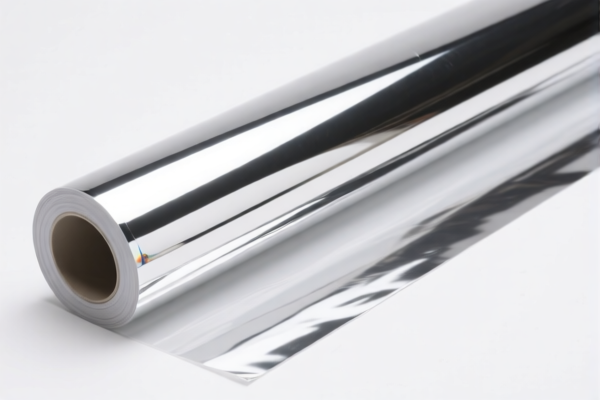
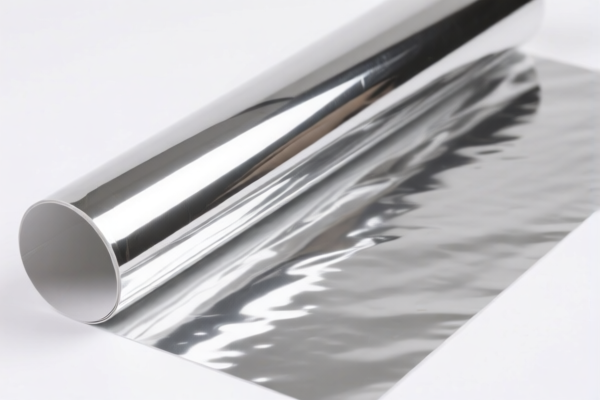
Reflective Building Decoration Film
CN → US| HS Code | Tariff Rate | Origin | Destination | Doc |
|---|---|---|---|---|
| 7018105000 | 35.0% | CN | US | Official Doc |
| 3920992000 | 39.2% | CN | US | Official Doc |
| 7018901000 | 20.7% | CN | US | Official Doc |
| 3926909989 | 22.8% | CN | US | Official Doc |
| 3920992000 | 39.2% | CN | US | Official Doc |
Product Images

AI Analysis
🏗️ Reflective Building Decoration Film (建筑装饰用玻璃珠反光膜)
🌐 HS Code Reference & Customs Clearance Guide | 2026 Latest Tariff Analysis | Professional-Level Clearance Strategy 📌 I. Product Definition & Classification: Do You Really Understand "Reflective Film"?
Reflective building decoration film is a specialized material used to enhance visibility, safety, and aesthetic appeal in architectural applications. It typically consists of a plastic base layer laminated with glass beads or reflective elements. In international trade, its classification hinges on two critical factors: 1. Material Composition: Is it primarily glass or primarily plastic? 2. Physical Form: Is it a standalone glass article or a plastic film with glass components?
⚠️ Key Distinction Point: - If the product is primarily glass beads in film form → Classified under Chapter 70 (Glass). - If the product is primarily plastic substrate with a glass bead layer → Classified under Chapter 39 (Plastics). - If it is a general plastic reflective film (e.g., for advertising) → Classified under Chapter 39 (Other Plastic Articles).
📦 II. HS Code Classification Details (2026 Latest Tariff Authority Comparison)
Based on the provided data, here are the specific HS Codes applicable to "Reflective Building Decoration Film":
| HS Code | Product Description | Material/Form | Total Tax Rate | Applicable Scenario |
|---|---|---|---|---|
7018.10.50.00 |
Decorative glass bead reflective film, material: glass, form: film | Glass beads | 35.0% | Glass beads treated as other glass articles |
3920.99.20.00 |
Decorative glass bead reflective film, material: plastic base + glass bead lamination | Plastic/Glass Laminate | 39.2% | Plastic film with glass layer |
7018.90.10.00 |
Decorative glass bead reflective film, material: glass, form: small glass articles/film | Glass beads/small articles | 20.7% | Glass beads classified as small glass articles |
3926.90.99.89 |
Reflective outdoor advertising film, material: plastic/resin | Plastic/Resin | 22.8% | General plastic reflective films (advertising use) |
3920.99.20.00 |
Reflective film, material: plastic base + glass bead lamination | Plastic/Glass Laminate | 39.2% | Same as above, general reflective film |
🔍 Focus Reminder: - Plastic-based films (
3920.99.20.00) are subject to the highest total tax (39.2%) due to higher base duties + additional tariffs. - Glass-based films (7018.10.50.00or7018.90.10.00) have varying rates (20.7% - 35.0%), depending on how "glass beads" are interpreted (as articles vs. other glass). - Advertising films (3926.90.99.89) have a lower total tax (22.8%) if classified as general plastic articles rather than laminates.
💰 III. 2026 Latest Tariff Rate Details (Including Additional Taxes & Policy Surcharges)
✅ Applicable Country: United States (US) ✅ Origin: China (CN) ✅ Effective Date: 2025年11月10日起 (From Nov 10, 2025, including subsequent imports)
🎯 1. 7018.10.50.00 —— Glass Bead Reflective Film (Glass Category)
| Item | Content |
|---|---|
| Base Duty | 0.0% |
| Section 301 Additional Duty | +25.0% |
| 122 Section Duty (IEEPA) | +10.0% |
| Total Tax Rate | 35.0% |
| Tax Calculation | CIF Value × 35.0% |
| De Minimis Exemption | ❌ Not Eligible (deny_de_minimis) |
| Legal Basis Path | Section 301 → IEEPA:9903.01.24 → USITC:7018.10.50.00 |
📌 Explanation: - Base Duty 0%: Glass articles often have low or zero base duties. - Section 301 (25%): Standard additional tariff for Chinese goods under US Trade Act Section 301. - 122 Section (10%): Additional tariff targeting specific Chinese imports under IEEPA. - Total 35%: High effective rate despite low base duty, driven by political tariffs.
🎯 2. 3920.99.20.00 —— Plastic-Glass Laminated Reflective Film (Plastic Laminate Category)
| Item | Content |
|---|---|
| Base Duty | 4.2% |
| Section 301 Additional Duty | +25.0% |
| 122 Section Duty (IEEPA) | +10.0% |
| Total Tax Rate | 39.2% |
| Tax Calculation | CIF Value × 39.2% |
| De Minimis Exemption | ❌ Not Eligible (deny_de_minimis) |
| Legal Basis Path | Section 301 → IEEPA:9903.01.24 → USITC:3920.99.20.00 |
📌 Note: - This is the highest tax rate among all options. - Even though the base duty is only 4.2%, the 25% + 10% surcharges push the total to 39.2%. - Applies to both "decorative" and general "reflective films" made of plastic with glass layers.
🎯 3. 7018.90.10.00 —— Glass Bead Reflective Film (Glass Small Articles Category)
| Item | Content |
|---|---|
| Base Duty | 3.2% |
| Section 301 Additional Duty | +7.5% |
| 122 Section Duty (IEEPA) | +10.0% |
| Total Tax Rate | 20.7% |
| Tax Calculation | CIF Value × 20.7% |
| De Minimis Exemption | ❌ Not Eligible (deny_de_minimis) |
| Legal Basis Path | Section 301 → IEEPA:9903.01.24 → USITC:7018.90.10.00 |
📌 Advantage: - Lowest total tax rate (20.7%) among glass-related classifications. - Section 301 duty is lower (7.5%) compared to other glass/plastic categories (25%). - Ideal if the product can be legally classified as "small glass articles" rather than "film."
🎯 4. 3926.90.99.89 —— Reflective Outdoor Advertising Film (Plastic Article Category)
| Item | Content |
|---|---|
| Base Duty | 5.3% |
| Section 301 Additional Duty | +7.5% |
| 122 Section Duty (IEEPA) | +10.0% |
| Total Tax Rate | 22.8% |
| Tax Calculation | CIF Value × 22.8% |
| De Minimis Exemption | ❌ Not Eligible (deny_de_minimis) |
| Legal Basis Path | Section 301 → IEEPA:9903.01.24 → USITC:3926.90.99.89 |
📌 Strategy: - If the film is used for outdoor advertising rather than structural decoration, this code offers a moderate tax rate (22.8%). - Lower Section 301 duty (7.5%) makes it cheaper than laminated films (
3920.99.20.00).
🛠️ IV. Customs Clearance Practical Advice (Real-World Pitfall Avoidance Guide)
✅ 1. Documentation Checklist (No Omissions Allowed)
| Document | Required | Explanation |
|---|---|---|
| ✅ Product Specification Sheet | ✔️ | Must detail material composition (glass vs. plastic ratio), structure (laminated vs. single), and usage (decorative vs. advertising). |
| ✅ Material Composition Statement | ✔️ | Explicitly state: "Plastic Base: XX%, Glass Beads: YY%." Critical for determining Chapter 70 vs. Chapter 39. |
| ✅ Product Photos | ✔️ | Show cross-section (to prove lamination) and end-use (building facade vs. billboard). |
| ✅ Commercial Invoice | ✔️ | Clearly describe as "Reflective Film for Building Decoration" or "Reflective Advertising Film." Avoid generic terms like "Plastic Sheet." |
| ✅ Packing List | ✔️ | Detail rolls, weights, and dimensions. |
| ✅ Certificate of Origin (CO) | ✔️ | Essential for proving Chinese origin to apply additional tariffs correctly. |
✅ 2. Classification Strategy (Key Mantra)
🔥 "Glass Beads = Chapter 70? Plastic Base = Chapter 39? Usage Matters for 3926!"
| Scenario | Correct HS Code | Why? |
|---|---|---|
| Plastic film + Glass bead lamination | 3920.99.20.00 |
Laminated plastic films fall under Chapter 39. High tax (39.2%). |
| Loose glass beads in film form | 7018.10.50.00 |
Classified as glass articles. High tax (35.0%). |
| Glass beads as small articles | 7018.90.10.00 |
If interpreted as "small glass goods," lower tax (20.7%). |
| Outdoor advertising reflective film | 3926.90.99.89 |
If not laminated with glass but is plastic/resin, lower tax (22.8%). |
⚠️ Critical Tip: - Do not misclassify laminated plastic films (
3920.99.20.00) as3926.90.99.89to save tax. Customs will inspect the cross-section. If glass beads are laminated, it must be3920. - Chapter 70 vs. 39: If the glass beads are integrated into a plastic matrix, it’s likely Chapter 39. If it’s a glass product with adhesive, it might be Chapter 70.
✅ 3. Special Cases Handling
| Situation | Handling Advice |
|---|---|
| Mixed Use (Building + Advertising) | Choose the HS Code that reflects the primary use. If primarily for buildings, use 7018 or 3920. If primarily for ads, consider 3926. |
| OEM Custom Films | Provide design specs and material datasheets to prove composition. |
| High-Value Laminated Films | Due to 39.2% tax, consider Advance Ruling to confirm classification and avoid post-import audits. |
| Non-Chinese Origin | If manufactured in Vietnam or Malaysia, apply for Tariff Exemptions under IEEPA, potentially reducing rates to 0-5%. |
🌍 V. Global Market Comparison (2026 Latest)
| Country/Region | Recommended HS Code | Tariff (China Origin) | Certification Requirements | Notes |
|---|---|---|---|---|
| 🇺🇸 USA | 7018.90.10.00 |
20.7% (Lowest Option) | None specific | Highest tax if misclassified as 3920 (39.2%). |
| 🇨🇳 China | 7018.10.50.00 |
0-3.2% | CCC (if applicable) | No additional Section 301/IEEPA tariffs. |
| 🇪🇺 EU | 7018.10.50.00 |
0% (if符合CE) | CE + RoHS | No additional political tariffs. |
| 🇦🇺 Australia | 3920.99.20.00 |
5-10% | RCM | Moderate tariffs, no 301 tariffs. |
| 🇯🇵 Japan | 7018.90.10.00 |
0% | PSE | Low tariffs, focus on safety standards. |
📌 Conclusion: - USA has the most complex and high-tariff structure due to Section 301 and IEEPA. - Classify as
7018.90.10.00if possible to achieve the lowest US tariff (20.7%). - Avoid3920.99.20.00unless necessary, as 39.2% is very costly.
📌 VI. Common Mistakes & Pitfall Guide (Lessons Learned from Blood & Tears)
❌ Mistake 1: Classifying all plastic films as 3926.90.99.89 to get 22.8% tax.
👉 Consequence: If the film contains glass beads, customs will reclassify to 3920.99.20.00 → Back taxes + penalties!
❌ Mistake 2: Calling it "Glass Film" when it’s actually "Plastic with Glass Beads." 👉 Consequence: Misdeclaration of material → Delay in customs, potential seizure.
❌ Mistake 3: Ignoring the "122 Section" (IEEPA) in tax calculations. 👉 Consequence: Underestimating total landed cost by 10%.
❌ Mistake 4: Not providing a material composition statement. 👉 Consequence: Customs cannot determine Chapter 70 vs. 39 → 100% Inspection Rate.
✅ Correct Approach:
"Reflective Film for Building Decoration, Laminated Structure: PET Base (40 microns) + Glass Bead Layer (20 microns) + Adhesive. Model: REF-BLD-001."
🎯 VII. Conclusion: Professional Declaration Saves Money!
🎯 Remember the Mantra:
🔹 "Plastic Laminate = 39.2%, Glass Beads = 20.7%~35%, Advertising Plastic = 22.8%." 🔹 "HS Code determines tax difference of nearly 20%. One wrong digit, thousands lost!"
📌 Tips:
- If your film is not made in China (e.g., Vietnam, Mexico), apply for IEEPA Exemption → Rates drop to 0-5%.
- Apply for Advance Ruling before shipment to lock in the HS Code and avoid disputes.
- Material Test Reports are crucial to prove whether the glass is "laminated" or "integrated."
📣 Immediate Action:
📞 Contact your customs broker + Provide product cross-section photo + Apply for HS Code Advance Ruling. 🚀 Ensure your reflective film clears customs smoothly, controls costs, and boosts profit margins!
✨ Professional clearance starts with accurate classification! 💼 Every cent of your cost deserves precise calculation!
Customer Reviews
About HS Code Classification
The Harmonized System (HS) is an internationally standardized nomenclature developed by the World Customs Organization (WCO) to classify traded products. Over 200 countries use the HS system as the basis for customs tariffs, trade statistics, and import/export regulations.
Each HS code follows a hierarchical structure:
- Chapter (2 digits) — Broad category of goods (e.g., Chapter 84: Machinery and Mechanical Appliances)
- Heading (4 digits) — More specific grouping within the chapter
- Subheading (6 digits) — Internationally standardized breakdown, used by all WCO member countries
- National subdivisions (8-10 digits) — Country-specific extensions for further classification, such as US HTSUS 10-digit codes
Correct HS code classification is essential for smooth customs clearance, accurate duty payment, and compliance with trade regulations. Misclassification can lead to customs delays, overpayment of duties, or penalties.
When importing from CN to US, the applicable tariff rates may include:
- Most-Favored-Nation (MFN) rate — The standard duty rate applied to WTO members
- General rate — Applied to countries without trade agreements
- Trade remedy duties — Additional tariffs such as Section 301 (anti-dumping), Section 232 (national security), or countervailing duties
The information provided on this page is for reference purposes only. For official classification, please consult with your local customs authority or a licensed customs broker.