Reflective Pendant
CN → US| HS Code | Tariff Rate | Origin | Destination | Doc |
|---|---|---|---|---|
| 7113195095 | 23.0% | CN | US | Official Doc |
| 7113195091 | 15.5% | CN | US | Official Doc |
| 7116200500 | 13.3% | CN | US | Official Doc |
| 7116201500 | 24.0% | CN | US | Official Doc |
| 7117909000 | 28.5% | CN | US | Official Doc |
Product Images
AI Analysis
🖥️ Reflective Pendant (Pendants for Jewelry)
🌐 HS Code Reference & Customs Clearance Guide | 2026 Latest Tariff Analysis | Professional Clearance Strategy
📌 I. Product Definition & Classification: Do You Truly Understand "Reflective Pendant"?
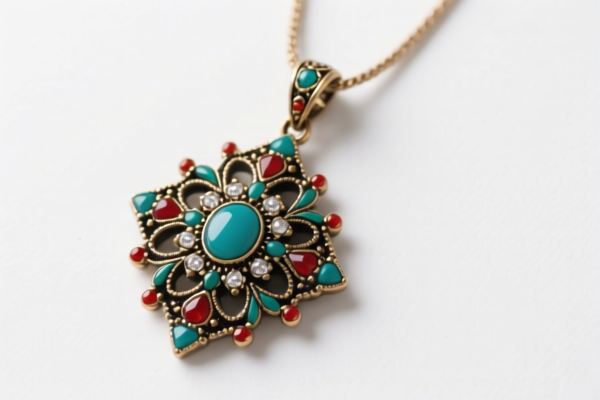
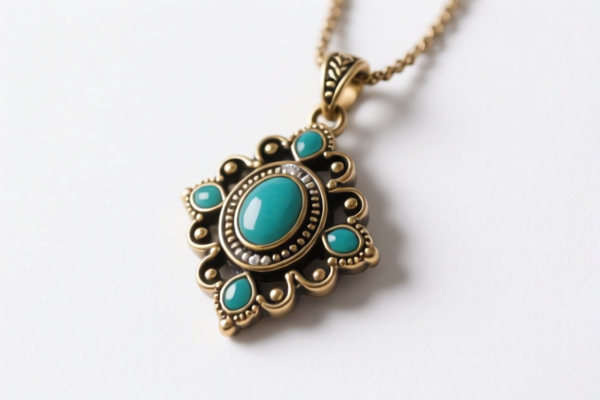
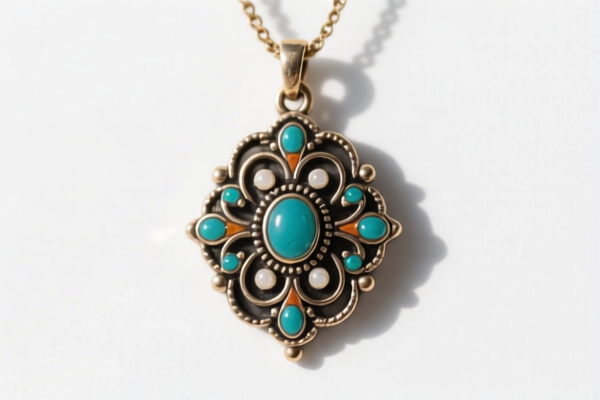
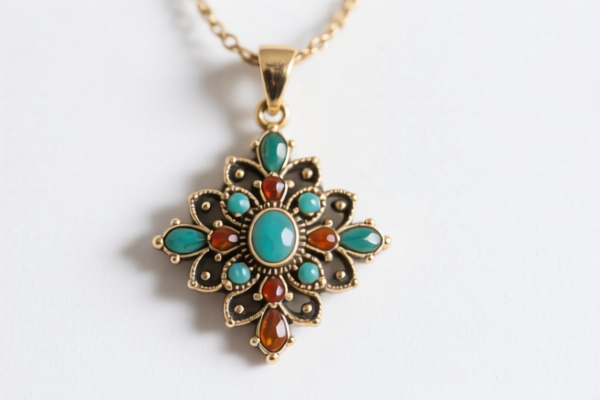
A Reflective Pendant is a decorative accessory worn on a chain or cord, typically made of metal, gemstones, or imitation materials. In international trade, the classification depends heavily on the material composition (precious metal vs. base metal vs. imitation) and form (chain vs. standalone pendant).
⚠️ Key Distinction Points:
- If made of precious metal (gold, silver, platinum) or base metal clad in precious metal → Classified under 7113.19.50
- If made of precious stones or semi-precious stones → Classified under 7116.20
- If considered imitation jewelry (non-precious materials, no precious stone content) → Classified under 7117.90.90.00
📦 II. HS Code Classification Details (2026 Latest Tariff Authority Comparison)
| HS Code | Product Description | Applicable Scenario | Material Basis |
|--------|----------|--------------------------|
| 7113.19.50.95 | Pendants of precious metal or base metal clad in precious metal | Metal pendants, gold/silver plated, non-chain form | ✅ Precious/Clad Metal |
| 7113.19.50.91 | Pendants of precious metal or base metal clad in precious metal (Other) | Metal pendants, inferred non-chain jewelry, specific metal types | ✅ Precious/Clad Metal |
| 7116.20.05.00 | Articles of jewellery of semi-precious stones | Pendants made of gemstones, agate, quartz, etc. | ✅ Semi-Precious Stone |
| 7116.20.15.00 | Articles of jewellery of precious stones | Pendants made of diamonds, rubies, emeralds, etc. | ✅ Precious Stone |
| 7117.90.90.00 | Imitation jewellery | Pendants made of base metals, glass, plastic, or mixed materials without precious content | ❌ Imitation |
🔍 Important Reminder:
- Metal pendants are generally classified under Chapter 71.13. If they are not chains, they fall under subheadings 50.91 or 50.95.
- Stone pendants fall under Chapter 71.16. The distinction between "precious" and "semi-precious" determines the specific code.
- Imitation jewelry (no precious metal/stone value) falls under 7117, which usually carries higher tariffs due to lack of intrinsic material value.
💰 III. 2026 Latest Tariff Rate Details (Including Additional Taxes, Policy Add-ons)
✅ Applicable Country: United States (US)
✅ Country of Origin: China (CN)
✅ Effective Time: 2025 November 10 onwards (including subsequent imports)
🎯 1. 7113.19.50.95 —— Metal Pendants (Precious/Clad Metal)
| Item | Content |
|---|---|
| Base Tariff | 5.5% |
| Additional Tariff (Section 301) | +7.5% |
| Section 122 Tariff | +10% |
| Total Tariff Rate | 23.0% |
| Tax Calculation | CIF Value × 23.0% |
| De Minimis Exemption | ❌ Not Eligible |
| Legal Basis Path | Base: 5.5% → Section 301: 7.5% → Section 122: 10% |
📌 Explanation:
- Pendants made of precious metals or clad precious metals are subject to the standard base tariff.
- Section 301 (7.5%) is applied due to US-China trade tensions.
- Section 122 (10%) is an additional national security tariff.
- Total 23.0% is a moderate-to-high rate for jewelry.
🎯 2. 7113.19.50.91 —— Metal Pendants (Other Metal Types)
| Item | Content |
|---|---|
| Base Tariff | 5.5% |
| Additional Tariff (Section 301) | +0.0% |
| Section 122 Tariff | +10% |
| Total Tariff Rate | 15.5% |
| Tax Calculation | CIF Value × 15.5% |
| De Minimis Exemption | ❌ Not Eligible |
| Legal Basis Path | Base: 5.5% → Section 122: 10% |
📌 Note:
- Some metal pendants may qualify for 0% Section 301 tariffs depending on specific sub-category interpretations, but Section 122 (10%) still applies.
- This is a cost-effective option if your product fits this specific metal classification.
🎯 3. 7116.20.05.00 —— Semi-Precious Stone Pendants
| Item | Content |
|---|---|
| Base Tariff | 3.3% |
| Additional Tariff (Section 301) | +0.0% |
| Section 122 Tariff | +10% |
| Total Tariff Rate | 13.3% |
| Tax Calculation | CIF Value × 13.3% |
| De Minimis Exemption | ❌ Not Eligible |
| Legal Basis Path | Base: 3.3% → Section 122: 10% |
📌 Advantage:
- Lower base tariff (3.3%) compared to metal pendants.
- No Section 301 additional tax, only Section 122 (10%).
- Total 13.3% is the most competitive rate for natural stone jewelry.
🎯 4. 7116.20.15.00 —— Precious Stone Pendants
| Item | Content |
|---|---|
| Base Tariff | 6.5% |
| Additional Tariff (Section 301) | +7.5% |
| Section 122 Tariff | +10% |
| Total Tariff Rate | 24.0% |
| Tax Calculation | CIF Value × 24.0% |
| De Minimis Exemption | ❌ Not Eligible |
| Legal Basis Path | Base: 6.5% → Section 301: 7.5% → Section 122: 10% |
📌 Warning:
- High-value items like diamond or ruby pendants face the highest total tariff (24.0%).
- Base tariff is higher (6.5%) plus Section 301 (7.5%).
🎯 5. 7117.90.90.00 —— Imitation Jewelry Pendants
| Item | Content |
|---|---|
| Base Tariff | 11.0% |
| Additional Tariff (Section 301) | +7.5% |
| Section 122 Tariff | +10% |
| Total Tariff Rate | 28.5% |
| Tax Calculation | CIF Value × 28.5% |
| De Minimis Exemption | ❌ Not Eligible |
| Legal Basis Path | Base: 11.0% → Section 301: 7.5% → Section 122: 10% |
📌 Risk Alert:
- Imitation jewelry has the highest base tariff (11.0%) because it lacks intrinsic precious material value.
- Total 28.5% is the most expensive classification. Avoid this if possible by proving material composition.
🛠️ IV. Customs Clearance Practical Advice (Combat Pitfall Guide)
✅ 1. Preparation Checklist (Missing Items Are Not Allowed)
| Material | Required | Description |
|---|---|---|
| ✅ Product Spec Sheet | ✔️ | Detail material composition (e.g., "925 Silver," "Stainless Steel," "Cubic Zirconia") |
| ✅ Material Certificate | ✔️ | Prove if it is genuine precious/semi-precious stone or metal |
| ✅ Product Photos (Clear) | ✔️ | Show back clasp, engraving, and overall structure |
| ✅ Commercial Invoice | ✔️ | Clearly state "Jewelry Pendant, [Material], Non-Chain" |
| ✅ Packing List | ✔️ | Specify if chains are included (chains may have different HS codes) |
| ✅ Third-Party Lab Report | ✔️ | For stone/precious metal content verification |
✅ 2. Declaration Tips (Key Mantra)
🔥 "Material defines code, Chain vs. Pendant matters, Imitation pays more!"
| Situation | Correct Declaration | Wrong Approach |
|---|---|---|
| Metal Pendant (Silver/Gold) | 7113.19.50.95 or 91 |
Declare as "Accessory" → 28.5% |
| Stone Pendant (Agate/Quartz) | 7116.20.05.00 |
Declare as "Plastic" → 28.5% |
| Diamond/Ruby Pendant | 7116.20.15.00 |
Declare as "Glass" → 28.5% |
| Alloy/Base Metal Pendant | 7117.90.90.00 |
Declare as "Silver" → 23.0% (Audit Risk) |
⚠️ Critical:
- If you declare a "Gold Pendant" but it is base metal, you face fraud penalties.
- If you declare a "Stone Pendant" but it is glass, you face tariff evasion penalties.
- Chains vs. Pendants: Ensure the item is clearly a pendant (no chain attached) for these codes. If attached to a chain, the entire item may be classified as a Necklace, which has different tariffs.
✅ 3. Special Cases Handling
| Situation | Handling Advice |
|---|---|
| Mixed Materials | If pendant is metal + stone, declare based on principal value/material. Usually, if stone >50% value, use 7116. |
| OEM Custom Pendants | Provide design drawings to prove material intent. |
| "Reflective" Coating | If it's just a reflective coating on base metal, still Imitation Jewelry (28.5%). |
| Gift Sets | If pendant + chain sold together, declare as Necklace. Check necklace HS codes separately. |
🌍 V. Global Market Comparison (2026 Latest)
| Country/Region | Recommended HS Code | Tariff (China Origin) | Certifications | Notes |
|---|---|---|---|---|
| 🇺🇸 USA | 7113.19.50.95 / 7117.90.90.00 |
15.5% – 28.5% | FTC Labeling Required | Section 122 + 301 apply |
| 🇨🇳 China | Same HS Codes | 5% – 11% | N/A | No additional tariffs |
| 🇪🇺 EU | Same HS Codes | 0% – 4% | CE (if applicable) | Generally lower duties |
| 🇦🇺 Australia | Same HS Codes | 5% | ACCC Labeling | Moderate duties |
📌 Conclusion:
- USA has the highest effective tariff due to Section 122 (10%) and Section 301 (7.5%).
- Imitation Jewelry (7117) is the most expensive to clear in the US.
- Semi-Precious Stone (7116.20.05.00) offers the lowest US tariff (13.3%).
📌 VI. Common Errors & Pitfall Guide (Blood & Tears Lessons)
❌ Error 1: Declaring "Reflective Pendant" as "Accessory" without material detail
👉 Consequence: Customs may classify as Imitation Jewelry (28.5%) by default.
❌ Error 2: Misclassifying Stone Pendants as Metal Pendants
👉 Consequence: If stone is precious, you may face higher base tariffs or audit issues.
❌ Error 3: Including Chain in "Pendant" Declaration
👉 Consequence: Necklace codes apply, which may have different tariffs. Split shipment or correct declaration needed.
❌ Error 4: Ignoring Section 122 Tariff
👉 Consequence: Underpayment by 10%, leading to penalties and delays.
✅ Correct Practice:
"Metal Pendant, 925 Sterling Silver, Polished Finish, Model XYZ, No Chain Attached"
🎯 VII. Conclusion: Professional Declaration, Cost Optimization!
🎯 Remember Mantra:
🔹 "Material First, Code Follows, Stone is Cheapest, Metal is Middle, Imitation is Costly!"
🔹 "Section 122 is Always 10%, Section 301 Varies, Declare Accurately to Save 15%!"
📌 Pro Tip:
- If your pendants are made of Semi-Precious Stones, use 7116.20.05.00 for the lowest US tariff (13.3%).
- If made of Base Metal, try to qualify for 7113.19.50.91 (15.5%) instead of 7117 (28.5%) by proving metal content.
- Always provide Material Certificates to support your HS Code declaration.
📣 Immediate Action:
📞 Contact Professional Customs Broker + Provide Material Certs + Apply for HS Code Pre-Ruling
🚀 Let your Reflective Pendants Clear Smoothly, Save Costs, and Boost Profits!
✨ Professional Clearance Starts with Accurate Classification!
💼 Every Penny of Your Cost Deserves Precise Calculation!
Customer Reviews
About HS Code Classification
The Harmonized System (HS) is an internationally standardized nomenclature developed by the World Customs Organization (WCO) to classify traded products. Over 200 countries use the HS system as the basis for customs tariffs, trade statistics, and import/export regulations.
Each HS code follows a hierarchical structure:
- Chapter (2 digits) — Broad category of goods (e.g., Chapter 84: Machinery and Mechanical Appliances)
- Heading (4 digits) — More specific grouping within the chapter
- Subheading (6 digits) — Internationally standardized breakdown, used by all WCO member countries
- National subdivisions (8-10 digits) — Country-specific extensions for further classification, such as US HTSUS 10-digit codes
Correct HS code classification is essential for smooth customs clearance, accurate duty payment, and compliance with trade regulations. Misclassification can lead to customs delays, overpayment of duties, or penalties.
When importing from CN to US, the applicable tariff rates may include:
- Most-Favored-Nation (MFN) rate — The standard duty rate applied to WTO members
- General rate — Applied to countries without trade agreements
- Trade remedy duties — Additional tariffs such as Section 301 (anti-dumping), Section 232 (national security), or countervailing duties
The information provided on this page is for reference purposes only. For official classification, please consult with your local customs authority or a licensed customs broker.