Reflective Plastic Body Panel
CN → US| HS Code | Tariff Rate | Origin | Destination | Doc |
|---|---|---|---|---|
| 3920991000 | 41.0% | CN | US | Official Doc |
| 3926909989 | 22.8% | CN | US | Official Doc |
| 8708295110 | 0.0% | CN | US | Official Doc |
| 3920995000 | 40.8% | CN | US | Official Doc |
| 8708295160 | 0.0% | CN | US | Official Doc |
Product Images
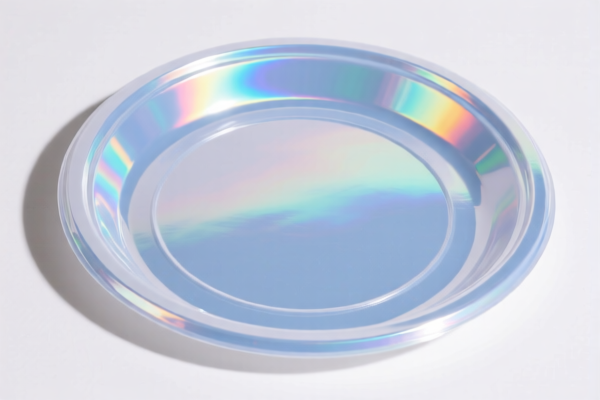
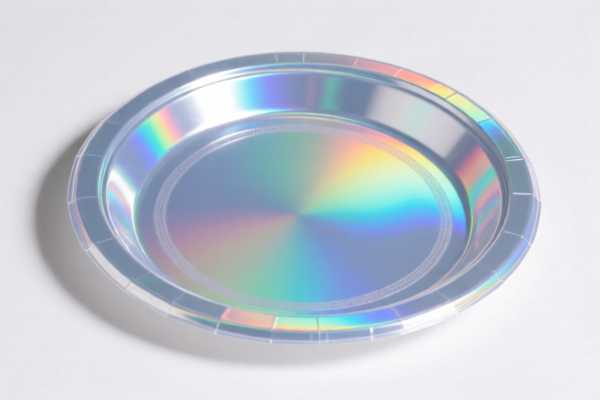
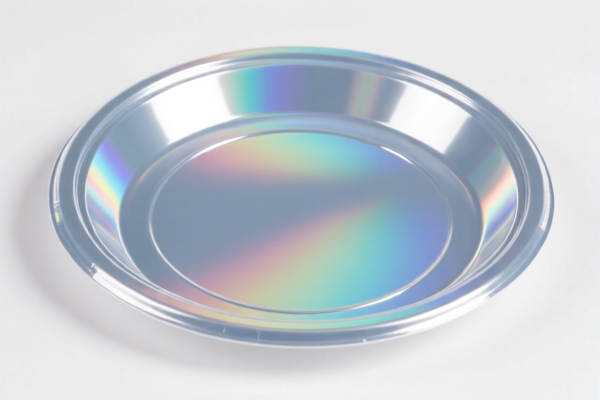
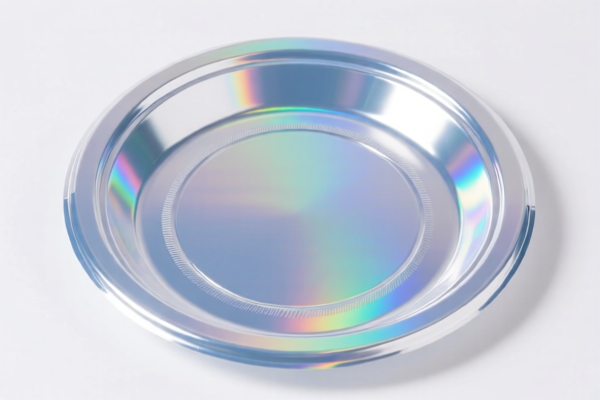
AI Analysis
🚗 Reflective Plastic Body Panel (Automotive Exterior Parts)
🌐 HS Code Reference & Customs Clearance Guide | 2026 Latest Tariff Analysis | Professional Clearance Strategy 📌 I. Product Definition & Classification: What is a "Reflective Plastic Body Panel"?
A Reflective Plastic Body Panel is a component used in the automotive industry, typically made from high-performance plastics (such as ABS, PP, or polycarbonate blends) that features a reflective surface treatment (such as vacuum metallization, painting, or coating) for aesthetic or functional purposes.
In international trade, the classification depends heavily on whether the item is viewed as a general plastic product or an automotive specific part.
Key Distinction: * As a Plastic Material/Board: If classified under Chapter 39, it is treated as a general plastic sheet/board, triggering higher base tariffs and significant punitive taxes (Section 301 + IEEPA). * As an Auto Part: If classified under Chapter 87, it is treated as a part of a motor vehicle, benefiting from lower base tariffs (2.5%), though still subject to punitive taxes.
⚠️ Critical Note: * If the panel is sold loose/unassembled, it falls into the "General Plastic" category (HS 3920/3926). * If the panel is specifically shaped for a car body (e.g., fender, bumper cover, door skin), customs authorities may argue for the "Auto Part" category (HS 8708), which is crucial for tax optimization.
📦 II. HS Code Classification Details (2026 Latest Tariff Authorities)
Based on the provided data, here are the four possible HS Codes, ranging from general plastic to specific auto parts.
| HS Code | Product Description | Category Logic | Total Tax Rate (US/China Origin) |
|---|---|---|---|
3920.99.10.00 |
Plastic Board/Sheet (Other plastics, non-cellular, not elsewhere specified) | General Plastic: Fits the "catch-all" for plastic boards/sheets. | 41.0% |
3926.90.99.89 |
Other Plastic Articles: Specifically identified as "Car Body Panels" not listed elsewhere. | General Plastic: Treated as a general plastic article, not a specific auto part under Ch 87. | 22.8% |
3920.99.50.00 |
Plastic Board/Sheet (Other plastics, non-cellular) | General Plastic: Another "catch-all" for plastic boards. | 40.8% |
8708.29.51.10 |
Body Parts: Plastic body panels specifically for motor vehicles. | Auto Part: Directly classified as a vehicle component. | 37.5% (2.5% Base + 35% Add-on) |
8708.29.51.60 |
Auto Accessories: Plastic body配件 not specifically excluded. | Auto Part: Classified as other auto parts/accessories. | 87.5% (2.5% Base + 85% Add-on) |
🔍 Key Insight: *
8708.29.51.10is the most favorable for tax rate calculation if accepted by customs (2.5% base), but note the total is 37.5% due to punitive taxes. *3926.90.99.89offers a middle ground at 22.8% total, but it is classified as a plastic article, not an auto part, which may raise questions during inspection. *8708.29.51.60has a very high additional tariff (50% for steel/aluminum/copper? Note: Data says 85% total, likely including a specific 50% metal-related surcharge if misidentified or specific clause application). Avoid this code if possible.
💰 III. 2026 Latest Tariff Rate Breakdown (Including Surcharges & Policy Add-ons)
✅ Applicable Country: United States (US) ✅ Origin: China (CN) ✅ Effective Time: 2025 November 10 onwards
🎯 1. 3920.99.10.00 & 3920.99.50.00 — General Plastic Boards/Sheets
| Item | Content |
|---|---|
| Base Tariff | 6.0% (3920.99.10) / 5.8% (3920.99.50) |
| Section 301 Add-on | +25.0% |
| IEEPA Add-on (Section 122) | +10% |
| Total Tax Rate | 41.0% (3920.99.10) / 40.8% (3920.99.50) |
| Calculation Basis | CIF Value × Total Rate |
| De Minimis Exemption | ❌ Not Eligible (Denied) |
| Legal Basis | USITC Tariff Schedule → Section 301 → IEEPA 9903 |
📌 Explanation: These codes are classified as general plastics. They do not benefit from the low 2.5% auto part base rate. The total tax burden is over 40%.
🎯 2. 3926.90.99.89 — Other Plastic Articles (Car Body Panels)
| Item | Content |
|---|---|
| Base Tariff | 5.3% |
| Section 301 Add-on | +7.5% |
| IEEPA Add-on (Section 122) | +10% |
| Total Tax Rate | 22.8% |
| Calculation Basis | CIF Value × 22.8% |
| De Minimis Exemption | ❌ Not Eligible (Denied) |
| Legal Basis | USITC Tariff Schedule → Section 301 (Reduced rate for certain plastics) → IEEPA |
📌 Explanation: This code offers the lowest total tax rate (22.8%) among the options, but it is classified as a plastic article, not an auto part. This may require strong documentation to prove it is a "general plastic item" and not a "vehicle part."
🎯 3. 8708.29.51.10 — Vehicle Body Parts (Plastic)
| Item | Content |
|---|---|
| Base Tariff | 2.5% |
| Section 301 Add-on | +25.0% |
| IEEPA Add-on (Section 122) | +10% |
| Total Tax Rate | 37.5% (2.5% + 25% + 10%) |
| Calculation Basis | CIF Value × 37.5% |
| De Minimis Exemption | ❌ Not Eligible (Denied) |
| Legal Basis | Chapter 87 (Vehicles) → USITC → Section 301 → IEEPA |
📌 Explanation: While the base tariff is low (2.5%), the punitive taxes push the total to 37.5%. This is a standard classification for auto parts.
🎯 4. 8708.29.51.60 — Other Auto Parts/Accessories
| Item | Content |
|---|---|
| Base Tariff | 2.5% |
| Section 301 Add-on | +25.0% |
| IEEPA Add-on (Section 122) | +10% |
| Special Metal Surcharge? | +50% (If deemed steel/aluminum/copper related) |
| Total Tax Rate | 87.5% (2.5% + 85%) |
| De Minimis Exemption | ❌ Not Eligible (Denied) |
📌 Warning: This code has an extremely high effective rate (85% add-on). This may include a specific 50% surcharge for materials classified as steel/aluminum/copper, or a punitive rate for "other" parts. Avoid this code unless absolutely necessary.
🛠️ IV. Customs Clearance Practical Advice (Real-World Pitfall Guide)
✅ 1. Documentation Checklist (Essential)
| Document | Required | Explanation |
|---|---|---|
| ✅ Product Specification Sheet | ✔️ | Must clearly state material (Plastic: ABS/PP/etc.) and dimensions. |
| ✅ Technical Drawings | ✔️ | Show that the item is a "Body Panel" (fender, door, hood) and its shape. |
| ✅ Product Photos | ✔️ | Clear images of the reflective surface, part numbers, and mounting holes. |
| ✅ Certificate of Origin (CO) | ✔️ | Essential for verifying origin (China) and applying punitive taxes. |
| ✅ Commercial Invoice | ✔️ | Must clearly describe the item as "Plastic Body Panel for Automotive Use." |
| ✅ Packing List | ✔️ | Detail quantity and packaging. |
✅ 2. Declaration Strategy (Key Tips)
🔥 "Describe Accurately, Classify Correctly, Avoid Auto-Part Traps!"
| Scenario | Recommended HS Code | Risk Level |
|---|---|---|
| General Plastic Sheet/Board | 3920.99.10.00 or 3920.99.50.00 |
High Tax (41%) but Low Inspection Risk |
| Generic Plastic Auto Part | 3926.90.99.89 |
Lowest Tax (22.8%) but Requires Proof it's not a "Specific Auto Part" |
| Specific Vehicle Body Part | 8708.29.51.10 |
Medium Tax (37.5%) but High Scrutiny (Customs may check for fitment) |
| Miscellaneous Auto Accessory | 8708.29.51.60 |
Extreme Tax (87.5%) → AVOID |
📌 Strategic Advice: * If you want the lowest tax, try to argue for
3926.90.99.89(22.8%). You must prove it is a "general plastic article" and not a "specific automotive part." * If you declare it as an auto part (8708), be prepared for detailed scrutiny of the vehicle make/model compatibility. * Never use8708.29.51.60unless you are certain of the specific surcharge rules.
✅ 3. Special Cases & Solutions
| Situation | Handling Advice |
|---|---|
| Reflective Surface | Clarify if the reflectivity is due to paint/coating or metallic film. If it's just paint, it stays in Chapter 39 or 87. If it involves a metal layer, customs might misclassify it under metals (triggering the 50% surcharge in 8708.29.51.60). Provide material safety data sheets (MSDS) to prove it's plastic-based. |
| OEM Parts | If sold to an auto manufacturer, use 8708.29.51.10. Provide the OEM part number and vehicle compatibility list. |
| Aftermarket Parts | Can argue for 3926.90.99.89 if the design is generic and not specific to one car model. |
| Small Quantity (De Minimis) | ❌ No Exemption. All these codes are denied de minimis. Even small shipments are subject to full tax. |
🌍 V. Global Market Comparison (2026 Latest)
| Country/Region | Recommended HS Code | Estimated Tax (China Origin) | Certification Required | Remarks |
|---|---|---|---|---|
| 🇺🇸 USA | 3926.90.99.89 |
22.8% (Best Option) | FCC (if electronic), RoHS | High scrutiny on "Auto Part" vs "Plastic Article" |
| 🇺🇸 USA | 8708.29.51.10 |
37.5% (Standard Auto) | FMVSS (if safety-related) | Lower base, but higher punitive taxes |
| 🇨🇳 China | 3920.99.10.00 |
5-6% | CCC (if safety) | Low import tax, no punitive surcharges |
| 🇪🇺 EU | 3926.90.99 |
4-5% | REACH, RoHS | No Section 301 equivalent |
| 🇲🇽 Mexico | 3920.99.10.00 |
5-10% | NOM Standards | USMCA benefits may apply if originating |
📌 Conclusion: * USA: The 22.8% rate under
3926.90.99.89is significantly cheaper than the 37.5% under8708.29.51.10. Focus efforts on proving it is a general plastic article. * EU/China: Tariffs are much lower. Focus on environmental compliance (REACH/RoHS).
📌 VI. Common Mistakes & Pitfalls (Blood-Teaching Lessons)
❌ Mistake 1: Declaring a plastic body panel as a metal part.
👉 Consequence: Triggers the 50% metal surcharge (seen in 8708.29.51.60 data). Total tax jumps to 87.5%!
✅ Solution: Provide material composition tests to prove it is >90% plastic.
❌ Mistake 2: Declaring it as an Auto Part (8708) when it is a generic plastic sheet.
👉 Consequence: Customs may reject the 2.5% base rate and impose higher penalties for misclassification.
✅ Solution: If generic, use 3926.90.99.89 (22.8%). If specific to a car, use 8708.29.51.10 (37.5%).
❌ Mistake 3: Assuming De Minimis applies. 👉 Consequence: Small shipments are NOT exempt. All taxes apply from the first dollar. ✅ Solution: Budget for full taxes even for small samples or LCL shipments.
✅ Correct Declaration Example:
"Plastic Automotive Body Panel, Model XYZ, Material: ABS, Reflective Coating, Non-Electronic, For Aftermarket Use"
🎯 VII. Conclusion: Professional Declaration, Cost Reduction!
🎯 Remember the Mantra:
🔹 "Plastic Article: 22.8% (Best Rate)" 🔹 "Auto Part: 37.5% (Standard Rate)" 🔹 "Metal Misclassification: 87.5% (Disaster!)" 🔹 "De Minimis: NO EXEMPTION"
📌 Pro Tip:
If you can prove the product is a generic plastic component (not specific to one car model), use 3926.90.99.89 to save 14.7% in taxes compared to the auto part classification.
📞 Action Step: 1. Collect material test reports (proving plastic composition). 2. Prepare technical drawings showing generic or specific fitment. 3. Consult with a customs broker to file a Pre-Ruling if the shipment value is high.
✨ Professional clearance starts with accurate classification! 💼 Every percentage point saved is profit earned!
Customer Reviews
About HS Code Classification
The Harmonized System (HS) is an internationally standardized nomenclature developed by the World Customs Organization (WCO) to classify traded products. Over 200 countries use the HS system as the basis for customs tariffs, trade statistics, and import/export regulations.
Each HS code follows a hierarchical structure:
- Chapter (2 digits) — Broad category of goods (e.g., Chapter 84: Machinery and Mechanical Appliances)
- Heading (4 digits) — More specific grouping within the chapter
- Subheading (6 digits) — Internationally standardized breakdown, used by all WCO member countries
- National subdivisions (8-10 digits) — Country-specific extensions for further classification, such as US HTSUS 10-digit codes
Correct HS code classification is essential for smooth customs clearance, accurate duty payment, and compliance with trade regulations. Misclassification can lead to customs delays, overpayment of duties, or penalties.
When importing from CN to US, the applicable tariff rates may include:
- Most-Favored-Nation (MFN) rate — The standard duty rate applied to WTO members
- General rate — Applied to countries without trade agreements
- Trade remedy duties — Additional tariffs such as Section 301 (anti-dumping), Section 232 (national security), or countervailing duties
The information provided on this page is for reference purposes only. For official classification, please consult with your local customs authority or a licensed customs broker.