Reflective Plastic Cutting Disc
CN → US| HS Code | Tariff Rate | Origin | Destination | Doc |
|---|---|---|---|---|
| 8202390070 | 35.0% | CN | US | Official Doc |
| 8202990000 | 35.0% | CN | US | Official Doc |
Product Images
AI Analysis
✂️ Reflective Plastic Cutting Discs (Saw Blades for Plastics)
🌐 HS Code Reference & Customs Clearance Guide | 2026 Latest Tariff Analysis | Professional Strategy for Metal Parts & Blades
📌 I. Product Definition & Classification: What Exactly is a "Reflective Plastic Cutting Disc"?
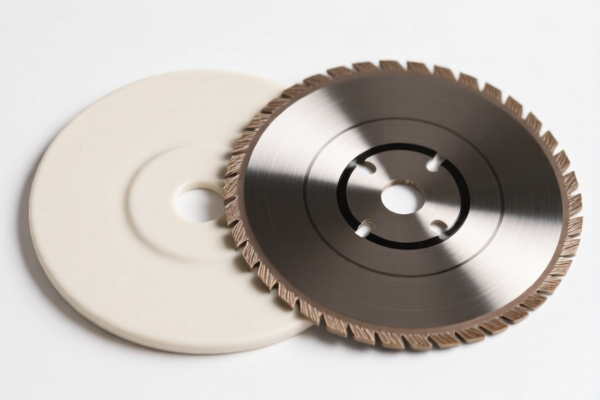
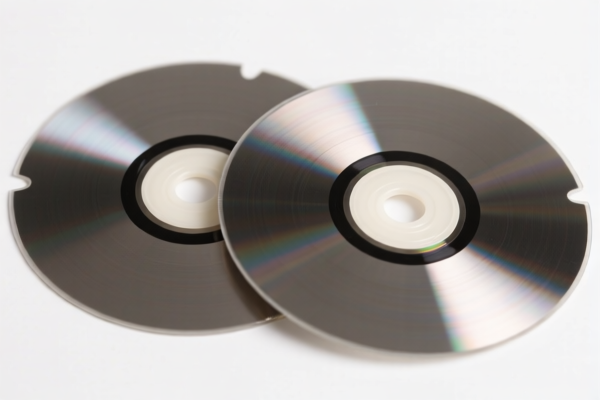
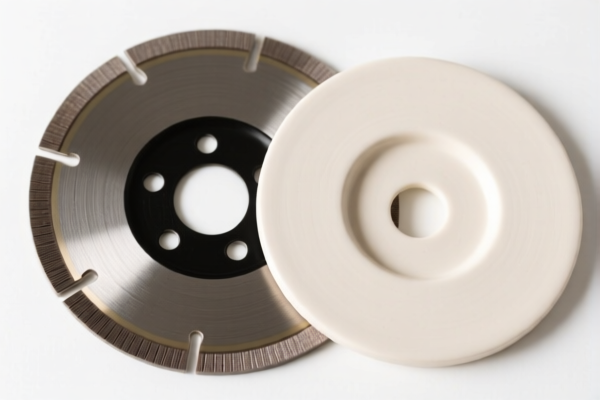
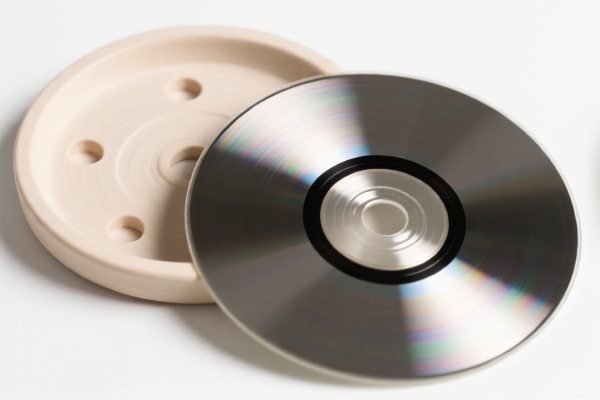
A "Reflective Plastic Cutting Disc" typically refers to a circular saw blade designed for cutting plastic materials (such as PVC, acrylic, polycarbonate, or PE). The term "reflective" may describe the finish of the blade (shiny/polished teeth) or the material being cut, but functionally, it is a metal circular saw blade.
In international trade, these are not classified as plastic products. They are classified as base metal parts/tools. The key distinction lies in whether it is a complete circular saw blade or a generic/other type of saw blade.
⚠️ Key Classification Point:
- If it is a circular saw blade (disk-shaped, rotates around an axis) → Classified under 8202.39 or 8202.99.
- If it has teeth (implied for cutting plastic) → It is a "saw blade."
- "Reflective" is a cosmetic/descriptive term and does not change the HS code, but must be disclosed in the description to avoid ambiguity.
📦 II. HS Code Classification Details (2026 Latest Tariff Authority Comparison)
Based on the provided <DATA>, the product falls under two primary HS Codes depending on specific manufacturing or sub-category nuances. Both codes fall under Chapter 82: Tools, Implements, and Cutlery.
| HS Code | Product Description | Application Scenario | Key Characteristics |
|---|---|---|---|
8202.39.00.70 |
Circular saw blades (including slitting or slotting saw blades), and parts thereof: Other, including parts | General circular blades for plastics, wood, or metal; specialized thin-kerf plastic cutting disks. | ✅ Circular shape; ✅ Base metal body; ✅ For sawing. |
8202.99.00.00 |
Other saw blades, and parts thereof: Other (including parts) | Non-circular saw blades (e.g., band saw blades, jig saw blades) OR circular blades that do not fit the specific "other" criteria of 8202.39 if strictly interpreted. Note: For most standard circular plastic cutting discs, 8202.39 is more precise, but 8202.99 is often used as a catch-all if 8202.39 is disputed. | ✅ Metal; ✅ Cutting tool; ❌ Not specifically defined as standard circular blades in the "Other" subcategory of 8202.39. |
🔍 Critical Distinction:
- 8202.39 is specifically for Circular Saw Blades. If your product is a round disk, this is the primary candidate.
- 8202.99 is for Other Saw Blades (e.g., band saws, chain saws, or irregular shapes).
- Recommendation: Use 8202.39.00.70 if the disc is circular. Use 8202.99.00.00 only if it is not circular (e.g., a long strip for a band saw) or if customs authorities require the "Other" category for specific plastic-specific metal blades not covered by 8202.39.
💰 III. 2026 Latest Tariff Rate Breakdown (Including Surtax & Policy Add-ons)
✅ Applicable Country: United States (US)
✅ Origin: China (CN)
✅ Effective Time: 2025–2026 (Current Trade Policy)
🎯 1. 8202.39.00.70 — Circular Saw Blades (Other)
| Item | Content |
|---|---|
| Basic Tariff Rate | 0.0% (Ad valorem) |
| Surtax (Section 301) | +25.0% |
| Total Tariff Rate | 25.0% |
| Tax Calculation | CIF Value × 25% |
| De Minimis Eligibility | ❌ No (De minimis does not apply to Section 301 goods) |
| Legal Basis Path | USITC:8202.39.00.70 → Section 301 Footnote: 9903.88.01 (or similar applicable footnote for tools) |
📌 Explanation:
- The base tariff is 0%, which is favorable for base metal tools.
- However, the 25% surtax applies to all goods classified under this HS code originating from China, as part of the ongoing trade dispute tariffs (Section 301).
- Total Cost Impact: For every $1,000 of CIF value, you pay $250 in tariffs.
🎯 2. 8202.99.00.00 — Other Saw Blades (Other)
| Item | Content |
|---|---|
| Basic Tariff Rate | 0.0% (Ad valorem) |
| Surtax (Section 301) | +25.0% |
| Total Tariff Rate | 25.0% |
| Tax Calculation | CIF Value × 25% |
| De Minimis Eligibility | ❌ No |
| Legal Basis Path | USITC:8202.99.00.00 → Section 301 Footnote: 9903.88.01 |
📌 Note:
- The tax structure is identical to 8202.39.
- Both codes carry the 25% additional duty.
- There is no basic duty, only the 25% surtax.
🛠️ IV. Customs Clearance Operational Advice (Practical Pitfall Guide)
✅ 1. Required Documentation Checklist
| Document | Mandatory? | Notes |
|---|---|---|
| ✅ Commercial Invoice | ✔️ | Must clearly state: "Circular Saw Blade for Plastic Cutting" |
| ✅ Packing List | ✔️ | Include quantity, weight, and dimensions |
| ✅ Product Photos | ✔️ | Show the blade's circular shape and tooth structure |
| ✅ Composition Statement | ✔️ | Confirm base metal content (e.g., Steel, Carbide-tipped) |
| ✅ Origin Certificate | ✔️ | If claiming any potential exemptions (rare for this category) |
| ❌ FCC/CE Certs | ❌ | Not required for metal cutting tools (unless electric hand tools are included) |
✅ 2. Declaration Best Practices
🔥 "Name it Right, Describe it Clear, Avoid 'Reflective' Ambiguity"
| Scenario | Correct Declaration | Incorrect Declaration |
|---|---|---|
| Circular Plastic Blade | Circular Saw Blade, Steel, for Plastic Cutting, HS 8202.39.00.70 |
Plastic Cutter, Reflective Disc (Too vague) |
| Non-Circular Blade | Band Saw Blade, Steel, HS 8202.99.00.00 |
Saw Blade for Plastic (Could be misclassified) |
| Blade + Handle | Saw Blade Only (Handle declared separately if metal) |
Hand Saw (Would change HS Code to 8202.10) |
📌 Tip: The word "Reflective" should be included in the description (e.g., "Reflective Finish Steel Blade") to match product samples, but do not let it mislead customs into thinking it’s a plastic or optical product.
✅ 3. Special Cases & Handling
| Situation | Handling Advice |
|---|---|
| Carbide-Tipped Blades | Still classified under 8202.39/8202.99. Carbide tips do not change the base metal classification. |
| Set of Blades | Declare as "Saw Blades, Set of X pcs." Total value is aggregated for the 25% tax. |
| With Packaging/Branding | Ensure branding doesn’t imply a different function (e.g., "Reflective Safety Disc" might be misclassified as safety gear). |
| Origin Non-China | If from Vietnam, Thailand, etc., no 25% surtax applies. Base tariff remains 0%. Total Tax: 0%. |
🌍 V. Global Market Comparison (2026 Latest)
| Country/Region | Recommended HS Code | Tariff Rate (China Origin) | Notes |
|---|---|---|---|
| 🇺🇸 USA | 8202.39.00.70 / 8202.99.00.00 |
25.0% (Surtax only) | Base tax 0%, but 25% Section 301 applies. |
| 🇨🇳 China | 8202.39.00.70 / 8202.99.00.00 |
0.0% - 5.0% | Import duty may vary, but no retaliatory tax for imports into China. |
| 🇪🇺 EU | 8202.39.00.00 / 8202.99.00.00 |
0.0% | Generally duty-free for tools, no major surtaxes. |
| 🇬🇧 UK | 8202.39.00.00 / 8202.99.00.00 |
0.0% - 2.5% | Post-Brexit tariffs are generally favorable for metal tools. |
| 🇦🇺 Australia | 8202.39.00.00 / 8202.99.00.00 |
5.0% | Low standard tariff. |
📌 Conclusion:
- The USA is the only major market with a high 25% surtax on these products from China.
- For other markets, these products are low-cost or duty-free, making them highly competitive outside the US.
📌 VI. Common Errors & Pitfall Guide (Lessons Learned)
❌ Error 1: Classifying as "Plastic Cutting Tool" → 8202.99 vs 3926.90
👉 Consequence: Misclassification leads to detention, reclassification, and fines. Metal blades are always Chapter 82, even if used for plastic.
❌ Error 2: Using "Reflective" as the primary name
👉 Consequence: Customs may confuse it with "Reflective Safety Tape" (3919.90) or "Optical Discs" (8523.51).
✅ Fix: Always use "Saw Blade" or "Circular Blade" as the primary term.
❌ Error 3: Ignoring the 25% Surtax in Profit Calculation
👉 Consequence: Underestimating landed cost. A $10 blade becomes $12.50 in tax alone.
✅ Fix: Factor in 25% additional duty for US shipments from China.
🎯 VII. Conclusion: Precision Classification, Cost Optimization!
🎯 Key Takeaways:
🔹 "Metal Blade, Plastic Cut: Still Chapter 82."
🔹 "Circular? Go 8202.39. Non-Circular? Go 8202.99."
🔹 "25% Surtax is Mandatory for US Imports from China."📌 Pro Tip:
If you are shipping to the USA, consider country-of-origin diversification (e.g., manufacturing in Vietnam or Thailand) to eliminate the 25% surtax. This can reduce your tariff burden from 25% to 0%, significantly boosting margins.
📣 Immediate Action:
📞 Verify HS Code with your customs broker.
📄 Prepare Documentation emphasizing "Base Metal" and "Circular Saw Blade."
💰 Calculate Landed Cost including the 25% US Surtax.
✨ Professional Clearance Starts with Accurate Classification!
💼 Your Every Dollar of Cost Deserves Precision!
Customer Reviews
About HS Code Classification
The Harmonized System (HS) is an internationally standardized nomenclature developed by the World Customs Organization (WCO) to classify traded products. Over 200 countries use the HS system as the basis for customs tariffs, trade statistics, and import/export regulations.
Each HS code follows a hierarchical structure:
- Chapter (2 digits) — Broad category of goods (e.g., Chapter 84: Machinery and Mechanical Appliances)
- Heading (4 digits) — More specific grouping within the chapter
- Subheading (6 digits) — Internationally standardized breakdown, used by all WCO member countries
- National subdivisions (8-10 digits) — Country-specific extensions for further classification, such as US HTSUS 10-digit codes
Correct HS code classification is essential for smooth customs clearance, accurate duty payment, and compliance with trade regulations. Misclassification can lead to customs delays, overpayment of duties, or penalties.
When importing from CN to US, the applicable tariff rates may include:
- Most-Favored-Nation (MFN) rate — The standard duty rate applied to WTO members
- General rate — Applied to countries without trade agreements
- Trade remedy duties — Additional tariffs such as Section 301 (anti-dumping), Section 232 (national security), or countervailing duties
The information provided on this page is for reference purposes only. For official classification, please consult with your local customs authority or a licensed customs broker.