Reflective Plastic Reflective Sticker
CN → US| HS Code | Tariff Rate | Origin | Destination | Doc |
|---|---|---|---|---|
| 3919905010 | 40.8% | CN | US | Official Doc |
| 5903102090 | 35.0% | CN | US | Official Doc |
| 5903102010 | 35.0% | CN | US | Official Doc |
| 3921110000 | 40.3% | CN | US | Official Doc |
| 3919101010 | 41.5% | CN | US | Official Doc |
Product Images
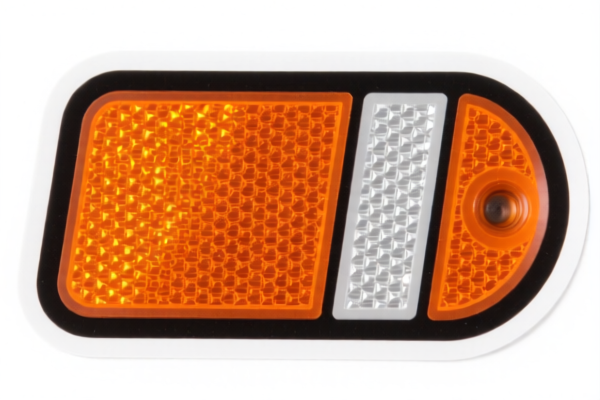
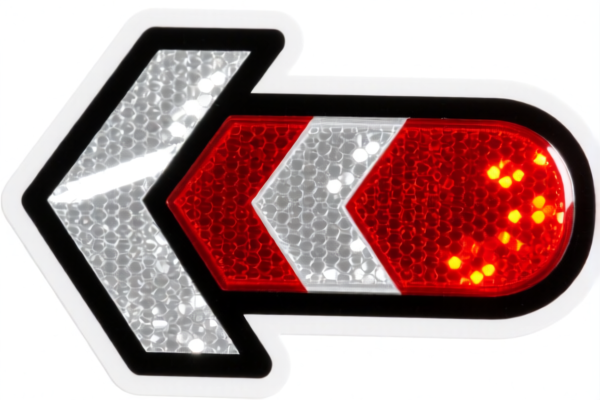

AI Analysis
🌈 Reflective Stickers (Reflective Plastic/Adhesive Sheets)
🌐 HS Code Reference & Customs Clearance Guide | 2026 Latest Tariff Analysis | Professional Compliance Strategy
📌 1. Product Definition & Classification: What Exactly is a "Reflective Sticker"?
Reflective stickers (often referred to as reflective tape, sheets, or films) are adhesive products designed to return light to its source. In international trade, their classification depends heavily on the substrate material (what it’s made of) and the manufacturing process (how the reflective layer is applied).
They are generally categorized into two main types:
Plastic/Film-Based Reflective Sheets (HS Chapter 39):
Consisting of a plastic film base with an adhesive layer and a reflective coating (glass beads or micro-prisms). If the primary characteristic is the plastic film itself, it often falls under Chapter 39.
Textile/Fabric-Based Reflective Materials (HS Chapter 59):
Consisting of a fabric or textile base impregnated, coated, covered, or laminated with plastics (PVC, PU, etc.) for reflectivity. If the base is textile and heavily coated, it often falls under Chapter 59.
⚠️ Key Distinction Point:
- If the base is purely plastic/polymer film and the adhesive is integral to the film structure → Chapter 39 (e.g.,3919,3921).
- If the base is textile/fabric and is impregnated/coated with plastic to achieve reflectivity → Chapter 59 (e.g.,5903).
📦 2. HS Code Classification Details (2026 Latest Tariff Concordance)
| HS Code | Product Description | Application Scenario | Material Conflict? |
|---|---|---|---|
3919.90.50.10 |
Self-adhesive plates, sheets, film, foil, strip, and other shapes of plastic, other | General reflective stickers (plastic base, self-adhesive) | ❌ No (Matches "plastic" and "self-adhesive") |
5903.10.20.90 |
Textile fabrics impregnated, coated, covered or laminated with plastics, of PVC | Reflective materials on textile bases (generic plastic coating) | ❌ No (Matches "textile + plastic coating") |
5903.10.20.10 |
Textile fabrics impregnated, coated, covered or laminated with plastics, of PVC (specific) | Reflective materials specifically using PVC coating on fabric | ❌ No (Matches "PVC coating on textile") |
3921.11.00.00 |
Other plates, sheets, film, foil and strip, of polymers of ethylene | Reflective stickers made of Polyethylene (PE) or similar polymer films | ❌ No (Matches "polymer film" characteristics) |
3919.10.10.10 |
Self-adhesive plates, sheets, film, etc., of plastics, in rolls of a width ≤20cm | Narrow roll reflective tape/stickers (plastic base) | ❌ No (Matches "self-adhesive plastic" and "width <20cm") |
🔍 Key Reminder:
- If the product is a plastic film with adhesive backing, it typically falls under 3919 (Self-adhesive plastic) or 3921 (Plastic sheets). - If the product is a fabric with a reflective plastic coating, it falls under 5903 (Impregnated/coated textile). - Misclassification can lead to significant duty differences (see below).
💰 3. 2026 Latest Tariff Rate Breakdown (Including Surcharges)
✅ Applicable Country: United States (US)
✅ Country of Origin: China (CN)
✅ Effective Date: From November 10, 2025 (including subsequent imports)
🎯 1. 3919.90.50.10 —— Self-adhesive Plastic Reflective Sheets
| Item | Details |
|---|---|
| Base Tariff | 5.8% (ad valorem) |
| USITC Surcharge (Section 301) | +25.0% |
| IEEPA Surcharge (Section 122) | +10.0% |
| Total Tariff | 40.8% |
| Tax Calculation | CIF Value × 40.8% |
| De Minimis Eligibility | ❌ Not Eligible (deny_de_minimis) |
| Legal Basis Path | IEEPA:9903.01.25 → USITC:3919.90.50.10 → FOOTNOTE:9903.88.01 |
📌 Explanation:
- The 5.8% is the standard Most Favored Nation (MFN) duty for self-adhesive plastic products. - The 25% is the Section 301 tariff on Chinese goods. - The 10% is the IEEPA tariff applied to specific Chinese imports. - Total: 40.8%. This is a high-duty item.
🎯 2. 5903.10.20.90 & 5903.10.20.10 —— Plastic-Coated Textile Reflective Materials
| Item | Details |
|---|---|
| Base Tariff | 0.0% (ad valorem) |
| USITC Surcharge (Section 301) | +25.0% |
| IEEPA Surcharge (Section 122) | +10.0% |
| Total Tariff | 35.0% |
| Tax Calculation | CIF Value × 35.0% |
| De Minimis Eligibility | ❌ Not Eligible (deny_de_minimis) |
| Legal Basis Path | IEEPA:9903.01.24 → USITC:5903.10.20 → FOOTNOTE:9903.88.01 |
📌 Note:
- Although the base tariff is 0%, the surcharges apply. - These codes are for textile-based reflective materials. If your product is fabric-backed, this is often a lower cost option compared to plastic film (35% vs 40.8%). - Ensure the product description clearly states "Textile" or "Fabric" base.
🎯 3. 3921.11.00.00 —— Polyethylene Plastic Sheets (Reflective)
| Item | Details |
|---|---|
| Base Tariff | 5.3% (ad valorem) |
| USITC Surcharge (Section 301) | +25.0% |
| IEEPA Surcharge (Section 122) | +10.0% |
| Total Tariff | 40.3% |
| Tax Calculation | CIF Value × 40.3% |
| De Minimis Eligibility | ❌ Not Eligible (deny_de_minimis) |
| Legal Basis Path | IEEPA:9903.01.25 → USITC:3921.11.00.00 → FOOTNOTE:9903.88.01 |
📌 Note:
- Use this code only if the reflective sticker is explicitly made of Polyethylene (PE) or similar polymers and does not fit the "self-adhesive" sub-category of 3919. - Slightly cheaper than3919.90.50.10but still high.
🎯 4. 3919.10.10.10 —— Narrow Self-Adhesive Plastic Sheets
| Item | Details |
|---|---|
| Base Tariff | 6.5% (ad valorem) |
| USITC Surcharge (Section 301) | +25.0% |
| IEEPA Surcharge (Section 122) | +10.0% |
| Total Tariff | 41.5% |
| Tax Calculation | CIF Value × 41.5% |
| De Minimis Eligibility | ❌ Not Eligible (deny_de_minimis) |
| Legal Basis Path | IEEPA:9903.01.25 → USITC:3919.10.10.10 → FOOTNOTE:9903.88.01 |
📌 Note:
- Applies to narrow rolls (width ≤ 20 cm). - Highest total tariff among the plastic film options.
🛠️ 4. Customs Clearance Practical Advice (Battle-Tested Pitfall Avoidance)
✅ 1. Documentation Checklist (Essential)
| Document | Required | Explanation |
|---|---|---|
| ✅ Product Specification Sheet | ✔️ | Must detail: Base material (Plastic vs. Textile), Thickness, Reflective Method (Beads vs. Prisms), Adhesive Type. |
| ✅ Product Photos | ✔️ | Clear images showing the cross-section (if possible) to prove substrate type. |
| ✅ Commercial Invoice | ✔️ | Must accurately describe the item. Avoid vague terms like "Sticker." Use "Reflective Plastic Sheet" or "Reflective Textile Tape." |
| ✅ Packing List | ✔️ | Include dimensions and weights. |
| ✅ Origin Certificate (CO) | ✔️ | If claiming preferential treatment (though unlikely for CN-origin under current tariffs). |
✅ 2. Classification Strategy (Key Mantra)
🔥 "Material is King, Adhesive is Queen, Width Determines Code!"
| Scenario | Correct HS Code | Risk of Misclassification |
|---|---|---|
| Plastic Film + Adhesive (General) | 3919.90.50.10 (40.8%) |
High risk if declared as "Textile" |
| Plastic Film + Adhesive (Narrow <20cm) | 3919.10.10.10 (41.5%) |
High risk if width not specified |
| Plastic Film + Adhesive (PE/Polymer) | 3921.11.00.00 (40.3%) |
High risk if polymer type not specified |
| Textile/Fabric + Plastic Coating | 5903.10.20.90 (35.0%) |
Medium risk if base material unclear |
| Textile/Fabric + PVC Coating | 5903.10.20.10 (35.0%) |
Medium risk if PVC not specified |
📌 Critical Advice:
- If your product is plastic-based, the lowest duty is 3921.11.00.00 (40.3%). - If your product is textile-based, the lowest duty is 5903.10.20.90/10 (35.0%). - Do not declare a plastic product as textile to save 5.8% without proof. Customs will inspect and penalize for fraud.
✅ 3. Special Cases Handling
| Scenario | Handling Advice |
|---|---|
| Mixed Materials (e.g., Plastic film on cardboard backing) | Declare the primary functional component (the reflective plastic/film). Do not include the cardboard in the HS Code unless it's sold as a kit. |
| Custom Sizes/Cuts | If cut from rolls, still classify based on the roll material. Ensure dimensions are consistent with the chosen HS subheading (e.g., width for 3919.10). |
| Highly Reflective/Prismatic | This does not change the HS Code classification between 3919/5903. It only affects the technical description. |
| Sample Shipments | Even for samples, the full duty (40.8% or 35.0%) applies if shipped via express courier (De Minimis does not apply to CN-origin goods under Section 301/122). |
🌍 5. Global Market Comparison (2026 Latest)
| Country/Region | Recommended HS Code | Total Duty (CN Origin) | Certification Requirements | Notes |
|---|---|---|---|---|
| 🇺🇸 USA | 5903.10.20.90 or 3919.90.50.10 |
35.0% or 40.8% | None specific, but compliance with safety standards recommended | High Tariff. Check if textile-based (35%) is feasible. |
| 🇨🇳 China | 5903.10.20.90 or 3919.90.50.10 |
~5-7% | CCC (if applicable) | Low duty for domestic trade. |
| 🇪🇺 EU | 3919.90.90 or 5903.90.90 |
~0-4% | CE (if consumer product) | No Section 301/122 tariffs. |
| 🇬🇧 UK | 3919.90.90 or 5903.90.90 |
~0-4% | UKCA | No Section 301/122 tariffs. |
| 🇨🇦 Canada | 3919.90.90 or 5903.90.90 |
~0-5% | Health Canada (if medical/safety) | No Section 301/122 tariffs. |
📌 Conclusion:
- The USA is the most expensive market for reflective stickers from China due to Section 301 (25%) and Section 122 (10%) tariffs. - Textile-based reflectives (35%) are cheaper than Plastic-based reflectives (40.8%). - Consider supply chain diversification (e.g., manufacturing in Vietnam or Thailand) if targeting the US market to avoid these surcharges.
📌 6. Common Mistakes & Pitfalls (Lessons Learned)
❌ Mistake 1: Declaring "Reflective Sticker" without specifying material.
👉 Consequence: Customs may classify it under the highest duty rate or request additional documentation, causing delays.
❌ Mistake 2: Using "Textile" HS Code for Plastic-Based Products.
👉 Consequence: Audit failure. Customs will inspect the product, find it's plastic, and reassess at 40.8% + penalties.
❌ Mistake 3: Ignoring Width Specifications.
👉 Consequence: If the sticker is narrow (<20cm) but declared under a general width code, it may be reassigned to 3919.10.10.10 (41.5%) instead of 3919.90.50.10 (40.8%).
❌ Mistake 4: Assuming De Minimis Applies.
👉 Consequence: Packages under $800 from China do NOT enjoy de minimis exemption due to Section 301 and 122 tariffs. Duty is owed on the entire value.
✅ Correct Approach:
"Reflective PVC-Coated Textile Tape, 5cm Width, Self-Adhesive Backing, Class 2 Reflectivity" →
5903.10.20.90(35.0%)
"Reflective PET Film Sticker, Self-Adhesive, 1m Roll" →3919.90.50.10(40.8%)
🎯 7. Conclusion: Precision in Classification Saves Money!
🎯 Remember the Mantra:
🔹 "Plastic vs. Textile, Duty Varies Five Point Eight!"
🔹 "Narrow Rolls Pay More, Wide Rolls Save More!"
🔹 "No De Minimis for China, Think Twice Before You Ship!"
📌 Pro Tip:
If your product can be fabric-based rather than plastic-based, consider switching suppliers or product design to qualify for 5903 codes (35.0% total duty) instead of 3919/3921 codes (40.3%-41.5%). This simple change can save you 5-6.5% on every shipment.
📣 Immediate Action:
📞 Consult with a licensed customs broker.
📸 Provide clear product photos showing the base material.
📝 Apply for an Advance Ruling if importing large volumes.
✨ Professional Clearance Starts with Accurate Classification!
💼 Every Percent Saved is Profit Earned!
Customer Reviews
About HS Code Classification
The Harmonized System (HS) is an internationally standardized nomenclature developed by the World Customs Organization (WCO) to classify traded products. Over 200 countries use the HS system as the basis for customs tariffs, trade statistics, and import/export regulations.
Each HS code follows a hierarchical structure:
- Chapter (2 digits) — Broad category of goods (e.g., Chapter 84: Machinery and Mechanical Appliances)
- Heading (4 digits) — More specific grouping within the chapter
- Subheading (6 digits) — Internationally standardized breakdown, used by all WCO member countries
- National subdivisions (8-10 digits) — Country-specific extensions for further classification, such as US HTSUS 10-digit codes
Correct HS code classification is essential for smooth customs clearance, accurate duty payment, and compliance with trade regulations. Misclassification can lead to customs delays, overpayment of duties, or penalties.
When importing from CN to US, the applicable tariff rates may include:
- Most-Favored-Nation (MFN) rate — The standard duty rate applied to WTO members
- General rate — Applied to countries without trade agreements
- Trade remedy duties — Additional tariffs such as Section 301 (anti-dumping), Section 232 (national security), or countervailing duties
The information provided on this page is for reference purposes only. For official classification, please consult with your local customs authority or a licensed customs broker.