Reflective Plastic Traffic Sign Sheet
CN → US| HS Code | Tariff Rate | Origin | Destination | Doc |
|---|---|---|---|---|
| 3926909925 | 22.8% | CN | US | Official Doc |
| 3926909989 | 22.8% | CN | US | Official Doc |
| 3920991000 | 41.0% | CN | US | Official Doc |
| 3920591000 | 41.0% | CN | US | Official Doc |
| 3920995000 | 40.8% | CN | US | Official Doc |
Product Images
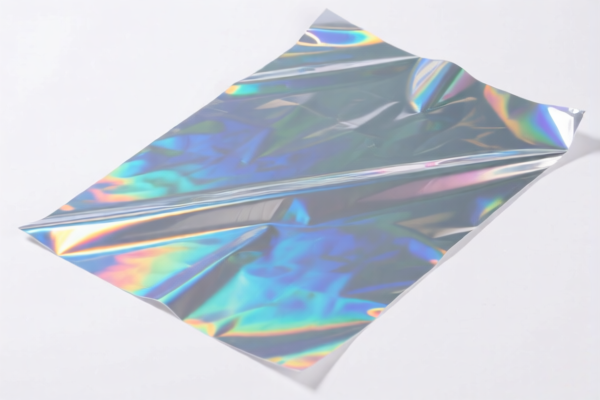
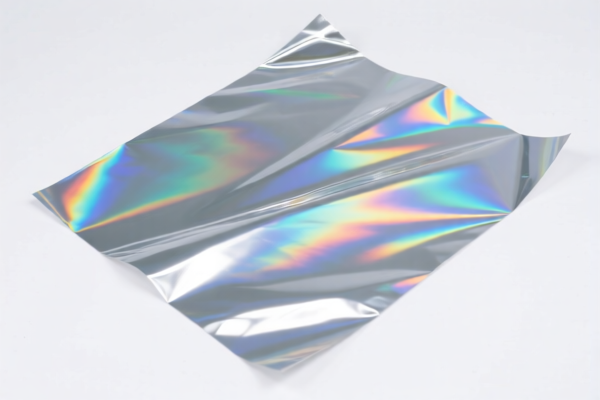

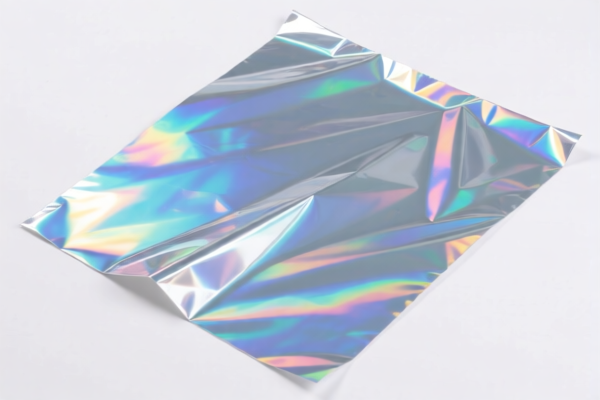
AI Analysis
🚧 Reflective Plastic Traffic Sign Sheet
🌐 HS Code Reference & Customs Clearance Guide | 2026 Latest Tariff Analysis | Professional Clearance Strategy
📌 Part I: Product Definition & Classification: What Exactly Is a "Reflective Plastic Traffic Sign Sheet"?
A Reflective Plastic Traffic Sign Sheet is a specialized industrial material used in traffic control, road safety, and vehicle identification. It consists of a plastic substrate (such as acrylic, PVC, or polycarbonate) coated with retro-reflective sheeting.
In international trade, these products are often ambiguous. They can be classified in two fundamentally different ways depending on their form and function:
- As a Finished Article: A sign board that is ready to be installed or attached to a vehicle.
- As a Raw Material/Component: A roll or sheet of plastic material intended for further processing (cutting, printing, laminating) into signs.
⚠️ Critical Distinction Point: - If the product is a composite board/sheet primarily composed of plastic material, it often falls under Chapter 39 (Plastics). - If it is considered a specific "reflective marking" item not elsewhere specified, it may fall under HS 3926.90 (Other articles of plastics). - Misclassification Risk: Declaring a finished sign board as a raw "plastic sheet" or vice versa can lead to significant tariff discrepancies, especially with the complex US trade policy landscape (Section 301, Section 122, Base Duties).
📦 Part II: HS Code Classification Details (2026 Latest Tariff Authority Mapping)
Based on the provided data, the product is classified under five potential HS Codes. The differences lie in whether the product is viewed as a "general plastic article," a "specific composite sheet," or a "specific plastic board."
| HS Code | Product Description | Application Scenario | Classification Logic |
|---|---|---|---|
3926.90.99.25 |
Plastic Reflective Sign Board Material: Plastic; Use: Reflective Signage |
Best Fit for Finished Signs Direct-use traffic or vehicle signs |
✅ Highly Accurate Matches "Reflective Sign" description perfectly. |
3926.90.99.89 |
Plastic Reflective Sign Board Material: Plastic; Classified as "Other plastic articles" |
Fallback for General Plastic Items If specific "reflective sign" code is unavailable |
⚠️ Acceptable Used when the item is considered a generic plastic article without specific sub-heading. |
3920.99.10.00 |
Plastic Reflective Sign Board Material: Plastic; Form: Composite Board/Sheet/Film |
Material-Focused Classification Treated as a composite plastic sheet |
🔶 Riskier Classified as "Other plastic plates/sheets/films." Triggers higher base/import duties. |
3920.59.10.00 |
Plastic Reflective Sign Board Material: Acrylic Polymer (Plastic); Form: Sheet |
Acrylic-Specific Classification Assumes the plastic is acrylic |
🔶 Riskier Specific to acrylic polymers. High duty rate if material is not pure acrylic. |
3920.99.50.00 |
Plastic Reflective Vehicle Panel Material: Plastic; Form: Board |
Vehicle-Specific Classification Treated as a panel for vehicles |
🔶 Niche Only applicable if explicitly for vehicle body use, not general traffic signs. |
🔍 Key Insight:
- Codes3926.90.99.25and3926.90.99.89have a Total Tax of 22.8%.
- Codes3920...series have a Total Tax of 40.8% - 41.0%.
- Choosing the wrong code can increase your tax burden by nearly 20%.
💰 Part III: 2026 Latest Tariff Rate Breakdown (Including Surtaxes & Policy Add-ons)
✅ Applicable Country: United States (US)
✅ Origin: China (CN)
✅ Effective Time: Current US Trade Policy (Post-2025 Adjustments)
🎯 1. The "Low Tax" Route: 3926.90.99.25 & 3926.90.99.89
These codes classify the item as a "finished article of plastic" rather than a raw material. This is generally the preferred classification for reflective signs.
| Item | Content |
|---|---|
| Base Tariff (MFN) | 5.3% (Standard Most Favored Nation rate for other plastic articles) |
| Section 301 Surtax | +7.5% (Additional duty under US Trade Act Section 301) |
| Section 122 Tariff | +10.0% (Specific tariff applied under Section 122 authority) |
| Total Effective Rate | 22.8% |
| Tax Calculation | CIF Value × 22.8% |
| De Minimis Eligibility | ❌ No (Section 301 and Section 122 duties typically do not apply to de minimis exemptions for commercial shipments, or thresholds are extremely low for Chinese goods) |
| Legal Basis Path | HTSUS:3926.90.99 → USITC:Section 301:7.5% → Executive Order:122:10% |
📌 Explanation:
- The 5.3% is the standard US base duty for other plastic articles. - The 7.5% is the Section 301 tariff added to Chinese imports. - The 10% is an additional tariff under Section 122 (often applied to specific categories or as a punitive measure). - Total 22.8% is significantly lower than the 40%+ rates for plastic sheets.
🎯 2. The "High Tax" Route: 3920.99.10.00, 3920.59.10.00, 3920.99.50.00
These codes classify the item as a plastic plate, sheet, film, or board (Chapter 39, Heading 3920). This is treated as a raw material or intermediate good, attracting higher base duties.
| Item | Content |
|---|---|
| Base Tariff (MFN) | 6.0% (for 3920.99.10 / 3920.59) or 5.8% (for 3920.99.50) |
| Section 301 Surtax | +25.0% (Higher Section 301 rate for plastic sheets/plates) |
| Section 122 Tariff | +10.0% |
| Total Effective Rate | 41.0% (for .10/.59) or 40.8% (for .50) |
| Tax Calculation | CIF Value × 41.0% |
| De Minimis Eligibility | ❌ No |
| Legal Basis Path | HTSUS:3920 → USITC:Section 301:25% → Executive Order:122:10% |
📌 Note:
- The 25% Section 301 duty for plastic sheets/plates is higher than the 7.5% for other plastic articles. This is the primary driver of the cost difference. - Even if you are exporting a "sign," if customs views it as a "plastic sheet," you pay the higher rate.
🛠️ Part IV: Customs Clearance Practical Advice (Battle-Tested Pitfall Guide)
✅ 1. Documentation Checklist (Non-Negotiable)
| Document | Mandatory | Description |
|---|---|---|
| ✅ Product Specification Sheet | ✔️ | Must clearly state: Material (e.g., Acrylic, PVC), Dimensions, Reflectivity Class (e.g., Engineer Grade, High Intensity), and End Use (Traffic Sign vs. Raw Material). |
| ✅ Commercial Invoice | ✔️ | Must NOT use vague terms like "Plastic Sheet." Use "Plastic Reflective Traffic Sign Board" or "Reflective Signage Material." |
| ✅ Product Photos | ✔️ | Clear images showing the reflective surface, edges, and any mounting holes/frames. Proves it is a "finished article" or specific sign component. |
| ✅ Packing List | ✔️ | Detail the weight and dimensions. If shipped in rolls, it leans towards "sheet" classification. If shipped as rigid boards, it leans towards "article." |
| ✅ Origin Certificate | ✔️ | To confirm China origin, which triggers the surtaxes. |
✅ 2. Declaration Strategy (Key Mantra)
🔥 "Describe the Function, Not Just the Material!"
| Scenario | Correct Declaration | Wrong Declaration | Consequence |
|---|---|---|---|
| Finished Sign Board | "Plastic Reflective Traffic Sign Board, Model ABC" | "Plastic Sheet, 2mm Thick" | ❌ Risk of reclassification to 3920 → Tax jumps from 22.8% to 41% |
| Roll of Reflective Film | "Reflective Plastic Film for Sign Making" | "Traffic Sign" | ⚠️ Likely 3920 classification → Higher Tax (but may be intentional if it's raw material) |
| Acrylic Sign | "Acrylic Polymer Reflective Sign Board" | "Glass Sign" | ❌ Misdeclaration → Fines + Delay |
| Composite Sign | "Multi-layer Plastic Reflective Article" | "Metal Sign" | ❌ Wrong HS Chapter → Major Audit Risk |
✅ 3. Special Handling Tips
| Situation | Handling Advice |
|---|---|
| Shipping in Rolls | If you ship reflective film in rolls, it is almost certainly classified under 3920 (Plastic Sheets). You cannot avoid the 41% tax just by calling it a "sign." Be prepared for the higher tax. |
| Shipping as Rigid Boards | If the plastic is rigid and cut to shape (or sold as rigid boards for signage), argue for 3926.90 (Other Articles) to qualify for the 22.8% rate. Provide photos of rigid, handled boards. |
| Customs Inquiry | If customs questions the value or classification, provide a Pre-Ruling Request or Advance Classification Ruling from CBP. This is the only way to guarantee the 22.8% rate. |
| Labeling | Ensure the product label says "Reflective Signage Material" or "Traffic Sign Component." Avoid labels like "Plastic Raw Material." |
🌍 Part V: Global Market Comparison (2026 Latest)
| Country/Region | Recommended HS Code | Estimated Tax (China Origin) | Certification Required | Notes |
|---|---|---|---|---|
| 🇺🇸 USA | 3926.90.99.25 |
22.8% (Base 5.3% + S301 7.5% + S122 10%) | None specific | Highest risk of misclassification. Fight for 3926! |
| 🇨🇳 China | 3926.90.99 |
~5-10% | CCC (if applicable) | Lower duties, but domestic production is competitive. |
| 🇪🇺 EU | 3926.90 |
0-4.5% | CE Marking (if applicable) | No Section 301/122 equivalents. Lower overall cost. |
| 🇬🇧 UK | 3926.90 |
0-4.5% | UKCA Marking | Post-Brexit rules similar to EU for plastics. |
| 🇨🇦 Canada | 3926.90 |
0-6.5% | None | NAFTA/USMCA may apply if manufactured in North America. |
📌 Conclusion:
- The US is the only major market imposing punitive surtaxes (Section 301/122) on Chinese plastic goods. - The difference between 22.8% and 41% is massive. Every shipment is worth ~18% of its value in tax savings if classified correctly. - Strategy: Always aim for3926.90.99.25by proving the item is a "finished article" (rigid, specific use) rather than a "sheet" (raw material).
📌 Part VI: Common Errors & Pitfall Guide (Lessons from Blood & Tears)
❌ Mistake 1: Declaring a rigid, cut-to-size reflective sign board as "Plastic Sheet."
👉 Result: Customs assigns 3920.99.10.00. Tax increases from 22.8% to 41%.
👉 Fix: Provide photos of the rigid board and state "Ready for mounting."
❌ Mistake 2: Using generic term "Reflective Material" without specifying "Sign."
👉 Result: Customs may assume raw film (3920) or reject the classification.
👉 Fix: Use specific terms: "Reflective Traffic Sign Board."
❌ Mistake 3: Ignoring the "122 Clause" Tariff.
👉 Result: Underestimating costs. The 10% Section 122 duty is always added to the base + 301 duty for these HS codes.
👉 Fix: Budget for Total 22.8% or 41.0% from Day 1.
✅ Correct Practice:
"Plastic Reflective Traffic Sign Board, Rigid, Acrylic Base, Engineer Grade Reflective Film, For Road Safety Use, Model XYZ, No Mounting Hardware Included."
🎯 Part VII: Conclusion: Professional Declaration Saves Money!
🎯 Remember the Mantra:
🔹 "Rigid Board? 3926! (22.8%)"
🔹 "Raw Sheet? 3920! (41%)"
🔹 "Don't Let Raw Material Rates Eat Your Profit!"
📌 Pro Tip:
If your product is flexible film in rolls, you cannot avoid the 41% rate. It is legally a plastic sheet. However, if you laminate it onto a rigid backing before export, it may qualify as a "composite article" under 3926.
Recommendation: Consult with a US Customs Broker for an Advance Ruling before your first shipment. The small fee for the ruling can save thousands on future shipments.
📣 Immediate Action:
📞 Contact Your Customs Broker
🖼️ Provide Photos of the Physical Product (Rigid vs. Roll)
📝 Request HS Code Pre-Ruling
🚀 Ensure Your Invoice Says "Sign Board," Not "Plastic Sheet"
✨ Professional Clearance Starts with Accurate Classification!
💼 Your Every Dollar of Duty is Worth Fighting For!
Customer Reviews
About HS Code Classification
The Harmonized System (HS) is an internationally standardized nomenclature developed by the World Customs Organization (WCO) to classify traded products. Over 200 countries use the HS system as the basis for customs tariffs, trade statistics, and import/export regulations.
Each HS code follows a hierarchical structure:
- Chapter (2 digits) — Broad category of goods (e.g., Chapter 84: Machinery and Mechanical Appliances)
- Heading (4 digits) — More specific grouping within the chapter
- Subheading (6 digits) — Internationally standardized breakdown, used by all WCO member countries
- National subdivisions (8-10 digits) — Country-specific extensions for further classification, such as US HTSUS 10-digit codes
Correct HS code classification is essential for smooth customs clearance, accurate duty payment, and compliance with trade regulations. Misclassification can lead to customs delays, overpayment of duties, or penalties.
When importing from CN to US, the applicable tariff rates may include:
- Most-Favored-Nation (MFN) rate — The standard duty rate applied to WTO members
- General rate — Applied to countries without trade agreements
- Trade remedy duties — Additional tariffs such as Section 301 (anti-dumping), Section 232 (national security), or countervailing duties
The information provided on this page is for reference purposes only. For official classification, please consult with your local customs authority or a licensed customs broker.