Reflective Safety Vest
CN → US| HS Code | Tariff Rate | Origin | Destination | Doc |
|---|---|---|---|---|
| 6217909045 | 32.1% | CN | US | Official Doc |
| 6117809510 | 32.1% | CN | US | Official Doc |
| 6117809540 | 32.1% | CN | US | Official Doc |
| 6217909095 | 32.1% | CN | US | Official Doc |
Product Images
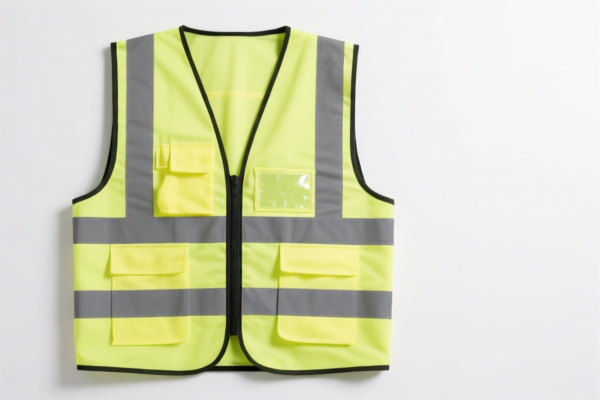
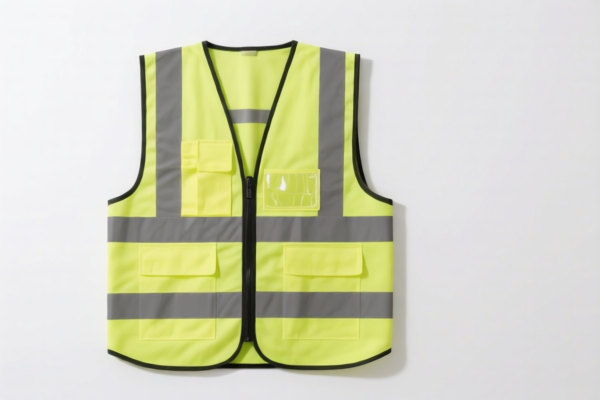
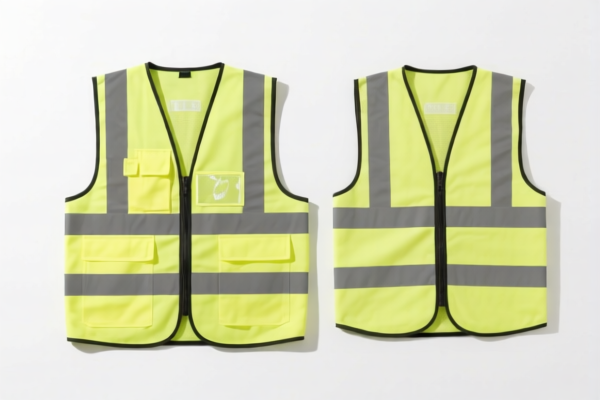

AI Analysis
🦺 Reflective Safety Vest (High-Visibility Apparel)
🌐 HS Code Reference & Customs Clearance Guide | 2026 Latest Tariff Analysis | Professional Compliance Strategy
📌 I. Product Definition & Classification: Do You Really Understand "Reflective Vests"?
A Reflective Safety Vest is a critical piece of Personal Protective Equipment (PPE) designed to enhance the visibility of workers in low-light conditions. In international trade, its classification is tricky because it can be viewed as either a garment accessory or a component/part. The key distinction lies in whether it is considered a finished article of apparel (knitted/woven) or a manufactured accessory/trim.
⚠️ Key Classification Logic:
- If the vest is knitted or crocheted and fits the general description of an accessory → It falls under 6117.80.
- If the vest is made up (sewn from woven fabric) and treated as a garment part/trim → It falls under 6217.90.
- Material Matters: Most are synthetic (Polyester/Nylon), which influences the specific sub-heading under the respective chapters.
📦 II. HS Code Classification Matrix (2026 Latest Tariff Authority)
Based on the provided data, there are four primary HS Code options for "Children's Reflective Vests." Note that while the summary mentions "Children's," the classification logic applies to the general category of reflective vests unless specifically exempted for infants (which is rare for high-vis gear).
| HS Code | Product Description | Material/Type | Application Scenario |
|---|---|---|---|
6217.90.90.45 |
Garment Accessory/Part | Synthetic Fiber | Woven reflective vests treated as "other" garment parts |
6117.80.95.10 |
Knitted/Crocheted Accessory | General/Other | Knitted high-vis accessories fitting the "other accessories" catch-all |
6117.80.95.40 |
Made-Up Accessory | Man-Made Fiber (e.g., Polyester/Nylon) | Synthetic knitted accessories with specific fiber content |
6217.90.90.95 |
Made-Up Garment Part/Trim | Polyester/Synthetic | Woven vests treated as finished accessories/trimmings |
🔍 Critical Note:
- Chapter 61 (6117) applies to Knitted or Crocheted articles.
- Chapter 62 (6217) applies to Beaded or Woven articles (not knit).
- You MUST determine if the vest is Knit or Woven. This is the primary decision driver.
- The specific 8-digit suffixes (95.10,95.40,90.45,90.95) are determined by the specific material composition and "other" classification within those chapters.
💰 III. 2026 Latest Tariff Rate Breakdown (Including Surcharges)
✅ Applicable Market: United States (US)
✅ Origin: China (CN)
✅ Effective Date: Current tariffs apply including Section 301 and 122 Clause impacts.
All four HS Codes listed in the data share the same total tax liability. This is a crucial insight for customs brokers: The classification path changes the description, but the tax burden remains identical for these specific sub-headings.
🎯 Unified Tariff Structure for All Listed HS Codes
| Component | Rate | Description |
|---|---|---|
| Basic Duty | 14.6% | Standard MFN (Most Favored Nation) rate for accessories/trimmings |
| Section 301 Surcharge | 7.5% | Additional tariff under US Trade Law Section 301 (China-specific) |
| Section 122 Surcharge | 10.0% | Additional tariff under Section 122 of the Trade Act (National Security/Emergency) |
| TOTAL TAX RATE | 32.1% | 14.6% + 7.5% + 10.0% |
| Tax Calculation | CIF Value × 32.1% |
Ad Valorem basis |
📌 Explanation of Clauses:
- Base 14.6%: The standard import duty for textile accessories (HS 6117/6217) from China without surcharges.
- Section 301 (7.5%): Part of the ongoing trade war tariffs targeting Chinese manufactured goods, including apparel components.
- Section 122 (10%): Often invoked under national security or emergency provisions; note that this is a distinct surcharge layered on top.
- ⚠️ Warning: There is no de minimis exemption for these items under current strict interpretations of PPE/Textile surcharges. Plan for 32.1% duty cost.
🛠️ IV. Customs Clearance Practical Advice (Pitfall Avoidance Guide)
✅ 1. Documentation Checklist (Non-Negotiable)
| Document | Required? | Purpose |
|---|---|---|
| ✅ Product Composition Sheet | ✔️ | Must specify % of Polyester, Nylon, Mesh, etc. to justify 6117.80.95.40 vs others |
| ✅ Technical Specs | ✔️ | Define if Knit (Chapter 61) or Woven (Chapter 62). This is the #1 audit trigger |
| ✅ Photos of Item | ✔️ | Clear view of seams, reflective striping, and label |
| ✅ Commercial Invoice | ✔️ | Must state "Reflective Safety Vest" and specify "Children's" if applicable to match HS summary |
| ✅ Certificate of Origin | ✔️ | To prove Chinese origin for accurate Section 301/122 assessment |
| ✅ Labeling | ✔️ | Ensure country of origin ("Made in China") is permanently affixed |
✅ 2. Declaration Strategy (Key Mnemonic)
🔥 “Knit is 61, Woven is 62. Synthetic makes it specific. 32.1% is the floor!”
| Scenario | Correct HS Approach | Error to Avoid |
|---|---|---|
| Knitted Vest (Looped yarn) | Use 6117.80.95.xx series | Do NOT use 6217 (Woven) |
| Woven Vest (Interlaced threads) | Use 6217.90.90.xx series | Do NOT use 6117 (Knitted) |
| Synthetic Material | Use sub-codes mentioning "Man-Made" (...95.40) |
Avoid generic "Textile" descriptions |
| Mixed Materials | Classify based on principal material | Misidentifying material leads to classification errors |
✅ 3. Special Handling for "Children's" Labeling
| Issue | Handling Advice |
|---|---|
| Age Classification | If intended for children < 12, specify "Children's" in description to match the provided HS summaries exactly |
| Safety Standards | Ensure compliance with ANSI/ISEA 107 or EN ISO 20471 standards. Customs may request test reports for PPE classification |
| Packaging | Retail-ready vs. Bulk. Retail packaging must have clear labeling to avoid "Undeclared Goods" flags |
🌍 V. Global Market Comparison (2026 Context)
| Region | HS Code Family | Est. Duty (China Origin) | Key Compliance | Note |
|---|---|---|---|---|
| 🇺🇸 USA | 6117.80 / 6217.90 |
32.1% (incl. Sec 301/122) | Labeling, PPE Standards | High Cost due to layered surcharges |
| 🇨🇳 China | 6117.80 / 6217.90 |
~5-8% | CCC (if applicable) | Low duty, no US-style surcharges |
| 🇪🇺 EU | 6117.80 / 6217.90 |
4-12% | CE Marking, REACH | No Section 301/122 equivalents |
| 🇬🇧 UK | 6117.80 / 6217.90 |
4-12% | UKCA Marking | Post-Brexit rules apply |
📌 Conclusion:
- The USA is the most expensive market for this item due to the 32.1% effective rate.
- No other major market combines Section 301 and Section 122 surcharges on textile accessories.
- Margins must be protected by absorbing this cost or adjusting FOB prices.
📌 VI. Common Errors & Pitfalls (Blood Lessons)
❌ Mistake 1: Confusing Knit vs. Woven
👉 Result: Wrong HS Code (6117 vs 6217). While the tax is the same here, incorrect description can lead to detention and reclassification fees.
✅ Fix: Check the fabric construction. If it stretches like a t-shirt → Knit (6117). If it’s like a jacket → Woven (6217).
❌ Mistake 2: Ignoring Section 122 Clause
👉 Result: Underpaying duty. Customs will assess the missing 10% upon audit.
✅ Fix: Always calculate 14.6% + 7.5% + 10% = 32.1% for budgeting.
❌ Mistake 3: Generic Description "Safety Vest"
👉 Result: Customs asks for detailed material breakdown.
✅ Fix: Use specific language: "Children's Reflective Safety Vest, Knitted, Polyester Mesh with Nylon Reflective Strips."
🎯 VII. Conclusion: Professional Declaration for Smooth Clearance
🎯 Remember the Strategy:
🔹 “Knit = 61, Woven = 62. Check the Fabric.
🔹 “32.1% is the Truth: Base 14.6, Sec301 7.5, Sec122 10.
🔹 “Be Specific: Synthetic, Made-Up, Accessory. Don’t be Generic.”
📌 Pro Tip:
Since all four HS Codes result in the same 32.1% total tax, focus on correct descriptive accuracy to prevent delays.
- If you are unsure if it's knit or woven, request a fabric swatch analysis from your supplier before shipping.
- Consider applying for a Binding Tariff Information (BTI) or US CBP Ruling if shipping large volumes, to lock in the HS Code classification and avoid post-audit surprises.
📣 Immediate Action:
📞 Verify Fabric Construction (Knit vs Woven) with Supplier
📄 Prepare Detailed Material Breakdown (% Polyester, % Nylon, % Mesh)
💵 Budget for 32.1% Total Landed Duty Cost
✨ Precision in Classification = Predictability in Costs!
💼 Your Safety Vests, Clear Path, Compliant Clearance.
Customer Reviews
About HS Code Classification
The Harmonized System (HS) is an internationally standardized nomenclature developed by the World Customs Organization (WCO) to classify traded products. Over 200 countries use the HS system as the basis for customs tariffs, trade statistics, and import/export regulations.
Each HS code follows a hierarchical structure:
- Chapter (2 digits) — Broad category of goods (e.g., Chapter 84: Machinery and Mechanical Appliances)
- Heading (4 digits) — More specific grouping within the chapter
- Subheading (6 digits) — Internationally standardized breakdown, used by all WCO member countries
- National subdivisions (8-10 digits) — Country-specific extensions for further classification, such as US HTSUS 10-digit codes
Correct HS code classification is essential for smooth customs clearance, accurate duty payment, and compliance with trade regulations. Misclassification can lead to customs delays, overpayment of duties, or penalties.
When importing from CN to US, the applicable tariff rates may include:
- Most-Favored-Nation (MFN) rate — The standard duty rate applied to WTO members
- General rate — Applied to countries without trade agreements
- Trade remedy duties — Additional tariffs such as Section 301 (anti-dumping), Section 232 (national security), or countervailing duties
The information provided on this page is for reference purposes only. For official classification, please consult with your local customs authority or a licensed customs broker.