Reflective Warning Plastic Sheet
CN → US| HS Code | Tariff Rate | Origin | Destination | Doc |
|---|---|---|---|---|
| 3919101050 | 41.5% | CN | US | Official Doc |
| 3926909925 | 22.8% | CN | US | Official Doc |
| 3919905010 | 40.8% | CN | US | Official Doc |
| 3926909989 | 22.8% | CN | US | Official Doc |
| 3926909925 | 22.8% | CN | US | Official Doc |
Product Images

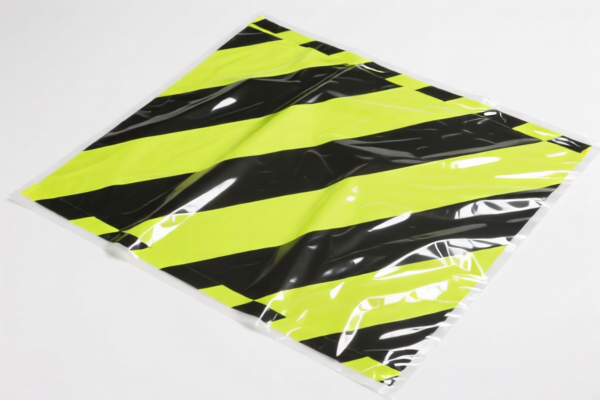
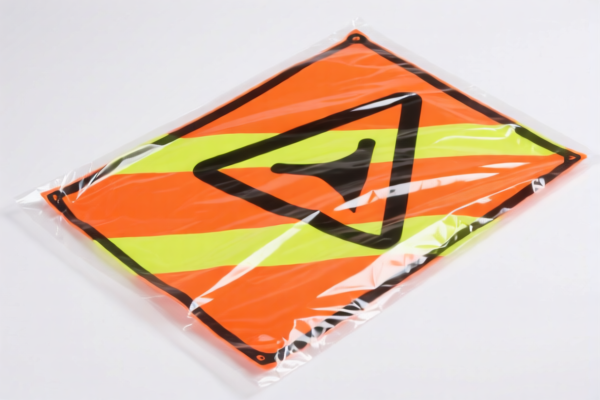
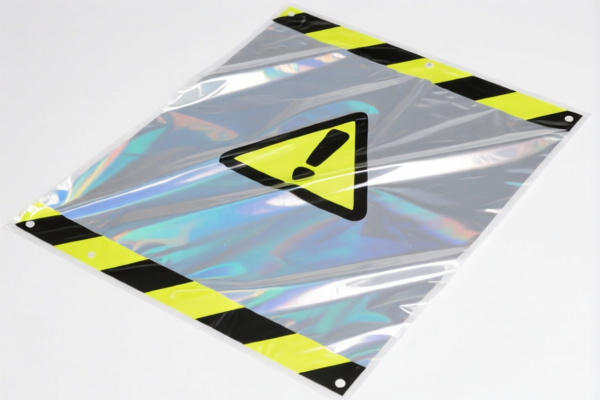
AI Analysis
🚧 Reflective Warning Plastic Sheet (反光警示塑料片)
🌐 HS Code Reference & Customs Clearance Guide | 2026 Latest Tariff Analysis | Professional Clearance Strategy
📌 I. Product Definition & Classification: What Exactly Is a "Reflective Warning Plastic Sheet"?
A Reflective Warning Plastic Sheet is a functional material used primarily for traffic safety, hazard marking, and logistics identification. In international trade, its classification hinges on three critical attributes: 1. Material: Plastic (typically polyester, PVC, or acrylic). 2. Function: Reflective (uses glass beads or micro-prisms to reflect light). 3. Form: Flat, sheet, tape, or label-like application.
⚠️ Critical Distinction:
- If the product is a raw reflective film/sheet intended for further processing (like cutting into signs) → It may fall under Chapter 39 (Plastics).
- If it is a finished road sign or vehicle marking with specific adhesive or backing not considered just "plastic sheets" → It might fall under Chapter 39 or 3926, but careful analysis of "specific use" vs. "generic plastic" is required.
- Key Trap: Many importers mistakenly classify reflective signs as generic plastic parts, leading to underpayment of duties. Conversely, generic plastic sheets are often over-classified into high-duty reflective categories.
📦 II. HS Code Classification Details (Based on Provided Data)
The provided data suggests four distinct HS Code candidates, with two codes appearing twice with slight variations in summary. Below is the consolidated analysis based strictly on the <DATA> provided.
| HS Code | Total Tax Rate | Tax Breakdown (Base + Add'l) | Summary & Logic from Data |
|---|---|---|---|
| 3919.10.10.50 | 41.5% | Base: 6.5% Add'l: 25.0% (Section 301) 122 Clause: 10% |
"Reflective" matches material trait (glass beads creating reflective surface); "Plastic" defines material; "Label" fits flat shape/application under "Other" category inference. |
| 3926.90.99.25 | 22.8% | Base: 5.3% Add'l: 7.5% (Section 301) 122 Clause: 10% |
Match Success. Material: Plastic. Use: Reflective Safety. Consistent with "Plastic Articles" and "Road-use Reflective" functional attributes. |
| 3919.90.50.10 | 40.8% | Base: 5.8% Add'l: 25.0% (Section 301) 122 Clause: 10% |
Match Success. "Reflective" = Use; "Plastic" = Material; "Label" = Flat sheet/tape form. Follows reflective sheet classification logic. |
| 3926.90.99.89 | 22.8% | Base: 5.3% Add'l: 7.5% (Section 301) 122 Clause: 10% |
Match Material: Plastic. "Label" is a specific application of plastic articles, fitting the "Other Plastic Articles" catch-all category. No material conflict. |
🔍 Note on Duplicate Entries:
The HS Code3926.90.99.25appears twice in the data with slightly different summary texts but identical tax rates. This indicates a robust classification match for this code when the product is viewed as a "Reflective Safety" plastic article.
💰 III. Detailed Tariff Rate Analysis (2026 Latest)
✅ Country: United States (US)
✅ Origin: China (CN) (Implied by Section 301 & 122 Clause taxes)
✅ Effective Date: Current as of 2026
🎯 1. High-Tariff Path: 3919.10.10.50 & 3919.90.50.10 (Reflective Sheets/Films)
These codes are classified under Chapter 3919 (Self-adhesive plates, sheets, film, paper, etc.). The data implies a stricter interpretation where the "reflective" nature triggers higher Section 301 duties.
| Item | Details |
|---|---|
| HS Code | 3919.10.10.50 or 3919.90.50.10 |
| Base Duty | 5.8% - 6.5% |
| Section 301 Duty | +25.0% (High tariff bracket) |
| Section 122 Clause | +10.0% (Specific regulatory surcharge) |
| Total Tax Rate | 40.8% - 41.5% |
| Calculation | CIF Value × ~41% |
| Legal Path | USITC:3919.x.x.x.x → Section 301: 25% → Section 122: 10% |
📌 Interpretation:
- The 25% Section 301 duty suggests these are viewed as strategic or specific plastic products targeted by US-China trade policies. - The 10% Section 122 is a significant additional burden, often applied to specific categories of goods under emergency powers or specific trade acts. - Risk: High cost. Requires justification if attempting to classify elsewhere.
🎯 2. Low-Tariff Path: 3926.90.99.25 & 3926.90.99.89 (Other Plastic Articles)
These codes fall under Chapter 3926 (Other articles of plastics). The data supports this classification if the product is viewed as a "finished plastic article" (like a label or sign) rather than a raw reflective sheet.
| Item | Details |
|---|---|
| HS Code | 3926.90.99.25 or 3926.90.99.89 |
| Base Duty | 5.3% |
| Section 301 Duty | +7.5% (Lower tariff bracket) |
| Section 122 Clause | +10.0% (Same surcharge applies) |
| Total Tax Rate | 22.8% |
| Calculation | CIF Value × 22.8% |
| Legal Path | USITC:3926.90.99.xx → Section 301: 7.5% → Section 122: 10% |
📌 Interpretation:
- The 7.5% Section 301 duty is significantly lower than the 25% bracket. - Crucial Point: The 10% Section 122 duty still applies, which negates some of the savings. However, 22.8% vs 41.5% is a massive difference. - Strategy: If the product can be legitimately argued as a "finished plastic article" (e.g., a pre-cut reflective label) rather than a "raw reflective sheet," this classification is highly advantageous.
🛠️ IV. Customs Clearance Practical Advice
✅ 1. Preparation Checklist (Essential Documents)
| Document | Required? | Purpose |
|---|---|---|
| Product Specifications | ✅ Yes | Detail material (PVC/PET), adhesive type, reflective technology (beads/prisms). |
| Product Photos | ✅ Yes | Show the product in its packaged form, highlighting "Label" or "Sheet" appearance. |
| Commercial Invoice | ✅ Yes | Clearly state "Reflective Warning Plastic Sheet" or "Reflective Labels." Avoid vague terms like "Plastic Parts." |
| Usage Declaration | ✅ Yes | Specify end-use: Traffic signs, vehicle safety, warehouse labeling, etc. |
| Certifications | ✅ Optional but Recommended | DOT/ASTM standards for reflective materials (proves safety function). |
✅ 2. Classification Strategy & Tips
🔥 "Label vs. Sheet: Define the Form, Define the Tax!"
| Scenario | Recommended HS Code | Tax Rate | Strategy |
|---|---|---|---|
| Pre-cut Reflective Labels/Stickers | 3926.90.99.25 / 3926.90.99.89 |
22.8% | Argue as "Finished Plastic Articles" (labels). Provide proofs of specific use. |
| Large Rolls of Reflective Film (Raw) | 3919.10.10.50 / 3919.90.50.10 |
41.5% | Likely classified as self-adhesive sheets. Higher duty. |
| Reflective Sheets with Specific Safety Standards | 3926.90.99.25 |
22.8% | Emphasize "Safety Application" and "Finished Article" status. |
| Generic Plastic Sheets (Non-Reflective) | 3926.90.99.89 |
22.8% | Not applicable here, but good baseline. |
📌 Key Tip:
- If you are importing reflective labels (small, cut-to-size), fight for 3926.
- If you are importing large rolls of reflective film for printing/sign-making, be prepared for 3919.
- Do not under-declare: Misclassifying 3919 as 3926 without justification can lead to audits and penalties.
✅ 3. Special Considerations
| Situation | Advice |
|---|---|
| Section 122 Clause (10%) | This duty applies to most Chinese-origin plastics in this range. No exemption is indicated in the data. Plan for this cost. |
| Product Description | Use precise terms: "Self-adhesive Reflective Plastic Label, Type III, for Traffic Safety" rather than just "Plastic Sheet." |
| Pre-Ruling | If importing in large volumes, apply for an Advance Ruling from CBP to confirm whether 3926 or 3919 applies. |
🌍 V. Global Market Comparison (2026)
| Region | Likely HS Code | Est. Duty (Excl. Add'l) | Notes |
|---|---|---|---|
| 🇺🇸 USA | 3926.90.99.25 |
22.8% (incl. 122 Clause) | Most competitive for labeled/finished goods. |
| 🇺🇸 USA | 3919.10.10.50 |
41.5% (incl. 122 Clause) | High duty for raw reflective sheets. |
| 🇨🇳 China | 3920.62.00.00 (Import) |
~5-7% | Lower base duty, no Section 301/122. |
| 🇪🇺 EU | 3920.62.00 |
~6.5% | No equivalent 25% or 10% surcharges. |
📌 Conclusion:
- The US market imposes significant Section 301 (7.5% or 25%) and Section 122 (10%) tariffs.
- Optimization: Classify as 3926.90.99.25 (22.8%) if the product is a finished label or safety article. This saves ~18.7% in total duties compared to the 3919 classification.
📌 VI. Common Errors & Pitfalls
❌ Error 1: Classifying reflective labels as "Plastic Parts" (3926) when they are clearly "Self-Adhesive Sheets" (3919).
👉 Consequence: Possible audit, but 3926 is often accepted for pre-cut items. Risk is low if well-documented.
❌ Error 2: Ignoring the 122 Clause (10%).
👉 Consequence: Underpayment of duties. This duty is mandatory for many Chinese plastic goods.
❌ Error 3: Misdeclaring material.
👉 Consequence: If the sheet is glass or metal-backed, 39xx codes are invalid. Must be plastic.
✅ Correct Approach:
"Reflective Safety Labels, PVC Material, Self-Adhesive, Pre-Cut, for Traffic Use, Model XYZ" → 3926.90.99.25
🎯 VII. Conclusion: Professional Clearance, Cost Control
🎯 Key Takeaway:
🔹 "Labels = 3926 (22.8%) | Sheets = 3919 (41.5%)"
🔹 "Don't forget the 122 Clause (10%) on both!"
🔹 "Justify 'Finished Article' status to claim the lower tariff."
📌 Pro Tip:
If your product is a reflective sheet intended for further manufacturing (e.g., cutting into signs), consider if it can be declared as a "Plastic Article for Safety Use" (3926) rather than a raw sheet (3919). This requires strong documentation of its specific, finished form.
📣 Action Required:
📞 Consult a customs broker to validate the 3926 classification for your specific product form.
📄 Ensure your invoice clearly states "Reflective Safety Label/Article" to support the lower duty rate.
🚀 Save nearly 19% in duties by choosing the correct HS Code!
✨ Precision in Classification, Profit in Clearance!
💼 Your Bottom Line Depends on These 22.8% vs 41.5% Choices.
Customer Reviews
About HS Code Classification
The Harmonized System (HS) is an internationally standardized nomenclature developed by the World Customs Organization (WCO) to classify traded products. Over 200 countries use the HS system as the basis for customs tariffs, trade statistics, and import/export regulations.
Each HS code follows a hierarchical structure:
- Chapter (2 digits) — Broad category of goods (e.g., Chapter 84: Machinery and Mechanical Appliances)
- Heading (4 digits) — More specific grouping within the chapter
- Subheading (6 digits) — Internationally standardized breakdown, used by all WCO member countries
- National subdivisions (8-10 digits) — Country-specific extensions for further classification, such as US HTSUS 10-digit codes
Correct HS code classification is essential for smooth customs clearance, accurate duty payment, and compliance with trade regulations. Misclassification can lead to customs delays, overpayment of duties, or penalties.
When importing from CN to US, the applicable tariff rates may include:
- Most-Favored-Nation (MFN) rate — The standard duty rate applied to WTO members
- General rate — Applied to countries without trade agreements
- Trade remedy duties — Additional tariffs such as Section 301 (anti-dumping), Section 232 (national security), or countervailing duties
The information provided on this page is for reference purposes only. For official classification, please consult with your local customs authority or a licensed customs broker.