Reflective Warning Sticker
CN → US| HS Code | Tariff Rate | Origin | Destination | Doc |
|---|---|---|---|---|
| 5903102090 | 35.0% | CN | US | Official Doc |
| 3919101010 | 41.5% | CN | US | Official Doc |
| 3919905010 | 40.8% | CN | US | Official Doc |
| 3921110000 | 40.3% | CN | US | Official Doc |
| 5903102010 | 35.0% | CN | US | Official Doc |
Product Images

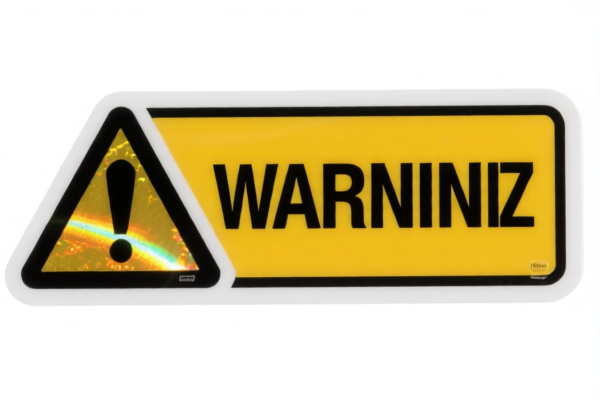
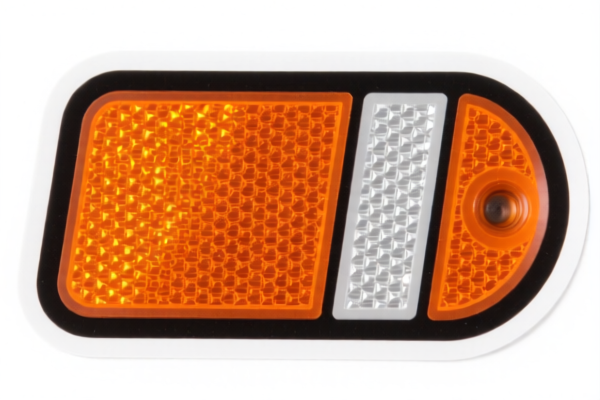
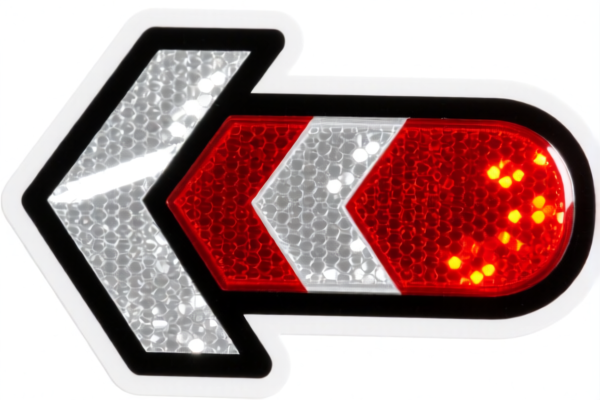
AI Analysis
🌈 Reflective Warning Sticker (反光材料贴)
🌐 HS Code Reference & Customs Clearance Guide | 2026 Latest Tariff Analysis | Professional Clearance Strategy
📌 I. Product Definition & Classification: What Exactly is a "Reflective Warning Sticker"?
A Reflective Warning Sticker is a safety accessory designed to enhance visibility in low-light conditions. In international trade, its classification hinges on two critical factors: 1. Material Composition: Is it primarily a plastic/film (self-adhesive sheet) or a textile/fabric coated with plastic? 2. Form/State: Is it a simple roll/sheet of reflective material (Chapter 39) or a textile product impregnated/covered with plastic (Chapter 59)?
⚠️ Key Distinction:
- If the base is a plastic film/polymer with a self-adhesive backing and reflective layer (glass beads or prismatic film) → It is typically classified under Chapter 39 (Plastics).
- If the base is a textile/fabric that has been impregnated, coated, covered, or laminated with plastics → It is classified under Chapter 59 (Textiles impregnated/coated).
- Note: There is often a conflict between "Plastic Sheets" and "Textile Products" depending on the primary material's role. The summaries below reflect the most common interpretations based on standard import data.
📦 II. HS Code Classification Details (2026 Latest Tariff Authority Mapping)
| HS Code | Product Description | Matching Logic from Data | Tax Total |
|---|---|---|---|
5903.10.20.90 |
Textile fabrics impregnated/coated/laminated with plastics (Other) | Summary: Infers material is plastic/polymer coated, shape fits textile/film characteristics, no material conflict. | 35.0% |
3919.10.10.10 |
Self-adhesive plates, sheets, film, foil, tape, etc., of plastics (Reflective) | Summary: Matches "Reflective Material Sticker"; infers plastic/film material; "sticker" form fits self-adhesive; "reflective" matches glass bead feature. | 41.5% |
3919.90.50.10 |
Self-adhesive plates, sheets, film, etc., of plastics (Other) | Summary: "Reflective material" corresponds to "reflective sheets"; "sticker" form fits self-adhesive; material inferred as plastic. | 40.8% |
3921.11.00.00 |
Other plates, sheets, film, foil, and strip, of polymers of ethylene | Summary: Infers plastic material (common polymer film); form fits "strip/film"; no conflict with styrene polymers category. | 40.3% |
5903.10.20.10 |
Textile fabrics impregnated/coated/laminated with plastics (PVC) | Summary: Reflective stickers often consist of functional coatings (PVC or other plastics) on film/fabric; fits 5903 "impregnated/coated" feature. | 35.0% |
🔍 Critical Analysis:
- Chapter 39 Codes (3919/3921): These are generally preferred if the sticker is purely a plastic/polymer composite (e.g., PET/PC/PE film with reflective coating and adhesive). They carry higher duties (40-41.5%) but are often more accurate for modern synthetic reflective films.
- Chapter 59 Codes (5903): These apply if the product is fundamentally a textile (fabric) that has been coated with plastic to make it reflective. These carry lower base duties (35%) but require proof of textile base material.
- Conflict Risk: If you declare a plastic sticker as5903(textile), customs may reject it for lacking textile characteristics. Conversely, declaring a fabric-based reflective sheet as3919may trigger requests for material composition proofs.
💰 III. 2026 Latest Tariff Rate Breakdown (Including Additional Duties)
✅ Applicable Country: United States (US)
✅ Country of Origin: China (CN)
✅ Effective Date: November 10, 2025 (and subsequent imports)
🎯 1. 5903.10.20.90 & 5903.10.20.10 —— Textiles Impregnated with Plastics
| Item | Detail |
|---|---|
| Base Tariff | 0.0% (ad valorem) |
| USITC Additional Duty | +25% (under Section 301, USITC Footnote 9903.88.01) |
| IEEPA Additional Duty | +10% (Against China/HK products, effective Nov 10, 2025) |
| Total Duty Rate | 35.0% |
| Tax Calculation | CIF Value × 35% |
| De Minimis Exemption? | ❌ NO (deny_de_minimis) |
| Legal Basis Path | IEEPA:9903.01.25 → IEEPA:9903.01.24 → USITC:5903.10.20.90 → FOOTNOTE:9903.88.01 |
📌 Explanation:
- The 25% USITC duty is part of the ongoing Section 301 trade war tariffs.
- The 10% IEEPA duty is the new additional levy on Chinese goods under the International Emergency Economic Powers Act.
- Total 35% is significantly lower than the plastic alternatives, making this class attractive if the product is genuinely textile-based.
🎯 2. 3919.10.10.10 —— Self-Adhesive Reflective Plastic Sheets
| Item | Detail |
|---|---|
| Base Tariff | 6.5% |
| USITC Additional Duty | +25% |
| IEEPA Additional Duty | +10% |
| Total Duty Rate | 41.5% |
| Tax Calculation | CIF Value × 41.5% |
| De Minimis Exemption? | ❌ NO (deny_de_minimis) |
| Legal Basis Path | IEEPA:9903.01.25 → IEEPA:9903.01.24 → USITC:3919.10.10.10 → FOOTNOTE:9903.88.01 |
📌 Note:
- This code specifically targets reflective plastic sheets. The base rate of 6.5% pushes the total to 41.5%.
- This is the most common classification for standard DIY reflective warning stickers made of PET/PC film.
🎯 3. 3919.90.50.10 —— Other Self-Adhesive Plastic Sheets
| Item | Detail |
|---|---|
| Base Tariff | 5.8% |
| USITC Additional Duty | +25% |
| IEEPA Additional Duty | +10% |
| Total Duty Rate | 40.8% |
| Tax Calculation | CIF Value × 40.8% |
| De Minimis Exemption? | ❌ NO (deny_de_minimis) |
| Legal Basis Path | IEEPA:9903.01.25 → IEEPA:9903.01.24 → USITC:3919.90.50.10 → FOOTNOTE:9903.88.01 |
📌 Note:
- Slightly lower base rate (5.8%) than3919.10.10.10, but still results in a high total duty.
- Used if the specific "reflective" subheading does not strictly apply (e.g., non-standard reflective materials).
🎯 4. 3921.11.00.00 —— Polymer Plates/Sheets of Ethylene
| Item | Detail |
|---|---|
| Base Tariff | 5.3% |
| USITC Additional Duty | +25% |
| IEEPA Additional Duty | +10% |
| Total Duty Rate | 40.3% |
| Tax Calculation | CIF Value × 40.3% |
| De Minimis Exemption? | ❌ NO (deny_de_minimis) |
| Legal Basis Path | IEEPA:9903.01.25 → IEEPA:9903.01.24 → USITC:3921.11.00.00 → FOOTNOTE:9903.88.01 |
📌 Note:
- Only applicable if the plastic base is specifically polyethylene (PE) or other ethylene polymers. Most reflective stickers use PET (polyester), so this code is less common unless specified.
🛠️ IV. Customs Clearance Practical Advice (Avoiding Pitfalls)
✅ 1. Required Documentation Checklist (Essential)
| Document | Mandatory? | Description |
|---|---|---|
| ✅ Product Specification Sheet | ✔️ | Must detail material composition (e.g., "PVC coated fabric" vs. "PET film with acrylic adhesive"). |
| ✅ Material Composition Proof | ✔️ | Lab test reports or manufacturer declaration confirming if it is Textile (for 5903) or Plastic (for 3919/3921). |
| ✅ Product Photos | ✔️ | Clear images showing the adhesive backing, reflective surface, and cross-section if possible. |
| ✅ Commercial Invoice | ✔️ | Must accurately describe the item as "Reflective Warning Sticker" and state the material. |
| ✅ Packing List | ✔️ | Weight and dimensions for duty calculation. |
| ✅ Originality Certificate (if applicable) | ❌ | Not applicable for China origin under current tariffs, but good for supply chain audit. |
✅ 2. Declaration Tips (Key Rules)
🔥 “Material Dictates Code, Adhesive Defines Form”
| Scenario | Correct Declaration | Error Consequence |
|---|---|---|
| Standard Plastic Reflective Sticker (PET/PC film) | Use 3919.10.10.10 or 3919.90.50.10 |
Declaring as 5903 (Textile) → Rejection/Downgrade/Seizure. |
| Fabric-Based Reflective Tape (PVC coated cloth) | Use 5903.10.20.90 |
Declaring as 3919 (Plastic) → Potential fine for misclassification. |
| Sticker Rolls | Declare as "Self-adhesive sheets of plastic" | Declaring as "Stickers" (vague) → Customs request for further info, delays. |
| Mixed Packaging | Declare main item only | Splitting into parts → Higher duty on each part (up to 89.5% in other cases, but here consistently high). |
✅ 3. Special Situations
| Situation | Handling Advice |
|---|---|
| OEM Custom Designs | Provide design files to prove the material structure matches the declared HS Code. |
| Sample vs. Bulk | Samples are also subject to duties if over de minimis thresholds (which is impossible here due to deny_de_minimis). |
| Transshipment | Do not simply re-label goods from Vietnam to avoid Chinese tariffs. Rules of Origin still apply if Chinese content > de minimis. |
🌍 V. Global Market Comparison (2026 Latest)
| Country/Region | Recommended HS Code | Estimated Duty | Certification | Notes |
|---|---|---|---|---|
| 🇺🇸 USA | 3919.10.10.10 or 5903.10.20.90 |
35% - 41.5% | None specific for stickers | High Duty Environment. Pre-clearance recommended. |
| 🇨🇳 China | 3919.10.10.10 or 5903.10.20.90 |
~5-6% | CCC (if applicable) | Low import duty, no Section 301. |
| 🇪🇺 EU | 3919.10.10 or 5903.10.20 |
~4-6% | CE (if safety equipment) | No anti-dumping duties on stickers generally. |
| 🇬🇧 UK | 3919.10.10 or 5903.10.20 |
~4-6% | UKCA | Post-Brexit alignment with EU rates. |
| 🇯🇵 Japan | 3919.10.10 or 5903.10.20 |
~5-8% | PSE (if electrical/safety) | Stable tariff environment. |
📌 Conclusion:
- The USA remains the most expensive market for these goods due to the combination of Base Tariff + 25% Section 301 + 10% IEEPA.
- Cost Saving Tip: If the product can be manufactured in a non-China country (e.g., Vietnam, Thailand, India), you may avoid the IEEPA 10% and potentially the Section 301 25% duties, reducing the total tax to 0-6%.
📌 VI. Common Mistakes & Pitfalls (Lessons Learned)
❌ Mistake 1: Assuming "Sticker" = Low Duty
👉 Result: Ignoring the material composition. If it's plastic, it faces 41.5%.
❌ Mistake 2: Misclassifying Plastic as Textile (5903)
👉 Result: Customs will demand proof of textile base. If none exists, goods are seized or reclassified to 3919 with penalties.
❌ Mistake 3: Ignoring IEEPA 10% Surcharge
👉 Result: Budgeting only for 25% Section 301, leaving 10% uncovered. Total actual cost is 35-41.5%.
❌ Mistake 4: Declaring "Gift" or "Sample" to Avoid Duties
👉 Result: deny_de_minimis applies. No exemption for Chinese origin goods under this value threshold.
✅ Correct Approach:
"Self-Adhesive Reflective Warning Sticker, Made of PET Film with Acrylic Adhesive and Glass Bead Reflective Layer, Model XYZ."
🎯 VII. Conclusion: Precision in Classification Saves Money!
🎯 Key Takeaways:
🔹 "Plastic = 3919/3921 (40-41.5% Tax)"
🔹 "Textile-Coated = 5903 (35% Tax)"
🔹 "Origin China = IEEPA 10% + Section 301 25%"
🔹 "Total Cost Impact: Up to 41.5% of CIF Value"📌 Pro Tip:
If your volume is high, consider supply chain diversification. Moving production to Vietnam or Mexico can drastically reduce duties (potentially to <10% or even 0% under USMCA/FTA), saving significant margin.
📣 Immediate Action Required:
📞 Consult a Customs Broker: Provide product samples for Advance Ruling (Ruling Letter) to lock in the HS Code.
📊 Cost Analysis: Compare landed cost from China vs. alternative origins.
🚀 Ensure Accurate Documentation: Never leave material composition vague in commercial invoices.
✨ Professional Clearance Starts with Accurate Classification!
💼 Every Percent of Duty is a Percent of Profit Lost!
Customer Reviews
About HS Code Classification
The Harmonized System (HS) is an internationally standardized nomenclature developed by the World Customs Organization (WCO) to classify traded products. Over 200 countries use the HS system as the basis for customs tariffs, trade statistics, and import/export regulations.
Each HS code follows a hierarchical structure:
- Chapter (2 digits) — Broad category of goods (e.g., Chapter 84: Machinery and Mechanical Appliances)
- Heading (4 digits) — More specific grouping within the chapter
- Subheading (6 digits) — Internationally standardized breakdown, used by all WCO member countries
- National subdivisions (8-10 digits) — Country-specific extensions for further classification, such as US HTSUS 10-digit codes
Correct HS code classification is essential for smooth customs clearance, accurate duty payment, and compliance with trade regulations. Misclassification can lead to customs delays, overpayment of duties, or penalties.
When importing from CN to US, the applicable tariff rates may include:
- Most-Favored-Nation (MFN) rate — The standard duty rate applied to WTO members
- General rate — Applied to countries without trade agreements
- Trade remedy duties — Additional tariffs such as Section 301 (anti-dumping), Section 232 (national security), or countervailing duties
The information provided on this page is for reference purposes only. For official classification, please consult with your local customs authority or a licensed customs broker.